
📋 Table of Contents
- The Physics of Thermal Energy Storage
- How a Thermostatic Mixing Valve Acts as a Performance Multiplier
- The ‘Virtual Tank’ Hack: Cost-Benefit Analysis
- Legionella Growth Prevention and Safety Standards
- Optimizing Heat Pump Water Heaters (HPWH)
- Installation Concerns: Point-of-Use vs. Source Mixing
- FAQs
According to the U.S. Department of Energy, water heating accounts for nearly 20% of the average home’s energy use, yet most homeowners leave significant capacity on the table due to outdated temperature settings. If your family is tired of the ‘cold water sandwich’ during back-to-back showers, the solution isn’t necessarily a larger tank; it is a smarter approach to thermal energy storage.
Key Takeaways for Bay Area Homeowners
- Capacity Multiplier: Storing water at 140°F+ and mixing it down can effectively turn a 50-gallon tank into a 75-gallon equivalent.
- Safety First: A thermostatic mixing valve is mandatory for high-temp storage to provide essential anti-scald protection.
- Health Benefits: Maintaining higher tank temperatures is the industry gold standard for Legionella growth prevention.
- Financial Strategy: Use your water heater as a ‘thermal battery’ to offset high PG&E time-of-use rates.
The Physics of Thermal Energy Storage
Storing heat is often more cost-effective than generating it on demand, especially when you leverage the density of water as a battery. By increasing your tank’s internal temperature, you are essentially ‘overclocking’ your appliance to hold more BTUs in the same physical footprint.
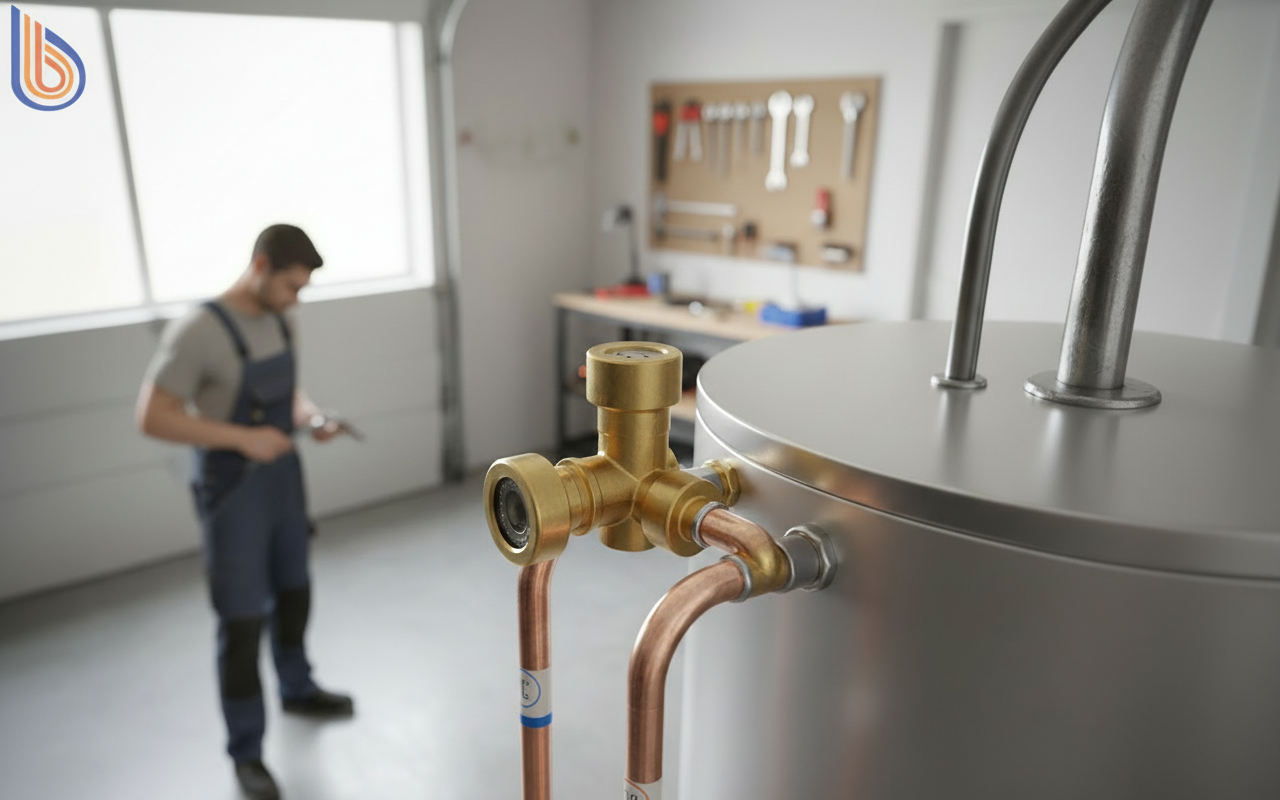
What most people miss is that water at 140°F holds significantly more energy than water at 120°F. When this high-temp water leaves the tank, a thermostatic mixing valve (TMV) injects cold water into the stream to bring it down to a safe 120°F before it reaches your faucets. This process stretches your water heater capacity because you are using less ‘tank water’ per minute of showering.
Consider these benefits of high-temp storage:
- Increased total gallons of usable hot water.
- Faster effective hot water recovery rate.
- Ability to meet peak morning demand without upgrading to a larger unit.
- Compliance with ASSE 1017 certified safety standards.
How a Thermostatic Mixing Valve Acts as a Performance Multiplier
Think of a mixing valve not just as a safety device, but as a transmission that allows your water heater to shift into a higher gear. In our work with established Bay Area families in homes built in the 70s and 80s, we often see 40-gallon tanks struggling to keep up with modern high-flow showerheads.
The real kicker? Installing a mixing valve is often 60% cheaper than replacing a perfectly functional tank with a larger model. This is particularly vital for homeowners in cities like Palo Alto or San Jose where space in utility closets is at a premium. By ‘cranking the heat’ and mixing at the source, you solve the volume problem without the construction headache.
But wait—you can’t just turn the dial up and walk away. Without a TMV, water at 140°F can cause third-degree burns in seconds. The valve acts as the gatekeeper, ensuring that while the tank stays hot enough to kill bacteria, your family stays safe from scalding.
Need a professional opinion on your current setup? Schedule a free capacity assessment with our local experts today.
The ‘Virtual Tank’ Hack: Cost-Benefit Analysis
The math behind the ‘Virtual Tank’ is straightforward: higher storage temperatures require more cold water dilution to reach a comfortable 120°F. This table illustrates how thermal energy storage changes the game for a standard 50-gallon tank.
| Storage Temp | Output Temp | Effective Capacity | Increase |
|---|---|---|---|
| 120°F | 120°F | 50 Gallons | 0% |
| 140°F | 120°F | ~72 Gallons | 44% |
| 150°F | 120°F | ~85 Gallons | 70% |
Here’s the thing: while the energy required to maintain 140°F is slightly higher than 120°F, the total cost is usually lower than the permit and labor fees associated with upsizing a tank. For a typical Bay Area mid-market home, this strategy provides the best ROI for improving domestic comfort.
Legionella Growth Prevention and Safety Standards
Modern plumbing logic has shifted; we no longer view 120°F as the ‘gold standard’ for storage because it is the ideal breeding ground for bacteria. According to the CDC, Legionella bacteria thrive in tepid water, making high-temperature storage a health necessity rather than a luxury.
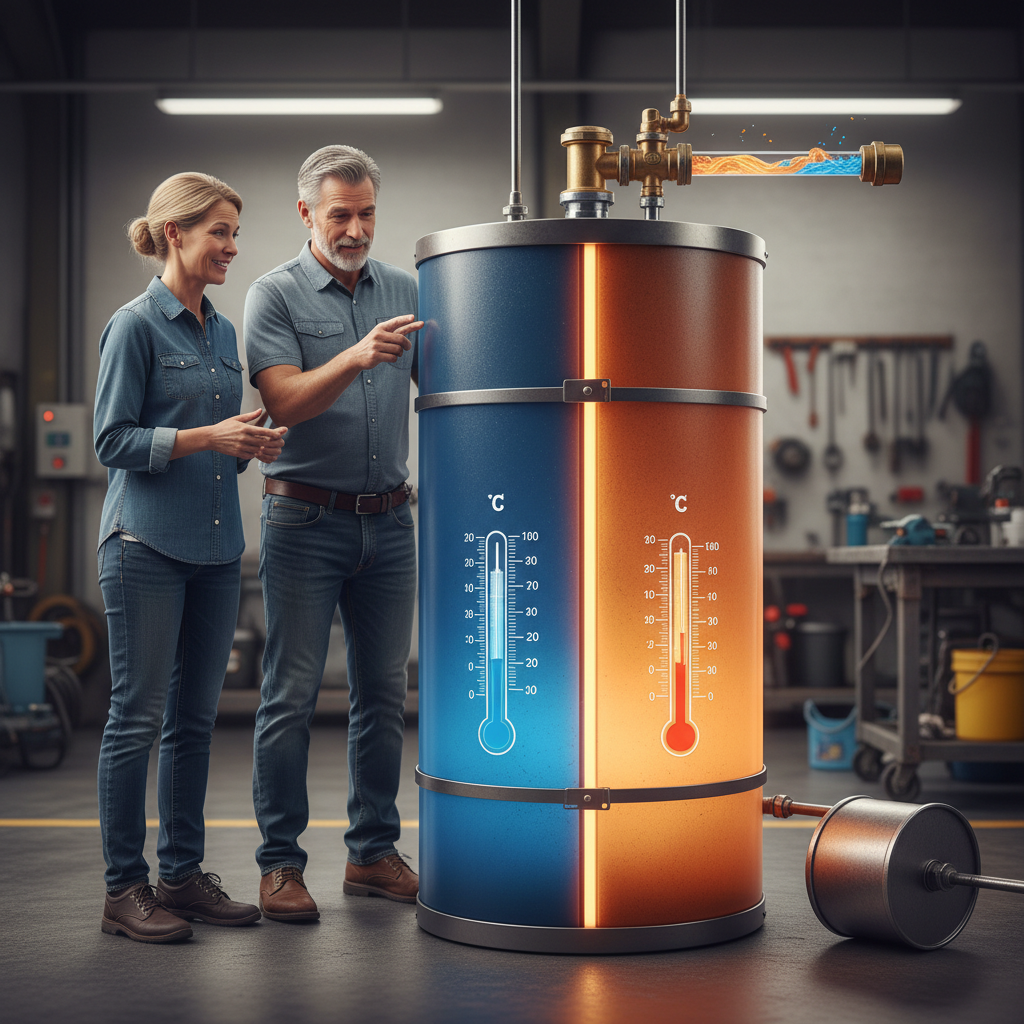
What most people miss is that the anti-scald protection provided by a mixing valve allows you to satisfy two conflicting goals: killing pathogens and preventing burns. By keeping the tank at 140°F, you ensure Legionella growth prevention, while the valve ensures the water at the tap never exceeds safe limits. This is a non-negotiable setup for senior citizens or households with small children.
Conversational transition: You might be wondering, “Isn’t this just wasting gas or electricity?” Actually, it’s the opposite when you consider time-of-use (TOU) billing. By heating your water to a higher temperature during off-peak hours (like midday when solar production is high in California), you can ‘coast’ through the expensive evening peak without the burners or elements ever kicking on.
Optimizing Heat Pump Water Heaters (HPWH)
If you have recently transitioned to a heat pump system to meet California’s decarbonization goals, a mixing valve is your best friend. Heat pumps are incredibly efficient but generally have a slower hot water recovery rate compared to gas units.
- Use the ‘Heat Pump Only’ mode for maximum efficiency during the day.
- Set the storage temperature to 140°F to create a larger thermal buffer.
- Offset the slower recovery by having a ‘deeper’ reserve of high-heat water.
- Integrate with smart home systems to track thermal energy storage levels.
In our work with early-adopting tech professionals in Mountain View, we’ve found that this configuration allows families to stay in ‘Eco’ mode 90% of the time, even with guests staying over. It’s the ultimate way to be environmentally conscious without sacrificing long, hot showers.
Ready to optimize your hybrid system? Explore our heat pump guides to learn more about local rebates and installation tips.
Installation Concerns: Point-of-Use vs. Source Mixing
The most common mistake we see is homeowners buying cheap ‘point-of-use’ valves for a single faucet when the real problem is the whole-home capacity. A source-mounted thermostatic mixing valve is installed directly at the water heater, protecting every fixture in the house simultaneously.
Here is the breakdown of why source mixing wins:
- Unified Control: One valve regulates the entire home’s temperature.
- Simplified Maintenance: Easier to service one high-quality valve than five small ones under sinks.
- System Longevity: Helps mitigate thermal layering issues within the tank.
- Code Compliance: Meets California Title 24 requirements for safety and efficiency.
The contrarian insight? Most plumbers will tell you to just buy a bigger tank because it’s a bigger ticket for them. We disagree. If your tank is less than 8 years old, adding a mixing valve is the smarter, more sustainable move for 90% of Bay Area residences. We use our internal AI content engine, Ingest.blog, to track these industry shifts and ensure our customers get the most forward-thinking advice possible.
Conclusion: Your Action Plan for This Week
Don’t let another week of lukewarm showers frustrate your family. The path to better water heater capacity is likely already sitting in your garage—it just needs a performance upgrade. This week, check your water heater’s temperature dial. If it’s set to 120°F and you’re running out of hot water, you are a prime candidate for a mixing valve upgrade.
Take these steps to ‘overclock’ your home’s comfort:
- Check your tank’s manufacture date; if it’s under 10 years old, it’s worth upgrading.
- Look for ASSE 1017 certified valves to ensure you’re getting commercial-grade safety.
- Consult with a specialist who understands the specific water chemistry and pressure issues in the Bay Area.
Ready to double your hot water without doubling your footprint? Contact Better Water Heaters today for a professional mixing valve installation and start enjoying the benefits of a ‘Virtual Tank’ tomorrow.
Frequently Asked Questions
How much does it cost to install a thermostatic mixing valve in the Bay Area?
While prices vary based on your existing plumbing, a professional installation typically ranges from $400 to $800. This is significantly less than the $2,500+ required for a larger tank replacement, especially when you factor in the cost of new permits and potential venting modifications needed for larger gas units.
Will increasing my tank temperature to 140°F shorten its lifespan?
No, provided you perform regular maintenance. While higher temperatures can accelerate mineral buildup (hard water) in some areas like Fremont or San Jose, an annual flush and a high-quality anode rod will protect the tank. The benefits of thermal energy storage and bacteria prevention far outweigh the negligible wear on the tank lining.
Can I install a mixing valve on a tankless water heater?
Yes, though the purpose is different. For tankless systems, a mixing valve helps mitigate the ‘cold water sandwich’—that brief burst of cold water between hot cycles. It ensures a consistent output temperature, which is a common pain point for homeowners switching from traditional tanks to high-efficiency tankless models.
Is a mixing valve required by law in California?
For new installations and replacements, California plumbing codes often require anti-scald protection. Even if not strictly mandated for a simple repair, we highly recommend them for any system where water is stored above 120°F to ensure safety and to allow for maximum water heater capacity expansion.