
📋 Table of Contents
While the CPSC recommends setting water heaters to 120°F to prevent scalding, the American Society of Sanitary Engineering (ASSE) notes that Legionella bacteria can still thrive at these temperatures. This creates a frustrating mixing valves vs tank temperature debate: do you prioritize preventing third-degree burns or protecting your family from waterborne pathogens?
Here is the reality: you shouldn’t have to choose. By utilizing a thermostatic mixing valve (TMV), you can maintain your tank at a bacteria-killing 140°F while ensuring the water reaching your shower head never exceeds a safe 120°F. This setup isn’t just a safety precaution; it is a sophisticated hot water capacity hack that effectively increases your usable hot water without the footprint of a larger tank.
The Hidden Danger of the 120°F Standard
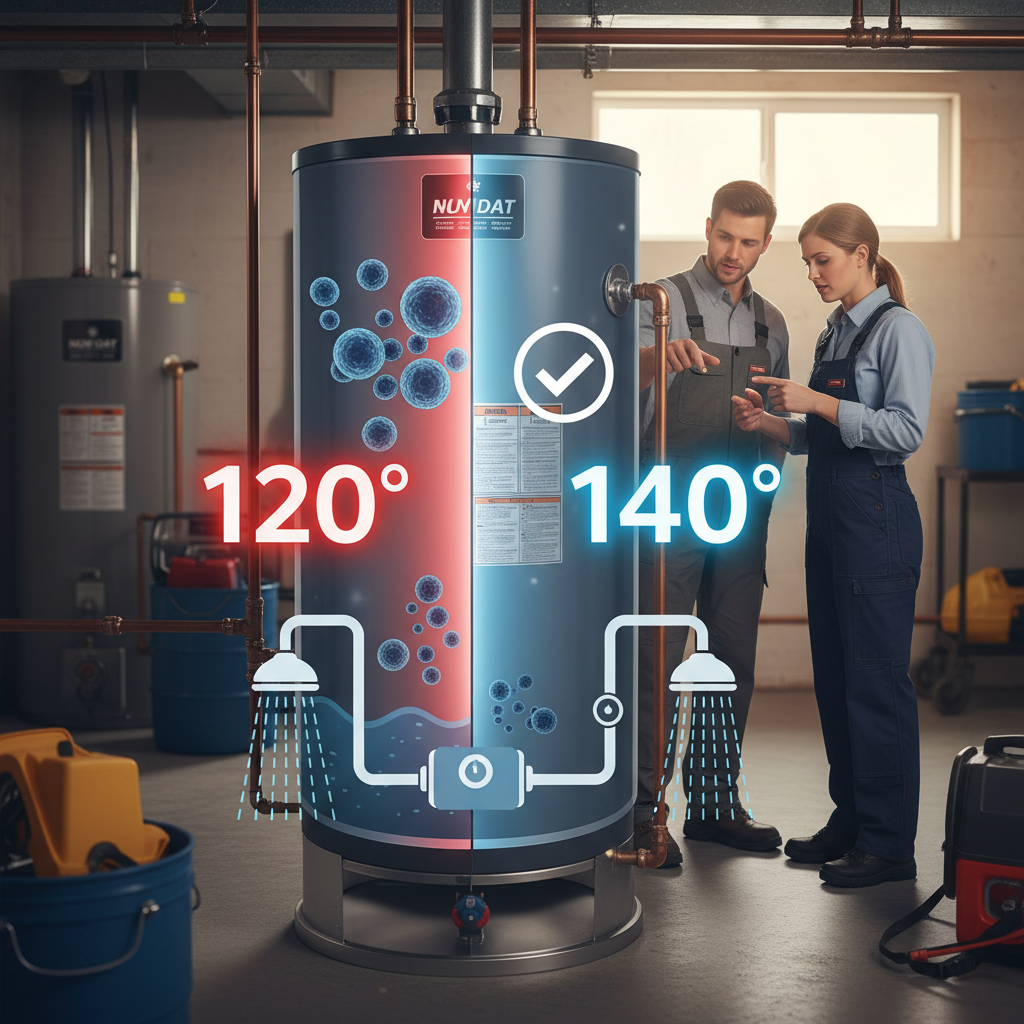
Setting your tank to 120°F is the industry default, but it often creates a “lukewarm zone” where water heater bacteria prevention becomes nearly impossible.
- Legionella bacteria stay dormant at 68°F but begin to multiply rapidly between 95°F and 115°F.
- At 120°F, the bacteria can survive, though they stop multiplying.
- Only at 140°F (60°C) is Legionella killed within 32 minutes, according to the OSHA technical manual.
- Storing water at higher temperatures also reduces the accumulation of biofilm inside the tank.
Why Biofilm Matters in Bay Area Homes
In many older homes in San Jose or Redwood City, aging pipes can contribute to sediment and biofilm buildup. When you keep your tank at lower temperatures, you are essentially providing a greenhouse for microorganisms. By bumping the temperature up, you sanitize the environment, ensuring the water you use for bathing and cooking is biologically safe.
The Hot Water Capacity Hack: More Water, Same Tank
The real kicker is that increasing your tank temperature actually gives you more hot water for your morning shower. Because you are storing water at 140°F, the thermostatic mixing valve blends in more cold water to reach the target 120°F output.
- Increased Volume: A standard 50-gallon tank stored at 140°F provides roughly 50% more usable hot water than one stored at 120°F.
- Space Savings: This allows homeowners with limited garage or closet space to get 75 gallons of performance out of a 50-gallon footprint.
- Recovery Time: The system recovers faster because the energy density of the stored water is higher.
- Cost Efficiency: You avoid the massive expense of upgrading to a 75-gallon tank, which often requires a larger footprint and different venting.
What most people miss is that this setup acts like a “hidden battery” for your home’s thermal energy. In our work with typical Bay Area mid-market clients, we often find that a $200-$400 valve installation saves them from a $3,000 tank upsizing project.
| Feature | 120°F Tank (No Valve) | 140°F Tank + Mixing Valve |
|---|---|---|
| Scald Risk | Low | Near Zero (Mechanical Protection) |
| Bacteria Control | Poor (Legionella Risk) | Excellent (Bacteria Killed) |
| Usable Hot Water | Standard | Up to 50% Increase |
| Energy Efficiency | Baseline | High (Lower Standby Loss Ratio) |
Need help optimizing your system? Schedule a free consultation with our Bay Area experts to see if a mixing valve is right for your home.
Understanding the Mixing Valves vs Tank Temperature Trade-off
Choosing between mixing valves vs tank temperature settings requires understanding the physics of thermal layering and heat loss. While storing water at 140°F does increase standby heat loss slightly, the ability to use a smaller tank often offsets this by reducing the surface area of the appliance.
- ASME and ASSE 1017 standards govern these valves to ensure they fail-safe, meaning if the cold water supply is cut, the valve shuts off hot water to prevent scalding.
- Modern heat pump water heaters, popular in the Peninsula, often have “high-temp” modes specifically designed to work with mixing valves for grid demand-response.
- The 2024 California Plumbing Code has increasingly strict requirements for anti-scald protection in new constructions and major remodels.
But wait—there is a contrarian view to consider. Some argue that the increased temperature accelerates the depletion of your anode rod. This is technically true; higher heat increases the rate of sacrificial corrosion. However, the trade-off for biological safety and increased capacity is almost always worth the $50 cost of a new anode rod every few years.
Installation and Thermal Expansion Management
Properly installing a thermostatic mixing valve isn’t just about the valve itself; it changes the dynamics of your entire plumbing system. When you heat water to 140°F, it expands more than it does at 120°F, which can increase pressure on your pipes and joints.
- Expansion Tanks: Most Bay Area codes require a thermal expansion tank when a check valve or pressure-reducing valve is present.
- Seismic Strapping: In our region, any water heater work must ensure the unit is double-strapped for earthquake safety.
- Point-of-Use vs. Point-of-Source: While a master valve at the tank is great for capacity, some local codes require ASSE 1070 valves at specific fixtures like soaking tubs.
For first-time homebuyers, navigating these regulations can be daunting. We recommend checking out our Bay Area regulation guide to stay compliant with local building departments.
Energy Efficiency and Environmental Impact
For environmentally-minded residents, the mixing valves vs tank temperature debate touches on carbon footprints. According to Energy.gov, water heating accounts for about 18% of your home’s energy use. While 140°F uses more energy than 120°F, the efficiency gain comes from the ability to keep a smaller, better-insulated tank.
- High-performance tank insulation is more effective than just lowering the temperature.
- Mixing valves are essential for solar thermal systems, which can reach temperatures well over 160°F.
- By maximizing the capacity of a standard tank, you delay the need for manufacturing and shipping a larger replacement unit.
The real value for many of our clients is reliability. Whether you’re a property manager overseeing multiple units in Fremont or a senior citizen in San Mateo, knowing that you won’t run out of hot water mid-shower—and that the water is safe from bacteria—provides immense peace of mind.
The ROI of a Thermostatic Mixing Valve
When you look at the numbers, the ROI of a TMV installation is surprisingly high. You aren’t just buying a brass valve; you are buying a hot water capacity hack that adds years of functional life to your system.
- Avoids the $2,000+ cost of upgrading to a larger tank or tankless system.
- Reduces the risk of costly medical issues related to waterborne bacteria.
- Increases home resale value by ensuring the system meets modern safety codes.
Here’s the thing: most plumbers won’t mention mixing valves because it’s easier to just sell you a bigger tank. At Better Water Heaters, we believe in providing the most efficient solution for your specific needs. If you’re ready to upgrade your home’s safety and capacity, contact us today for a professional assessment.
Key Takeaways for Bay Area Homeowners
- Safety First: Mixing valves prevent scalding while allowing for high-temp bacteria kill cycles.
- Capacity Boost: Storing at 140°F can make a 50-gallon tank feel like a 75-gallon tank.
- Code Compliance: Professional installation ensures your thermal expansion and seismic strapping are up to California standards.
- Health: It is the most effective way to achieve water heater bacteria prevention without risking burns.
FAQs About Mixing Valves and Tank Temperatures