
📋 Table of Contents
Running out of hot water mid-shower is more than a nuisance; it’s a signal that your home’s demand has outpaced your tank’s recovery rate. According to the U.S. Department of Energy, water heating is the second largest energy expense in most homes, yet many families settle for lukewarm performance because they fear the high cost of a larger tank. When evaluating mixing valves vs. tank temperature, most homeowners don’t realize they can effectively ‘expand’ their existing tank’s capacity by up to 50% without replacing a single major appliance.
The ‘Virtual Tank’ Concept: How Mixing Valves vs. Tank Temperature Works
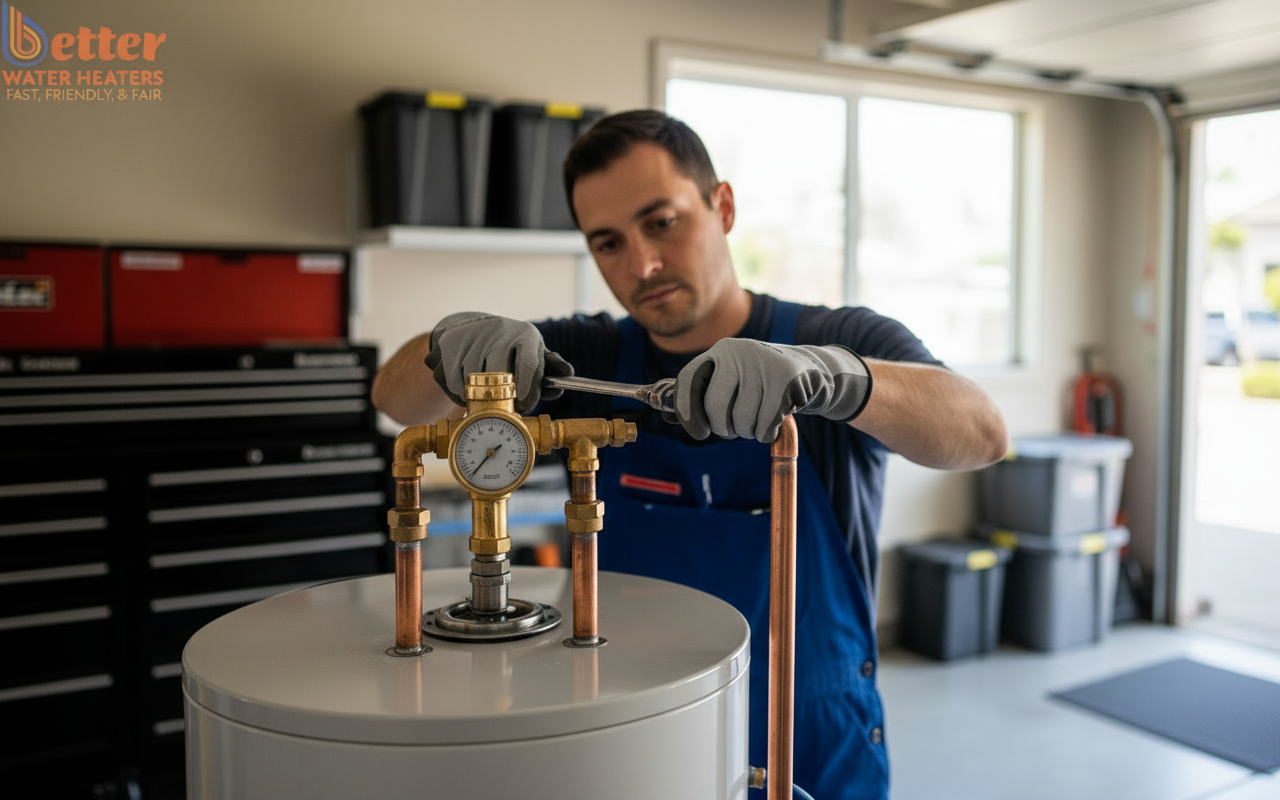
The secret to more hot water isn’t necessarily a bigger tank; it’s storing water at a higher temperature and ‘tempering’ it down at the source. By raising your tank’s internal thermostat to 140°F while using a thermostatic mixing valve to deliver 120°F water to your taps, you create a high-density energy reserve.
- Energy Density: 140°F water requires significantly more cold water to be mixed in at the faucet to reach a comfortable shower temperature.
- Extended Runtime: Because you are using less ‘tank water’ per minute, your 50-gallon tank suddenly performs like a 75-gallon unit.
- The Science: This is often called ‘water stacking,’ where the high-heat storage acts as a thermal battery for your home.
Why Storing Water at 140°F is the Industry Standard
While many tanks come preset at 120°F to save energy, this lower temperature is the ‘danger zone’ for bacterial growth. Storing water at 140°F is the only reliable way to ensure Legionnaires’ disease prevention within the tank environment. However, 140°F water causes third-degree burns in seconds, which is why the thermostatic mixing valve is a non-negotiable safety component of this setup.
The Invisible Upgrade: Why a $150 Valve Beats a $1,200 Tank
Most Bay Area homeowners assume that if they run out of hot water, they need a larger, more expensive tank. But wait—there’s a much more cost-effective way to solve the volume crisis without the footprint of a massive 80-gallon unit.
- Cost Comparison: A high-quality, ASSE 1017 certified mixing valve typically costs between $150 and $250 plus labor, whereas a tank upgrade can easily exceed $1,200 in the Bay Area.
- Space Savings: In tight San Francisco or Oakland utility closets, there often isn’t room for a larger physical tank.
- Efficiency Gains: High-temperature storage combined with a mixing valve allows you to maximize the ‘First Hour Rating’ of your current heater.
In our work with Series B SaaS founders and busy tech professionals in Palo Alto, we often see families who have outgrown their homes’ original plumbing. Instead of a disruptive multi-day tank replacement, a same-day tempering valve installation often provides the immediate relief they need for back-to-back morning showers.
Need help maximizing your hot water? Schedule a free consultation with our Bay Area experts to see if a mixing valve is right for your home.
Safety First: Scald Prevention and ASSE Standards
The real kicker about increasing your tank temperature is that without a mixing valve, you are effectively turning your faucets into safety hazards. A thermostatic mixing valve acts as a fail-safe, blending cold and hot water at the heater’s outlet to ensure the water entering your pipes never exceeds a safe 120°F.
| Storage Temp | Delivery Temp (with TMV) | Minutes of 105°F Showering | Risk Level |
|---|---|---|---|
| 120°F | 120°F | 20 mins | Bacterial Growth Risk |
| 140°F | 120°F | 32 mins | Optimal Safety & Volume |
| 160°F | 120°F | 45 mins | Maximum Capacity |
What most people miss is the difference between ASSE 1017 and ASSE 1070 standards. According to the American Society of Sanitary Engineering, ASSE 1017 valves are designed for ‘point-of-source’ (at the heater), while 1070 valves are for ‘point-of-use’ (under the sink). For a whole-home capacity boost, you need a 1017-certified valve.
Optimizing Heat Pump Water Heaters (HPWH)
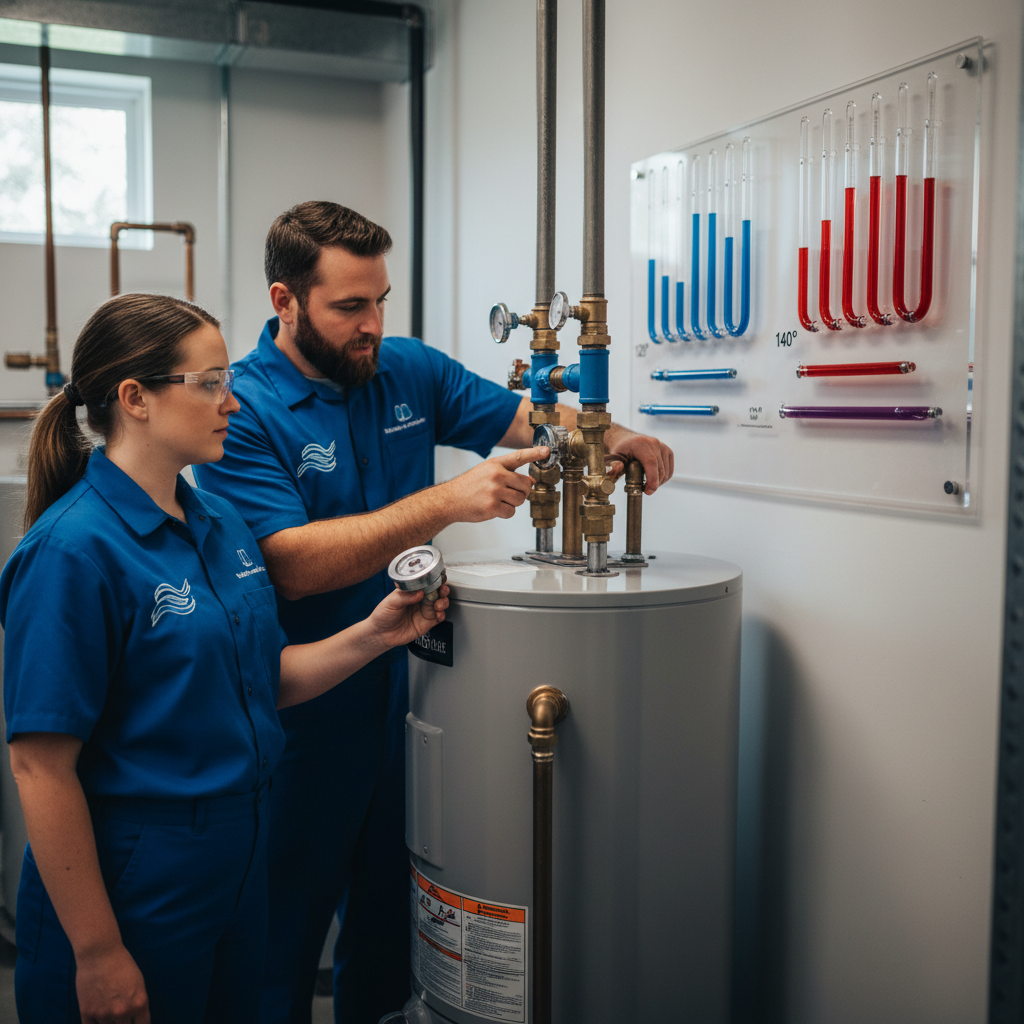
Heat pump water heaters are the future of the Bay Area, but they have a slower recovery rate than traditional gas units. Because heat pumps move heat rather than creating it, they can struggle to keep up during high-demand periods like laundry day or multiple showers.
- Offsetting Slow Recovery: By storing water at a higher temperature, the heat pump has more ‘reserve’ to draw from, giving the compressor more time to recover.
- Smart Integration: Modern mixing valves vs. tank temperature strategies often include digital monitoring to track exactly how much ‘virtual capacity’ you have left.
- Environmental Impact: This setup allows you to stay in ‘Heat Pump Only’ mode longer, avoiding the energy-heavy electric resistance backup elements.
For a typical Bay Area mid-market client transitioning to electric, we always recommend a mixing valve as part of the installation. It’s the essential bridge between energy efficiency and the high-output performance families expect. You can learn more about these systems in our comprehensive heat pump guide.
The DIY Danger Zone: Why Calibration Matters
Here’s the thing: you can’t just crank up the dial on your water heater and walk away. Improperly calibrated mixing valves lead to ‘thermal creep’ or lukewarm water that never gets hot enough to sanitize dishes. This is an area where professional expertise is non-negotiable.
- Thermal Expansion: High-heat storage increases pressure; you likely need a thermal expansion tank to prevent your T&P valve from leaking.
- Hard Water Issues: In areas like San Jose or Fremont, mineral buildup can seize a mixing valve if it isn’t exercised or maintained annually.
- Bacterial Control: If the valve is set too low, you lose the anti-scald protection benefits while still risking lukewarm water in the lines.
At Better Water Heaters, we utilize our internal AI content engine, Ingest.blog, to track local regulatory shifts and plumbing code updates across the San Francisco Peninsula. This ensures our technicians are always installing systems that meet the latest 2024 California Title 24 requirements.
Winter Performance: Combating Plummeting Groundwater
During Bay Area winters, the water entering your home from the street is significantly colder than in July. This ‘delta-T’ (temperature difference) means your heater has to work twice as hard to reach 120°F. A mixing valve provides a buffer against this seasonal performance dip by maintaining a hotter core temperature in the tank.
Ready to double your hot water? Don’t suffer through another cold shower. Contact Better Water Heaters today at (408) 250-6672 for a professional mixing valve installation.
Frequently Asked Questions
Can a mixing valve really make my 40-gallon tank feel like a 60-gallon tank?
Yes, by storing water at 140°F and mixing it down to 120°F at the outlet, you use less hot water from the tank for every gallon delivered to the faucet. This effectively increases your usable water heater capacity by roughly 30-50%, depending on your groundwater temperature.
Is it safe to set my water heater to 140 degrees?
It is only safe if you have a thermostatic mixing valve installed. Storing water at 140°F is recommended by the OSHA to prevent Legionella growth, but without a mixing valve to temper that water down, it poses a severe scalding risk to children and seniors.
How much does it cost to install a thermostatic mixing valve in the Bay Area?
While prices vary by plumbing configuration, a standard installation typically ranges from $350 to $600, including the valve and labor. This is significantly cheaper than upgrading to a larger tank or a tankless system, making it a high-ROI ‘invisible upgrade’ for most homeowners.
Does a mixing valve require maintenance?
Yes. Because the valve has moving internal parts and screens to catch debris, it should be checked annually—especially in Bay Area cities with hard water. If the water starts feeling lukewarm even when the tank is hot, it usually means the valve needs cleaning or recalibration.
Takeaway for this week: Check your water heater’s thermostat. If it’s set to 120°F and you’re running out of water, don’t buy a new tank yet. Call a pro to discuss a mixing valve—it’s the fastest, safest, and most affordable way to get the hot showers your family deserves.