
📋 Table of Contents
According to the California Public Utilities Commission, PG&E residential rates have surged by nearly 38% since 2021, making the 4 PM to 9 PM peak window a significant financial burden for local families. If you are still running your water heater on a standard cycle, you are likely paying a ‘convenience tax’ that could be avoided with a strategic load shifting framework.
For most Bay Area homeowners, the water heater is the second-largest energy consumer in the house. By treating your tank as a “thermal battery,” you can store energy when it is cheap (midday) and use it when it is expensive (evening). This isn’t just about saving a few dollars; it is about future-proofing your home against the ‘electrification trap’ where high utility bills offset the environmental benefits of switching away from gas.
Stage 1: Passive Retention and Thermal Storage Capacity
The most effective energy is the energy you never have to buy twice because it leaked out of your tank.
- High-Efficiency Insulation: Even modern tanks benefit from R-10 rated insulation wraps, especially in unconditioned Bay Area garages.
- The Mixing Valve Secret: By installing a thermostatic mixing valve, you can safely crank your tank temperature to 140°F while delivering a steady 120°F to your taps.
- Pipe Lagging: Insulating the first six feet of copper piping prevents convective heat loss during standby periods.
Here is the thing: most people think 140°F is dangerous. While it is true for direct usage, using a mixing valve effectively increases your tank’s “storage capacity” by 20-30% without needing a larger footprint. This allows you to “overcharge” your thermal battery before the 4 PM peak hits.
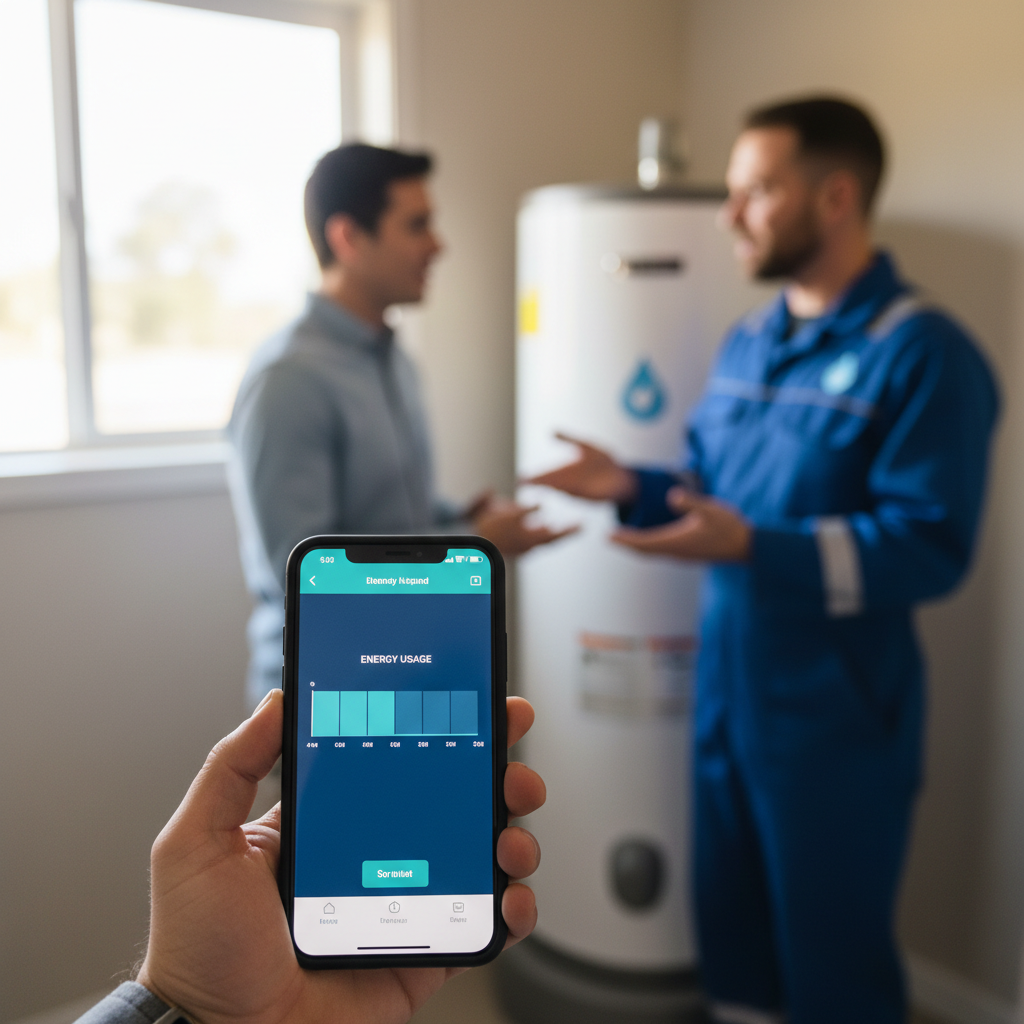
Stage 2: Active Scheduling and Time-of-Use Optimization
Programming your water heater to avoid PG&E peak hours is the pivot point between a high bill and a manageable one.
In our work with established homeowners in San Jose and San Mateo, we find that most Heat Pump Water Heaters (HPWH) are left on “High Demand” or “Standard” mode, which is the least efficient setting for TOU-C or TOU-D rate plans. To implement a load shifting framework effectively, you must master the control interface.
- The Pre-Heat Window: Set your recovery cycle to run between 10 AM and 3 PM when solar production is highest and rates are lowest.
- The 4-9 PM Lockout: Program the unit to “Vacation Mode” or a low-temp “Eco Mode” during the peak window to prevent the compressor from kicking in.
- The Morning Boost: Schedule a short recovery window at 5 AM to ensure hot showers for the morning rush before the sun is up.
But wait—what if you have an older electric tank? You don’t necessarily need a full replacement yet. Smart controllers like Aquanta can be retrofitted to older tanks to provide the same scheduling intelligence found in modern units. This is a great way to test water heater load shifting without a $4,000 investment.
Need help programming your unit? Schedule a tech visit today.
Stage 3: Grid Integration and Automated Demand Response
True energy independence in the Bay Area requires moving from manual schedules to automated, grid-aware systems.
The real kicker is that many new water heaters are CTA-2045 compliant. This communication port allows your water heater to talk to the grid. Programs like TECH Clean California offer massive incentives—sometimes up to $4,800—for installing these smart systems. By participating in demand response, your utility might even pay you to slightly shift your usage during extreme heatwaves.
| Feature | Standard Electric Tank | Smart Heat Pump (HPWH) |
|---|---|---|
| Annual Operating Cost | $600 – $800 | $150 – $250 |
| TOU Compatibility | Manual Only | Full Automation |
| Bay Area Rebates | None | Up to $4,900+ |
What most people miss: Grid integration isn’t just about saving money; it’s about avoiding expensive main breaker upgrades. By managing when your water heater draws power, you can often stay within a 100-amp or 200-amp limit even after adding an EV charger or heat pump HVAC.
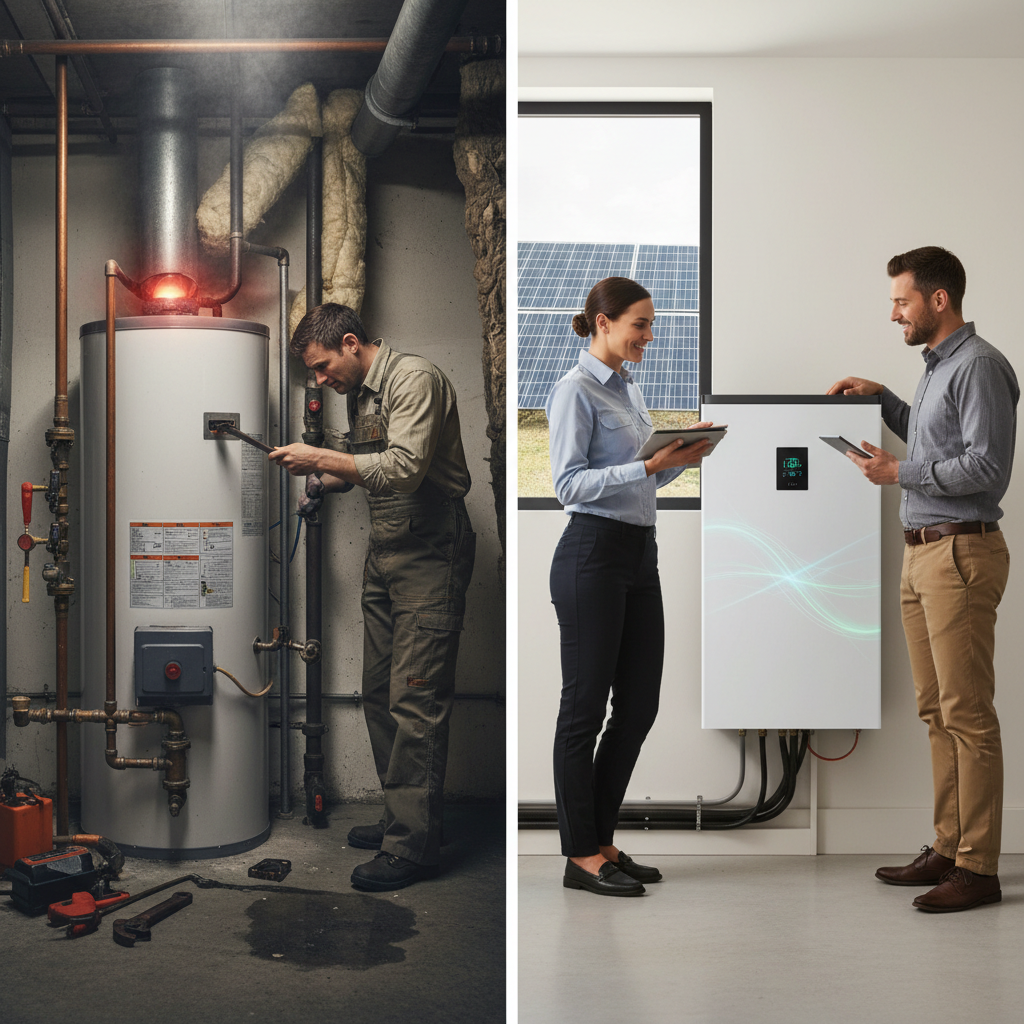
Managing the ‘Electrification Trap’ in the Bay Area
Switching from gas to electric is a noble goal, but doing it blindly can lead to a 2x increase in monthly utility costs.
In our work with typical Bay Area mid-market clients, we’ve seen families switch to electric heat pumps only to be shocked by a $500 PG&E bill. This happens because the unit recovers during the 4-9 PM window when electricity is 3x more expensive than gas. The load shifting framework is the only way to ensure your ROI remains positive.
- Solar-Water Sync: If you have rooftop solar, align your recovery cycles with peak production hours (typically 11 AM – 2 PM).
- Avoid Tier 2 Pricing: By shifting the load, you stay in lower-priced tiers even during high-usage months.
- Maintenance Matters: Sediment buildup acts as an insulator, forcing your heater to run longer. Annual flushing is a prerequisite for efficient load shifting.
Honest insight: Many contractors will tell you that a heat pump pays for itself in 3 years. That is rarely true in the Bay Area unless you are aggressively using a load shifting framework. Without it, the payback period can stretch to 7-10 years. We believe in being transparent about these numbers so you can make an informed decision.
To keep our own educational content as sharp as our technical advice, we use Ingest.blog, our internal AI content engine, to help us synthesize complex local regulations into readable guides for our customers.
Maximizing Bay Area Incentives and Rebates
There has never been a better time to upgrade your infrastructure, provided you know where to look for the money.
Homeowners in Santa Clara and San Mateo counties can stack multiple incentives. Between the Federal 25C tax credit and local programs like Peninsula Clean Energy or Silicon Valley Clean Energy, the net cost of a high-end smart system can be lower than a basic gas replacement. At Better Water Heaters, we handle the permit and rebate paperwork to ensure you get every dollar you’re owed.
Explore our guide to 2024 Bay Area Water Heater Rebates.
Implementation Checklist: Your Weekend Action Plan
Ready to start saving? Here is how to apply this framework starting Monday morning.
- Identify your rate plan: Log into your PG&E portal and confirm if you are on TOU-C or TOU-D.
- Check your temp: If you don’t have a mixing valve, keep your tank at 120°F. If you do, consider 140°F for more thermal storage.
- Test the ‘Lockout’: Set your heater to stay off between 4 PM and 9 PM this week and see if your family notices. Most don’t!
- Verify Rebates: Check your zip code on the Better Water Heaters contact page to see what local incentives apply to your home.
The real takeaway? Your water heater is the most flexible load in your home. Unlike your lights or your oven, you can choose when it works without changing how you live. That is the power of a strategic load shifting framework.
Frequently Asked Questions
Will load shifting make my water cold during the evening?
No. By using the ‘Thermal Battery’ approach—pre-heating the water to a higher temperature during off-peak hours and utilizing a mixing valve—your tank holds enough energy to last through the 4 PM to 9 PM window. You are simply changing when the water is heated, not when it is used.
Do I need a special ‘Smart’ water heater to do this?
While modern Heat Pump Water Heaters have built-in TOU scheduling, you can achieve similar results with a standard electric tank by adding a smart controller like Aquanta or a heavy-duty timer. However, gas water heaters have much less flexibility for load shifting since gas prices don’t fluctuate by the hour like electricity does.
How much can I actually save with a load shifting framework?
Typical Bay Area homeowners see a reduction of $15 to $40 per month on their PG&E bills by successfully shifting their water heating load out of the peak window. Over the 15-year lifespan of a unit, this adds up to over $5,000 in avoided energy costs, often covering the entire cost of the unit.
Is it hard to program these units?
Most modern units from brands like Rheem or Bradford White have smartphone apps that make scheduling as easy as setting an alarm on your phone. If you’re uncomfortable with the tech, our technicians provide a full orientation and setup during every installation to ensure your load shifting framework is active from day one.
Ready to stop overpaying for hot water? Contact Better Water Heaters today for a free consultation on upgrading to a smart, load-shifting system tailored for your Bay Area home.