
📋 Table of Contents
Upgrading to an all-electric kitchen in the Bay Area often hits a $5,000 roadblock: the dreaded main electrical panel upgrade. According to the U.S. Department of Energy, over 60% of existing U.S. homes may require electrical infrastructure improvements to support full electrification, a challenge amplified by the 100-amp limits found in historic San Francisco and Oakland neighborhoods.
The load balancing framework we use at Better Water Heaters allows you to bypass these massive infrastructure costs by managing how and when your home consumes power. By strategically pairing high-draw appliances like induction stoves with high-efficiency heat pump water heaters, you can achieve a modern, carbon-free home without waiting months for a PG&E transformer upgrade.
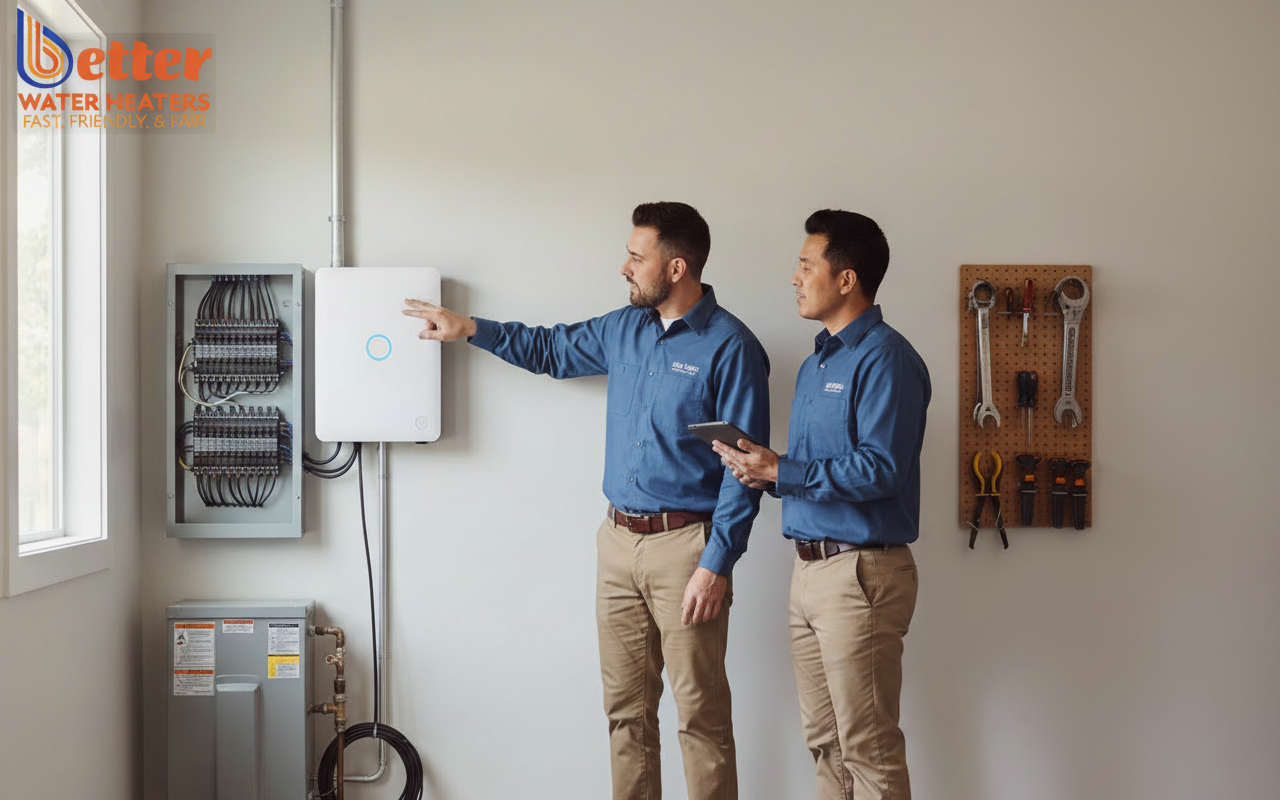
1. Audit Your Bay Area Panel Capacity with NEC 220.87
The first step in any all-electric home conversion is realizing that your panel is likely more capable than the stickers on the breakers suggest. Most homeowners assume a 100-amp panel is a hard ceiling, but real-world usage patterns rarely peak simultaneously.
- Data-Driven Calculations: Use NEC 220.87 to calculate your actual load based on the last 12 months of PG&E usage data rather than theoretical maximums.
- Watt-Pinching: Identify “vampire” loads and old incandescent lighting that can be swapped for LEDs to shave off 5-10 amps of baseline demand.
- The 100-Amp Bottleneck: In our work with established homeowners in San Jose and Fremont, we often find that smart management can fit a whole-home heat pump system on a 100-amp service that previously seemed “full.”
What most people miss is that your water heater doesn’t need to run at full blast while you’re searing a steak on your induction range. By understanding your Bay Area panel capacity through actual demand metrics, you unlock the ability to stack appliances strategically.
2. Prioritize the Heat Pump Water Heater Integration
If you want to maximize your all-electric home conversion, the water heater is your most flexible asset. Unlike an oven, which must heat up the moment you turn it on, a heat pump water heater (HPWH) acts as a thermal battery, storing energy in the form of hot water for later use.
Here’s how to leverage this for your kitchen:
- Time-of-Use (TOU) Optimization: Program your HPWH to do the heavy lifting during mid-day when solar production is high and kitchen demand is low.
- 120V vs. 240V Options: If circuit space is at a premium, a 120V “plug-in” HPWH can save you from running new heavy-gauge wire while still qualifying for Bay Area electrification rebates.
- Recovery Rate Focus: Ensure your tank is sized correctly (usually 65-80 gallons for families) so it can coast through dinner prep without needing to engage the resistive heating elements.
But wait—if you are worried about running out of hot water during peak cooking times, the real kicker is that modern heat pumps are incredibly efficient at maintaining temperature without spiking your Bay Area panel capacity. Want to see which model fits your garage? Schedule a free capacity assessment today.
3. Implement Smart Load-Sharing Devices
The core of any successful load balancing framework is hardware that prevents two high-draw appliances from running at the exact same time. This is the “financial hack” that saves you $5,000+ on a panel upgrade and avoids the permit headaches of a service lateral move.
We recommend industry-standard tools like the SimpleSwitch or NeoCharge. These devices allow an induction range and a heat pump water heater to share a single 240V circuit. When the stove turns on, the device temporarily pauses the water heater. Because the water in the tank is already hot, you’ll never notice the interruption.
| Feature | Standard Installation | Load-Balanced Framework |
|---|---|---|
| Estimated Cost | $8,000 – $12,000 | $3,500 – $5,500 |
| Panel Upgrade Required | Yes (200 Amp) | No (Stays at 100/125 Amp) |
| PG&E Wait Time | 3 – 9 Months | Same-Day / 1 Week |
The real-world data from a typical Bay Area mid-market client shows that kitchen cooking peaks between 6:00 PM and 7:30 PM, while hot water demand peaks either before 8:00 AM or after 8:30 PM. The overlap is minimal, making load-sharing a no-brainer for heat pump water heater installation.
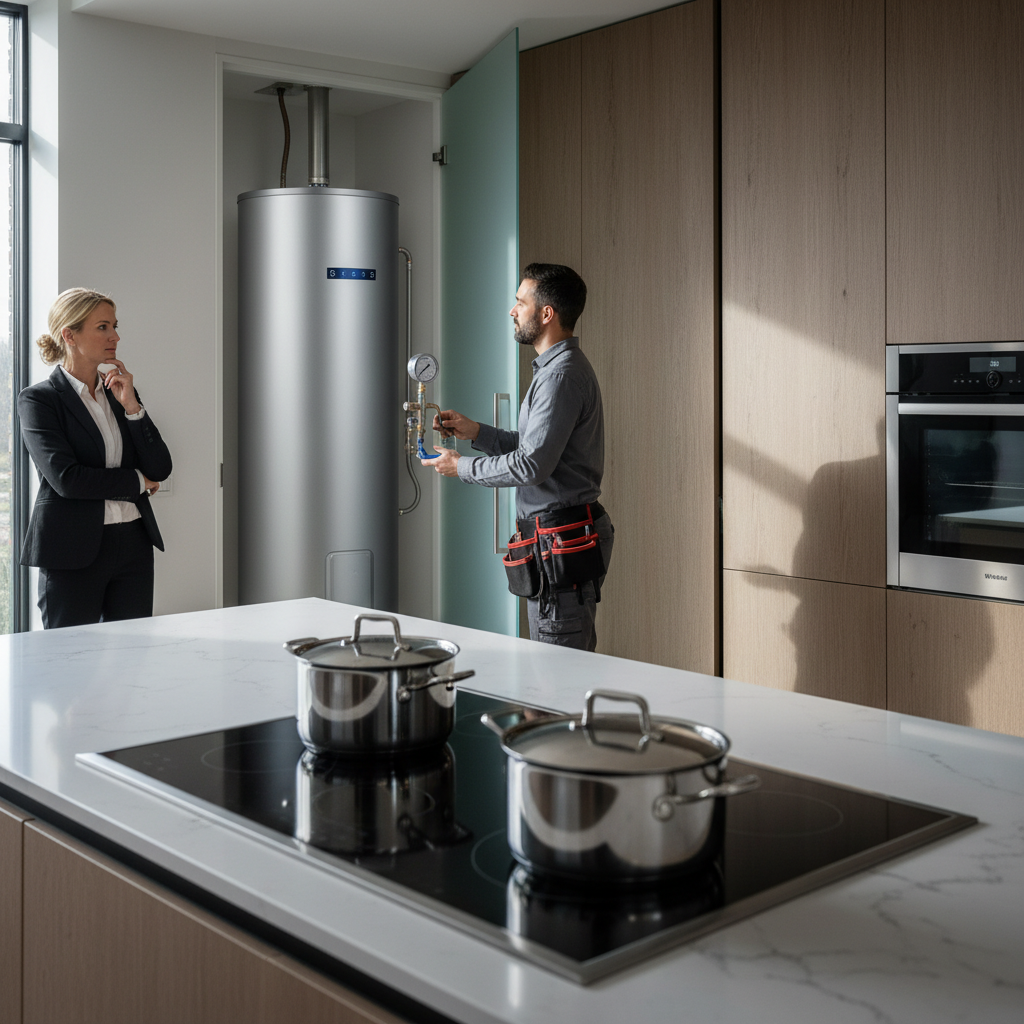
4. Stack Local Rebates to Offset Costs
The Bay Area is currently the “Goldilocks zone” for electrification incentives. Between federal tax credits and local programs, the net cost of a heat pump water heater installation can often be lower than a traditional gas unit.
- TECH Clean California: Offers substantial incentives (often $1,000-$3,100) specifically for switching from gas to heat pump technology.
- BayREN: Provides additional rebates for residents in the nine Bay Area counties who improve home performance.
- Federal 25C Tax Credit: Allows you to claim 30% of the project cost, up to $2,000 annually, for heat pump water heaters.
Here’s a contrarian insight: Many contractors will tell you to wait for the “perfect” rebate, but with the 2027 gas water heater ban looming, labor prices in the Bay Area are only going up. Acting now while Bay Area panel capacity management tools are readily available is the smartest move for your ROI. Our team at Better Water Heaters handles the complex paperwork for these programs so you don’t have to.
The ‘Grid-Ready’ Kitchen Strategy
Modern electrification isn’t just about swapping fuel sources; it’s about building a smart system. By using our load balancing framework, you are essentially creating a “Grid-Ready” kitchen that can respond to demand signals from utilities while keeping your utility bills low through TOU rate arbitrage.
In our work with environmentally-minded residents in Palo Alto and Redwood City, we’ve seen that the combination of induction cooking and heat pump water heating reduces household carbon footprints by up to 40%. This transition is even smoother when you use load-sharing devices to keep your existing electrical footprint small. For those managing high-volume content for their own home-service businesses, using tools like Ingest.blog (our internal AI content engine) can help educate customers on these complex technical shifts.
When to Consult a Professional Water Heater Specialist
While the load balancing framework is powerful, it requires precise execution. You cannot simply “DIY” a circuit-sharing switch if your home’s wiring isn’t up to current California Title 24 codes. A professional can ensure your induction range conversion doesn’t create a fire hazard or violate seismic strapping requirements for your water heater.
The real value of an expert is in the NEC 220.87 load calculations. We provide a detailed roadmap that shows exactly how many amps your home has left and where you can “pinch watts” to make space for your dream kitchen. Ready to stop worrying about your circuit breaker? Request your Load-Balancing Audit here.
Key Takeaways for Bay Area Homeowners
- Avoid the Upgrade: Most 100-amp panels can support an all-electric kitchen with smart load-sharing.
- Thermal Storage: Use your heat pump water heater as a battery to shift demand away from cooking hours.
- Stack Incentives: Combine TECH Clean California, BayREN, and Federal credits for maximum savings.
- Plan for 2027: Get ahead of upcoming gas appliance regulations by electrifying today.
Frequently Asked Questions
Can I really run an induction stove and a heat pump water heater on a 100-amp panel?
Yes, by using a load balancing framework and circuit-sharing devices, you can prioritize power delivery. These devices ensure that the water heater pauses briefly if the stove draws maximum current, preventing the main breaker from tripping while staying within Bay Area panel capacity limits.
How much can I save by avoiding a full electrical panel upgrade?
A full panel upgrade in the Bay Area typically costs between $4,000 and $6,000, not including potential costs for trenching or PG&E service upgrades. By using load-sharing technology and efficient heat pumps, you can often keep your existing panel and spend that money on higher-quality appliances instead.
Will a load-sharing device affect my hot water supply?
Rarely. Because a heat pump water heater is a storage-based system, a 30-60 minute pause while you cook dinner will only result in a negligible drop in tank temperature. As long as your tank is properly sized for your household, you will still have plenty of hot water for showers afterward.
What are the specific rebates for heat pump water heaters in the Bay Area?
Residents can currently access up to $3,100 through TECH Clean California and additional incentives from local CCAs like Peninsula Clean Energy or Silicon Valley Clean Energy. When combined with the $2,000 Federal tax credit, the total savings can exceed $5,000 for a single heat pump water heater installation.
Stop letting electrical panel fears hold back your home’s evolution. Start your all-electric home conversion with confidence this week by reviewing your last 12 months of PG&E data. If you’re ready for a professional perspective, call the experts at Better Water Heaters at 408-250-6672.