
📋 Table of Contents
According to the U.S. Department of Energy, a split-system heat pump water heater can be up to three times more efficient than conventional electric models, yet many Bay Area homeowners are stalling because they aren’t sure if these units will fit in their historic San Francisco closets or compact San Jose garages. With the Bay Area Air Quality Management District (BAAQMD) mandating a phase-out of NOx-emitting gas heaters starting in 2027, the transition to electric isn’t just a green choice—it’s a regulatory reality for local property owners.
The Fundamental Choice: Integrated HPWH vs Split Systems
The most important thing to remember is that while both systems move heat rather than creating it, the physical footprint determines your installation cost more than the hardware itself.
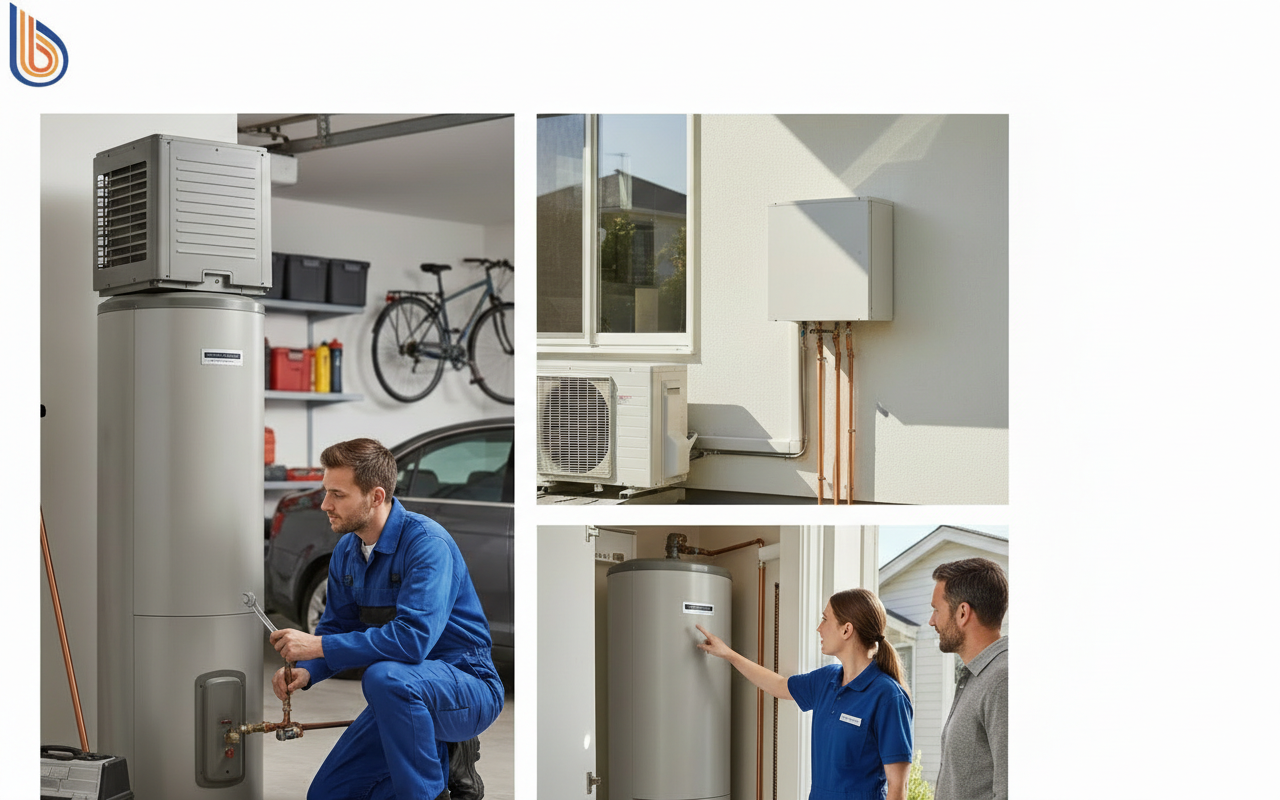
- Integrated Units: These are “all-in-one” systems where the heat pump sits directly on top of the water tank. They are generally taller and require significant airflow (usually 700–1,000 cubic feet of space) to operate efficiently.
- Split-Systems: These separate the compressor (placed outdoors) from the storage tank (placed indoors). This is the gold standard for Bay Area HVAC space saving because the indoor tank is no larger than a traditional water heater.
- Hybrid Functionality: Most integrated units can switch to standard electric resistance mode if the ambient air is too cold, whereas split systems are engineered to pull heat from outdoor air even in lower temperatures.
Spatial Logistics: Why San Francisco Homes Favor Split Systems
Here’s the thing: A typical integrated unit needs to “breathe,” which means if you put it in a tiny utility closet under a staircase in a Richmond District Victorian, you’ll likely need to install louvered doors or ducting to prevent the unit from freezing the room. For a typical Bay Area mid-market client living in a home built before 1970, space is the ultimate luxury. A split-system heat pump water heater solves this by moving the noisy, air-hungry component outside, leaving the tank to fit perfectly where your old gas unit once stood.
Acoustic Etiquette and the Noise Factor
Choosing a system that won’t trigger a noise complaint from your neighbor is a critical consideration in high-density neighborhoods like Berkeley or North Beach.
- Integrated Noise: Since the compressor is inside, you will hear a hum similar to a large refrigerator whenever the unit is heating water. If your heater is next to a bedroom, this can be a dealbreaker.
- Split-System Noise: The noise is moved outdoors. However, you must be mindful of property lines. Most modern split systems, like those from Sanden or SanCO2, are whisper-quiet, often operating at decibel levels lower than a standard AC unit.
- Vibration Isolation: Regardless of the system, professional installation includes vibration pads to ensure the unit doesn’t rattle your home’s framing.
What most people miss is that the “fog belt” micro-climate in San Francisco actually benefits split systems. Because the outdoor air rarely hits freezing, the Coefficient of Performance (COP) remains high year-round compared to East Bay homes that might see wider temperature swings.
Need help navigating the spatial requirements for your home? Schedule a free site assessment today.
The Retrofit Reality: Avoiding the $5,000 Panel Upgrade
The real kicker for many homeowners isn’t the heater itself—it’s the electrical panel. Most traditional heat pumps require a 240V, 30-amp circuit, which often necessitates a costly main breaker panel upgrade in older homes.
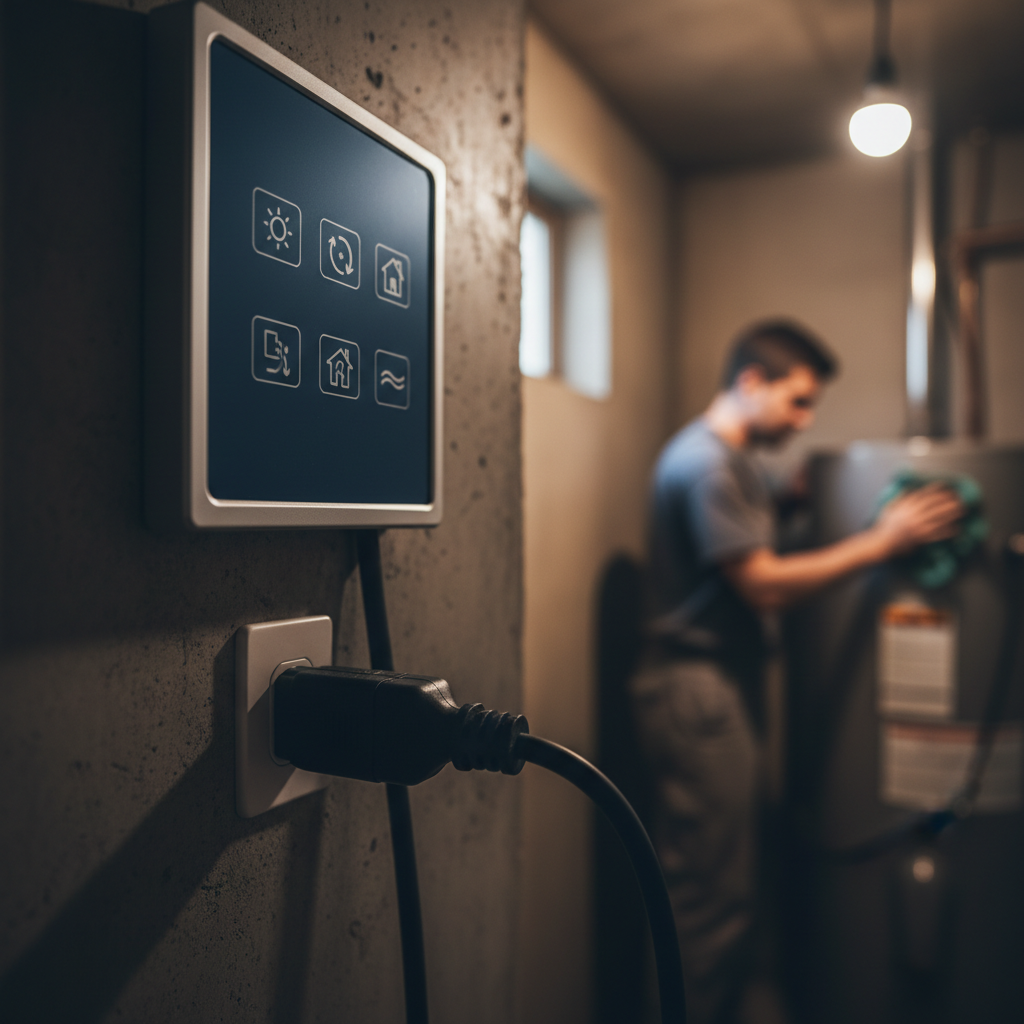
- The 120V Revolution: New 120V heat pump water heater retrofit models are designed to plug into a standard outlet. This is a game-changer for avoiding the “electrical tax” often associated with electrification.
- Power Requirements: While split systems typically require 240V for the outdoor compressor, some integrated models are now optimized for 120V shared circuits.
- Title 24 Compliance: As of the Title 24 water heater requirements 2024 update, new constructions and major remodels in California are heavily incentivized to choose these high-efficiency electric paths.
Rebate Math: Stacking BayREN and Federal Incentives
In our work with environmentally-minded residents, we’ve found that the ROI on a heat pump often lands under five years when you stack local and federal incentives correctly.
| Incentive Source | Amount (Up To) | Applicability |
|---|---|---|
| BayREN Heat Pump Rebates | $1,000 | Bay Area Residents only |
| TECH Clean California | $1,000 – $3,100 | Varies by contractor & equipment |
| Federal Tax Credit (25C) | $2,000 | Annual limit for heat pumps |
| Total Potential Savings | $4,900+ | Depends on system type |
But wait—don’t assume every model qualifies. To maximize your BayREN heat pump rebates, the unit must be installed by a participating contractor. At Better Water Heaters, we handle the paperwork for you to ensure no money is left on the table. You can learn more about our process on our rebate information page.
Integrated vs. Split: The Decision Matrix
An honest, contrarian insight: The split-system is technically superior in almost every performance metric, but it is not always the “smart” financial choice. If you have a large, unconditioned garage in Sunnyvale, an integrated unit is significantly cheaper to install and will perform beautifully because it has plenty of air to draw from.
- Choose Integrated If: You have a garage installation, a budget under $6,000 (before rebates), and at least 1,000 cubic feet of surrounding air.
- Choose Split-System If: You are installing in a small indoor closet, you are sensitive to noise, or you want the highest possible efficiency (COP) regardless of outdoor temps.
- Consider the 120V Plug-in: If your electrical panel is maxed out and you want to avoid a $3,000-$5,000 upgrade cost.
For those managing high-volume content for their own service businesses, using a tool like Ingest.blog (our internal AI content engine) can help keep your customers informed about these fast-moving regulatory changes, but nothing beats an on-site expert evaluation.
Installation Challenges in the Bay Area
Bay Area architecture presents unique challenges that national big-box retailers often overlook. From seismic strapping requirements to specific venting codes in cities like Palo Alto, the details matter.
- Seismic Strapping: In earthquake country, your tank must be double-strapped to the wall studs. Split-system tanks are easier to secure because they lack the top-heavy weight of an integrated compressor.
- Condensate Management: Heat pumps produce water (condensate). In a garage, this is easy to drain. In a San Francisco closet, we often have to install a condensate pump to move that water to a nearby drain or exterior point.
- Permitting: Every city from Fremont to Santa Rosa has different permit fees. We handle all San Francisco heat pump installation permits to ensure your system is fully code-compliant for future home sales.
Ready to make the switch before the 2027 mandates? Get your transparent, fixed-price quote here.
FAQs: Advanced Heat Pump Questions
How does the fog affect a split-system heat pump water heater?
Actually, the Bay Area’s high humidity and moderate temperatures are ideal for heat pumps. While extreme cold (below 30°F) reduces efficiency, our coastal climate allows split systems to maintain a high Coefficient of Performance (COP) year-round. The moisture in the air actually carries more heat energy for the system to extract.
Can I install a split-system if my water heater is in the middle of the house?
Yes, but it requires running refrigerant lines from the indoor tank to the outdoor compressor, similar to a mini-split AC. This is often the best way to handle Bay Area HVAC space saving in homes where the water heater is located in a central hallway closet or basement with zero ventilation.
Is a 120V heat pump water heater less powerful than a 240V model?
A 120V model provides the same amount of hot water, but it typically has a slower “recovery rate” because it lacks the high-powered backup electric elements found in 240V units. For most households, a slightly larger tank (e.g., 65 gallons instead of 50) completely offsets this difference.
Will my electricity bill skyrocket if I switch from gas?
While your electric usage will increase, your gas bill will drop significantly. Because heat pumps are 300-400% efficient compared to gas heaters (which are ~60-90%), most Bay Area homeowners see a net decrease in total energy costs, especially if they have solar panels or are on a time-of-use (TOU) rate plan.
Final Takeaway for Bay Area Homeowners
Don’t wait until your current gas heater leaks and you’re forced into an emergency replacement. By planning your transition now, you can secure up to $4,900 in rebates and choose the system—integrated or split—that actually fits your home’s architecture. This week, check your water heater’s manufacture date. If it’s over 10 years old, call a specialist to map out your electrical and spatial requirements before the 2027 rush begins.