
📋 Table of Contents
According to the U.S. Department of Energy, heat pump water heaters can be up to three times more energy-efficient than conventional electric resistance models, yet the fear of mechanical hum often stalls adoption. For many Bay Area homeowners, the transition to indoor heat pump installations triggers a valid concern: will my utility closet sound like a idling turboprop engine?
The reality is that while modern units are significantly quieter than their predecessors, a poorly planned installation in a tight Palo Alto closet or a San Jose laundry room can create an “echo chamber” effect. At Better Water Heaters, we’ve spent two decades refining a technical ‘Source-Path-Receiver’ strategy to ensure your transition to sustainable energy doesn’t come at the cost of your peace and quiet. This guide breaks down our proprietary 3-step framework for total noise control.
Key Takeaways for Homeowners
- Structural Decoupling: Preventing vibration from traveling through your floor joists is 70% of the battle.
- Acoustic Absorption: Modern R290 refrigerants have different frequency profiles that require specific damping materials.
- Digital Scheduling: Leveraging Time-of-Use (TOU) rates allows you to sync high-activity heating cycles with times you aren’t home.
Step 1: Structural Decoupling and Vibration Isolation
The most common mistake in indoor heat pump installations is bolting the unit directly to a wooden subfloor, which effectively turns your entire home into a sounding board. Think of it like a cell phone vibrating on a glass table; the noise isn’t just the phone, it’s the amplification of the surface.
What most people miss is that vibration isn’t just a low-frequency hum; it’s mechanical energy looking for a path. In our work with established homeowners in the Santa Clara Valley, we’ve found that high-density vibration isolation mounts are non-negotiable. For units installed in multi-family dwellings or upper-floor closets, we often step up to spring hangers or specialized neoprene pads to break the physical connection between the compressor and the building’s skeleton.
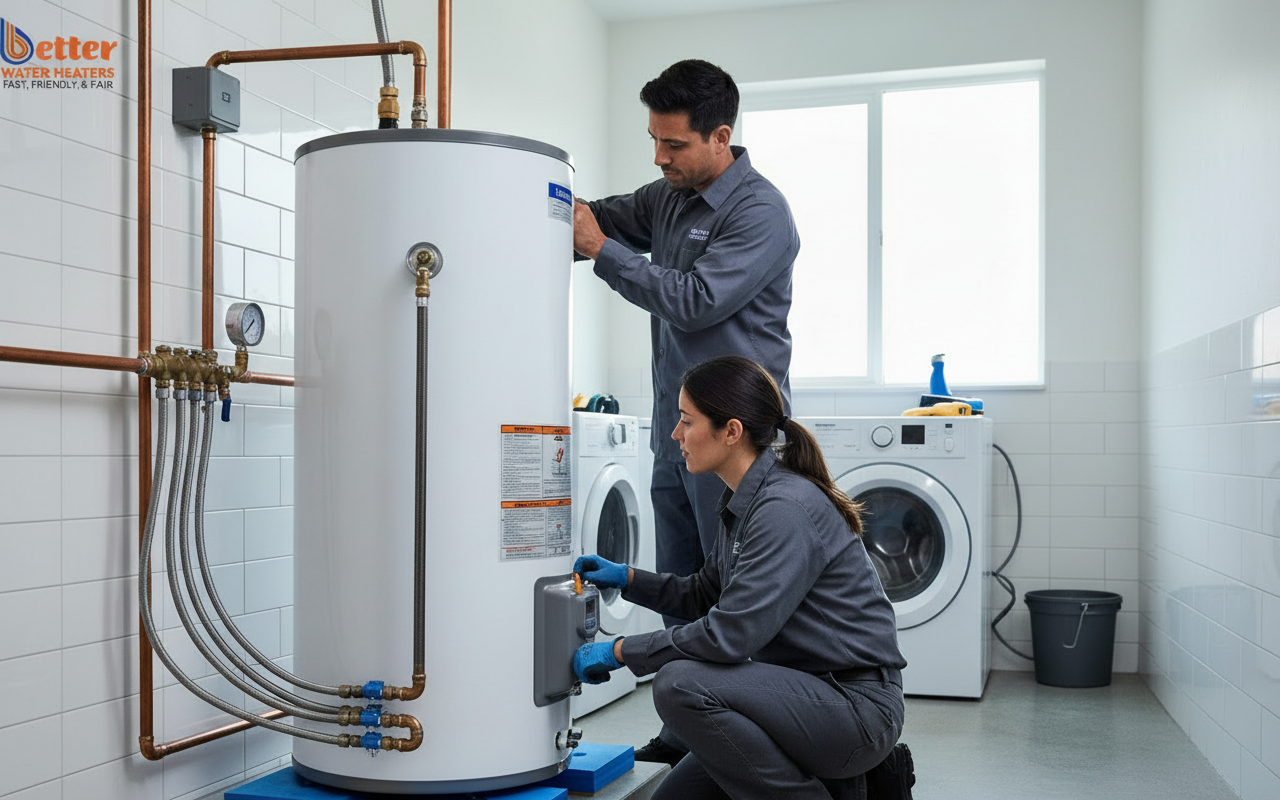
- Vibration Isolation Pads: Use 2-inch thick composite rubber/cork pads to absorb micro-vibrations.
- Flexible Connectors: Replace rigid copper piping with braided stainless steel connectors to prevent the plumbing from acting as a tuning fork.
- Seismic Strapping: In the Bay Area, California seismic code requires strapping; ensure these straps include rubber grommets so they don’t transmit noise to the wall studs.
The real kicker? Even the most expensive heat pump will sound “cheap” if it’s rattling against a 1950s drywall assembly. Decoupling is the foundation of a silent utility space.
Step 2: Path Mitigation via Acoustic Dampening for Appliances
Once the vibration is handled, we have to address airborne sound—the “whooshing” of the fan and the high-frequency whine of the compressor. Acoustic dampening for appliances involves treating the environment, not just the machine.
Modern hybrid units are moving toward R290 and R32 refrigerants. While these are environmentally superior, they operate at different pressures and frequencies than older R134a units. This is where hybrid water heater soundproofing becomes a specialized craft. We recommend lining utility closets with mass-loaded vinyl (MLV) or open-cell acoustic foam. These materials don’t just block sound; they soak it up, preventing it from bouncing off hard surfaces and leaking under the door.
Table 1: Decibel Comparison of Indoor Water Heating Technologies
| Technology | Average Decibel (dB) | Subjective Noise Level |
|---|---|---|
| Standard Gas Tank | 35-45 dB | Quiet Whisper |
| Standard Heat Pump (Unmitigated) | 55-65 dB | Moderate Rainfall/Conversation |
| Mitigated Heat Pump (3-Step Framework) | 42-48 dB | Library Background |
But wait—don’t forget the air! Heat pumps need to breathe. If you’re sealing a closet for sound, you must use sound-damping ductwork liners for the intake and exhaust. This allows for necessary airflow without creating a direct path for noise to escape. If you’re unsure about your space’s airflow requirements, you can schedule a site evaluation with our team.
Step 3: Digital Optimization and Frequency Modulation
The final step in our framework moves away from physical hardware and into the “brain” of the unit. Modern high-efficiency heat pumps, like those from Rheem or AO Smith, offer sophisticated firmware settings that most installers ignore.
The “Silent Utility” audit involves more than just measuring decibels; it’s about frequency modulation. We often recommend a “Smart Scheduling” approach. By using the unit’s built-in WiFi or a smart home integration, we can program the unit to perform its heavy heating cycles during the day when the house is empty or background noise is higher. At night, the unit can be set to “Efficiency Mode” or “Quiet Mode,” which reduces fan speeds and compressor frequency during sleeping hours.
Here’s the thing: Quiet Mode usually comes with a slight performance trade-off. It might take 20% longer to recover a full tank of hot water. However, for a typical Bay Area mid-market client with a 50 or 80-gallon tank, this recovery lag is virtually unnoticeable but the reduction in heat pump noise levels is dramatic.
Need a professional to calibrate your system? Find a specialist in your city to ensure your digital settings match your lifestyle.
The Psychology of Sound: Why Frequency Matters
An honest, contrarian insight we’ve gathered over 20 years: Homeowners don’t actually hate noise; they hate unpredictable noise. A steady, low-frequency “whoosh” is often perceived as white noise, whereas a rhythmic “clunk” or a high-pitched vibration causes immediate dissatisfaction. This is why we focus heavily on frequency modulation and vibration isolation mounts.
In high-density urban areas like San Francisco or downtown San Jose, the ROI of silence is real. A quiet home is a premium home. When you eventually sell your property, a heat pump that hums softly in the background is a feature; one that rattles the master bedroom walls is a liability. By investing in proper indoor water heater installation techniques now, you are protecting your property value for the future.
Overcoming the ‘Echo Chamber’ in 1950s Retrofits
Many homes in the Peninsula and South Bay feature tight utility closets designed for compact gas units. When we perform indoor heat pump installations in these spaces, we face the “Echo Chamber” effect. The small volume of the room amplifies the sound waves.
Our solution involves a combination of the following:
- Stand-off Mounting: Ensuring the unit is at least 3-5 inches from any wall surface.
- Corner Trapping: Placing acoustic bass traps in the corners of the closet to catch low-frequency energy.
- Door Sealing: Installing a high-quality sweep and weatherstripping on the closet door to prevent sound leakage.
What most people miss is that the door is often the weakest link. Replacing a hollow-core closet door with a solid-core version can reduce perceived noise by as much as 10-15 decibels alone. If you’re planning a major renovation, this is the time to look at these structural details.
Ready to upgrade to a future-ready system without the noise? Contact Better Water Heaters today for a transparent, expert consultation on the best system for your Bay Area home.
Frequently Asked Questions
How loud is a heat pump water heater compared to a refrigerator?
A standard heat pump water heater typically operates at 55-65 decibels, which is slightly louder than a modern refrigerator (usually 40-45 dB). However, with the 3-step mitigation framework—including vibration isolation and acoustic dampening—we can often bring the perceived noise level down to be nearly indistinguishable from other household appliances.
Do I really need vibration isolation mounts for a garage installation?
While noise is less of a concern in a garage, we still recommend vibration isolation mounts if the garage is attached to the home. Vibrations can travel through the concrete slab and into the wall framing of adjacent living areas. It is a low-cost preventive measure that ensures long-term comfort and protects the unit’s internal components from harmonic stress.
Will soundproofing my water heater closet cause it to overheat?
Heat pumps require significant airflow to extract heat from the air. If you use acoustic dampening for appliances, you must ensure the closet has adequate louvered doors or dedicated intake/exhaust ducting. We never recommend sealing a closet airtight, as this will cause the unit to fail or revert to less efficient electric-resistance mode.
Can I use a standard water heater blanket for noise reduction?
Standard thermal blankets are designed for heat retention, not sound attenuation. For effective hybrid water heater soundproofing, you need materials with high mass or specialized acoustic properties, like mass-loaded vinyl. Furthermore, you must be careful not to cover the air intake or the fan assembly on the top of the heat pump unit.