
📋 Table of Contents
A family of four in San Jose recently paid $4,200 for a ‘top-tier’ energy-efficient upgrade, only to find the teenage daughter shivering in a cold shower by 8:15 AM. The culprit wasn’t a broken unit; it was a fundamental failure in hybrid water heater sizing that most Bay Area contractors are too lazy—or too greedy—to explain to you.
The ‘Recovery Rate’ Trap: Why Your New Unit Feels Like a Downgrade
Most homeowners don’t realize that a 50-gallon heat pump unit has a significantly slower heat pump recovery rate than the gas guzzler it replaced. While a standard gas heater can recover almost its entire volume in an hour, a hybrid unit in ‘Eco-Mode’ might only manage 20 gallons.
- Gas Recovery: ~40-50 gallons per hour.
- Hybrid Recovery (Heat Pump Mode): ~15-20 gallons per hour.
- The Deficit: If four people shower back-to-back, a 50-gallon hybrid is effectively empty by the third person.
The real kicker? Contractors push the 50-gallon units because they fit in the same footprint as your old tank, making for an ‘easy’ sale that avoids difficult conversations about space or electrical upgrades. But in the damp, cool climate of a Sunset District garage, that heat pump is working double-time to pull energy from the air, further slowing your recovery.
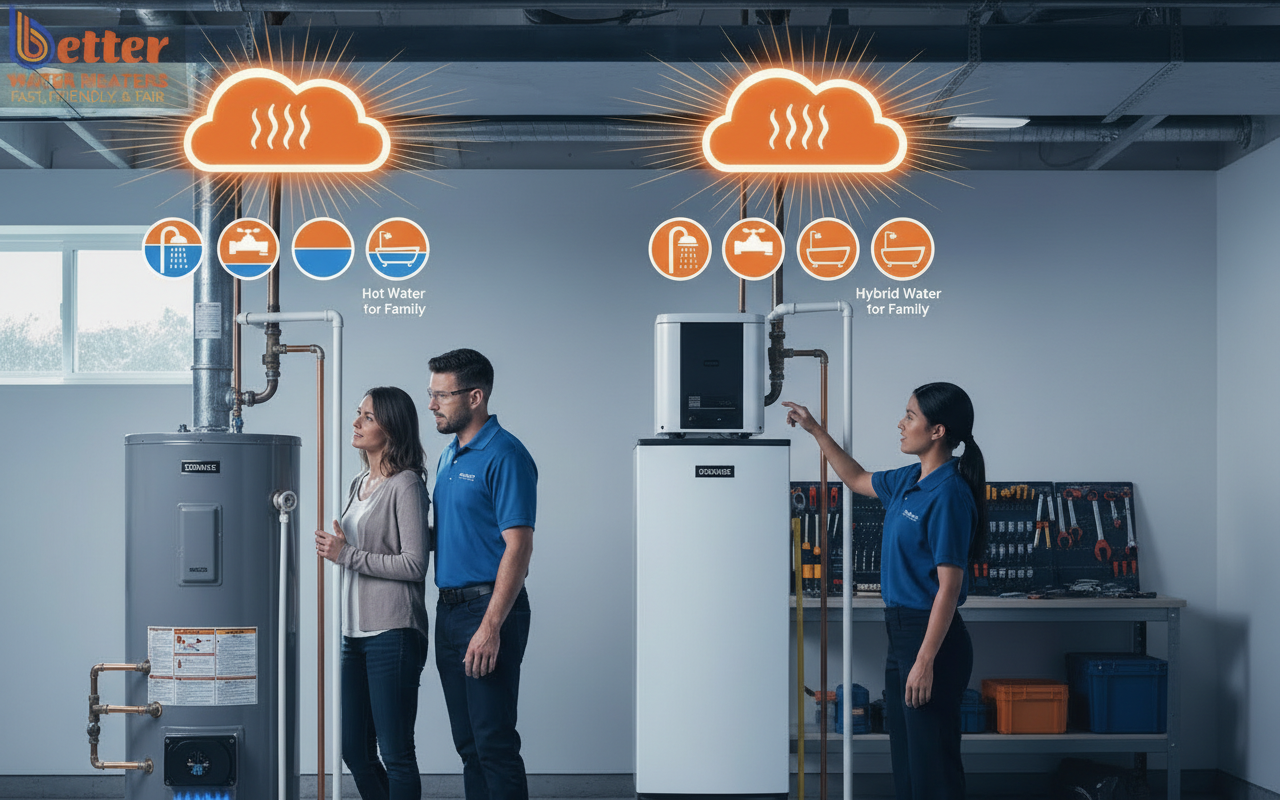
50 Gallon vs 80 Gallon Heat Pump: The Math Contractors Hide
If you have four people in your house, installing a 50-gallon hybrid is a recipe for domestic warfare. To match the ‘First Hour Rating’ of a 50-gallon gas unit, you almost always need to jump to an 80-gallon heat pump model.
What most people miss is the ‘First Hour Rating’ (FHR). This is the total amount of hot water the heater can provide in one hour, starting with a full tank. A typical 50-gallon gas unit has an FHR of about 75-80 gallons. A 50-gallon hybrid? It often struggles to break 65 gallons in pure heat pump mode.
- Storage vs. Speed: Since hybrids heat slower, you must store more volume to compensate.
- The 80-Gallon Advantage: An 80-gallon tank provides a massive buffer, allowing the slow-and-steady heat pump to keep up with morning rushes.
- Mode Switching: If you undersize, the unit forces itself into ‘High Demand’ (electric resistance) mode, which is 3x more expensive to run, essentially deleting your energy savings.
Need a professional opinion on your home’s specific needs? Schedule your free sizing consultation with our experts today.
The ‘Cold Blow’ Effect in Bay Area Garages
Bay Area garages are unique—they are often uninsulated, damp, and influenced by Pacific breezes, which creates a hostile environment for heat pump efficiency. Unlike a gas flame that creates its own heat, a hybrid heater steals heat from the surrounding air.
As of 2024, many San Francisco homeowners are finding that their hybrid units turn their garages into refrigerators. This ‘Cold Blow’ effect drops the ambient temperature so much that the heater’s COP (Coefficient of Performance) plummets. When the air is too cold, the unit switches to expensive backup heating elements just to stay alive.
| Feature | 50-Gallon Hybrid | 80-Gallon Hybrid | 50-Gallon Gas (Old) |
|---|---|---|---|
| Recovery Speed | Very Slow | Moderate (due to volume) | Fast |
| 4-Person Suitability | Poor (Risky) | Excellent | Good |
| Bay Area Rebates | Up to $4,900 | Up to $4,900 | None |
The BAAQMD Regulations and the 2027 Mandate
The Bay Area Air Quality Management District (BAAQMD) has already fired the starting pistol on the end of gas water heaters. By 2027, the sale of NOx-emitting gas heaters will be phased out for most residential applications.
This Bay Area electrification mandate 2027 is driving a gold rush for contractors, many of whom are ‘specialists’ in name only. They use the urgency of these regulations to scare homeowners into quick installs without calculating the actual BTU requirements for the household. One client in Palo Alto was quoted $7,500 for a 50-gallon install, only to find out later they needed a $2,500 electrical panel upgrade that the contractor ‘forgot’ to mention until the gas was already capped.
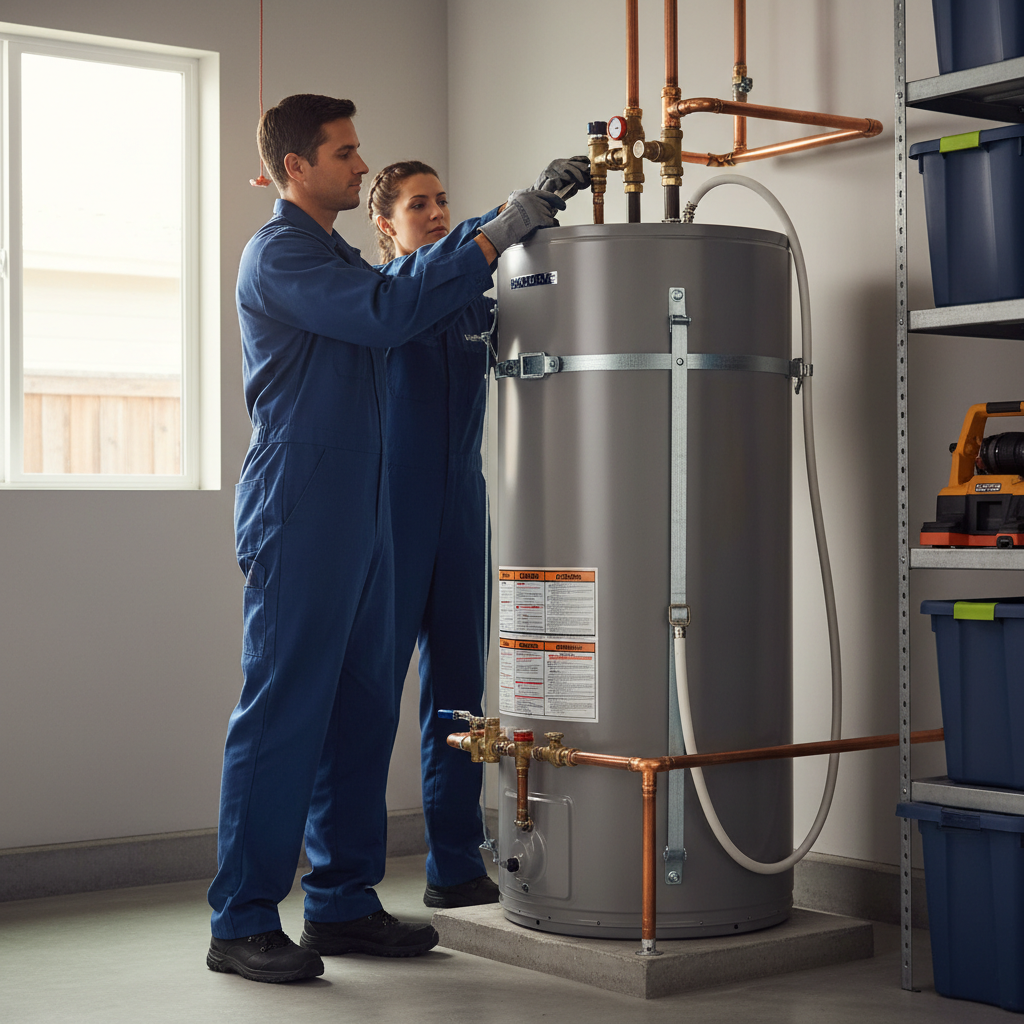
The Hidden Electrical Panel Tax
Here is a contrarian truth: The most expensive part of your ‘energy-saving’ water heater might not be the heater at all. Most older Bay Area homes have 100-amp panels that are already maxed out by EVs and AC units. A hybrid water heater requires a dedicated 30-amp, 240-volt circuit.
But wait—there’s a workaround. If a contractor tells you that you must upgrade your panel for $3,000 before you can get a hybrid, they might be wrong. There are now ‘plug-in’ 120V heat pump models designed specifically for gas replacement, though their heat pump recovery rate is even slower, making hybrid water heater sizing even more critical. You can learn more about these options on the Department of Energy website.
Why We Recommend the 80-Gallon ‘Buffer’ Strategy
At Better Water Heaters, we’ve seen the results of undersized installs: frustrated parents, high utility bills, and units that fail prematurely due to constant ‘High Demand’ cycling. Our strategy for a water heater sizing for 4-person household is simple: bigger is better.
- Future-Proofing: As your kids grow into teenagers, their water usage will only increase.
- Efficiency: An 80-gallon tank allows the unit to stay in ‘Eco-Mode’ longer, utilizing the heat pump rather than the heating elements.
- Reliability: Brands like Rheem and AOSmith perform better when they aren’t forced to ‘panic-heat’ every morning.
Don’t get stuck with a $3,400 mistake. Check out our guide on local rebates to see how you can offset the cost of the larger, more efficient 80-gallon unit.
Conclusion: Don’t Settle for Lukewarm Solutions
The transition to electric is inevitable, but the ‘8 AM Cold Shower’ is optional. If a contractor quotes you a 50-gallon hybrid for a family of four without looking at your electrical panel or explaining recovery times, show them the door. Proper hybrid water heater sizing is the difference between an eco-friendly home and a daily headache. In the Bay Area, where the cost of living is high and the mornings are chilly, you deserve a system that actually works when you need it most.
Frequently Asked Questions
Is a 50-gallon hybrid enough for a family of 4?
Technically yes, but practically no. While it meets the minimum, the slow recovery rate of heat pumps means that back-to-back showers will likely exhaust the tank. For a 4-person Bay Area household, an 80-gallon unit is the professional recommendation to ensure consistent hot water without relying on expensive electric resistance mode.
How much can I save with Bay Area water heater rebates?
Homeowners can often access up to $4,900 in combined incentives through programs like TECH Clean California and local utility rebates from PG&E or Peninsula Clean Energy. However, these rebates are often used by low-bid contractors to hide inflated installation fees for undersized equipment.
What is the difference in 50 gallon vs 80 gallon heat pump costs?
The equipment cost difference is usually only $400-$600. However, the long-term savings of an 80-gallon unit are higher because it stays in ‘Eco-Mode’ more consistently. Given the high labor costs in San Jose and San Francisco, it is much cheaper to install the right size once than to replace an undersized unit later.
Do heat pump water heaters work in cold Bay Area garages?
They do, but their efficiency drops. In uninsulated garages, the unit may struggle to pull enough heat from the air during winter months. This is why proper sizing and placement are critical. Some installations may require ducting to pull warmer air from elsewhere or to exhaust the ‘cold blow’ outside.