Water heater article archive
Hybrid Water Heater ROI: Boost Bay Area Home Value | Better Water Heaters
Historical article, not newly reviewed advice. Verify current requirements, incentives and model guidance with the relevant authority or manufacturer before relying on them. Equipment and service needs require an assessment.
📋 Table of Contents
Maximizing your hybrid water heater ROI is no longer just about lowering monthly PG&E bills; it is a strategic move for Bay Area homeowners looking to dominate a competitive real estate market. As California pushes toward aggressive electrification, installing a heat pump water heater has evolved from an eco-friendly luxury into a high-yield investment that protects your home's equity.
Key Takeaways for Sophisticated Sellers
- Immediate Equity: Energy-efficient upgrades can increase home resale value by up to 3-5% in tech-forward markets like San Jose and Palo Alto.
- Regulatory Compliance: Avoid 2027 BAAQMD gas heater ban complications by upgrading now.
- Rebate Triple-Stack: Combine federal tax credits, TECH Clean California, and local utility incentives for up to $4,900 in savings.
- Inspection Protection: Eliminate buyer concessions by removing aging, high-emission appliances before the listing hits the MLS.
Why Hybrid Water Heater ROI is Surpassing Traditional Upgrades
In the high-stakes Bay Area real estate market, buyers are increasingly scrutinizing "hidden" costs like energy efficiency and future regulatory compliance. A hybrid water heater, also known as a heat pump water heater (HPWH), offers a unique value proposition because it addresses both immediate cash flow and long-term liability.
According to research from the U.S. Department of Energy, these units are up to three times more efficient than standard electric heaters. For a Series B executive or a tech-savvy homebuyer in Sunnyvale, this efficiency translates to a lower total cost of ownership, making your property significantly more attractive than a neighboring home with an aging gas tank.
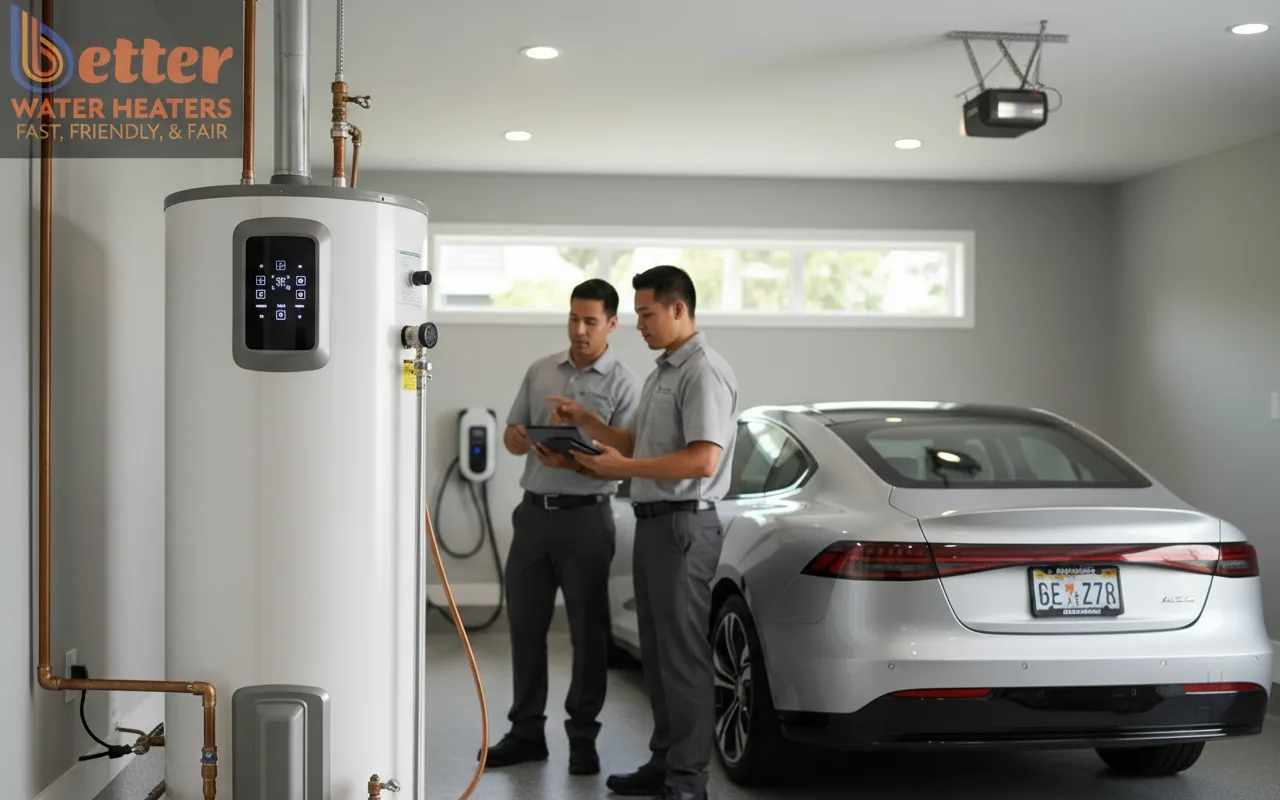
Furthermore, the financial math has shifted dramatically in favor of the homeowner. By leveraging local Bay Area rebates, the net cost of installation often drops below the price of a mid-range traditional unit, resulting in an immediate 100%+ return upon the sale of the home.
The 2027 Regulatory Cliff: Future-Proofing Your Resale
Strategic sellers understand that the Bay Area Air Quality Management District (BAAQMD) has already set the clock ticking. Starting in 2027, the sale of traditional NOx-emitting natural gas water heaters will be phased out across much of the region.
- Concession Prevention: Savvy buyers will use an existing gas heater as a point of negotiation, demanding credits for the inevitable electric conversion.
- Market Speed: Homes with "future-proofed" systems typically see fewer days on market because they pass modern green-building inspections with flying colors.
- Appraisal Boost: High-efficiency systems contribute to a higher "Green Energy Score," a metric increasingly used by appraisers to justify premium valuations.
By installing a hybrid system today, you aren't just buying an appliance; you are buying an insurance policy against future inspection hurdles. If you're wondering how these regulations impact your specific neighborhood, contact our specialists for a local code consultation.
Stacking Incentives: Turning a $5,000 Upgrade into a Profit Center
The true hybrid water heater ROI is found in the "incentive stack." For Bay Area residents, the combination of federal, state, and local programs can cover the majority of the installation costs. This makes the upgrade one of the most cost-effective Bay Area home value upgrades available in 2024 and 2025.
| Incentive Source | Program Name | Estimated Value |
|---|---|---|
| Federal Government | 25C Tax Credit (Inflation Reduction Act) | Up to $2,000 |
| State of California | TECH Clean California | $1,000 - $3,100 |
| Local Utility | Silicon Valley Clean Energy / Peninsula Clean Energy | Up to $1,000 |
| Total Potential Savings | Combined Stack | $4,000 - $6,100+ |
When you account for these incentives, the out-of-pocket expense for a premium Rheem or Bradford White hybrid unit often rivals that of a basic tank. This allows you to market an energy efficient home resale without the heavy capital expenditure typically associated with solar panels or whole-home HVAC retrofits.
Need help navigating the paperwork? We specialize in rebate maximization and handle the complex permit processes required by Bay Area municipalities like Redwood City and Fremont.
Hybrid vs. Tankless: Which Wins the ROI Race?
While tankless units were the gold standard for a decade, the hybrid water heater ROI is currently winning in San Francisco and San Jose. This shift is driven by the lower infrastructure cost and superior energy ratings of heat pump technology.
- Electrical vs. Gas: Tankless gas units require expensive venting and gas line upgrades. Hybrids often utilize existing footprints, though they may require a 240V circuit.
- Efficiency Ratings: Hybrid units boast a Uniform Energy Factor (UEF) of 3.5+, compared to approximately 0.95 for high-end tankless gas models.
- Buyer Perception: Modern buyers prioritize "all-electric" homes as they look to decouple from fluctuating natural gas prices.
For most $1M+ Bay Area properties, the hybrid system provides a cleaner, more marketable story for the "Features and Upgrades" sheet provided during open houses. It signals to the buyer that the previous owner was sophisticated and proactive about maintenance.
Mid-Article Strategy Break: Is Your Home Ready?
Don't wait until you're in escrow to discover your water heater is a liability. A proactive upgrade ensures you capture the full 25C tax credit and state incentives before they are re-allocated. Schedule your free Bay Area home efficiency assessment today.
Solving Installation Hurdles: Space, Noise, and Airflow
A common concern for high-growth professionals is whether a hybrid unit fits their specific home layout. Because heat pump water heaters pull heat from the surrounding air, they require specific conditions to operate at peak hybrid water heater ROI.
- Garage Placement: Ideal for most Bay Area homes, providing ample air volume and keeping the unit away from living spaces.
- Closet Installations: Can be achieved using louvered doors or ducting kits to ensure proper airflow and cooling.
- Noise Mitigation: Modern units from top brands are significantly quieter than older models, often comparable to a running dishwasher.
Our team at Better Water Heaters has 20+ years of experience navigating the tight mechanical rooms and unique architectural challenges found in Berkeley and Oakland. We ensure your high-efficiency water heater for home resale is installed to code, including mandatory seismic strapping for California earthquake safety.
The Psychology of the Tech-Savvy Buyer
In the Silicon Valley corridor, buyers are not just looking for a house; they are looking for a high-performance asset. An energy efficient home resale strategy taps into the values of the modern workforce—sustainability, smart technology, and data-driven savings.
According to National Association of Realtors (NAR) data, over 50% of buyers find energy efficiency "very or somewhat important." In the Bay Area, that number is significantly higher. Highlighting a hybrid water heater in your marketing materials demonstrates a commitment to quality that resonates with VPs, engineers, and founders alike.
Conclusion: Secure Your Equity Before the Listing
The window to maximize your hybrid water heater ROI is currently wide open. With the 2027 regulations approaching and current rebate programs like TECH Clean California at peak funding, there has never been a more profitable time to upgrade. You'll enjoy lower bills while you live there, and a faster, more lucrative closing when you're ready to move.
Ready to boost your home’s value and stay ahead of California's energy mandates? Call Better Water Heaters today at (408) 686-4969 or book your installation online to secure your rebates before they expire.
Frequently Asked Questions
How much does a hybrid water heater actually increase home value?
While specific dollar amounts vary, homes with high-efficiency electrification upgrades typically see a 3-5% increase in resale value in the Bay Area. More importantly, it prevents "repair credits" or price reductions during the inspection phase, which can often cost a seller $5,000 to $10,000 in a cooling market.
Will a hybrid water heater work in a small Bay Area garage?
Yes, most Bay Area garages provide more than the 1,000 cubic feet of air space required for efficient operation. For smaller utility closets, we utilize specialized ducting or louvered doors to ensure the heat pump has enough air to operate efficiently without overheating the space.
How do I claim the $2,000 federal tax credit for my hybrid heater?
The 25C tax credit is claimed via IRS Form 5695 when you file your annual tax return. As of 2024, you can claim 30% of the project cost, up to a maximum of $2,000 per year. We provide the necessary manufacturer certification statements and invoices to make this process seamless for your CPA.
Is a hybrid water heater better than tankless for ROI?
For modern Bay Area sellers, the hybrid often provides a better ROI because it qualifies for significantly higher rebates (up to $3,100+ more than tankless) and aligns with the region's push toward total electrification. It is also generally simpler to install in homes that do not already have high-capacity gas lines.