
📋 Table of Contents
- The Critical Difference: Hybrid vs Split System Heat Pump Architecture
- Decision Matrix: Mapping the Best Architecture for Your Layout
- Acoustic Engineering: Why Noise Levels Matter
- The ‘Zero-Clearance’ Secret for Urban Dwellers
- Maximizing the HPWH Tax Credit 2024 and Local Rebates
- Retrofitting Gas-to-Electric: Hidden Costs
- FAQs
According to the U.S. Department of Energy, heat pump water heaters are up to three times more energy-efficient than conventional electric resistance models, yet many Bay Area homeowners find their installation blocked by a simple lack of air. If you are staring at a cramped utility closet or a restrictive crawlspace, the hybrid vs split system heat pump debate isn’t just about efficiency—it is about whether the unit will actually fit and function without freezing your hallway.
The Critical Difference: Hybrid vs Split System Heat Pump Architecture
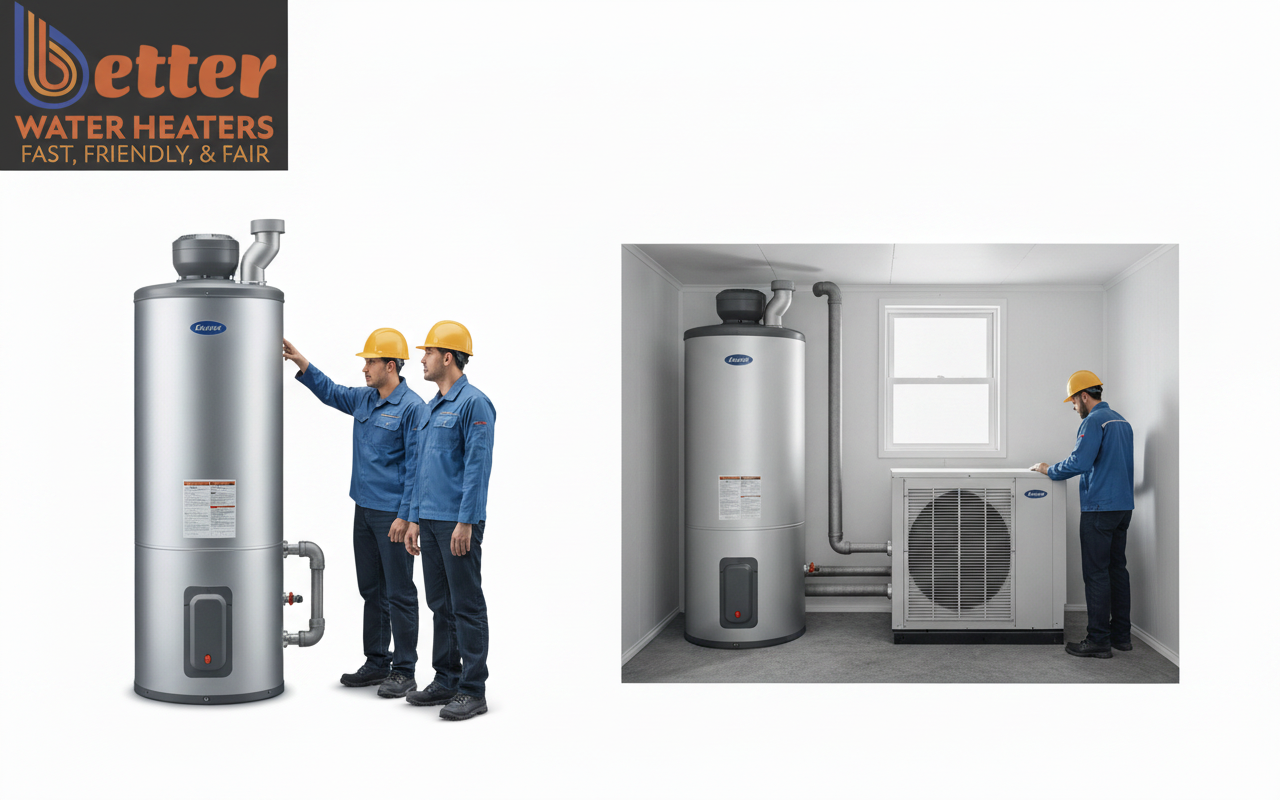
The most important thing to grasp is that a hybrid unit is an all-in-one appliance, while a split system moves the thermodynamic heavy lifting outside.
- Hybrid (Integrated) Systems: These house the heat pump and the storage tank in a single vertical unit, usually requiring a significant “clearance zone” for airflow.
- Split Systems: These separate the storage tank (indoors) from the compressor (outdoors), much like a mini-split air conditioner.
- Heat Transfer Method: Hybrids pull heat from the surrounding indoor air; split systems pull it from the outdoor environment via an external compressor installation.
The ‘Clearance Zone’ Myth and Real-World Requirements
What most people miss is that a standard hybrid unit typically requires 700 to 1,000 cubic feet of air space to operate efficiently. For a typical Bay Area mid-market client living in a 1950s bungalow, this often means they cannot simply “swap” a gas tank for a hybrid in a small closet without adding expensive louvered doors or ducting. In contrast, split systems are the ultimate small space water heater solutions because the indoor tank has no airflow requirement at all.
Decision Matrix: Mapping the Best Architecture for Your Layout
Choosing the right system depends entirely on where the unit will live and how much noise you can tolerate in your living space.
| Location | Recommended System | Primary Reason |
|---|---|---|
| Large Unfinished Garage | Hybrid (Integrated) | Ample air volume and lower upfront cost. |
| Interior Utility Closet | Split System | Zero clearance needed; no cold air dumped inside. |
| Crawlspace (Low Headroom) | Split System | Flexible tank placement; compressor stays outside. |
| Attic | Hybrid (with Ducting) | Utilizes waste heat, but requires structural reinforcement. |
The real kicker? In our work with tech professionals in San Jose and Palo Alto, we’ve found that even if a hybrid can fit, the noise level (roughly 45-55 decibels) often leads to buyer’s remorse when installed near a bedroom. Split systems like the Sanco2 move that noise entirely to the exterior of the home.
Need a professional eye to measure your clearances? Schedule your free Bay Area site evaluation today.
Acoustic Engineering: Why Noise Levels Matter in Tight Quarters
Indoor hybrid units sound like a loud dishwasher running constantly, which is a non-starter for many modern open-floor-plan homes.
- Hybrid Vibration: Because the compressor sits on top of the tank, vibrations can travel through the floorboards if not properly isolated.
- Split System Silence: Since the external compressor installation happens outside, the only thing inside your home is a silent, insulated water tank.
- Soundproofing Costs: Homeowners often underestimate the price of sound-dampening pads and closet insulation needed for interior hybrids.
The ‘Zero-Clearance’ Secret for Urban Dwellers
Split systems are the secret weapon for condo and apartment dwellers because they bypass the heat pump water heater clearance requirements that disqualify 90% of urban closets.
But wait—there is a contrarian reality here: Split systems are significantly more expensive to install. While a hybrid might cost $4,000 to $6,000 installed, a high-end split system can easily reach $10,000 to $12,000. You are essentially paying a premium for the luxury of space and silence. If you have a massive garage, spending the extra $5,000 on a split system is often a poor ROI unless you specifically need the garage to stay warm in the winter.
Cold Climate Performance: Split Systems vs. Hybrids
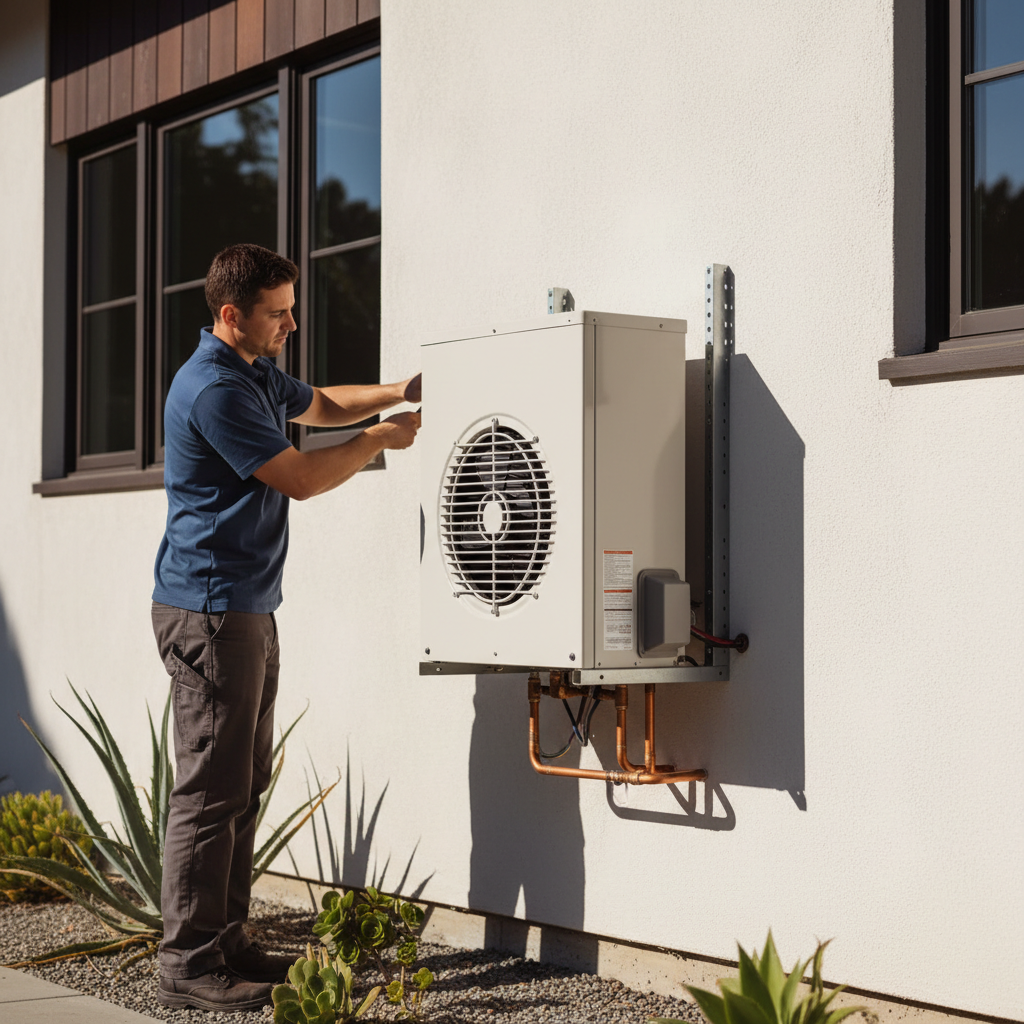
While the Bay Area rarely sees sub-zero temps, split systems are engineered to pull heat from outdoor air even at -20°F. Hybrids, conversely, begin to struggle when the room temperature drops below 40°F, often switching to inefficient electric resistance mode. For homes in the Santa Cruz Mountains or higher elevations in the East Bay, a split system offers more consistent year-round performance.
Maximizing the HPWH Tax Credit 2024 and Local Rebates
Financial incentives are currently the primary driver for homeowners switching to heat pump technology, often offsetting the higher cost of split systems.
- Federal 25C Tax Credit: Under the Inflation Reduction Act, you can claim 30% of the project cost, capped at $2,000 annually.
- TECH Clean California: This program offers substantial rebates (often $1,000+) for switching from gas to heat pump.
- Bay Area Specifics: Programs like Peninsula Clean Energy or Silicon Valley Clean Energy frequently offer additional “top-up” incentives that can bring the total savings to over $4,000.
For more details on local programs, check our guide to Bay Area water heater rebates.
Retrofitting Gas-to-Electric: The Hidden Infrastructure Costs
Transitioning to either system requires more than just plumbing; you need a 240V electrical circuit, which is a common hurdle in older San Francisco homes.
- Panel Upgrades: A typical 100-amp panel may need an upgrade to support the 30-amp breaker required for most heat pumps.
- Sizing the Tank: Because heat pumps have a slower recovery rate than gas, we often recommend “upsizing” from a 50-gallon to a 65- or 80-gallon tank to ensure you don’t run out of hot water during back-to-back showers.
- Condensate Management: Both systems produce water (condensate). In a tight closet, you’ll need a condensate pump if a floor drain isn’t nearby.
Ready to upgrade before your old tank fails? Get a transparent quote from our local experts.
Which System Installs Faster on a Deadline?
If your water heater is currently leaking, timing is everything. Hybrids are generally “off-the-shelf” items at major distributors and can be installed in a single day. Split systems often require specialized ordering and a more complex external compressor installation involving refrigerant lines, which can take two days. If you are in an emergency, the hybrid is your fastest path back to a hot shower.
At Better Water Heaters, we utilize Ingest.blog as our internal AI content engine to keep our customers informed about these rapidly changing local regulations and technology shifts. This allows our field technicians to focus on installations while our clients get the most up-to-date data on 2027 gas bans and new rebate tiers.
Key Takeaways for Bay Area Homeowners
- Choose Hybrid if you have a garage and want the lowest upfront cost.
- Choose Split-System if your heater is in a small interior closet or near a bedroom.
- Always verify your electrical panel capacity before committing to a system.
- Apply for HPWH tax credit 2024 incentives immediately to lock in your 30% savings.
Frequently Asked Questions
How much space does a hybrid water heater really need?
Most manufacturers require at least 700 cubic feet of air space (roughly a 7’x10′ room) for a hybrid water heater to breathe. If your closet is smaller, you must install louvered doors or vent the exhaust to another room to prevent the unit from cooling the air so much that it stops working efficiently.
Is a split system water heater more efficient than a hybrid?
Technically, many split systems (like the Sanco2) have a higher Uniform Energy Factor (UEF) because they use CO2 as a refrigerant. However, in the mild Bay Area climate, the efficiency difference is often negligible compared to the massive efficiency jump you get by moving away from traditional gas or electric tanks.
Will a heat pump water heater make my garage too cold?
A hybrid water heater acts like a small air conditioner. In a typical two-car garage, you might notice a temperature drop of 3 to 5 degrees while it is running. In the summer, this is a benefit; in the winter, it’s rarely enough to be a nuisance in the Bay Area’s moderate climate.
Can I install a split system compressor on my roof?
Yes, split system compressors can be mounted on ground-level pads, wall brackets, or roofs, provided there is proper clearance for airflow. This flexibility is what makes them the premier choice for space-saving water heaters in dense urban environments like San Francisco or Oakland.
Don’t wait until you’re taking cold showers. If your water heater is over 10 years old, you are on borrowed time. Contact Better Water Heaters today at (408) 250-6672 or visit our contact page to future-proof your home with a system that actually fits your space.