
📋 Table of Contents
Deciding between a hybrid vs electric water heater is no longer just a matter of price; in the Bay Area, it’s a matter of geography. According to the U.S. Department of Energy, heat pump models can be two to three times more energy-efficient than conventional electric resistance units, but those savings fluctuate wildly when you move from the sun-drenched hills of Walnut Creek to the persistent ‘Fogust’ of the Sunset District.
Key Takeaways for Bay Area Homeowners
- Efficiency Winner: Hybrid units offer superior ROI in warmer inland climates like San Jose and Livermore.
- Recovery Reality: Traditional electric units have faster recovery times, though modern hybrids like the Rheem Performance Platinum are narrowing the gap.
- The Fog Factor: High humidity in coastal microclimates can actually assist heat pump evaporation, but lower ambient temperatures may trigger electric backup mode.
- Financial Boost: Combining BayREN rebates with federal tax credits can offset up to $4,900 of the installation cost.
1. The Microclimate Paradox: How Bay Area Weather Dictates Efficiency
The real kicker is that a water heater’s performance isn’t static; it breathes the air of your specific neighborhood. In a region where a 20-minute drive can mean a 30-degree temperature swing, the Bay Area microclimate performance of your appliance becomes the primary driver of your utility bill.
For a typical Bay Area mid-market client living in the East Bay, a hybrid water heater operates in its highest efficiency zone (Heat Pump mode) for most of the year. However, residents in Pacifica or Daly City face a different reality. When the ambient air temperature drops below 40°F—or if the unit is installed in a drafty, uninsulated garage—the system may struggle to pull enough heat from the air, forcing it to switch to less efficient electric resistance coils.
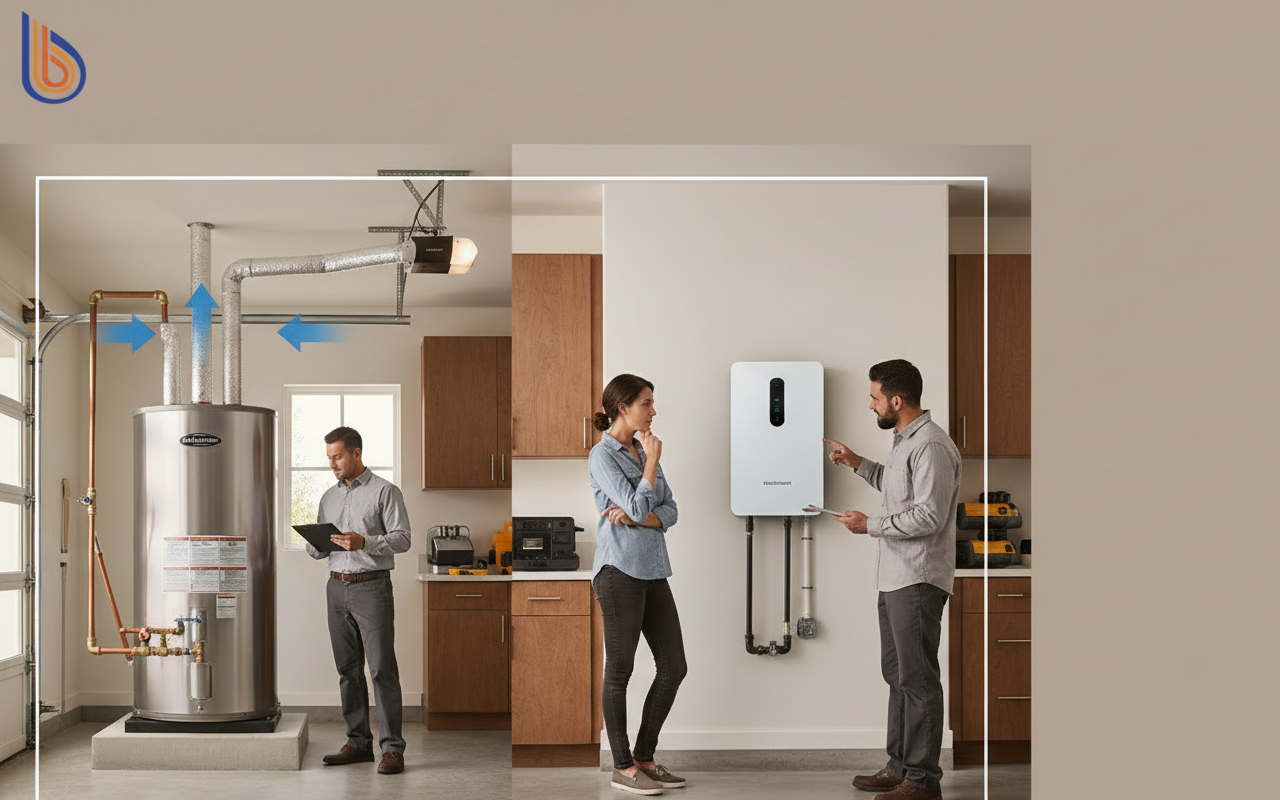
What most people miss is the “Dehumidification Bonus.” In coastal areas prone to mildew, a hybrid unit naturally pulls moisture out of the air as a byproduct of the heating process. This makes them excellent choices for damp basements or utility rooms, effectively acting as a free dehumidifier while providing hot water.
2. Recovery Time and Performance: Hybrid vs Electric Water Heater
If you have a large family that takes back-to-back showers, the heat pump recovery time is likely your biggest concern. Traditional electric heaters use high-wattage elements to flash-heat water, whereas hybrids take a “slow and steady” approach to maximize efficiency.
Here is how the two technologies stack up in a side-by-side performance comparison:
| Feature | Traditional Electric | Hybrid (Heat Pump) |
|---|---|---|
| Energy Factor (UEF) | 0.90 – 0.95 | 3.0 – 4.0 |
| Recovery Rate (GPH) | 20 – 25 Gallons | 15 – 20 Gallons (Heat Pump Mode) |
| Noise Level | Silent | 45 – 55 dB (Compressor Fan) |
| Lifespan | 10 – 15 Years | 13 – 15 Years |
But wait—modern units like the AOSmith Voltex or Rheem Performance Platinum include a “High Demand” mode. This setting uses both the heat pump and the electric elements simultaneously. While this temporarily lowers efficiency, it ensures you don’t run out of hot water during a busy Monday morning routine.
3. The Cold Air Exhaust Effect: Installation Constraints
One honest, contrarian insight we often share with our clients: a hybrid water heater is essentially an air conditioner that happens to heat water. For every unit of heat it puts into your tank, it exhausts a corresponding amount of cold air into the surrounding room.
In a large San Jose garage, this is negligible. However, in a small indoor utility closet in a San Francisco Victorian, that cold air exhaust can drop the room temperature by 5 to 10 degrees. To solve this “Cold Garage” problem, we often recommend ducting the exhaust air outside or into an attic space. This maintains Title 24 compliance in California while keeping your home comfortable.
Need an expert eye to look at your space? Schedule a free site assessment today to see if your layout supports a hybrid installation.
4. Noise Levels and Indoor Living: The Hidden Cost of Silence
Traditional electric heaters are effectively silent because they have no moving parts. In contrast, a Heat Pump Water Heater (HPWH) uses a compressor and a fan, similar to a small refrigerator or a window AC unit. For homeowners with laundry rooms located next to bedrooms, this noise can be a deal-breaker.
- Traditional Electric: 0 dB – Ideal for closets inside the main living area.
- Hybrid Heaters: 45-55 dB – Best suited for garages, basements, or sound-insulated utility rooms.
- Vibration: Hybrid units require proper dampening pads to prevent compressor hum from traveling through floor joists.
In our work with busy entrepreneurs and remote professionals, we find that the sound of a compressor is often the deciding factor for indoor installations. If silence is your priority, a high-efficiency traditional electric unit or a specialized sound-dampened hybrid is the way to go.
5. The Rebate Roadmap: Maximizing Your Bay Area Investment
The financial feasibility of a hybrid vs electric water heater has shifted dramatically due to aggressive local incentives. In the Bay Area, we are currently seeing a “perfect storm” of savings that can make a $5,000 installation cost less than a $2,000 traditional replacement.
To navigate this, you need to look at three specific tiers of funding:
- BayREN Rebates 2024: Offers significant instant rebates for switching from gas to heat pump technology.
- TECH Clean California: A statewide initiative providing incentives directly to contractors to lower your out-of-pocket costs.
- Federal Tax Credits (25C): The Inflation Reduction Act allows you to claim 30% of the project cost, up to $2,000, on your annual tax return.
For a typical Bay Area property manager, these incentives don’t just lower the entry price; they future-proof the building against upcoming decarbonization Bay Area mandates that will eventually phase out gas appliances entirely.
6. Grid Resilience and Smart Features
As California moves toward a greener grid, “smart” water heaters are becoming essential for Title 24 compliance. Modern hybrid units come equipped with Wi-Fi connectivity that allows them to participate in demand-response programs. During a Flex Alert, your water heater can automatically shift its heating cycle to off-peak hours, saving you money and helping prevent local blackouts.
Furthermore, these apps provide leak detection alerts—a feature that has saved our clients thousands in potential water damage. The ability to monitor your ambient air operating range and energy consumption from a smartphone is a massive advantage for tech-savvy homeowners and landlords alike.
7. Final Verdict: Which One Should You Choose?
The choice between a hybrid vs electric water heater comes down to your specific microclimate and installation constraints. If you live in the warmer inland corridors and have garage space, the hybrid is a clear winner for ROI and environmental impact. If you live in a foggy coastal zone with a small indoor utility closet, the simplicity and silence of a traditional electric unit might be more practical.
The real takeaway? Don’t wait for your current heater to burst. Emergency replacements rarely allow time for permit processing and rebate applications. By planning your upgrade now, you can secure the highest rebates and ensure your home is ready for the 2027 regulatory shifts.
Ready to upgrade your home’s efficiency? Contact Better Water Heaters today for a transparent, fixed-price quote tailored to your local Bay Area microclimate.
Frequently Asked Questions
Is a hybrid water heater worth it in San Francisco’s cold fog?
Yes, but with caveats. While the ambient air operating range of most hybrids handles SF temperatures well, the unit will work harder. The high humidity actually helps the heat exchange process, but you must ensure the installation space has enough cubic footage to prevent the area from becoming too cold.
How much can I actually save with Bay Area water heater rebates?
As of 2024, combined incentives from TECH Clean California, BayREN, and federal tax credits can exceed $4,000. For many Bay Area homeowners, this covers nearly the entire price difference between a traditional and a hybrid model.
Does a hybrid water heater take longer to recover than electric?
Generally, yes. The heat pump recovery time is slower than electric resistance. However, most modern hybrids have a ‘Hybrid Mode’ that uses both technologies when the tank temperature drops rapidly, ensuring you don’t run out of hot water during peak usage.
Are hybrid water heaters noisy?
Hybrid water heaters produce about 45-55 decibels of sound, similar to a dishwasher or a modern refrigerator. This is a significant change from silent traditional electric heaters. We recommend installing them in garages or using sound-dampening materials if they are near living spaces.