
📋 Table of Contents
- The Physics of the Hybrid Heat Pump Water Heater Cooling Effect
- Strategic Garage Cooling: Turning a Byproduct into a Benefit
- Heat Pump Ducting Options: When to Vent Outside
- The Room Compatibility Scorecard
- The Contrarian View: Why Standard Electric Might Still Win
- Maximizing ROI with Bay Area Rebates
- FAQs
According to the U.S. Department of Energy, a hybrid heat pump water heater can be up to three times more energy-efficient than a conventional electric model, yet most Bay Area homeowners are surprised by the literal ‘chill’ it introduces to their utility room. If you are standing in a San Jose garage on a July afternoon, that 15-degree drop in ambient temperature feels like a luxury, but in a small indoor laundry room during a damp January, it can feel like a strategic error.
Key Takeaways for Bay Area Homeowners:
- Dual-Benefit: Hybrid systems provide “free” dehumidification and cooling as a byproduct of heating water.
- Space Matters: You typically need 1,000 cubic feet of air space unless you utilize specific heat pump ducting options.
- Rebate Power: Bay Area residents can access up to $4,900 in combined incentives for these upgrades.
The Physics of the Hybrid Heat Pump Water Heater Cooling Effect
The core insight here is that a heat pump doesn’t create heat; it moves it from the surrounding air into your water tank. Think of it as a refrigerator running in reverse; while the water gets hot, the exhaust air is significantly cooled and dried.
For a typical Bay Area mid-market client, this means their water heater acts as a 5,000 BTU air conditioner that runs whenever the household is showering or doing laundry. The ambient air cooling effect is a result of the evaporator coil absorbing thermal energy from the room. This process also pulls moisture out of the air, which is why these units require a dedicated condensate drain or pump.
- Temperature Drop: Expect exhaust air to be 10°F to 15°F cooler than the room temperature.
- Dehumidification: Excellent for preventing mold in damp crawlspaces or garages.
- Efficiency: Measured by the Uniform Energy Factor (UEF), which often exceeds 3.5 for top-tier hybrid models.
Strategic Garage Cooling: Turning a Byproduct into a Benefit
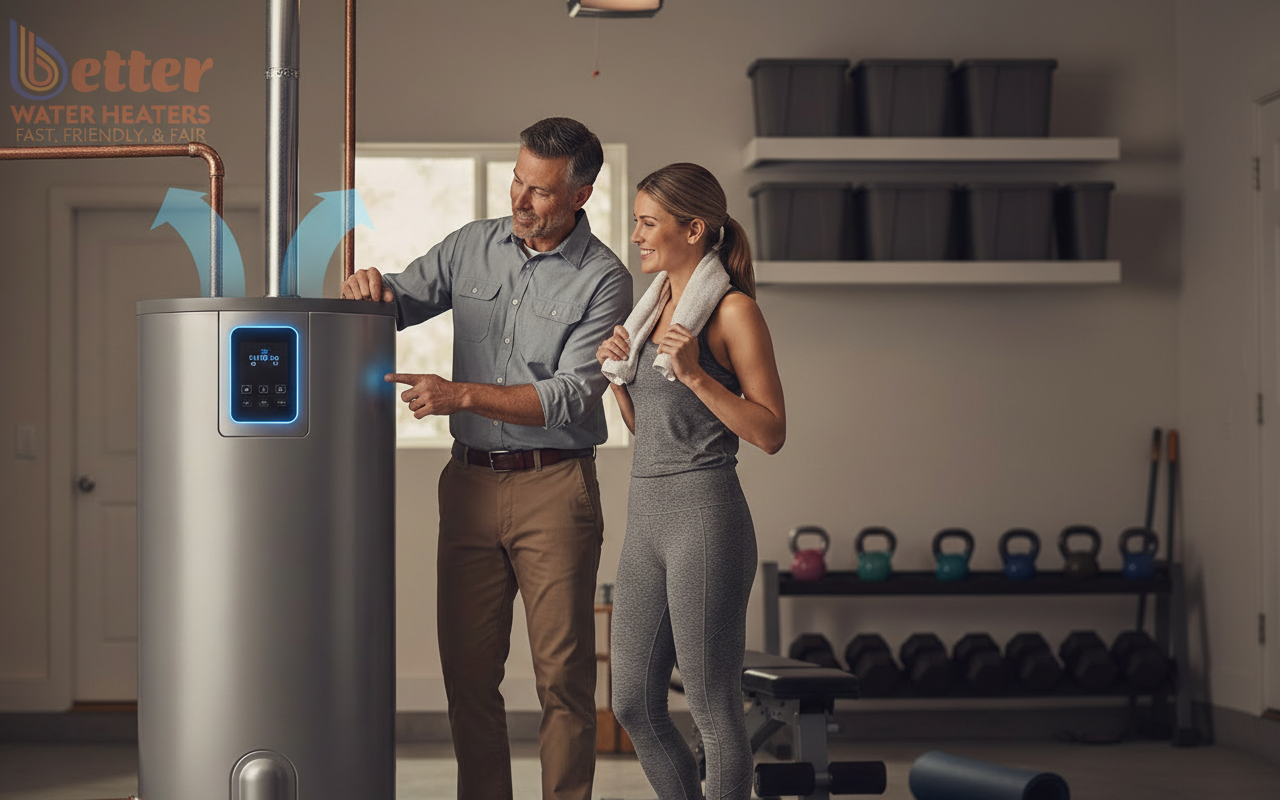
The smartest way to view a garage cooling water heater setup is as a seasonal climate control tool rather than just a plumbing fixture. In our work with tech professionals in Sunnyvale and Palo Alto, we often see garages converted into home gyms or workshops where summer heat makes the space unusable.
By installing a hybrid unit in these spaces, you effectively get a “free” cooling boost during the hottest parts of the day. Because the Bay Area enjoys moderate evening temperatures, the heat pump can recover efficiently overnight when Time-of-Use (TOU) electricity rates are at their lowest. However, the real kicker is ensuring you have enough clearance; without 1,000 cubic feet of air, the unit will starve for heat and switch to expensive electric resistance mode.
Need a professional assessment of your garage space? Schedule your free Bay Area site visit today.
Heat Pump Ducting Options: When to Vent Outside
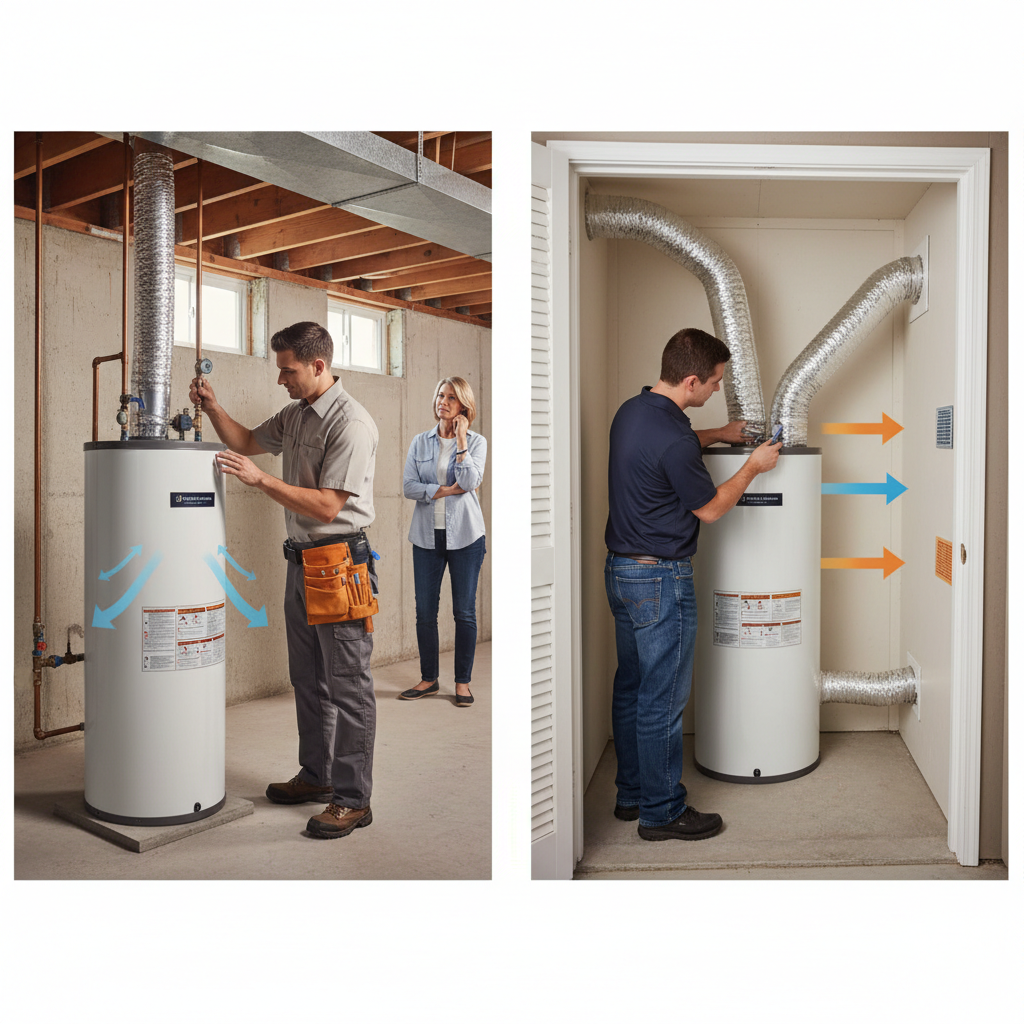
What most people miss is that you don’t have to live with the cold air if the unit is installed inside your home’s thermal envelope. If your water heater is in a closet near a bedroom, the noise (roughly 45-55 dBA) and the cold draft can be disruptive.
Modern heat pump ducting options allow us to route the intake and exhaust air independently. You can pull warm air from the attic and dump the cold exhaust outside, or vice versa. This is particularly critical for “Series B startup founder” types who are retrofitting older homes in San Francisco where every square foot of living space is precious. Ducting kits essentially turn the hybrid unit into a sealed combustion-style system, protecting your indoor comfort.
| Installation Scenario | Recommended Venting | Cooling Impact |
|---|---|---|
| Unfinished Garage | Unducted | High (Positive in Summer) |
| Indoor Utility Closet | Fully Ducted to Exterior | Neutral |
| Crawlspace / Basement | Unducted (Exhaust only) | Excellent Dehumidification |
The Room Compatibility Scorecard
Before you commit to a hybrid heat pump water heater, you need to evaluate the “Micro-Climate” impact of your specific installation site. Not all rooms are created equal when it comes to heat exchange.
- Volume Check: Does the room have at least 10′ x 10′ x 10′ of air? If not, you need louvered doors or ducting.
- Drainage Access: Is there a floor drain nearby for the 2-5 gallons of condensate produced daily?
- Noise Sensitivity: Is the wall shared with a nursery or home office? If so, vibration isolation pads are mandatory.
- Temperature Range: Will the room stay above 40°F year-round? Bay Area climates are usually perfect, but uninsulated outbuildings can struggle in rare cold snaps.
The Contrarian View: Why Standard Electric Might Still Win
Here’s the thing: despite the massive rebates, a hybrid isn’t always the right choice. If your home has a very low ceiling height or if you are a “minimalist” user who only uses hot water for five minutes a day, the Coefficient of Performance (COP) benefits might never offset the higher initial installation cost and maintenance requirements of a hybrid system.
Furthermore, in a tightly sealed, highly insulated “passive house,” the cooling effect of the water heater can actually force your furnace or space heater to work harder in the winter, effectively shifting your energy bill from water heating to space heating. This is what we call the “Hidden Thermal Tax.” We always recommend a holistic look at your home’s HVAC balance before swapping a standard tank for a hybrid.
Ready to see if a hybrid fits your home? Explore local Bay Area rebates or call us at 408-266-2929.
Maximizing ROI with Bay Area Rebates and Regulations
The real financial win comes from stacking incentives. As of 2024, programs like TECH Clean California and local utility programs from Peninsula Clean Energy or SVCE offer thousands in rebates. When you combine these with the federal 25C tax credit, the net cost of a hybrid heat pump water heater often drops below that of a standard gas unit.
At Better Water Heaters, we handle the permit process and rebate paperwork for you. We ensure your installation meets the 2027 zero-NOx requirements early, future-proofing your home against upcoming California regulations. Whether you’re in a mid-market suburban home or a high-end estate, these savings are too significant to ignore.
FAQs About Hybrid Heat Pump Water Heaters
How much cooler will my garage get with a heat pump water heater?
On average, you can expect a 10 to 15-degree Fahrenheit drop in the immediate vicinity of the unit while it is actively heating water. In a standard two-car Bay Area garage, this provides a noticeable garage cooling water heater effect that helps offset summer heat gain, though it is not a replacement for a dedicated AC unit.
Do I really need to duct my hybrid water heater?
Ducting is only necessary if the installation space is smaller than 1,000 cubic feet or if you want to avoid the cooling and noise effects in a living area. Using heat pump ducting options allows you to pull air from one location and exhaust it elsewhere, providing maximum flexibility for indoor installations.
Is the noise of a hybrid water heater annoying?
Most modern units, like those from Rheem or Bradford White, operate at 45-55 dBA, which is similar to a modern dishwasher. While not silent, it is rarely an issue in a garage or basement. For indoor closets, we recommend sound-dampening materials and vibration isolation to ensure total comfort.
What maintenance does a hybrid unit require compared to a standard tank?
In addition to the standard annual tank flush, you must clean the air filter every 3-6 months to maintain the Coefficient of Performance. You also need to ensure the condensate drain line remains clear of debris or algae to prevent water damage in your home.
Your Monday Morning Action Item: Go to your current water heater and measure the room’s square footage. If you have less than 100 square feet of floor space with an 8-foot ceiling, start researching heat pump ducting options today so you aren’t caught off guard when your current tank eventually fails. For a professional sizing and climate impact analysis, contact the experts at Better Water Heaters.