
📋 Table of Contents
According to the U.S. Department of Energy, heat pump systems can be two to three times more energy-efficient than conventional electric resistance water heaters, but only if the underlying infrastructure supports them. If you are planning a 240V water heater upgrade, the biggest hurdle isn’t the plumbing—it is the potential ‘miscommunication loop’ between you and your electrician that can stall permits for weeks.
Key Takeaways for Homeowners:
- A standard high-efficiency heat pump water heater typically requires a dedicated 30-amp, 240V circuit.
- Requesting a formal load calculation is the only way to avoid mid-project main panel failures.
- Bay Area codes often require specific seismic and zoning considerations for new electrical runs.
- Documentation of wire gauge and breaker type is mandatory for Inflation Reduction Act tax credit compliance.
The Essential Homeowner Electrical Briefing for Bay Area Electrification
The real kicker? Most electricians are used to simple repairs, not the specific load requirements of modern, grid-integrated heat pump water heaters.
When you start your homeowner electrical briefing, you need to be precise. You aren’t just asking for ‘a new outlet’; you are requesting a 240V circuit installation that meets 2024 NEC compliance standards. In our work with established Bay Area homeowners, we’ve seen that providing a technical spec sheet upfront reduces labor costs by up to 15% because it eliminates the ‘discovery’ phase of the site visit.
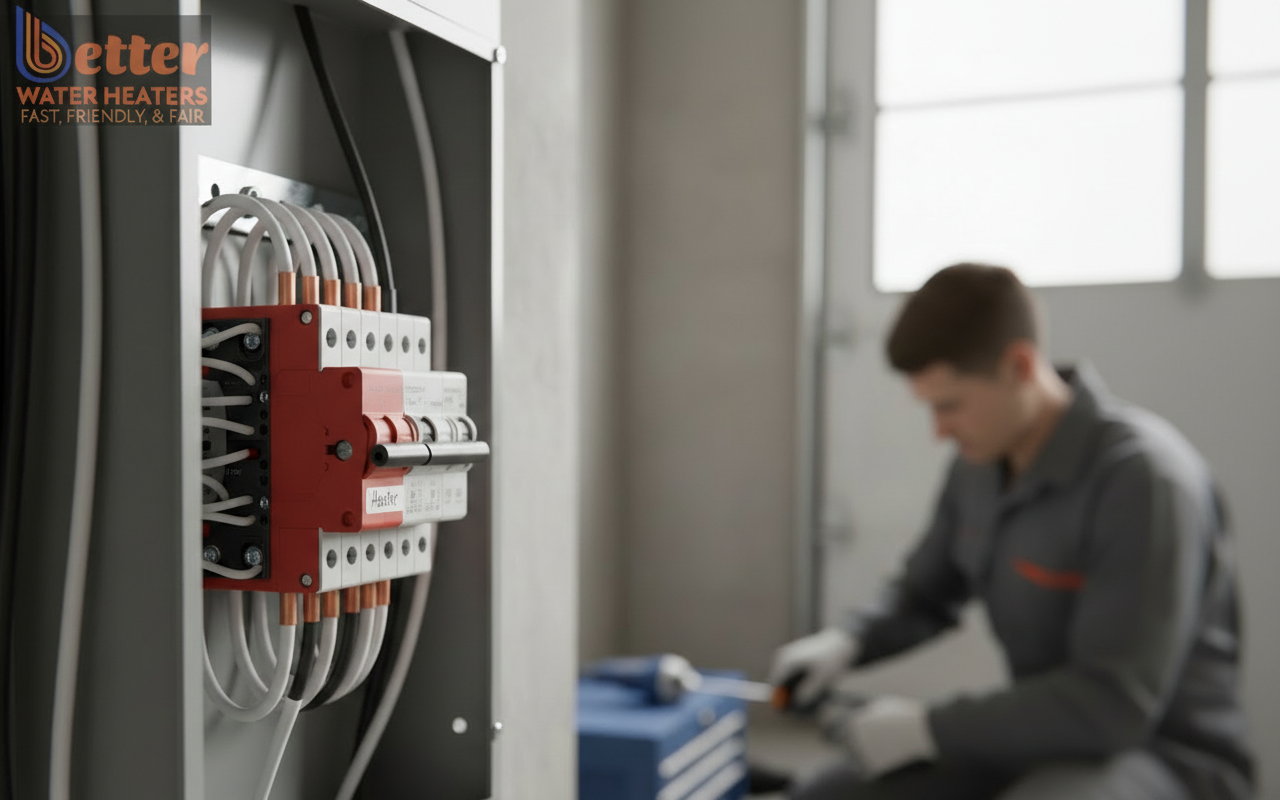
What to Include in Your Brief:
- Target Location: Specify exactly where the water heater will sit (e.g., garage, basement, or exterior closet).
- Amperage Requirements: Most HPWH units require a 30-amp circuit, though some compact models may use 15 or 20 amps.
- Distance to Panel: The length of the wire run directly impacts the subpanel installation cost if your main panel is maxed out.
- Demand Response: Ask if the circuit can accommodate a CTA-2045 port for future utility rebates.
Decoding Water Heater Electrical Requirements: Beyond the Basics
Wire gauge and breaker type matter more for long-term safety than just ‘getting the unit to turn on’ today.
For a standard 240V water heater upgrade, you are looking at a 10-3 gauge wire. Using a thinner wire might save a few dollars in materials, but it risks overheating and will likely fail a San Jose or San Mateo county inspection. Furthermore, you must ensure your electrician installs a double-pole circuit breaker. This isn’t just a recommendation; it’s a safety requirement to ensure both ‘hot’ legs of the 240V circuit trip simultaneously if a fault occurs.
Here is a quick comparison of what you might currently have versus what you need:
| Feature | Old Gas System | New 240V HPWH System |
|---|---|---|
| Circuit Voltage | None (or 120V for fan) | 240-volt dedicated circuit |
| Breaker Space | 0 Slots | 2 Slots (Double-pole) |
| Typical Wire | N/A | 10 AWG (Copper) |
| Permit Need | Standard Plumbing | Plumbing + Electrical Load Calc |
Ready to make the switch? Schedule your free sizing consultation with our Bay Area experts to ensure your electrical plan is solid.
Avoiding the Main Panel Upgrade: The Load Calculation Strategy
What most people miss is that your home has a ‘budget’ for electricity, and adding a 30-amp water heater might push you over the limit if you also have an EV charger.
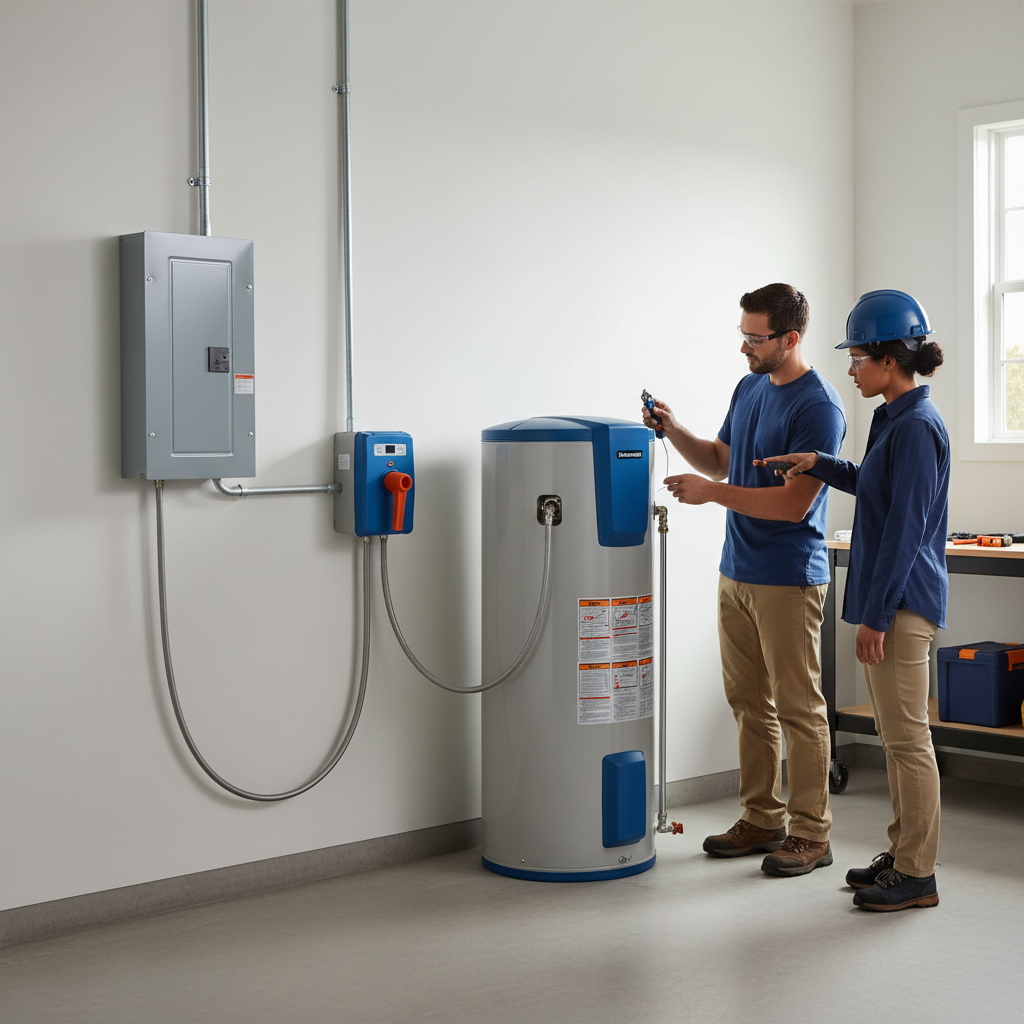
Before the electrician starts pulling wire, insist on a electrical panel load calculation. This is a formal document that proves your existing 100-amp or 200-amp service can handle the new heat pump water heater wiring alongside your other appliances. If you’re tight on space, ask about ‘load shedding’ devices. These smart controllers can briefly pause your water heater when your EV is fast-charging, potentially saving you $3,000 to $5,000 in main panel upgrade costs.
Questions to Ask Your Electrician:
- “Does my current panel have the physical space for a double-pole breaker?”
- “Based on my existing loads (A/C, EV, Oven), do I have the capacity for an additional 30 amps?”
- “Are you familiar with the BayREN or TECH Clean California rebate requirements for electrical work?”
But wait—don’t forget the disconnect switch. California code often requires a local means of disconnect within sight of the water heater. If your electrician misses this, your permit will be rejected, regardless of how clean the wiring looks.
Future-Proofing for Total Home Electrification
The real value in a 240V water heater upgrade isn’t just hot water; it’s preparing your home for a gas-free future before the 2027 regulations kick in.
In our work with typical Bay Area mid-market residential clients, we recommend ‘oversizing’ the conduit. If the electrician is already drilling holes and running wire, spending an extra $50 on larger conduit allows you to pull additional wires for a future heat pump HVAC system or battery backup without opening your walls again. This is a classic ‘do it once, do it right’ strategy that appeals to the environmentally-conscious homeowner.
Need to understand the local codes better? Browse our guide on Bay Area water heater regulations to stay ahead of the curve.
Safety First: Identifying Hidden Hazards in Older Bay Area Homes
Here is an honest, contrarian insight: Just because your panel says ‘200 Amps’ doesn’t mean it’s safe to add a high-draw appliance.
Many homes in neighborhoods like Willow Glen or Menlo Park still have Zinsco or Federal Pacific panels. These are notorious for failing to trip, even when overloaded. If you have one of these, a 240V water heater upgrade is the perfect time—and a necessary time—to replace the panel entirely. Don’t let a contractor talk you into ‘just adding a subpanel’ to a compromised main service. Safety is the one area where you should never cut corners to save on the subpanel installation cost.
The Efficiency Checklist: Wire Gauge and NEC Compliance 2024
The difference between a ‘functional’ job and a ‘compliant’ job is often found in the labeling and the grounding.
- Dedicated Circuit: The water heater must not share power with any other outlet or appliance.
- Proper Labeling: The panel must be clearly labeled so future service techs know exactly which breaker handles the 240V run.
- Seismic Strapping: While this is a plumbing requirement, the electrical conduit must be flexible enough to withstand movement during a Bay Area quake.
- Wire Gauge: Ensure 10-gauge copper is used for 30-amp circuits to minimize voltage drop.
The ‘Future-Proof’ Brief ensures that when you apply for your federal tax credits, your receipts and photos show a system that meets every requirement of the Inflation Reduction Act. If the paperwork is messy, the IRS may deny the credit, turning your ‘efficient’ upgrade into a full-price headache.
Summary: Taking Action This Week
Don’t wait until your old gas water heater starts leaking to start this process. The electrical work is often the longest lead-time item in a replacement project. This week, take a photo of your electrical panel and your current water heater setup. Call a qualified electrician and use the phrase: “I need a quote for a dedicated 240V, 30-amp circuit installation for a heat pump water heater, including a load calculation for my 100/200-amp service.”
By using this specific language, you signal that you are an informed homeowner who won’t accept sub-standard work. If you need help coordinating between the electrical work and the final installation, Better Water Heaters is here to bridge the gap. We handle the complexities of Bay Area permits and rebates so you don’t have to.
Frequently Asked Questions
Do I really need a 240V circuit for a heat pump water heater?
While some “plug-in” 120V models exist, they often have slower recovery times. A 240V water heater upgrade ensures your family doesn’t run out of hot water during back-to-back showers and is the standard for most high-performance units in the Bay Area.
How much does it cost to run a new 240V line in the Bay Area?
Depending on the distance from your panel and the complexity of your home’s construction, a 240V circuit installation typically ranges from $800 to $2,500. This is in addition to the cost of the water heater itself but is often offset by local rebates.
Will a 240V upgrade require a new main electrical panel?
Not necessarily. If your load calculation shows you have enough headroom, a simple double-pole breaker addition is enough. However, if your panel is full or outdated, a subpanel or main panel upgrade may be required for NEC compliance.
Can I use my old dryer outlet for the water heater?
No. A water heater requires a dedicated circuit. While a dryer outlet may provide 240V, code prohibits sharing that line. You must have a new, dedicated run from the panel to the water heater location to pass inspection.