
📋 Table of Contents
According to the U.S. Energy Information Administration, water heating and space conditioning account for approximately 64% of a typical home’s energy consumption. For Bay Area homeowners, the home electrification roadmap isn’t just an environmental choice—it is a strategic financial defense against rising natural gas costs and looming 2027 NOx emission regulations.
Key Takeaways:
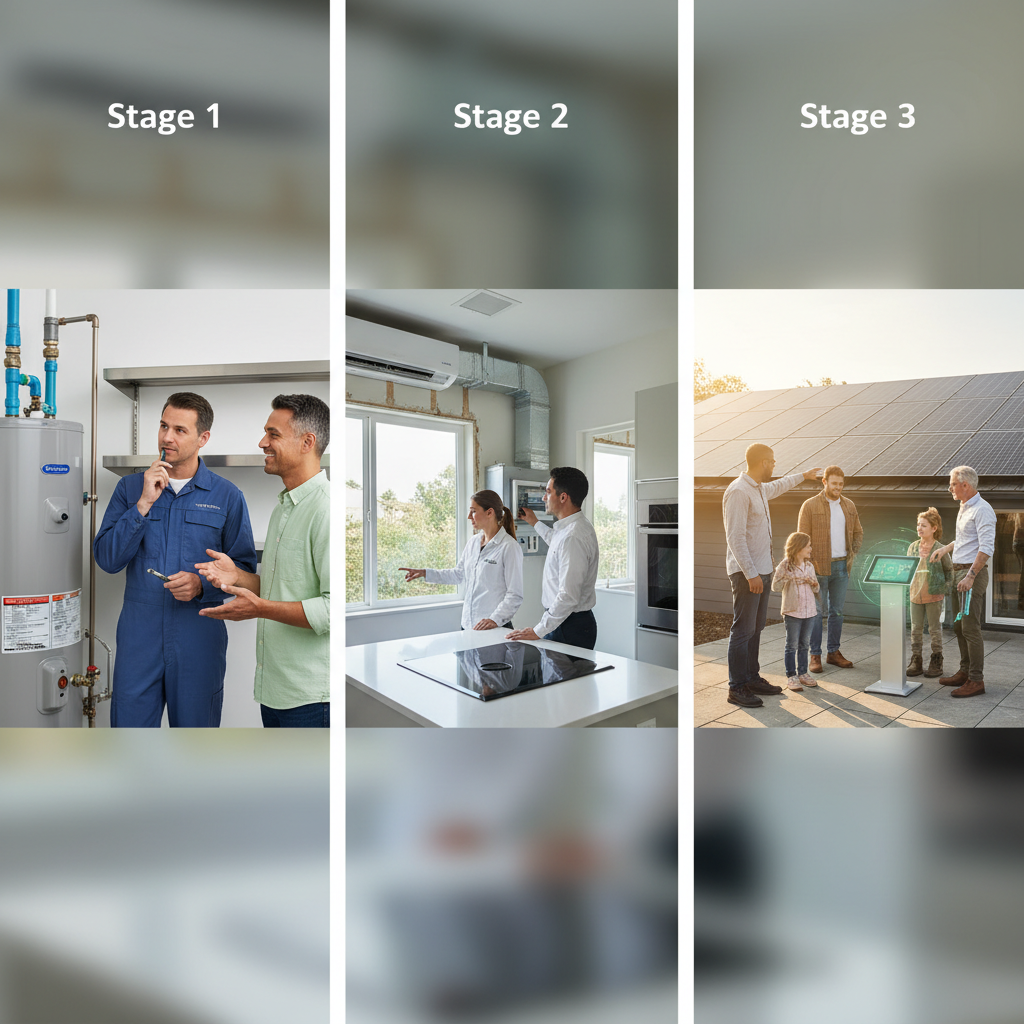
- Prioritize the water heater as the ‘Stage 1’ gateway to avoid emergency gas replacements.
- Utilize 120V heat pump technology to bypass expensive electrical panel upgrades.
- Sequence upgrades to maximize the $2,000 annual 25C Federal Tax Credit limit.
- Coordinate your transition with solar PV installation for maximum ROI.
Stage 1: Infrastructure and the ‘Gateway’ Upgrade
The smartest move in a home electrification roadmap is securing your infrastructure before a single appliance fails at 2:00 AM on a Tuesday. Most people wait for a leak to act, but in the Bay Area, that delay often forces you into another 15-year commitment to a gas appliance because you don’t have time to pull permits or run new circuits during an emergency.
What most people miss: The water heater is your strategic ‘Stage 1’ priority because it is the second-largest energy consumer in the home and the easiest to transition using new technology. We often see homeowners in San Jose or Redwood City worried that their 100-amp or 125-amp electrical panel can’t handle the gas to electric transition. However, the emergence of the 120-volt heat pump water heater has changed the game entirely. These ‘plug-in’ models can often use existing outlets, effectively bypassing the electrical panel capacity for electrification bottleneck.
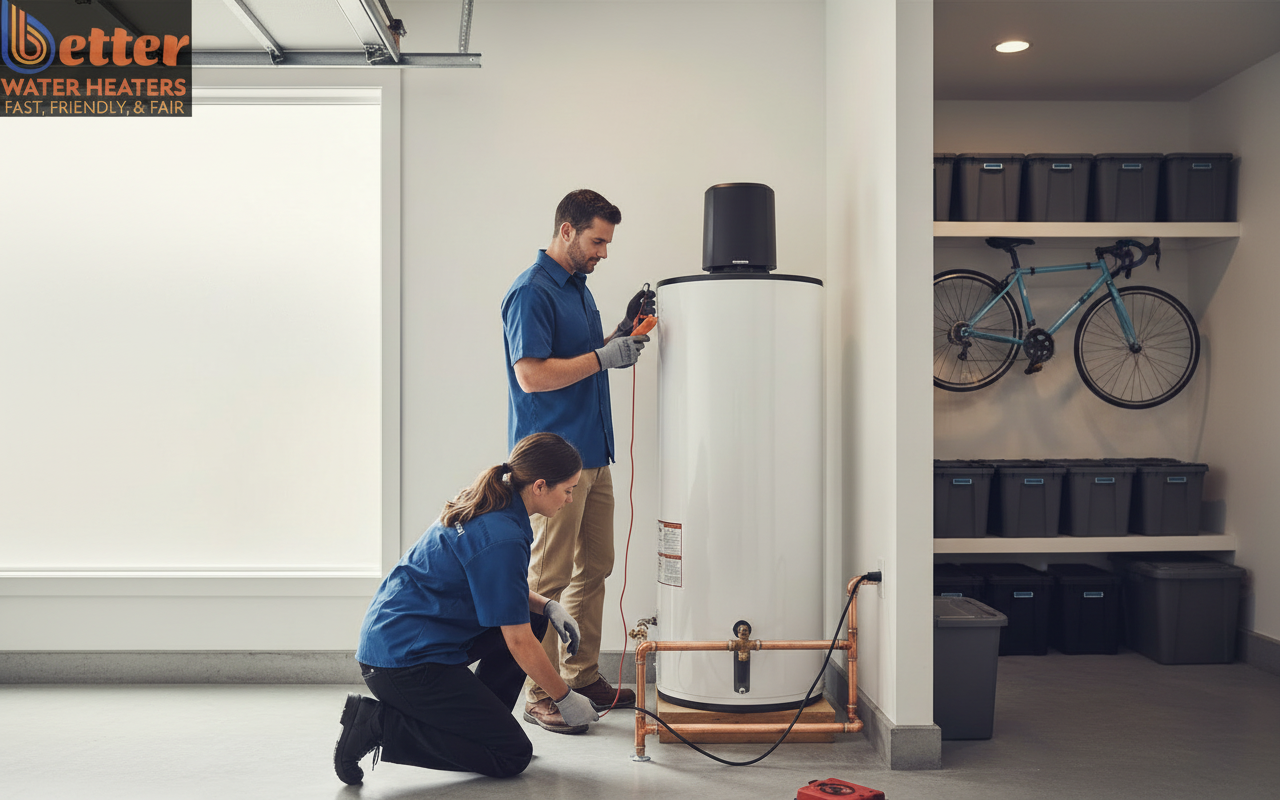
- Emergency-Proofing: Replace an aging gas tank (10+ years) now to avoid a panicked fossil-fuel replacement.
- 120V Advantage: Avoid the $3,000–$5,000 cost of a main panel upgrade by choosing shared-circuit compatible models.
- Rebate Capture: Access up to $4,900 in combined incentives through Energy.gov and local programs like TECH Clean California.
In our work with established Bay Area professionals, we’ve found that starting with a heat pump water heater (HPWH) provides the immediate data needed to size future solar arrays. It’s the ultimate diagnostic tool for your home’s future energy profile.
Stage 2: Implementation and Phased Appliance Upgrades
Successful phased appliance upgrades require a ‘load-conscious’ approach that treats your electrical panel like a finite budget. Once the water heater is electrified, the next logical steps involve the HVAC system and the kitchen, but the order depends heavily on your existing ductwork and cooking preferences.
The real kicker? You don’t have to do it all at once; in fact, doing so often wastes thousands in federal tax credits. The Inflation Reduction Act 25C credit offers up to $2,000 annually for heat pump installs. By splitting your HVAC and water heater upgrades across two different tax years, you can effectively double your federal incentive capture.
| Appliance | Estimated Energy Share | Difficulty Level | Avg. Bay Area Rebate |
|---|---|---|---|
| Heat Pump Water Heater | 18-20% | Low (with 120V) | $1,000 – $4,800 |
| Heat Pump HVAC | 40-50% | Medium to High | $2,000 – $6,000 |
| Induction Cooktop | 2-4% | Medium | $100 – $500 |
Here’s the thing: If you are considering solar, Stage 2 is the time to pull the trigger. According to Better Water Heaters’ research on solar integration, timing your HPWH installation with PV panels allows you to size the system for your future electric load, rather than your past gas-heavy usage. Need help navigating the technical requirements? Schedule a free consultation with our Bay Area specialists.
Stage 3: Optimization and Smart Home Integration
The final stage of the home electrification roadmap shifts from hardware installation to software optimization. Once your home is fully electric, your goal is ‘load shifting’—moving your energy consumption to times when electricity is cheapest and cleanest (typically mid-day in California due to solar oversupply).
But wait—optimization isn’t just for tech enthusiasts. For a typical Bay Area mid-market client, modern heat pump water heaters come with built-in Wi-Fi and ‘EcoPort’ (CTA-2045) technology. This allows the unit to act as a thermal battery, heating water when prices are low and storing it for the evening peak. This single adjustment can reduce the operating hybrid water heater installation cost over time by 20-30%.
- Load Shedding: Use smart apps to prevent the dryer, EV charger, and water heater from running simultaneously.
- Time-of-Use (TOU) Rates: Program appliances to align with PG&E or SVCE off-peak windows.
- Maintenance: Ensure annual descaling for heat pumps to maintain the high COP (Coefficient of Performance) levels you paid for.
What most people miss is that optimization also applies to your content and research. At Better Water Heaters, we use Ingest.blog as our internal AI content engine to keep up with the rapidly shifting rebate landscapes across Santa Clara and San Mateo counties.
The Contrarian View: Why ‘Panel Upgrades First’ is Often Bad Advice
Many contractors will tell you that a 200-amp panel upgrade is the mandatory first step of any home electrification roadmap. We disagree. With the advent of 120-volt heat pump water heaters, smart circuit splitters, and high-efficiency induction ranges, many 1,500 sq. ft. Bay Area homes can fully electrify on a 100-amp or 125-amp service. Spending $5,000 on a panel upgrade before you’ve explored ‘watt-sipping’ appliances is often a misallocation of your renovation budget.
Maximizing Your Investment with 2024 Incentives
Navigating heat pump water heater rebates in the Bay Area feels like a full-time job. Between federal credits, state-wide TECH incentives, and local CCA (Community Choice Aggregator) bonuses, the paperwork can be daunting. As of 2024, the Inflation Reduction Act 25C credit remains the most stable foundation for your financial planning.
For landlords or property managers, sequencing these upgrades across multiple units is even more critical. Phasing the gas to electric transition allows for better cash flow management and ensures that you aren’t hit with massive electrical infrastructure bills all at once. Check out our guide for multi-family electrification to see how to scale this framework.
The ROI of Immediate Transition vs. Delay
Is it cheaper to wait? Generally, no. While hybrid water heater installation cost is higher than a standard gas tank, the combination of a 70% reduction in energy use (per ENERGY STAR) and the avoidance of future ’emergency’ labor rates makes the immediate transition the superior ROI play. In the Bay Area, where gas prices are consistently among the highest in the nation, the payback period for a well-sequenced electrification plan is often under 6 years.
Next Steps for Your Monday Morning
Don’t let ‘analysis paralysis’ stall your transition. This week, take these three steps:
- Check the age of your water heater. If it’s over 8 years old, it’s time to plan.
- Take a photo of your electrical panel and send it to a specialist to assess your current electrical panel capacity for electrification.
- Download your last 12 months of PG&E data to identify your baseline gas therm usage.
Ready to jumpstart Stage 1 of your roadmap? Contact Better Water Heaters today for a transparent, expert assessment of your home’s potential. We specialize in making the complex simple, ensuring your transition is code-compliant, rebate-optimized, and future-ready.
Frequently Asked Questions
How do I know if my electrical panel can handle a heat pump water heater?
A professional load calculation is the only definitive way to know. However, if you have a 100-amp panel, you are a prime candidate for a 120-volt ‘plug-in’ heat pump water heater, which requires significantly less electrical capacity than the standard 240-volt models. This allows you to electrify without a full panel upgrade.
What is the difference between a hybrid and a heat pump water heater?
In the residential market, the terms are often used interchangeably. A ‘hybrid’ water heater is a type of heat pump water heater that includes standard electric resistance elements as a backup for high-demand periods. This ensures you never run out of hot water, even if the heat pump is struggling with extreme ambient temperatures.
Are there specific Bay Area rebates for switching from gas to electric?
Yes, Bay Area residents have access to some of the highest incentives in the country. Programs like TECH Clean California offer thousands in rebates, and local providers like Peninsula Clean Energy or Silicon Valley Clean Energy often provide additional ‘top-up’ incentives that can bring the total cost down significantly.
Can I install a heat pump water heater in a cold garage?
Absolutely. Modern heat pumps are designed to operate efficiently in temperatures down to 35-40°F. While they may switch to ‘hybrid’ mode during a rare Bay Area frost, their overall annual efficiency remains significantly higher than any gas-powered alternative. Proper venting and space clearance are key to maintaining this performance.