Water heater article archive
High Water Bill Troubleshooting: The $1,400 Invisible Leak | Better Water Heaters
Historical article, not newly reviewed advice. Verify current requirements, incentives and model guidance with the relevant authority or manufacturer before relying on them. Equipment and service needs require an assessment.
📋 Table of Contents
A retired couple in Menlo Park recently opened a Cal Water statement to find a staggering $1,427 charge, yet their garage floor was bone dry. Most homeowners assume a failing appliance leaves a crime scene of standing water, but in the high-pressure environment of the Peninsula, the most expensive leaks are the ones you never see.
If you are currently performing high water bill troubleshooting, stop looking for puddles and start looking at your floor drains. Your water heater might be acting as a silent siphon, dumping hundreds of gallons of heated water directly into your sewer line 24/7 through a failed Temperature and Pressure (T&P) relief valve. This isn't just a plumbing glitch; it's a financial hemorrhage that can cost more in a single month than a brand-new, energy-efficient installation.
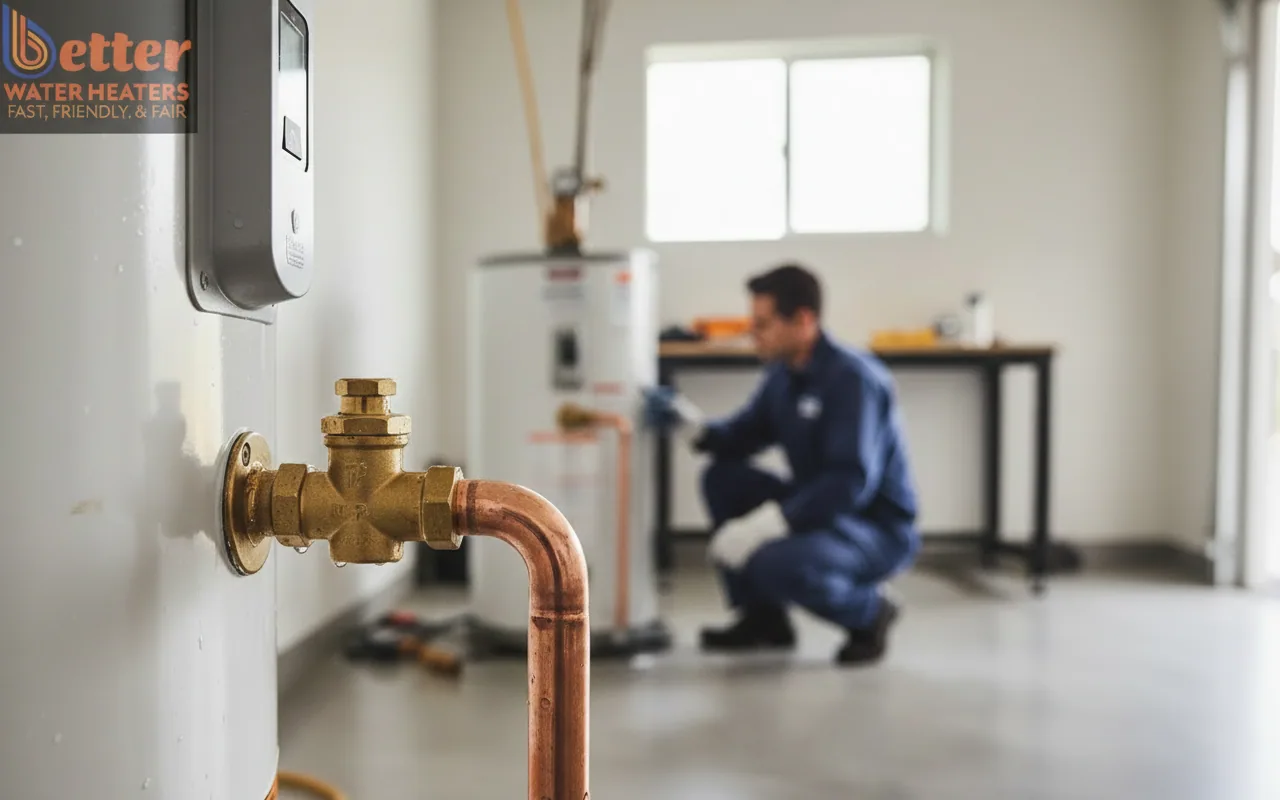
The Anatomy of a Silent Internal Water Heater Leak
What most people miss is that your water heater is designed to fail safely, which often means failing silently into your home’s drainage system. Here is why your bill is skyrocketing while your floors stay dry:
- The T&P Discharge Line: This safety pipe often runs from the top of your heater directly into a floor drain or through a wall to the exterior soil. If the valve fails, it bleeds water at a rate of 3-5 gallons per minute.
- Thermal Expansion Tank Failure: When these small tanks lose their air charge, the resulting pressure spikes force the relief valve open, creating a constant 'weeping' effect.
- Internal Tank Fractures: In some cases, sediment buildup causes micro-fractures that allow water to escape into the combustion chamber or internal insulation, where it evaporates or drains before hitting the floor.
The real kicker? Because this water is often 120 degrees or higher, you aren't just paying for the water—you're paying PG&E to heat water that goes straight to the San Francisco Bay. According to the EPA's WaterSense program, a leak at this scale can waste as much as 10,000 gallons per year in a standard home, but a failed T&P valve can hit that number in just two weeks.
Why Peninsula Homes Suffer More From Utility Bill Spikes
High water pressure is the silent killer of Peninsula plumbing systems, often exceeding 100 PSI in areas like San Carlos and Belmont. While the California plumbing code mandates a Pressure Reducing Valve (PRV) to keep home pressure under 80 PSI, these valves typically fail after 10-15 years without warning.
What happens next is a domino effect:
- High street pressure enters your home.
- Your water heater becomes a 'pressure cooker' as the water expands during heating.
- The T&P valve does its job and opens to prevent an explosion.
- The water disappears down the drain, and your Bay Area utility bill spike begins.
One of our clients, a tech executive in Palo Alto, ignored a slight 'hissing' sound in his mechanical room for three months. By the time he called us, his cumulative water and gas overages totaled $3,800—nearly double the cost of the high-end tankless system we eventually installed to solve the problem.
The 2-Minute 'Silent Home Test' for Leak Detection
Here is a contrarian insight: your smart home hub won't always catch this. While devices like Flume or Moen Flo are excellent, they sometimes struggle to distinguish between a slow-dripping T&P valve and a very long shower or a high-efficiency irrigation cycle. You need to go old-school.
Step-by-Step Diagnostic:
- Turn off every faucet, dishwasher, and washing machine in the house.
- Locate your water meter (usually in a concrete box near the sidewalk).
- Watch the 'low flow' indicator—often a small red triangle or star. If it’s spinning, water is moving.
- Now, close the cold water shut-off valve on top of your water heater.
- Check the meter again. If the spinning stops, the leak is inside your water heater.
Need professional eyes on the problem? Schedule a professional inspection today before next month's bill arrives. We specialize in Peninsula water bill spikes and can often identify the culprit in under 15 minutes.
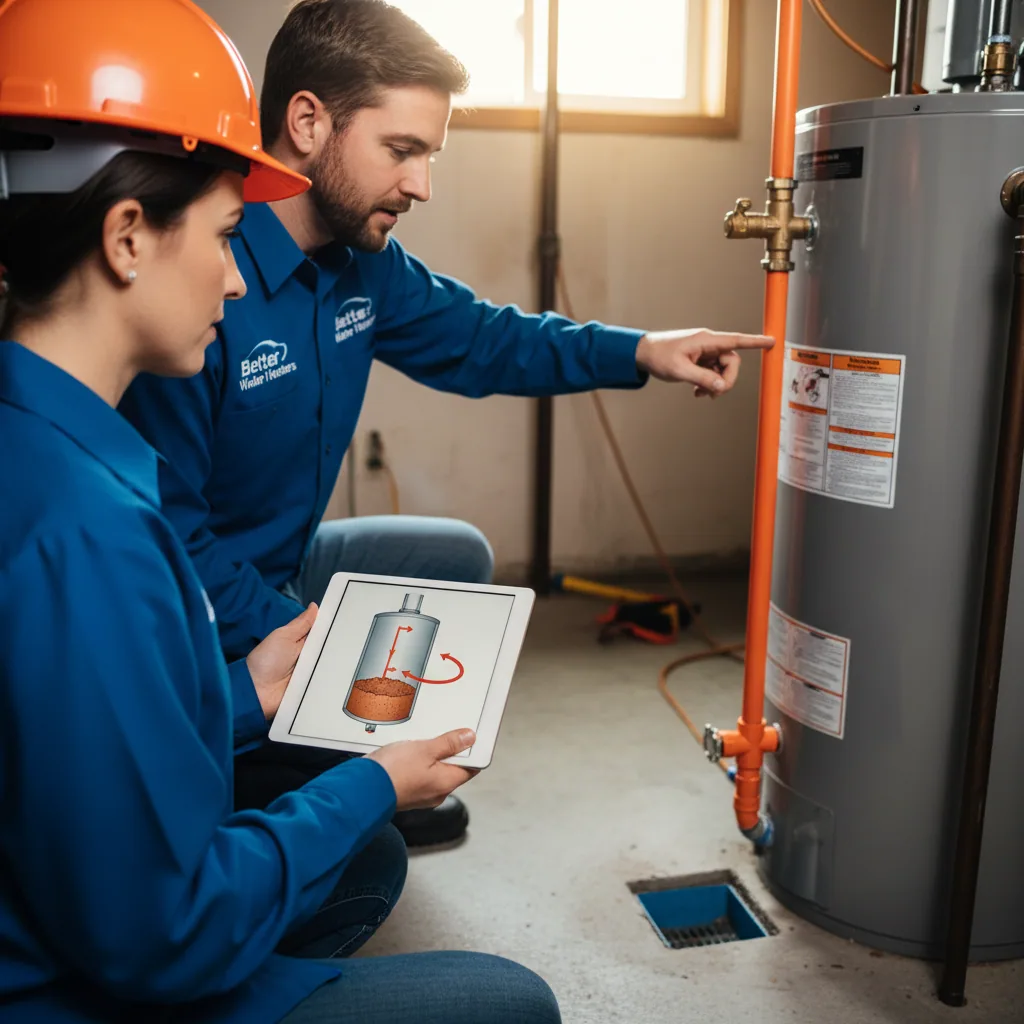
Hard Water: The Invisible Abrasive in San Mateo County
The water supplied by the SFPUC and local districts in Santa Clara County is notoriously high in mineral content. This sediment doesn't just sit at the bottom of your tank; it creates a layer of 'scale' that acts as an insulator, forcing your burner to run longer and hotter to reach the same temperature.
This heat stress leads to:
- Micro-boiling: Trapped water under the sediment layer turns to steam, creating the 'popping' or 'knocking' sound you hear.
- Valve Corrosion: Minerals crystallize inside the T&P valve, preventing it from sealing properly once it has opened.
- Anode Rod Depletion: Hard water eats through your tank's sacrificial anode rod twice as fast, leading to internal tank rust.
Here’s the thing: Insurance companies often deny claims for 'gradual seepage.' If your water heater has been leaking internally for months, they may argue it was a maintenance failure rather than a sudden accident. Proactive water heater maintenance isn't just about efficiency; it's about protecting your right to an insurance claim should a catastrophic failure occur.
The ROI of Proactive Replacement vs. Emergency Bills
Waiting for a water heater to burst is a billionaire’s game—it’s unnecessarily expensive and risky. When you factor in the cost of a Peninsula water bill spike, the math for replacement changes instantly. A standard 50-gallon gas water heater in the Bay Area has a life expectancy of 8-12 years due to our water chemistry.
| Factor | Aging Tank (10+ Years) | New High-Efficiency System |
|---|---|---|
| Monthly Utility Waste | $50 - $400 (if leaking) | $0 |
| Risk of Property Damage | High (Slab leaks/Flooding) | Low |
| Available Rebates | None | Up to $4,900+ |
But wait—before you just buy another tank, consider the future. By 2027, new regulations from the Bay Area Air Quality Management District will effectively ban the installation of standard gas water heaters in favor of zero-NOx heat pump models. Making the switch now allows you to access massive incentives from programs like Energy.gov and TECH Clean California.
Don't Ignore the 'Ghost Flush' and Other False Leads
While we focus on high water bill troubleshooting for heaters, don't forget the toilet. A 'ghost flush'—where a toilet tank refills on its own—is common, but it rarely accounts for a $1,000+ jump. That level of volume almost always points to the main line, a slab leak, or the water heater's relief system.
If you live in an older home in Redwood City or San Mateo, a 'slab leak' (a pipe bursting under your concrete foundation) is a distinct possibility. However, because the water heater is the only appliance that connects your water, gas, and drainage lines, it remains the #1 suspect for 'invisible' high-volume loss.
Ready to stop the bleed? Contact Better Water Heaters for a comprehensive pressure test and system diagnostic. We’ve seen every 'impossible' leak the Peninsula has to offer, and we have the tools to fix them today.
Frequently Asked Questions
How can I tell if my T&P valve is leaking if the pipe goes into a wall?
The easiest way is to feel the discharge pipe. If the pipe is hot to the touch several feet away from the water heater, water is actively moving through it. You can also listen for a faint hissing or rushing sound near the top of the tank where the valve is seated. If the pipe ends in a floor drain, look for signs of steam or constant moisture around the drain grate.
Will a smart water monitor detect an internal water heater leak?
Yes, most smart monitors like Flume or Moen Flo will detect 'continuous flow.' However, they may categorize a small, constant weep as a 'slow leak' and not trigger an emergency shut-off. You should regularly check your monitor's app for any 24-hour periods where water usage never hit zero. If your home never reaches zero flow, you likely have a silent leak in the T&P valve or a toilet flapper.
Why did my water bill spike only after I installed a new water heater?
This is often due to 'thermal expansion.' New water heaters are highly sealed systems. When water heats up, it expands. If you don't have a functional thermal expansion tank, that extra pressure has nowhere to go but out the relief valve. If your installer didn't check your home's PSI or install an expansion tank, your brand-new heater could be 'dumping' water immediately after every shower.
Can hard water cause a high water bill?
Indirectly, yes. Hard water leads to sediment buildup, which causes the tank to overheat and increases internal pressure. This pressure forces the T&P valve to open. Furthermore, the efficiency loss from scale means your gas or electric bill will spike alongside your water bill, as the heater works twice as hard to penetrate the mineral layer at the bottom of the tank.
The Bottom Line: A high water bill is a diagnostic tool, not just a debt. If you're on the Peninsula and your bill doesn't match your lifestyle, your water heater is likely crying for help through your sewer line. Ignoring it is the most expensive path you can take—act now, save your foundation, and keep your money in your bank account where it belongs.