
📋 Table of Contents
According to the U.S. Department of Energy, heat pump water heaters can be two to three times more energy-efficient than conventional electric resistance water heaters, yet many Bay Area families fear the ‘recovery gap’ during morning rushes. If you are managing a household of five or more, or perhaps an ADU on your property, standard heat pump water heater sizing guides often fail because they prioritize tank volume over actual delivery capacity.
The real kicker? A 50-gallon gas heater does not perform the same as a 50-gallon heat pump. Because heat pumps extract heat from the air rather than generating it via combustion, the recovery time is naturally slower. To avoid the dreaded mid-shower cold snap, you need a framework that moves beyond simple gallon counts. At Better Water Heaters, we utilize the 4-Metric Load Assessment to ensure your transition to electric is a comfort upgrade, not a compromise.
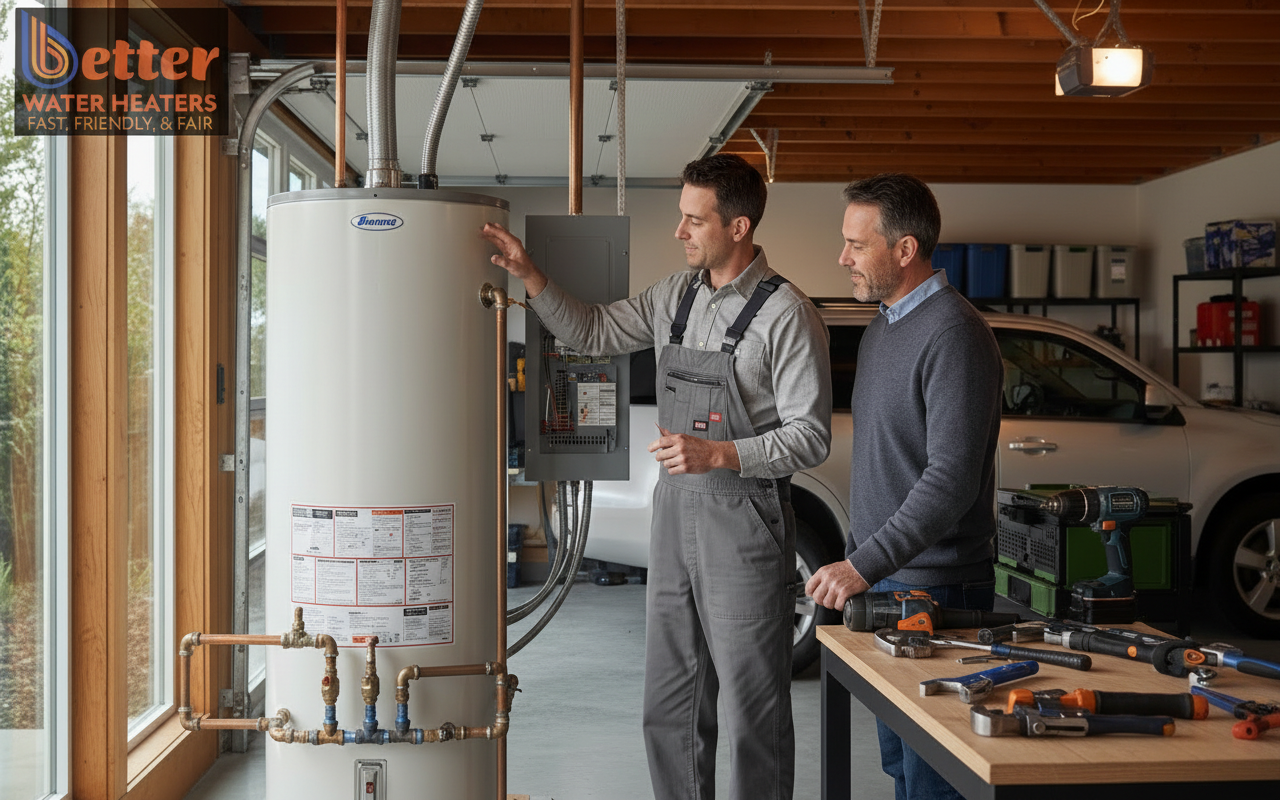
1. The First Hour Rating (FHR) vs. Tank Capacity
Insight: Tank size is a storage metric, but First Hour Rating is a performance metric—and for high-occupancy homes, performance is the only thing that matters.
When sizing a system for a large family, most homeowners look at the gallon capacity on the yellow EnergyGuide label. However, the first hour rating (FHR) is the number of gallons a water heater can supply per hour starting with a full tank. For high-occupancy plumbing scenarios, the FHR must exceed your peak hour demand.
- Gas Units: Typically have high FHR because they can burn fuel rapidly to heat water.
- Heat Pumps: Rely on ambient air; therefore, a 65-gallon or 80-gallon unit is often required to match the FHR of a 50-gallon gas unit.
- The Hybrid Advantage: Most modern units offer a ‘High Demand’ mode that engages electric elements to boost FHR during guests’ visits.
Here’s the thing: if your peak hour involves three back-to-back showers and a load of laundry, you likely need an FHR of at least 75-85 gallons. In our work with typical Bay Area mid-market residents, we find that upsizing the tank is almost always more cost-effective than dealing with the energy spike of constant ‘Electric Only’ mode usage.
2. Simultaneous Draw Profiles and Peak Demand Load
Insight: Your water heater doesn’t care how many people live in the house; it cares how many faucets are open at 7:15 AM.
A peak demand load calculation is the second pillar of our assessment. We look at the ‘Simultaneous Draw Profile’—the maximum amount of hot water your home uses at one specific time. In multi-generational housing or homes with ADUs, this is where systems fail. If a teenager is showering while the dishwasher is running, the flow rate increases, and the ‘available’ hot water in the tank depletes faster than the heat pump can recover.
Consider these standard flow rates for your calculation:
- Average Shower: 2.0 to 2.5 gallons per minute (GPM).
- Dishwasher: 2.0 to 4.0 gallons per load.
- Washing Machine: 15 to 30 gallons per load.
- Bathroom Sink: 0.5 to 1.5 GPM.
Transitioning to a larger tank provides a ‘buffer’ for these simultaneous events. If you’re worried about your current system’s ability to keep up, schedule a free sizing consultation with our team to map out your home’s specific draw profile.
3. Recovery Rate Optimization and The Hybrid Strategy
Insight: The most efficient heat pump is the one that stays in ‘Heat Pump Only’ mode for 90% of the day but has the ‘muscle’ to switch gears when needed.
Recovery rate refers to how quickly the unit can reheat the water after it has been drained. For heat pump water heater sizing, we look at the Uniform Energy Factor (UEF). Higher UEF ratings mean better efficiency, but sometimes lower recovery speeds. To solve this, we implement a Hybrid Strategy.
What most people miss is that modern HPWHs (like those from Rheem or Bradford White) allow you to program schedules. You can set the heater to ‘High Demand’ mode during the morning rush and ‘Heat Pump’ (Eco) mode for the rest of the day. This balances recovery rate optimization with the goal of lower utility bills. Furthermore, for those looking to maximize ROI, the Federal 25C tax credit provides up to $2,000 for these high-efficiency installs, making the jump to a larger, more capable tank much easier on the wallet.
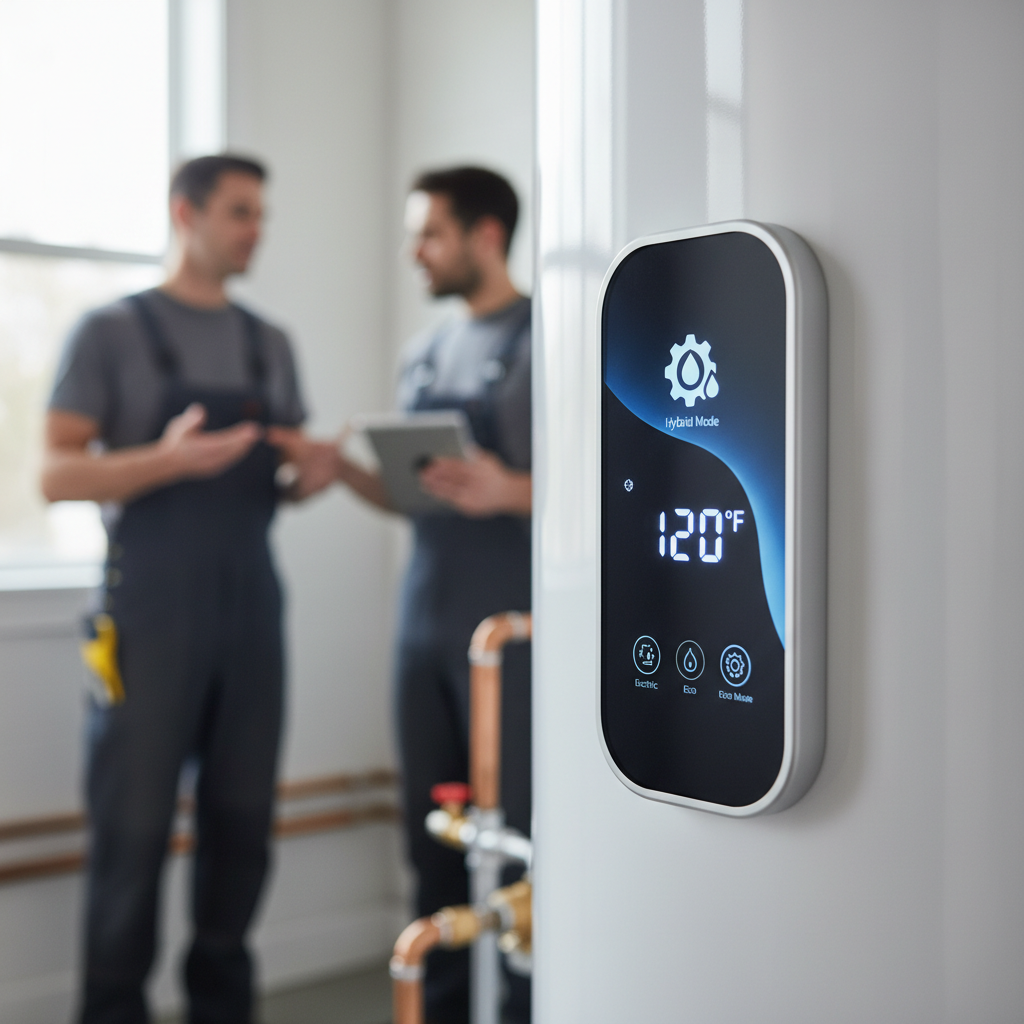
4. Physical Constraints: Airflow and 120V vs. 240V Retrofits
Insight: You can’t put a high-capacity heat pump in a broom closet; it needs to ‘breathe’ to work.
The final metric is the environment. Heat pumps move heat from the air into the water. If the unit is in a small, unvented utility room, it will eventually exhaust the heat in that room and lose efficiency. According to the AHRI 820 Standard, most units require approximately 700 to 1,000 cubic feet of air space.
In Bay Area retrofits, we often see two paths:
- 240V High-Performance: Best for high-occupancy. Requires a dedicated circuit but offers the fastest recovery.
- 120V ‘Plug-and-Play’: A trending solution for gas-to-electric swaps where running new wires is too expensive. While easier to install, these have lower FHRs and require careful load assessment.
But wait—if you are tight on space, we can often use ducting kits to pull air from a larger room or the outdoors, ensuring the unit operates at peak efficiency even in a cramped San Jose garage.
The ‘Recovery Gap’ and 2027 Regulations
Insight: Waiting until your current gas heater leaks in 2027 might leave you with fewer (and more expensive) options due to upcoming NOx regulations.
The Bay Area Air Quality Management District has signaled a shift toward zero-NOx water heaters starting in 2027. This means gas replacements will become increasingly difficult. By performing a decarbonization retrofit now, you can take advantage of current rebates—sometimes up to $4,900 in total incentives—before the rush begins.
A contrarian truth we share with our clients: The smallest tank that ‘works’ is usually the wrong choice. In a high-occupancy home, the energy saved by a smaller unit is negligible compared to the utility costs of the electric backup elements firing up every time two people shower. Go bigger on the tank to stay in the high-efficiency heat pump zone longer.
Need to know exactly which model fits your family’s needs? Explore our guide to local Bay Area rebates or call us today.
Summary Table: Sizing for Occupancy
| Household Size | Recommended Tank Size | Target FHR (Gallons) | Best Mode Setting |
|---|---|---|---|
| 1-2 People | 40-50 Gallons | 50-60 | Heat Pump / Eco |
| 3-4 People | 65 Gallons | 65-75 | Hybrid / Scheduled |
| 5+ People / ADU | 80 Gallons | 85+ | High Demand / Hybrid |
FAQs About Heat Pump Water Heater Sizing
Does a heat pump water heater work in the Bay Area climate?
Yes, the Bay Area’s moderate climate is ideal for heat pump technology. Because our temperatures rarely drop below freezing for extended periods, the units can efficiently extract heat from the air year-round, unlike in colder Northeast climates where performance significantly degrades in winter.
Will I run out of hot water if I switch from gas to a heat pump?
Not if you size it correctly using the First Hour Rating (FHR). A typical 50-gallon gas heater should be replaced with a 65-gallon or 80-gallon heat pump to ensure the same volume of hot water is available during peak usage times.
What are the electrical requirements for a high-capacity unit?
Most high-performance heat pumps require a 240V, 30-amp dedicated circuit. However, new 120V ‘plug-and-play’ models are available for easier retrofits, though they generally have slower recovery rates and are best suited for smaller households.
Are there rebates available for sizing up to an 80-gallon tank?
Yes, many Bay Area programs like TECH Clean California and local utility incentives (like SVCE or Peninsula Clean Energy) offer rebates based on the unit’s efficiency and installation, rather than just tank size. In many cases, larger, more efficient units qualify for higher tiers of funding.
Ready to secure your home’s hot water future? Don’t settle for ‘rule of thumb’ sizing that leaves you in the cold. Contact Better Water Heaters today for a professional 4-Metric Load Assessment and ensure your high-occupancy home is ready for the electric future. Call us at 408-250-6672 to speak with a specialist now.