
📋 Table of Contents
According to the U.S. Department of Energy, heat pump water heaters can be up to three times more efficient than conventional electric models, but they come with a mechanical trade-off: sound. In the dense, zero-lot-line neighborhoods of San Francisco and the East Bay, managing heat pump water heater noise levels isn’t just about comfort—it’s about staying compliant with strict local noise ordinances.
Key Takeaways for Bay Area Homeowners
- Modern heat pumps typically operate between 45 and 55 decibels (dB), roughly the volume of a quiet conversation.
- The “Urban Canyon” effect in narrow side-yards can amplify sound by up to 6dB as it bounces off stucco and concrete.
- San Francisco and San Jose have specific decibel limits at property lines that may require specialized vibration isolation.
- Strategic scheduling (Night Mode) can prevent neighbor disputes by limiting compressor activity during sleep hours.
Understanding Heat Pump Water Heater Noise Levels in Tight Spaces
The real kicker about sound isn’t just the volume; it’s the environment where the unit lives. In a typical Bay Area mid-market home, water heaters are often relegated to 5-foot-wide side-yards that act like acoustic echo chambers.
When a compressor kicks on, the sound waves hit your home’s stucco exterior and your neighbor’s fence, creating a resonance that makes a 50dB unit sound significantly louder. This is known as the “Urban Canyon” effect. If you are planning an upgrade, you need to look beyond the manufacturer’s spec sheet and consider the HPWH sound pressure level in the context of your specific installation site.
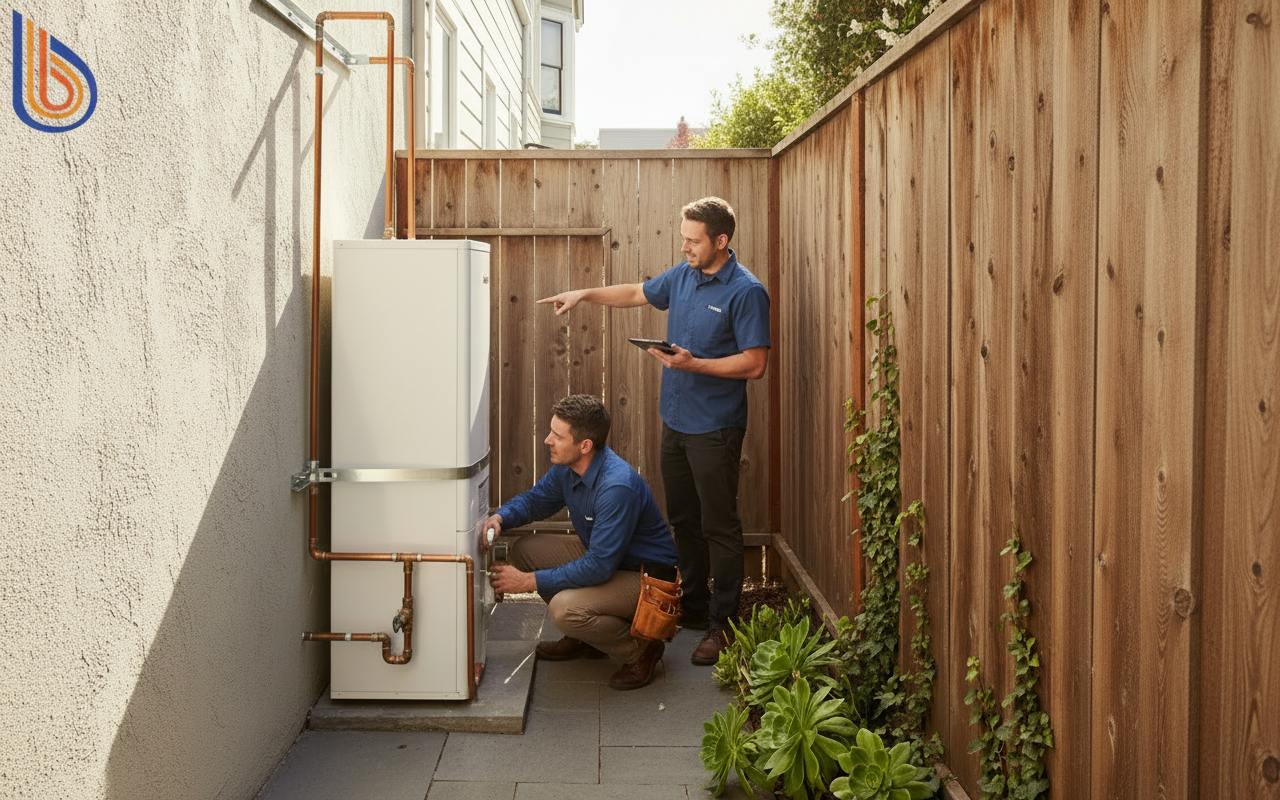
Most Tier 1 brands like Rheem, AO Smith, and Bradford White have made massive strides in acoustic engineering. However, a unit that sounds like a hum in a spacious Fremont garage might sound like a buzzing drone in a narrow Redwood City alleyway. We recommend checking the Energy.gov guidelines on heat pump placement to minimize these acoustic reflections.
Quietness Comparison: Ranking the Leading Brands
Choosing the quietest water heaters requires looking at both the decibel rating and the frequency of the sound produced. Low-frequency hums often travel through walls more easily than high-pitched fan whirrs, which is why your neighbor might complain about a “vibration” rather than a “noise.”
| Brand/Model | Average Decibel (dB) | Acoustic Profile | Best For |
|---|---|---|---|
| Rheem ProTerra | 49 dB | Mid-frequency hum | Outdoor enclosures | AO Smith Voltex | 51 dB | Steady fan whirr | Garages/Basements |
| Bradford White AeroTherm | 50 dB | Low-frequency vibration | Interior closets |
What most people miss is that these ratings are often measured in open laboratories. In our work with tech-savvy homeowners in Palo Alto, we’ve found that installing vibration isolation mounts can reduce perceived noise by an additional 3-5dB. This is a small investment that prevents a large headache with the city building inspector later.
Need help choosing the right model for your home? Schedule a free site audit with our experts to measure your side-yard acoustics before you buy.
Bay Area Noise Ordinances: The Legal Landscape
Local regulations in the Bay Area are some of the strictest in the country, and failing a noise inspection can lead to costly retrofits. San Jose noise regulations for water heaters, for instance, typically limit noise to 55dB at the property line during the day and even less at night.
- San Francisco: Focuses on “nuisance noise,” which can be triggered by neighbor complaints even if decibel levels are technically legal.
- Oakland: Has specific requirements for equipment located in side-yard setbacks.
- Palo Alto: Often requires sound-dampening enclosures for heat pumps located near bedroom windows.
But wait—there is a silver lining. Many local programs, including TECH Clean California incentives, may help offset the cost of high-efficiency units that feature advanced noise-reduction technology. Always verify your local city code before finalizing an outdoor installation.
The ‘Good Neighbor’ Guide to HPWH Installation
Maintaining peace with your neighbors is just as important as maintaining your water heater. If your side-yard is narrow, consider the “Night Mode” feature found on many modern smart units. This allows you to schedule the most intensive heating cycles for the afternoon when ambient neighborhood noise is higher, rather than at 3:00 AM.
Here’s what I’d do if I were installing a unit in a tight space today:
- Use a rubberized vibration isolation mount to decouple the unit from the concrete pad.
- Install a sound-dampening blanket if the unit is within 10 feet of a neighbor’s window.
- Orient the cold air exhaust away from shared fences to prevent “wind noise” complaints.
For those managing multiple properties, we use our internal AI content engine to keep our landlords updated on changing local codes across different municipalities quickly and accurately.
Retrofitting for Silence: Is it Worth the Cost?
If you already have a unit that is drawing glares from the folks next door, you don’t necessarily need to replace it. Passive noise reduction—like adding mass-loaded vinyl to the interior of a water heater closet—can be highly effective. In a typical Bay Area residential scenario, a $200 investment in soundproofing materials can resolve a dispute that might otherwise lead to a $1,000 city fine.
The real contrarian insight? Sometimes, the “quietest” unit on paper is the loudest in practice if it isn’t leveled correctly. A 1-degree tilt can cause the compressor to rattle against the housing, doubling the heat pump water heater noise levels instantly. Professional leveling is the most underrated noise-reduction tactic in the industry.
Ready to upgrade to a high-efficiency system without the noise? Get a transparent quote from Better Water Heaters today. We handle the permits and the acoustics so you don’t have to.
Frequently Asked Questions
How loud is a heat pump water heater compared to a refrigerator?
Most modern heat pump water heaters operate at about 45-55 decibels, which is slightly louder than a modern refrigerator (typically 40dB). However, because the water heater is often located in a garage or outside, the noise is less noticeable inside the living areas of the home unless it is installed directly against a bedroom wall.
Do I need a permit for a heat pump water heater in the Bay Area?
Yes, almost all Bay Area jurisdictions, including San Jose, San Francisco, and Oakland, require a plumbing and electrical permit for a heat pump water heater installation. This ensures the unit meets Title 24 energy standards and adheres to local Bay Area noise ordinances and seismic strapping codes.
Can I put a sound blanket on my heat pump water heater?
You can use specialized acoustic blankets designed for compressors, but you must never block the air intake or exhaust vents. Heat pumps require significant airflow to extract heat from the air; restricting this flow will decrease efficiency and could lead to system failure. Always consult a specialist before adding enclosures.
What is the best way to reduce vibration noise?
The most effective way to reduce vibration is to install the unit on a heavy-duty rubber isolation pad. These pads absorb the kinetic energy from the compressor before it can reach the floor or walls of your home, which is the primary cause of the “low-frequency hum” that bothers neighbors.
Final Action Plan for Homeowners
Don’t wait for a knock on the door from a frustrated neighbor. This week, take a decibel meter app (like NIOSH SLM) and measure the ambient noise in your side-yard during the day. If it’s consistently below 50dB, you’ll need to be extra careful with your equipment selection to ensure your new water heater doesn’t become the loudest thing on the block. Start by researching quietest water heaters on our site to find a model that fits both your budget and your neighborhood’s peace and quiet.