
📋 Table of Contents
According to the U.S. Department of Energy, heat pump water heaters can be up to three times more energy-efficient than conventional electric resistance models, yet most homeowners leave them on the factory ‘Hybrid’ setting year-round. In the Bay Area, where electricity rates are among the highest in the nation, failing to optimize your heat pump water heater modes is essentially leaving $200 to $300 on the table every single year.
Key Takeaways for Homeowners
- Heat Pump Only Mode is the gold standard for efficiency, offering the highest COP ratings (Coefficient of Performance).
- Hybrid Mode acts as a safety net, engaging electric elements only when the compressor cannot keep up with demand.
- Seasonal adjustments in the Bay Area—switching modes between our damp winters and temperate summers—can significantly extend the life of your unit.
- Using your water heater as a ‘thermal battery’ during off-peak hours can slash your PG&E bill.
Understanding the Mechanics: Heat Pump vs. Hybrid Mode Efficiency
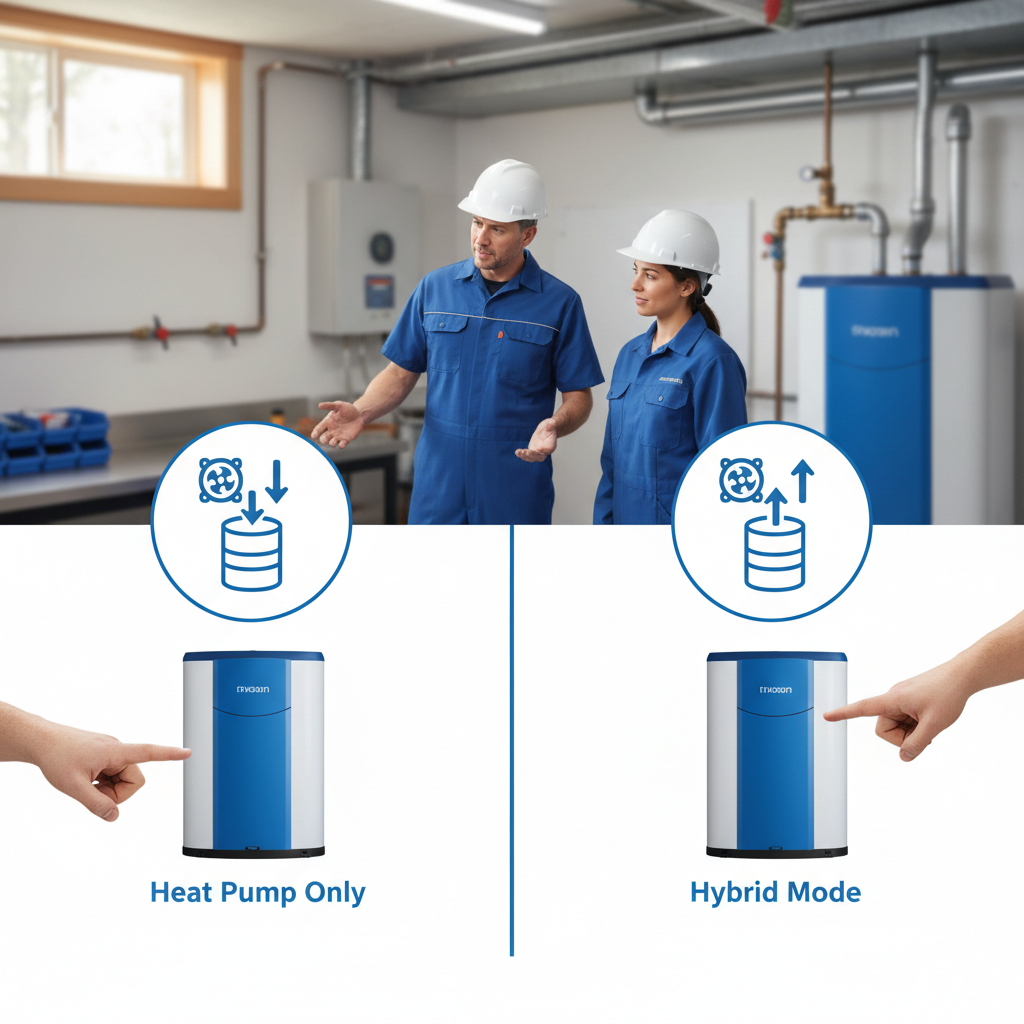
The fundamental difference between these settings lies in which component does the heavy lifting: the energy-sipping compressor or the power-hungry electric elements. Here’s the thing: while hybrid water heater efficiency is high, the ‘Hybrid’ setting often triggers the electric backup sooner than necessary, spiking your energy draw.

In our work with established homeowners in San Jose and Palo Alto, we’ve found that most households can satisfy 90% of their needs using ‘Heat Pump Only’ mode. This mode relies entirely on the compressor to move heat from the surrounding air into the water. However, when the ambient temperature operating range drops or demand spikes, the recovery time slows down. That is where understanding your specific unit’s limitations becomes critical for maintaining comfort.
- Heat Pump Only: Maximum efficiency (COP of 3.0+), slowest recovery, zero electric element usage.
- Hybrid Mode: Balanced efficiency, faster recovery, utilizes electric elements during high-draw events.
- Electric/High Demand: Lowest efficiency, fastest recovery, operates like a standard electric heater.
The Bay Area Seasonal Calibration Chart
What most people miss is that the ‘set it and forget it’ mentality is a myth if you want to maximize your ROI on a high-end unit like a Rheem or AO Smith. Because our climate is Mediterranean, our ‘cold’ snaps rarely drop below the operating floor of modern heat pumps, but they do impact the heat pump water heater recovery rate.
| Season/Month | Recommended Mode | Why It Works | Efficiency Gain |
|---|---|---|---|
| Summer (June-Sept) | Heat Pump Only | High ambient air temps maximize compressor COP. | Highest |
| Shoulder (Oct-Nov) | Heat Pump Only | Moderate temps still allow for efficient recovery. | High |
| Winter (Dec-Feb) | Hybrid Mode | Prevents cold showers during cold garage snaps. | Moderate |
| Spring (March-May) | Heat Pump Only | Transition back to compressor-heavy lifting. | High |
But wait—if your unit is installed in an unconditioned garage, the winter performance is even more sensitive. A typical Bay Area mid-market client might see their garage drop to 45°F in January. At this temperature, the compressor vs electric element trade-off shifts; the heat pump has to work much harder, and forcing it to stay in ‘Heat Pump Only’ mode might result in a lukewarm morning shower.
Need a professional to audit your setup? Schedule a consultant visit to ensure your settings match your household’s actual hot water usage patterns.
Maximizing COP Ratings: The Thermal Battery Strategy
The real kicker for Bay Area residents is the integration with Time-of-Use (TOU) rates. By using your water heater as a thermal battery, you can ‘overheat’ the water during the day when solar production is high (and rates are lower) and then turn the unit to a lower-draw mode during the 4 PM – 9 PM peak. This strategy works best in ‘Heat Pump Only’ mode to ensure you aren’t pulling expensive peak-hour grid power for electric resistance heating.
How to implement the thermal battery approach:
- Set your water temperature slightly higher (e.g., 130°F) during the day.
- Use a thermostatic mixing valve to bring the water down to a safe 120°F at the tap.
- Program your app to shift to ‘Heat Pump Only’ during peak rate hours.
- Switch to ‘High Demand’ only 30 minutes before a known high-usage event.
The Guest Room Factor: When to Bypass Efficiency
Here is a contrarian insight: Efficiency isn’t everything. If you have family visiting for the holidays, keeping your unit in ‘Heat Pump Only’ mode is a recipe for a customer service disaster in your own home. In these scenarios, forcing ‘Hybrid’ or even ‘High Demand’ mode is the correct move.
In our work with growth-stage professionals who host frequent events, we recommend the ‘Emergency Recovery’ tactic. Most modern units from Rheem or Bradford White allow for app-controlled overrides. If you know four people are about to shower back-to-back, switch to High Demand for two hours, then let the automation switch it back to Hybrid. This ensures the heat pump water heater recovery rate stays ahead of the demand curve.
Pro Tip: If you’re managing multiple properties or trying to keep track of various home maintenance schedules, you might find Ingest.blog useful for organizing your own content distribution and maintenance logs.
Summer Bonus: Dehumidification and Free Cooling
A frequently overlooked benefit of heat pump water heater modes is the effect on the installation space. Because the heat pump extracts heat from the air, it exhausts cool, dry air as a byproduct. In a damp Bay Area basement or a stuffy garage, ‘Heat Pump Only’ mode acts as a free dehumidifier.
- Dehumidification: Helps prevent mold in older San Francisco or Oakland basements.
- Cooling: Can drop garage temperatures by 3-5 degrees during a heatwave.
- Energy Savings: You’re essentially getting two appliances for the price of one.
According to ENERGY STAR, this cooling effect is most pronounced when the unit is in Dedicated Heat Pump mode, as the compressor is running for longer cycles compared to the rapid-heat electric elements.
When to Call a Professional
While mode switching is a DIY task, ensuring your unit is sized correctly for these modes is a job for an expert. If you find yourself constantly needing ‘High Demand’ mode just to get through a normal day, your unit is likely undersized or the UHR ratings aren’t meeting your home’s specific needs. This often happens in homes that have recently added an ADU or a high-flow rain showerhead.
Ready to optimize your home’s efficiency? Explore our heat pump installation services or call us to discuss how to maximize your local rebates, which can reach up to $4,900 in the Bay Area.
Frequently Asked Questions
Does ‘Heat Pump Only’ mode take longer to heat water?
Yes, the recovery rate is significantly slower in Heat Pump Only mode because the compressor moves heat gradually. While an electric element might heat a tank in 30-60 minutes, the heat pump may take 2-4 hours. This is why proper tank sizing—often going up to an 80-gallon tank—is vital when prioritizing efficiency.
Can I save money by switching modes daily?
While daily manual switching is tedious, using a smart-connected app to automate modes based on Time-of-Use rates can save a typical Bay Area household $15-$25 per month. Most homeowners find a seasonal approach (switching 4 times a year) provides the best balance of effort versus reward.
What happens if the ambient temperature is too cold?
Most modern heat pumps operate down to 35°F or 40°F. If the temperature in your garage drops below this ambient temperature operating range, the unit will automatically trigger the electric backup elements. In the Bay Area, this typically only happens on the coldest winter nights.
Is Hybrid mode louder than Heat Pump Only mode?
Actually, the compressor in Heat Pump Only mode creates a hum similar to a dishwasher or a refrigerator. Hybrid mode is only louder if the electric elements create a slight ‘hissing’ sound, but generally, the compressor is the primary noise source. Proper vibration pads can mitigate this during installation.
Take Action This Week: Check your water heater’s control panel today. If it’s currently on ‘High Demand’ or ‘Electric’ and you don’t have guests staying over, switch it to ‘Hybrid’ or ‘Heat Pump Only’ immediately. You’ll start saving on your next PG&E bill without sacrificing a single drop of comfort.