
📋 Table of Contents
That shiny new hybrid water heater in your San Jose garage is currently sweating a liquid as acidic as orange juice directly into your concrete foundation. While you’re enjoying a 70% reduction in energy costs, a silent chemical reaction is likely dissolving the calcium carbonate that holds your garage floor together.
At Better Water Heaters, we’ve seen the fallout: heat pump water heater floor damage so severe that two-year-old installations have created half-inch deep ‘craters’ in pristine epoxy floors. It’s a $3,800 foundation crisis caused by a $50 part that 40% of Bay Area installers simply ‘forget’ to include. If your installer didn’t mention pH balancing, you aren’t just saving the planet; you’re slowly liquidating your home’s resale value.
The Chemistry of Corrosion: Why ‘Efficiency’ Has a Sour Side
High-efficiency water heaters create liquid byproduct called condensate that typically registers a 3.0 to 5.0 on the pH scale.
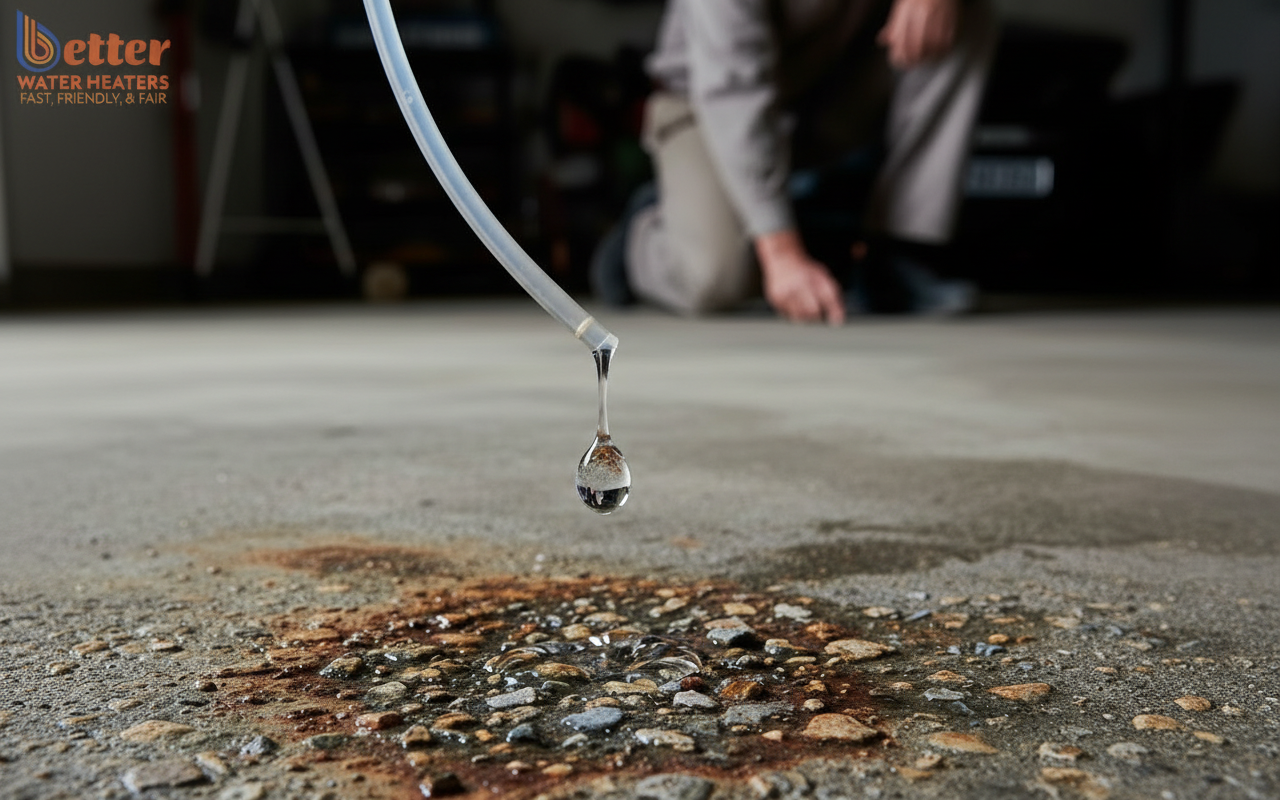
The real kicker? Concrete is alkaline. When that acidic discharge hits your garage floor, it doesn’t just sit there; it leaches the paste out of the concrete, leading to a process called spalling or ‘honeycombing.’ Most homeowners don’t notice the pitting until the aggregate—the rocks inside the concrete—starts popping out like loose teeth.
- The 2024 Tax Credit Trap: Many ‘tax credit chasers’ are installing units rapidly to claim the 25C Federal Tax Credit but skipping the critical condensate neutralizer installation.
- Structural Integrity: Over five years, unneutralized discharge can penetrate deep enough to reach steel rebar, causing it to rust and expand.
- The Invisible Acid Test: You can check your floor’s health today with a simple $10 pH strip from a hardware store; if the puddle under your drain line is yellow or orange, your floor is actively dissolving.
Contractor Malpractice: The $50 Part They ‘Forgot’ to Install
What most people miss is that California plumbing code actually requires neutralizers for acidic discharge, yet high-volume ‘box store’ installers ignore it to shave 20 minutes off the job.
Take the case of a tech executive in Los Altos who upgraded to a top-tier hybrid system. He saved $400 a year on PG&E, but eighteen months later, his custom $6,000 epoxy garage floor was bubbling and peeling. The culprit? A ‘silent’ failure of the drain line that allowed acidic condensate to seep under the coating. Because the damage was ‘gradual seepage’ rather than a ‘sudden burst,’ his insurance company denied the claim. He was left with a $4,200 repair bill for a system that was supposed to save him money.
But wait—it gets worse. In many Bay Area cities like Palo Alto or Walnut Creek, a missing neutralizer can actually cause you to fail a point-of-sale inspection when you try to move. You’ll end up paying for the neutralization and the floor repair just to close escrow.
Need a professional eyes-on your system? Schedule a 21-point inspection to ensure your high-efficiency upgrade isn’t a low-key disaster.
Cost Comparison: A $150 Fix vs. a $3,800 Foundation Bill
The math on heat pump water heater floor damage is brutal, making proactive acidic discharge solutions the only logical choice for savvy homeowners.
| Service Item | Proactive Cost | Reactive Repair Cost |
|---|---|---|
| Condensate Neutralizer Kit | $50 – $150 | $0 (Too late) |
| Professional Installation | $100 – $250 | $0 (Too late) |
| Concrete Resurfacing/Patching | $0 | $1,200 – $2,500 |
| Epoxy Floor Re-coating | $0 | $2,000 – $4,500 |
| Total Potential Cost | ~$300 | $3,200 – $7,000+ |
Here’s the thing: a neutralizer isn’t a ‘lifetime’ part. The sacrificial limestone media inside the capsule dissolves as it works. If you haven’t refilled your neutralizer in the last two years, it’s likely just an empty plastic tube doing absolutely nothing for your pH levels.
The ‘No-Drain’ Dilemma in Bay Area Garages
A surprising number of older homes in Fremont and Sunnyvale were built without garage floor drains, creating a massive headache for HPWH transitions.
If you don’t have a drain, some installers will simply run a tube to the driveway, which creates a slip hazard and a permanent white calcium stain on your pavers. The better way? A dedicated condensate pump. These pumps can lift the neutralized water up and over into a laundry standpipe or out to a landscape area.
- Gravity isn’t your friend: Without a pump, stagnant acidic water sits in the line, breeding ‘slime’ that eventually clogs the unit and triggers a leak.
- Hybrid Water Heaters vs. Epoxy: If you have a finished garage, the chemical mismatch between acidic runoff and epoxy resins is a guaranteed failure point.
- Landscape Impacts: Even if you pipe it outside, unneutralized water will kill your lawn or yellow your expensive Japanese Maples.
What most people miss is that regular hybrid water heater maintenance should include a pH test of the discharge. If your plumber isn’t bringing litmus paper to the job, they aren’t a specialist—they’re just a parts-swapper.
The 2027 Regulation Shift: Why You Must Act Now
The Bay Area Air Quality Management District (BAAQMD) is phasing out gas water heaters starting in 2027. This means thousands of homeowners will be forced into heat pump technology soon.
The real kicker? As demand spikes, the number of ‘fly-by-night’ installers will skyrocket. We are already seeing a surge in concrete spalling repair cost inquiries from homeowners who went with the lowest bidder in 2023. By the time the 2027 mandate hits, the shortage of qualified technicians who understand HPWH drain line requirements will be acute. Don’t wait for the rush to find out your foundation is being eaten away.
Protect your home today. Call Better Water Heaters at (408) 250-6672 for a comprehensive HPWH health audit. We serve the entire Bay Area, from San Jose to Redwood City.
Summary: Don’t Let Efficiency Kill Your Equity
Transitioning to sustainable technology shouldn’t come at the expense of your home’s structural health. The heat pump water heater floor damage crisis is entirely preventable with the right pH balancing condensate strategy. Whether you’re a property manager in Oakland or a homeowner in Cupertino, the message is clear: check your drain line, install a neutralizer, and stop the acid before it stops your resale value.
Frequently Asked Questions
How do I know if my water heater needs a condensate neutralizer?
If you have a high-efficiency (condensing) gas water heater or a heat pump (hybrid) water heater, you are producing acidic condensate. Look for a small plastic tube exiting the unit. If that tube goes directly to the floor or a drain without passing through a horizontal plastic cylinder filled with white rocks, you are missing a neutralizer.
Can I install a condensate neutralizer kit myself?
While kits are available at big-box stores, improper installation can lead to backflow issues that damage the water heater’s internal electronics. Professional installation ensures the drain line is pitched correctly and that the neutralizer is sized for the BTU or gallon capacity of your specific system to prevent floor damage.
How often should the neutralizer media be replaced?
For most Bay Area households, the neutralizing media (typically crushed limestone or magnesium oxide) should be replenished every 12 to 24 months. High-use households or those with very large heat pump systems may need more frequent service to maintain a safe pH level above 7.0.
Is concrete spalling from water heater acid covered by home insurance?
Typically, no. Most standard homeowners’ insurance policies in California exclude damage caused by ‘gradual seepage’ or ‘long-term corrosion.’ Because the acid eats the concrete over months or years, it is classified as a maintenance issue rather than a sudden, accidental discharge of water.
What are the best acidic discharge solutions for garages without drains?
The gold standard is a condensate pump paired with a neutralizer. The pump sends the neutralized water through a small 3/8″ tube up into the rafters and over to a laundry drain or utility sink. This prevents any liquid from ever touching your garage floor or foundation walls.