
📋 Table of Contents
According to the Bay Area Air Quality Management District (BAAQMD), gas water heaters will be phased out for new installations starting in 2027, making electrification a looming necessity rather than a choice. For owners of legacy properties in Berkeley, Palo Alto, or San Francisco, the transition to a heat pump retrofit framework isn’t just about environmental stewardship—it’s about navigating the physical constraints of century-old architecture.
Key Takeaways:
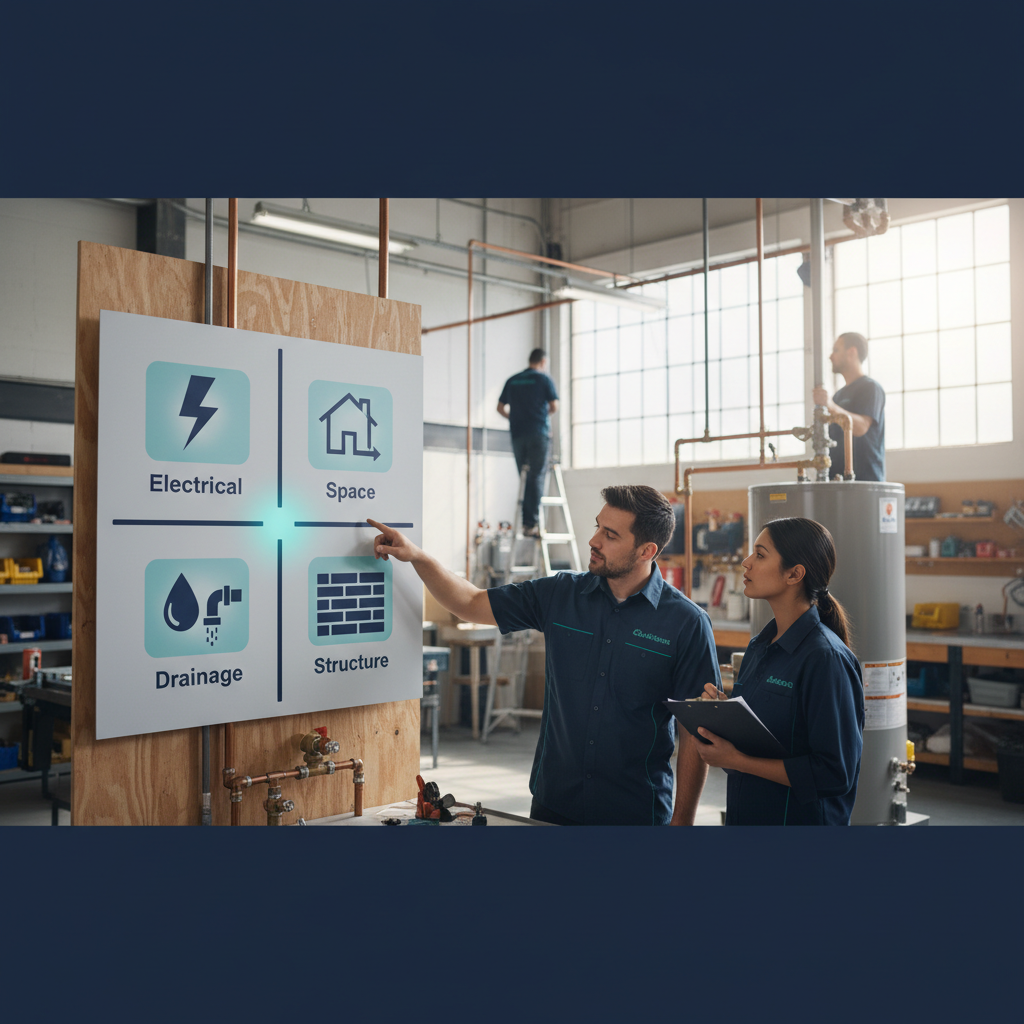
- The 4-Quadrant Framework assesses Electrical Readiness, Space/Airflow, Drainage, and Structural Integrity.
- New 120V “Plug-and-Play” models can save homeowners up to $5,000 by avoiding main panel upgrades.
- Stacking BayREN, TECH California, and Federal tax credits can offset up to $4,900+ in costs.
- Preparation for the 2027 BAAQMD mandate should begin at least 24 months before your current tank fails.
1. Electrical Readiness: Avoiding the $5,000 Panel Trap
The biggest hurdle for Bay Area home electrification is the antiquated 60-amp or 100-amp service found in most pre-1970 homes. Here’s the thing: you don’t always need a massive panel upgrade to go electric.
What most people miss is the emergence of 120-volt heat pump water heaters. These units plug into a standard outlet, drawing significantly less amperage than traditional 240-volt models. In our work with established homeowners in the Peninsula, we’ve found that many can bypass a $5,000 electrical overhaul by selecting a “shared circuit” technology model designed specifically for retrofits.
- 240V Dedicated Circuit: Requires a 30-amp breaker; best for large families with high recovery needs.
- 120V Plug-and-Play: Ideal for 2-4 person households; utilizes existing ungrounded circuits with minor safety modifications.
- Smart Circuit Splitters: Allows the water heater to share a circuit with an existing appliance like a dryer.
Before you commit, check the latest Energy.gov guidelines on tax credits for electrical upgrades. If you’re unsure if your panel can handle the load, schedule a professional electrical audit with our team.
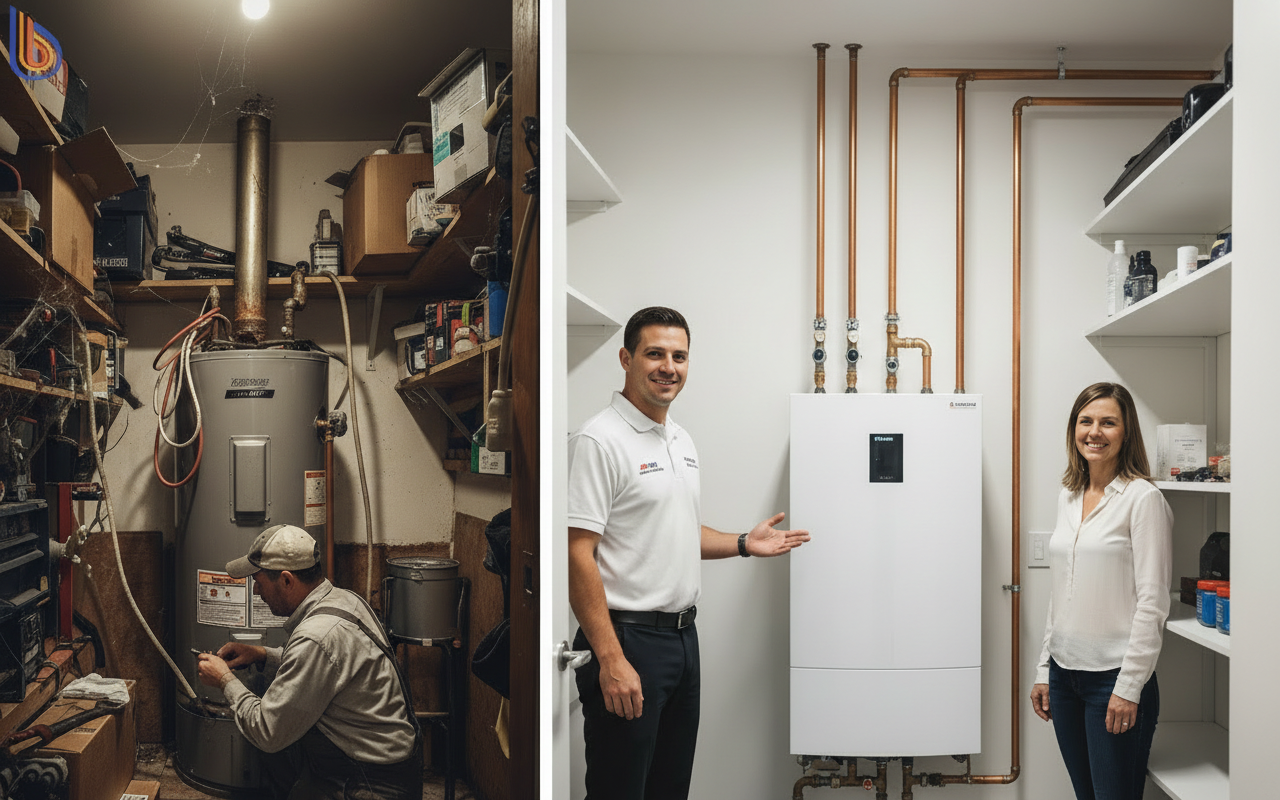
2. Space and Airflow: The “Closet” Constraint
Heat pumps require roughly 700 to 1,000 cubic feet of surrounding air to operate efficiently because they pull heat from the environment. In a classic mid-century ranch or Victorian utility closet, this space simply doesn’t exist without modification.
The real kicker? If you trap a heat pump in a tiny room, it will eventually turn the closet into a refrigerator, causing the unit to work harder and fail prematurely. For a successful heat pump retrofit framework, you must evaluate ventilation options like louvered doors or ducting.
- Louvered Doors: The simplest fix for interior closets to allow passive airflow.
- Ducting Kits: Pulling air from an attic or crawlspace and exhausting it outside.
- Outdoor Siting: Common in San Jose or East Bay where temperate climates allow for exterior enclosures.
In our work with mid-market residential clients, we often suggest the “Hybrid Approach.” This involves using a split-system where the tank stays inside, but the compressor sits outdoors, preserving precious square footage in tight urban footprints.
3. Drainage and Condensate Management
Unlike your old gas tank, a heat pump water heater is essentially an air conditioner that produces water (condensate). A historic home water heater rarely has a floor drain nearby, which can lead to messy DIY workarounds if not handled correctly.
But wait—don’t let the lack of a drain stop your project. We frequently install low-profile condensate pumps that move the water through a small tube to a nearby laundry standpipe or through an exterior wall. This is a critical component of Title 24 compliance Bay Area inspectors look for during the permit process.
| Drainage Method | Ideal For | Relative Cost |
|---|---|---|
| Gravity Drain | Garages with floor drains | Low |
| Condensate Pump | Interior closets/Basements | Medium |
| Crawlspace Termination | Raised foundation homes | Medium |
Need to see how this looks in a real home? Browse our installation gallery for examples of clean drainage solutions in Berkeley and Oakland.
4. Structural Integrity and Noise Mitigation
Heat pumps contain a compressor and fan, which means they vibrate. In a legacy redwood-frame home, these vibrations can resonate through the floorboards, creating a low hum that bothers sensitive sleepers.
The real insight most contractors won’t tell you: standard rubber pads aren’t enough for second-story installations. We recommend high-density vibration isolation mounts and flexible water connectors to decouple the unit from the home’s structure. This is especially important for historic home water heater replacements where lath-and-plaster walls may be more prone to cracking from sustained micro-vibrations.
One honest, contrarian insight: Heat pumps are louder than gas tanks. If your water heater is located directly behind a bedroom wall in a thin-walled mid-century home, you might want to consider a different location or a high-end model like the Rheem ProTerra which is rated for lower decibel levels.
If you are managing multiple properties or trying to scale your home’s efficiency, using a tool like Ingest.blog (our internal AI content engine) can help you document and share these technical maintenance requirements across your portfolio.
5. Navigating BAAQMD Water Heater Regulations
The BAAQMD water heater regulations are moving fast. By 2027, you will likely be unable to buy a standard gas water heater in the Bay Area. Starting your heat pump retrofit framework now allows you to take advantage of current BayREN rebates 2024 before the “rush” happens and labor prices spike.
What most people miss is that these rebates are often “stackable.” You can combine federal tax credits under the Inflation Reduction Act with local utility incentives from Peninsula Clean Energy or Silicon Valley Clean Power. For a typical Bay Area client, this can look like:
- $2,000 Federal Tax Credit (25C)
- $1,000 – $2,000 BayREN/TECH Rebate
- $500 – $900 local utility bonus
Ready to maximize your savings? Contact us today for a rebate-optimized quote.
6. The 2027 Deadline: Why You Need a Multi-Year Plan
If your water heater is over 10 years old, you are on borrowed time. Replacing it during an emergency (when your garage is flooding) is the worst time to try to implement a heat pump retrofit framework. You’ll likely be forced to install another gas unit just to get the hot water back on, locking you out of electrification for another decade.
Instead, use this week to check your electrical panel capacity and measure your utility closet. Knowing your “Quadrant Status” now means you can act decisively when a sale on a Rheem ProTerra vs AO Smith Voltex pops up, or when a new round of BayREN rebates 2024 is announced.
FAQs About Heat Pump Retrofits
How much does a San Francisco electrical panel upgrade cost for a heat pump?
A full panel upgrade in San Francisco typically ranges from $3,500 to $6,000 depending on permit fees and PG&E requirements. However, using a 120V heat pump or a circuit-sharing device can often eliminate this cost entirely, making the retrofit much more affordable for older homes.
Are heat pump water heaters noisy in older homes?
Heat pumps produce about 45-55 decibels of sound, similar to a modern dishwasher. In older homes with wood flooring, we use vibration isolation pads and sound-dampening blankets to ensure the noise doesn’t travel through the joists into living areas or bedrooms.
Do I need a permit for a heat pump water heater in the Bay Area?
Yes, all Bay Area jurisdictions require a plumbing and electrical permit for heat pump installations. This ensures that the seismic strapping, electrical safety, and condensate drainage meet current California Title 24 codes. We handle the entire permitting process for our clients.
What is the 4-Quadrant Compatibility Framework?
It is a diagnostic tool we use to evaluate a home’s readiness for a heat pump. It covers: 1) Electrical capacity, 2) Space/Airflow availability, 3) Condensate drainage paths, and 4) Structural/Noise considerations. Addressing all four ensures a reliable, long-term installation.
Don’t wait for your old tank to burst. Book your Feasibility Audit with Better Water Heaters today and stay ahead of the 2027 gas ban.