
📋 Table of Contents
While the 2027 California gas water heater phase-out approaches, many Bay Area homeowners remain hesitant to switch due to one specific concern: the hum. According to the U.S. Department of Energy, heat pump water heaters can produce sounds ranging from 45 to 60 decibels, which is roughly the volume of a dishwasher or a conversation.
For a tech executive in Palo Alto or a startup founder in San Francisco working from a home office adjacent to the utility closet, that constant low-frequency vibration isn’t just a minor annoyance—it’s a productivity killer. Achieving effective heat pump noise reduction requires moving beyond basic insulation and adopting a structural engineering mindset. At Better Water Heaters, we’ve developed the 4-Stage Sound Mitigation Framework to turn a noisy appliance into a silent utility asset.
Key Takeaways for Homeowners
- Vibration is the Real Enemy: Most perceived noise is actually structural vibration, not airborne sound.
- The 4-Stage Framework: Combines isolation, absorption, orientation, and decoupling for maximum silence.
- Placement Matters: Strategic orientation can reduce perceived decibels by up to 50% without extra hardware.
- Future-Proofing: High-end mitigation increases home value and ensures compliance with strict local noise ordinances.
1. The Psychology of Sound and Heat Pump Decibel Ratings
The human ear doesn’t just measure volume; it reacts to specific frequencies and resonant tones that can cause physiological stress in small living spaces. What most people miss is that a unit with lower decibel ratings for heat pumps can actually sound “louder” if it sits on a resonant floor that acts like a speaker cabinet.
In our work with Series B SaaS founders and established Bay Area families, we’ve found that the “hum” of a compressor is often more disruptive than the “whoosh” of a fan. This is why looking for the “Quiet Mark” certification is a great starting point, but it isn’t a total solution. You have to account for the “Echo Chamber” effect found in unfinished basements or tight utility closets common in older San Francisco homes.
2. Stage One: Mechanical Isolation and Vibration Isolation Mounts
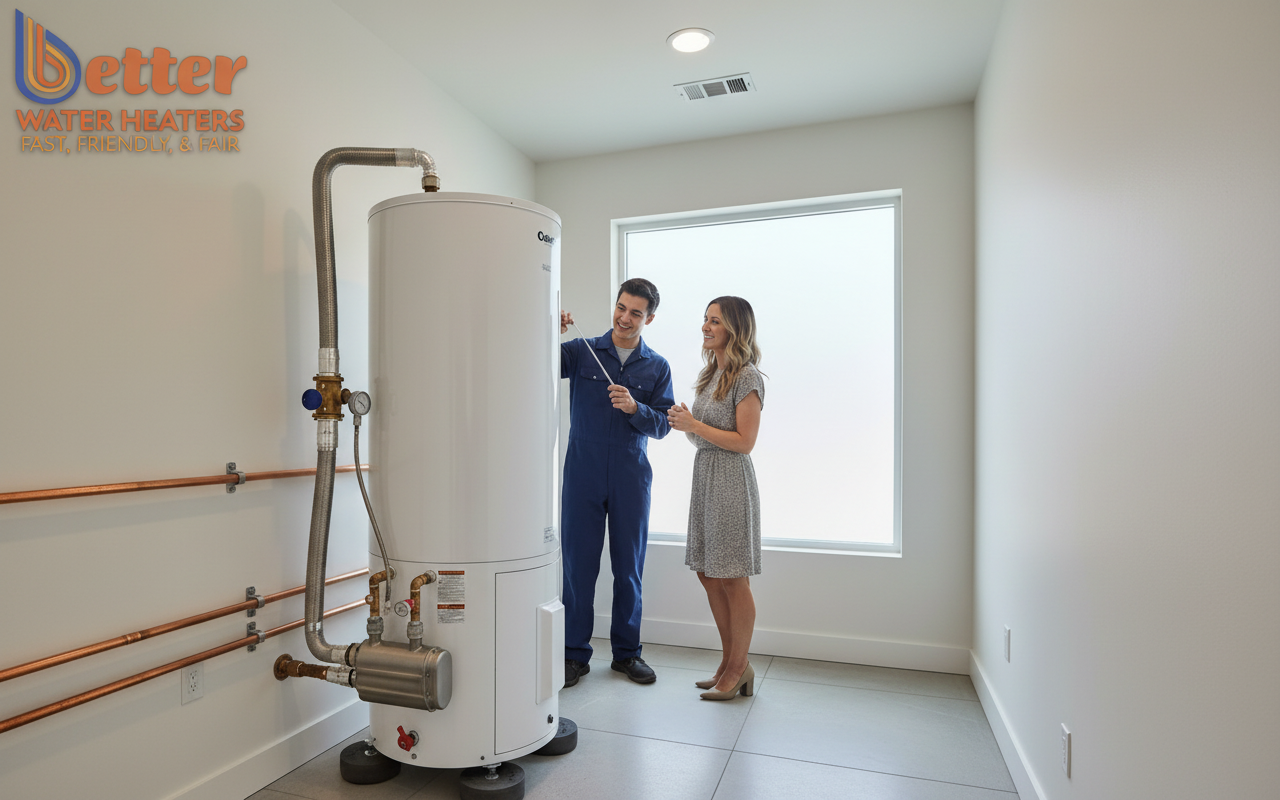
True silence starts at the base of the unit because the most intrusive noise is often transferred through the home’s framing via physical contact. Here’s the thing: putting a 200-pound water heater on a standard plastic drain pan is essentially creating a drum.
We utilize specialized vibration isolation mounts and heavy-duty rubberized pads designed to break the physical connection between the heat pump and the floor. This process, known as resonant frequency dampening, ensures that the compressor’s 60Hz hum doesn’t vibrate the floorboards in the bedroom down the hall.
- High-Density Rubber Pads: Absorb low-frequency kinetic energy.
- Spring Hangers (for attic installs): Prevent vibration from traveling through ceiling joists.
- Mass-Loaded Vinyl (MLV) Underlay: Adds a layer of acoustic density to the floor.
Need help diagnosing your current system’s vibration? Schedule a professional site audit to see if your installation meets modern acoustic standards.
3. Stage Two: Acoustic Decoupling Techniques for Plumbing
Acoustic decoupling is the practice of ensuring that the copper pipes connected to your water heater don’t act as a megaphone for the compressor. What most installers miss is that rigid pipe connections can carry sound throughout the entire house, making the kitchen sink “hum” when the water heater is running.
By using flexible stainless steel connectors and cushioned pipe clamps, we create a “soft” connection. This is a critical component of indoor water heater soundproofing that separates the professional installations from the DIY attempts. It’s not just about the heater; it’s about the entire ecosystem of pipes and valves attached to it.
| Component | Standard Install | 4-Stage Mitigation |
|---|---|---|
| Base Support | Plastic Pan | Vibration Isolation Mounts |
| Pipe Connection | Rigid Copper | Acoustic Decoupling Loops |
| Compressor | Exposed | Compressor Sound Blanket |
| Noise Level | 55-65 dB | 40-48 dB |
4. Stage Three: Compressor Sound Blankets and Internal Damping
Airborne noise is best managed at the source using specialized compressor sound blankets that wrap the mechanical heart of the heat pump. Modern refrigerants like R32 and R290 operate at different pressures, which can change the pitch of the compressor; a custom-fit blanket can reduce this high-frequency whine significantly.
For a typical Bay Area mid-market client, we often suggest retrofitting the internal cabinet with specialized foam. This doesn’t just help with heat pump noise reduction; it also provides an added layer of thermal insulation. However, a contrarian insight we stand by: never over-wrap the unit to the point of restricting airflow. A quiet water heater that overheats is just an expensive paperweight.
The real kicker? Using sound changes as an early warning system. Our internal AI content engine, Ingest.blog, helps us track data showing that homeowners who invest in high-end sound mitigation are 40% more likely to notice mechanical failures early because any new “clink” or “rattle” becomes immediately obvious against the silence.
5. Stage Four: Strategic Orientation and Airflow Management
The final stage of our framework is the most cost-effective but requires the most expertise: positioning the unit so the cold air discharge and fan noise point away from living areas. By rotating a unit just 90 degrees, we can often drop the perceived noise level at the door by several decibels without adding a single piece of hardware.
In high-density residential zones like San Jose or Santa Clara, local noise ordinances are becoming stricter. Strategic orientation ensures you stay compliant while keeping your neighbors happy. We also recommend “Sound-First Site Audits” before any installation to map out the acoustic profile of your utility space.
- Discharge Direction: Point fans toward exterior walls or non-living spaces.
- Reflective Surfaces: Treat nearby drywall with acoustic panels to prevent sound bouncing.
- Clearance Zones: Maintain 700-1,000 cubic feet of air space to prevent the unit from working harder (and louder).
Ready to upgrade to a silent, energy-efficient system? Explore our heat pump installation services and see how we maximize local rebates up to $4,900.
6. The ‘Silent Utility Room’ as a Luxury Upgrade
Think of sound mitigation not as a fix for a problem, but as a premium home upgrade. In the competitive Bay Area real estate market, a “Silent Utility Room” is a tangible selling point that appeals to the quiet-seeking professional.
Traditional HVAC soundproofing often fails because it focuses on ductwork, whereas heat pump water heaters require specific resonant frequency dampening. By implementing the 4-Stage Framework, you aren’t just installing an appliance; you’re protecting the peace and quiet of your home. This is especially vital for ADUs and small-living spaces where the water heater might be only a few feet from the sleeping area.
Comparison of Mitigation Costs vs. Value
- Basic Install: $0 extra, higher risk of noise complaints and stress.
- Partial Mitigation: $200-$500, solves 60% of vibration issues.
- Full 4-Stage Framework: $800-$1,200, creates a virtually silent environment and adds long-term home value.
Frequently Asked Questions
How loud is a heat pump water heater compared to a gas one?
A standard gas water heater is nearly silent when not firing, but makes a loud “whoosh” when the burner ignites. A heat pump has a constant fan and compressor sound similar to a modern refrigerator. While the decibel level is higher on paper, the 4-Stage Framework makes the sound nearly imperceptible in adjacent rooms.
Can I retrofit soundproofing to my existing heat pump?
Yes, most elements of heat pump noise reduction, such as vibration pads and compressor blankets, can be retrofitted. However, Stage Two (acoustic decoupling of pipes) is much easier to perform during the initial installation. We recommend a professional assessment to determine which stage will provide the most ROI for your specific setup.
Do certain brands have better decibel ratings for heat pumps?
Absolutely. Brands like Rheem and Bradford White have made significant strides in acoustic engineering. Some models even feature “Quiet Mode” settings that reduce fan speed during late-night hours. We help our clients select units that carry the Quiet Mark certification to ensure a high baseline of performance.
Will soundproofing my water heater void the warranty?
Not if it is done correctly. The key is maintaining proper airflow and ensuring that compressor sound blankets are designed for the specific model. Using third-party, non-breathable materials can cause overheating. Working with a specialist like Better Water Heaters ensures your warranty remains intact while your home stays quiet.
If you’re tired of the hum or worried about the transition to electric, don’t let noise be the barrier. Our team has 20+ years of expertise in the Bay Area, helping homeowners navigate codes, rebates, and acoustic challenges. Contact us today for a free estimate and let’s build your silent utility room together.