
📋 Table of Contents
According to the U.S. Department of Energy, modern heat pump water heaters are up to three times more efficient than traditional electric models, yet many homeowners hesitate to switch due to concerns about operational sounds. While the efficiency gains are undeniable, a quiet water heater installation is essential for maintaining the sanctuary of your Bay Area home, where property lines are tight and acoustic comfort is a premium commodity.
Key Takeaways for Homeowners
- Equipment Selection: Choosing units with variable speed compressors significantly lowers average decibel ratings.
- Vibration Control: Acoustic decoupling prevents harmonic resonance from traveling through wall studs.
- Strategic Placement: Proper clearance and orientation can reduce perceived noise by up to 50%.
- Local Compliance: Meeting Bay Area noise ordinances is critical for long-term property value.
1. Selecting Equipment Based on Decibel Ratings for Water Heaters
The first step in a quiet water heater installation is acknowledging that not all heat pumps are created equal in the eyes—or ears—of a decibel meter. Most standard heat pumps operate between 45 and 55 decibels (dBA), which is roughly equivalent to a quiet dishwasher or background conversation.
But wait—those numbers are often measured in laboratory settings, not in a resonant garage or a tight utility closet. For a typical Bay Area mid-market client, we recommend looking specifically at the sound pressure level (SPL) data provided by manufacturers like Rheem or Bradford White. Higher-end models feature variable-speed compressors that ramp up and down slowly, avoiding the jarring “thump” of a single-stage motor kicking on at 2:00 AM.
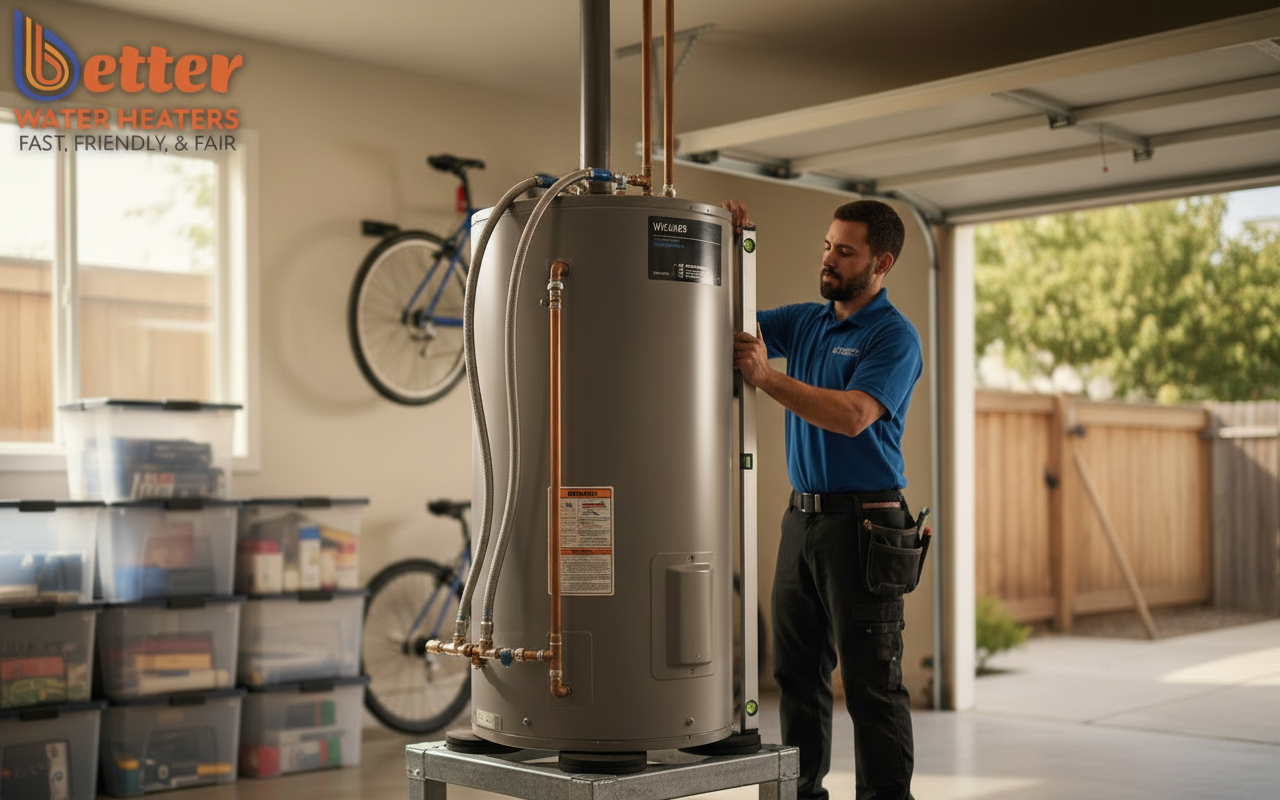
What most people miss is that the frequency of the sound matters as much as the volume. Low-frequency hums can penetrate standard drywall more easily than high-pitched fan noise. When comparing decibel ratings for water heaters, look for units that incorporate integrated compressor blankets. These internal sound-dampening layers are the difference between a unit you forget is there and one that keeps the guest bedroom vibrating.
Need help navigating the technical specs? Contact our specialists for a personalized equipment recommendation.
2. Acoustic Decoupling and Anti-Vibration Mounting Pads
The real kicker in noise complaints isn’t usually the air-borne sound, but the structural vibration that turns your home’s framing into a giant tuning fork. This phenomenon, known as harmonic resonance, occurs when the compressor’s vibration matches the natural frequency of your wall studs.
In our work with tech-savvy homeowners in San Jose and Palo Alto, we’ve found that standard mounting brackets almost always fail to address this in older homes with rigid redwood framing. Here is the framework for structural isolation:
- Anti-vibration mounting pads: High-density rubber or cork pads placed under the tank to absorb micro-vibrations.
- Flexible connectors: Using braided stainless steel lines instead of rigid copper for the final 18 inches of plumbing prevents vibration from traveling through the pipes.
- Acoustic decoupling: Ensuring the unit does not physically touch the wall studs or framing members.
Here’s the thing: even the quietest unit will sound loud if it’s bolted directly to a plywood subfloor without an isolation layer. By using anti-vibration mounting pads, we break the physical path the sound takes into your living space. According to Energy.gov, proper installation is the single most important factor in long-term satisfaction with heat pump technology.
3. Strategic Placement and Airflow Logistics
Placement is where the “Good Neighbor Policy” meets technical necessity, especially in densely packed neighborhoods in San Francisco or Berkeley. A quiet water heater installation requires at least 700 to 1,000 cubic feet of air space to operate efficiently, but where that air comes from—and where the exhaust goes—dictates the acoustic profile.
| Installation Location | Noise Concern | Mitigation Strategy |
|---|---|---|
| Attached Garage | Vibration through shared walls | Isolation pads + 12″ wall clearance |
| Utility Closet | Airborne fan noise | Louvered doors with acoustic foam |
| Outdoor Enclosure | Property line noise | Directional exhaust + sound baffles |
The real insight? Avoid placing the exhaust fan directly facing a neighbor’s window or a bedroom wall. Sound reflects off hard surfaces; if you tuck a heat pump into a tight corner with three concrete walls, you’ll create a megaphone effect that amplifies heat pump noise levels significantly. We often use the same spatial logic we apply to tankless systems to ensure optimal airflow without the acoustic bounce-back.
4. Smart Scheduling and ‘Quiet Mode’ Optimization
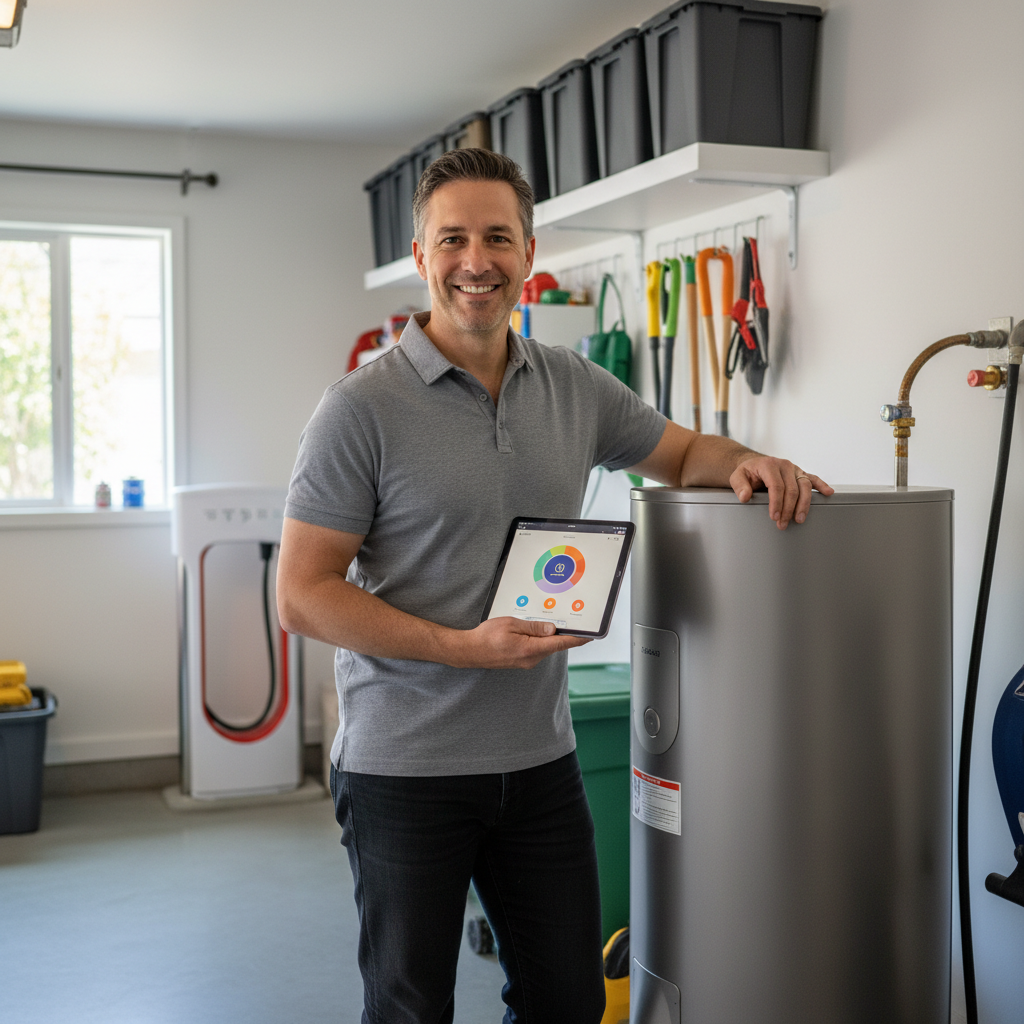
Most modern heat pump water heaters now feature smart home integration that allows for ‘Quiet Mode’ scheduling. This is a game-changer for homeowners who are sensitive to sound during the evening hours. You can program the unit to do its “heavy lifting”—the high-recovery heating cycles—during the middle of the day when ambient noise is higher and solar production (if you have it) is peaking.
But here’s a contrarian insight: Don’t over-rely on ‘Quiet Mode.’ While it reduces fan speed to lower heat pump noise levels, it also reduces efficiency and recovery time. If you have a large family taking back-to-back showers, a poorly timed quiet mode could leave you with a lukewarm morning. The goal should be a system so well-installed that you don’t need to throttled its performance just to get a good night’s sleep.
For those managing multiple properties, this smart integration also provides an ROI of silence. Tenants are far less likely to complain about a new appliance if it’s programmed to stay whisper-quiet during sleeping hours. Ready to upgrade your rental property? See our Bay Area service areas.
The ROI of a Professional Quiet Water Heater Installation
Investing in noise mitigation isn’t just about comfort; it’s about protecting your investment. In the Bay Area, where local noise ordinances can be strict, a system that exceeds decibel limits can result in costly retrofits or fines. Furthermore, as we move toward the 2027 zero-NOx requirements, heat pumps will become the standard. Doing it right the first time ensures your home is future-proofed and neighbor-approved.
What most people miss is that a loud water heater is often a sign of a struggling one. Excessive vibration can lead to premature wear on internal components and refrigerant leaks. By focusing on acoustic decoupling and proper mounting, you’re actually extending the lifespan of your unit.
Ready to experience the efficiency of a heat pump without the headache? Our team at Better Water Heaters has 20+ years of experience in the nuances of Bay Area installations. Schedule your free estimate today and let us help you maximize your rebates—up to $4,900—while keeping your home peaceful.
Frequently Asked Questions
How loud is a heat pump water heater compared to a refrigerator?
Most modern heat pump water heaters operate at 45-55 decibels, which is slightly louder than a high-end refrigerator (typically 38-45 dB). However, because the water heater is usually located in a garage or closet, the perceived noise inside the living area is often significantly lower than a kitchen appliance.
Can I install a sound blanket on my heat pump after it’s installed?
While you can add external acoustic baffles to a closet, you should never wrap the actual heat pump unit in a standard fiberglass water heater blanket. Heat pumps require significant airflow to function; obstructing the intake or exhaust will cause the unit to fail and void your warranty.
Do anti-vibration mounting pads really make a difference?
Yes, they are the most cost-effective way to reduce noise. By breaking the mechanical bond between the heater and the floor, you prevent the home’s structure from amplifying the compressor’s natural vibration. This is especially critical for installations on wooden subfloors or in attached garages.
Are there local Bay Area rebates for quiet heat pump models?
While rebates like TECH Clean California and those from Peninsula Clean Energy focus on efficiency (EF ratings), many of the highest-efficiency models that qualify for the full $4,900 in incentives also happen to be the quietest. These premium models utilize variable-speed technology which naturally lowers decibel levels.