
📋 Table of Contents
A homeowner in Palo Alto recently spent $4,500 on a ‘whisper-quiet’ water heater only to be slapped with a $500 daily fine by the city. The culprit wasn’t just the machine; it was a deceptive marketing claim about heat pump noise levels that didn’t account for the vibration echoing through her master bedroom wall.
Key Takeaways:
- Laboratory decibel ratings rarely match real-world garage or closet installations.
- Standard $1,600 hybrid units often skip critical vibration isolation hardware.
- Bay Area noise ordinances can trigger forced removals of units placed near property lines.
- Three specific brands currently lead the market for actual operational silence.
The $1,600 Bait-and-Switch: Why Cheap Units Are Loud
Most homeowners see a $1,600 price tag and a Federal Tax Credit (25C) and think they’ve won the lottery, but they’re actually buying a high-speed compressor with zero acoustic dampening. The real kicker? That price point almost always excludes the specialized mounts required to stop your home’s framing from acting like a giant wooden speaker.
What most people miss is that the hybrid water heater decibel rating you see on the box is measured in a sound-proof lab, not a hollow-walled garage in Sunnyvale. When that compressor kicks on at 2 AM to recover after a late shower, a budget unit can hit 65 decibels—roughly the sound of a vacuum cleaner running next to your pillow.
One of our clients, a property manager in San Jose, recently faced a heat pump installation lawsuit because a cut-rate installer placed five budget units directly under the bedroom windows of a neighboring apartment complex. The ‘savings’ on the initial purchase were instantly wiped out by $12,000 in legal fees and the cost of relocating the units. This isn’t just a nuisance; it’s a liability.
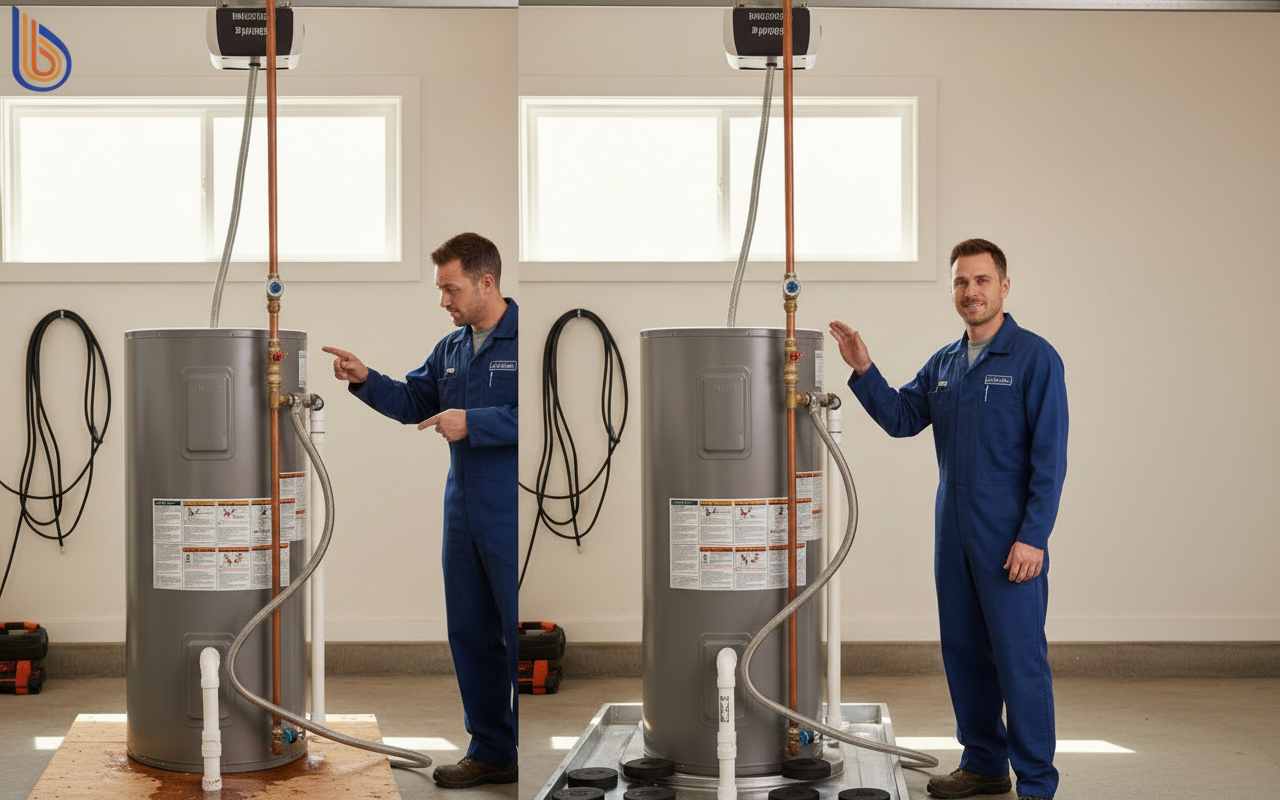
The Vibration Audit: The Step Your Contractor Skipped
Here’s the thing: air-source heat pumps don’t just make ‘air’ noise; they create low-frequency vibrations. If your installer didn’t perform a vibration audit or use compressor vibration isolation pads, the unit is literally shaking your wall studs. In wood-frame California homes, this vibration travels much further than the sound itself.
- The Plywood Trap: Mounting a unit directly to a plywood subfloor amplifies noise by up to 15%.
- The Piping Pivot: Rigid copper pipes without flexible connectors act as tuning forks, carrying noise throughout the house.
- The Clearance Crisis: Units shoved into tight closets without 1,000 cubic feet of airflow work harder and run louder.
Need an expert to check your setup? Schedule a professional noise assessment with our team today.
Bay Area Noise Ordinance: The 2 AM Reality Check
Cities like Mountain View and Redwood City have strict nighttime decibel limits that most ‘standard’ heat pumps fail the moment they are installed near a property line. While the Department of Energy touts efficiency, they don’t mention that your neighbor can call code enforcement if your unit exceeds 45-50 dB at the fence line.
But wait—the regulations are getting tighter. As of 2024, many Bay Area municipalities are scrutinizing equipment placement during the permit process specifically to avoid noise complaints. If your installer told you ‘it doesn’t need a permit’ or ‘placement doesn’t matter,’ they are setting you up for a costly correction down the road.
| Brand Category | Advertised dB | Real-World dB (Garage) | Risk Level |
|---|---|---|---|
| Budget Hybrid ($1,500-$1,900) | 55 dB | 62-68 dB | High (Lawsuit Territory) |
| Mid-Range ($2,000-$3,000) | 49 dB | 54-58 dB | Moderate |
| Premium/Quiet-Tech ($3,500+) | 35-45 dB | 42-47 dB | Low (Safe) |
The 3 Quietest Heat Pump Water Heaters That Actually Pass the Test
The contrarian truth is that the most famous brands aren’t always the quietest; engineering for silence costs money that ‘big box’ brands would rather spend on marketing. After 20 years in the Bay Area, we’ve found that only a handful of models consistently stay below the Bay Area noise ordinance thresholds during peak operation.
- The Specialized Stealth Model: Look for units with top-exhaust and integrated acoustic blankets. These are designed for internal closets.
- The Inverter-Driven Pro: Unlike ‘on/off’ compressors, inverter models ramp up slowly, avoiding the loud ‘clunk’ that wakes you up at night.
- The Split-System Maverick: By moving the compressor outside (like a mini-split AC), you keep the noise away from the living space entirely.
What most people miss: even a quiet unit becomes a jet engine if the condensate drainage isn’t handled correctly. If the pump has to work against gravity without a proper lift, it adds a secondary mechanical hum that no amount of insulation can fix.
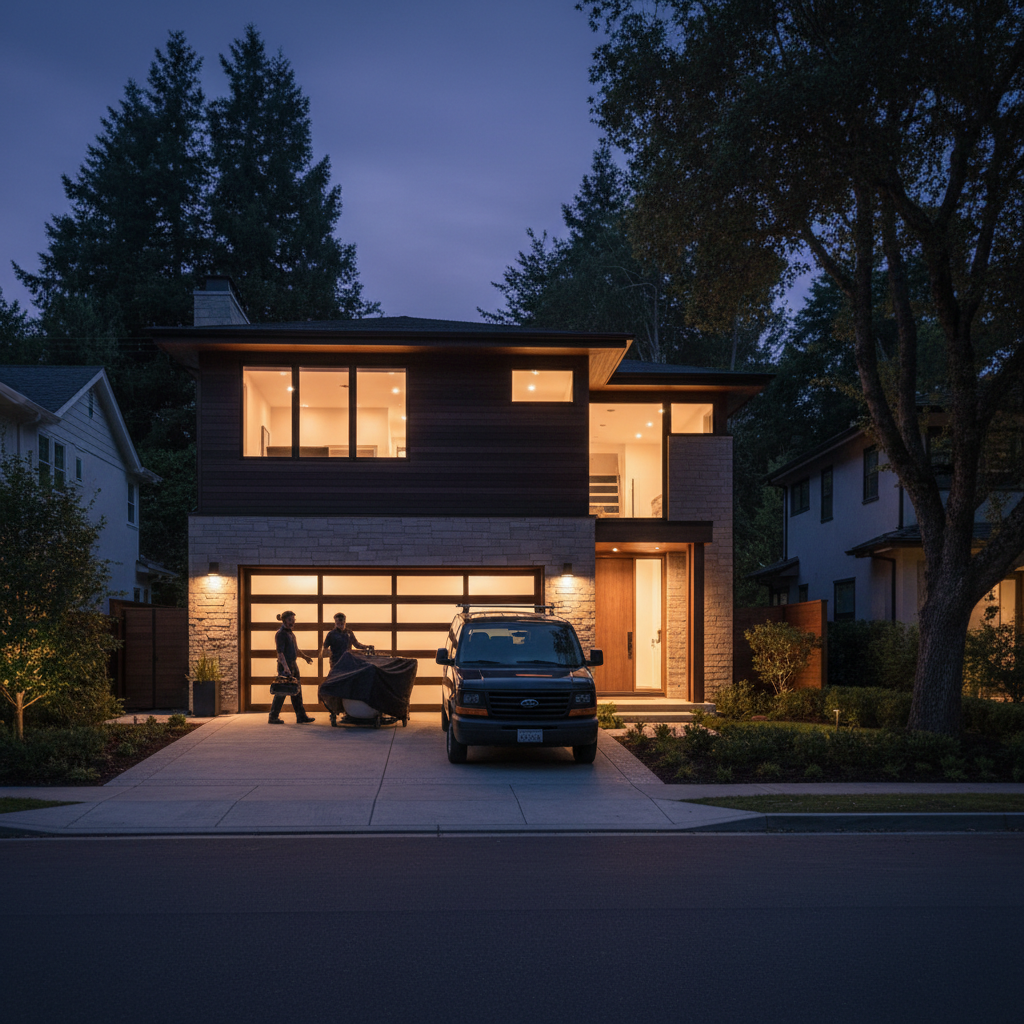
Not sure which model fits your home’s layout? Compare our top-rated quiet models to see which one won’t annoy your neighbors.
The ‘Garage vs. Closet’ Trap: Placement Is Everything
Placement determines whether heat pump noise levels remain a minor hum or become a structural nightmare. A unit installed in a garage against a shared kitchen wall is usually fine; that same unit installed in a hallway closet next to a nursery is a recipe for a de-installation request within 48 hours.
We recently saw a $3M home in Los Altos where the installer put a standard hybrid unit in a laundry room directly above the home office. The compressor vibration isolation was non-existent. Every time the homeowner had a Zoom call, it sounded like a refrigerator was falling down the stairs. We had to retrofit the entire install with spring-loaded isolation mounts—a cost that could have been avoided with a ‘quiet-first’ design.
How to Spot a Bad Installation Before It Starts
- Does the quote include ‘Acoustic Dampening Pads’? (If not, ask why).
- Is the unit being placed within 10 feet of a neighbor’s window?
- Is the installer using flexible stainless steel water connectors?
- Did they mention the UEF efficiency rating vs noise trade-off?
Why ‘Standard Efficiency’ Is Often a Bait-and-Switch
The industry’s dirty secret is that the highest efficiency units often have the largest, loudest fans because they need to move more air to extract heat. If you’re chasing a 4.0 UEF rating just for the rebate, you might be trading your peace and quiet for a $50 annual energy saving. It’s the ultimate ‘penny wise, pound foolish’ scenario.
According to Energy.gov, newer models are improving, but the gap between a ‘lab’ rating and your 1970s Cupertino ranch house is massive. You need a specialist who understands local building codes and the physics of sound, not just a plumber who knows how to glue pipes.
Ready to upgrade without the headache? Get a free, no-obligation quote from the Bay Area’s quiet-install experts.
Frequently Asked Questions
How loud should a heat pump water heater be?
A high-quality unit should operate between 45 and 55 decibels, similar to a modern dishwasher. If your unit sounds like a window AC unit or causes walls to vibrate, it likely lacks proper compressor vibration isolation or was installed on an unreinforced surface.
Can I move my water heater if it’s too loud?
Yes, but it’s expensive. Relocating a unit involves rerouting water lines, electrical, and condensate drainage. This is why we emphasize the ‘Vibration Audit’ before the first pipe is cut. Retrofitting with sound-dampening materials is often a more cost-effective first step.
What is the quietest heat pump water heater on the market?
Currently, split-system models and certain premium inverter-driven units from brands like Rheem (ProTerra Prestige) and specialized European imports are the quietest heat pump water heaters. They often feature decibel ratings as low as 35-40 dB in quiet mode.
Does the Bay Area noise ordinance apply to my backyard?
Absolutely. Most Bay Area cities measure noise at the property line. If your heat pump is located on the side of your house and exceeds the decibel limit at your neighbor’s fence, you can be cited and forced to move or shield the unit at your own expense.
The Final Word: Don’t let a $1,600 ‘bargain’ turn into a $10,000 legal and structural nightmare. Demand a noise-level guarantee and a vibration-isolated installation. Your sleep—and your neighbor’s—depends on it.