Water heater article archive
Heat Pump Efficiency Ghost: Why Your Bills are Skyrocketing
Historical article, not newly reviewed advice. Verify current requirements, incentives and model guidance with the relevant authority or manufacturer before relying on them. Equipment and service needs require an assessment.
📋 Table of Contents
One of our clients in Palo Alto recently opened a $450 PG&E bill only to realize their brand-new, high-efficiency water heater was actually a heat pump efficiency ghost, haunting their wallet while providing lukewarm results. Despite spending nearly $4,000 on a top-tier hybrid unit, the system had defaulted to 100% electric resistance heat costs because a legacy plumber forgot one $5 sensor calibration.
Here’s the cold, hard truth: thousands of Bay Area homeowners are currently paying a premium for green technology that is effectively operating as a standard, inefficient electric tank. When a heat pump isn't installed with precision, it stops using the compressor and starts relying on the "emergency" heating elements. This isn't just a minor glitch; it’s a systemic failure that kills your ROI and negates those federal tax credits you were counting on.
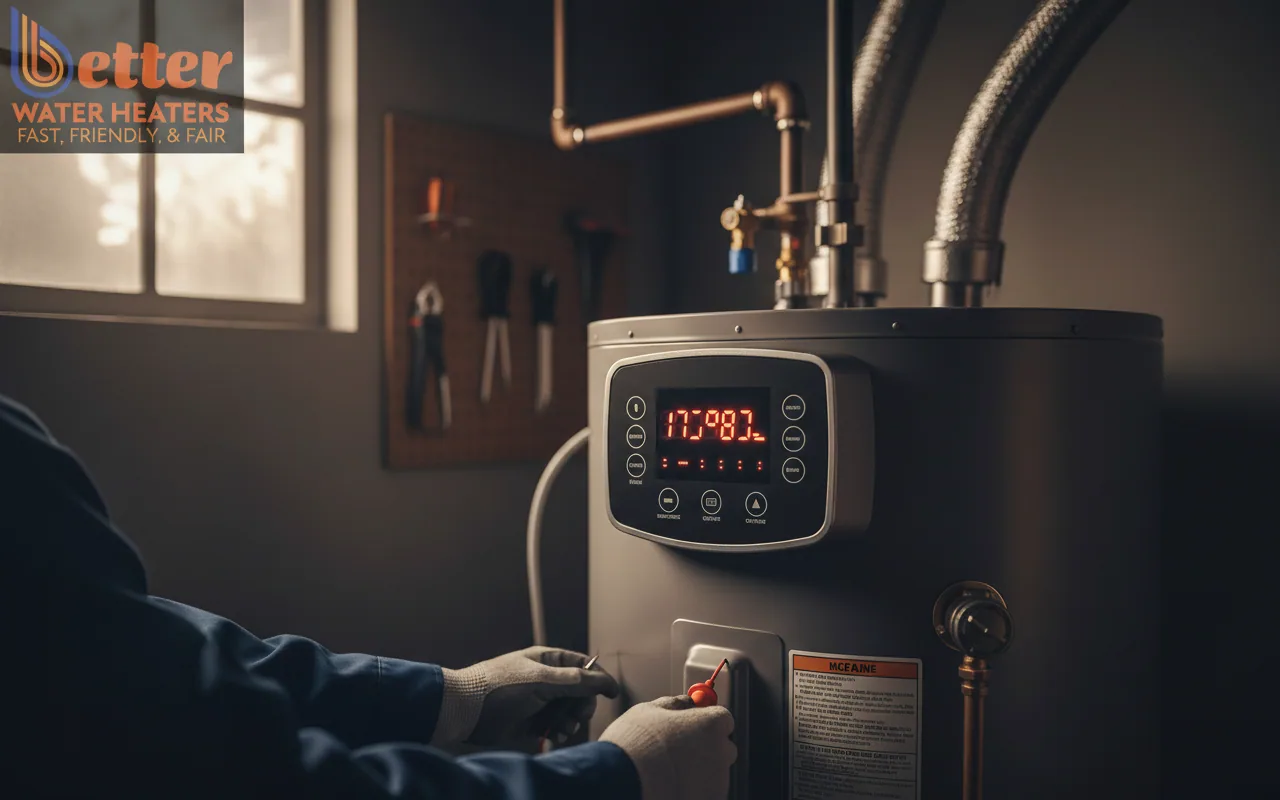
The Silent Failure: Why Your Compressor Isn't Kicking In
What most people miss is that a heat pump water heater is essentially an air conditioner running in reverse, and it requires specific ambient conditions to actually function.
The real kicker? If your garage or utility closet drops below 40 degrees—or if the airflow is restricted by poor ducting—the unit triggers a fail-safe. It assumes the compressor can't keep up and switches to "High Demand" or "Electric Only" mode. You still get hot water, so you don't call a repairman, but your meter is spinning like a top. This heat pump efficiency ghost is the primary reason why "efficient" homes often see zero net savings in the first year.
- Improper Venting: Without at least 700-1,000 cubic feet of air, the unit suffocates and defaults to resistance mode.
- Sensor Misalignment: If the upper and lower thermistors aren't calibrated, the tank thinks it's under heavy load constantly.
- The 'Set and Forget' Trap: Many installers leave the unit in "Electric" mode during the initial fill and never switch it back to "Hybrid."
Calculating the Damage: Electric Resistance Heat Costs vs. Hybrid Savings
The difference between a 3.5 COP (Coefficient of Performance) and a 1.0 COP is the difference between a $15 monthly operating cost and a $95 one.
Think about a $4M estate in Los Gatos we serviced last month. They had two 80-gallon hybrids that were both stuck in 100% electric mode due to heat pump calibration errors. They were losing roughly $140 per month in potential savings. Over the 15-year lifespan of the units, that "ghost" would have cost them over $25,000 in wasted electricity. That’s more than the cost of the units and installation combined!
| Heating Mode | Efficiency (COP) | Estimated Monthly Cost (Bay Area) | Annual Carbon Impact |
|---|---|---|---|
| Heat Pump Only | 3.0 - 4.0 | $12 - $20 | Low |
| Hybrid (Balanced) | 2.0 - 3.0 | $25 - $40 | Moderate |
| Electric Resistance | 1.0 | $80 - $120 | High |
Need to know if your unit is actually saving you money? Schedule a professional efficiency audit with our team to bust the ghost in your garage.
The Contractor Education Gap: Why Legacy Plumbers Fail High-Tech Units
The surprising insight most homeowners ignore is that your average plumber is great with a pipe wrench but terrible with a circuit board.
Legacy installers often view heat pumps as "fancy electric tanks." They strap them in, wire them up, and walk away without ever touching the digital interface. This leads to heat pump calibration errors that force the unit to work twice as hard for half the result. At Better Water Heaters, we’ve seen units where the condensate line was backed up, causing the internal computer to disable the compressor entirely. The homeowner had no idea because the electric elements kept the water hot.
- Firmware Updates: Modern units like the Rheem ProTerra require firmware updates that most plumbers don't even know exist.
- Anode Rod Conflicts: Using the wrong type of powered anode rod can interfere with the unit’s electrical grounding, triggering safety shutdowns.
- Ducting Sabotage: Installing a heat pump in a closet without louvered doors is a guaranteed way to summon the heat pump efficiency ghost.
Diagnostic Checklist: Is Your Heat Pump Actually a Hybrid?
The best way to identify a failure is to listen to your home—if you don't hear a fan humming, you're losing money.
Here is how you can spot the problem before the utility company sends you a bill that ruins your weekend. Check your unit's display panel. If it says "Electric" or "High Demand" and you haven't had twelve guests staying over, you have a configuration issue. Also, check the air temperature coming out of the top of the unit; it should be significantly colder than the surrounding room air. If it isn't, your compressor is dormant.
- Check the App: Most modern units (EcoNet, etc.) show real-world energy usage. If you see spikes during off-peak hours, your resistance elements are firing.
- Monitor the Recovery: A heat pump takes longer to recover. If your tank is hot 20 minutes after a 4-person shower run, it's using electric resistance heat costs to catch up.
- Look for Error Codes: Many units won't "beep" at you; they'll just quietly show a small wrench icon on the LCD.
Don't let a bad configuration eat your ROI. Read our guide on hybrid maintenance or call us at (408) 686-4969 to get your system back on track.
The Uncomfortable Truth About Undersizing
A contrarian take that often upsets sales reps: a 50-gallon heat pump often performs like a 30-gallon gas unit in the real world.
Because the recovery rate of a heat pump compressor is slower than a gas burner, many homeowners find themselves constantly running out of hot water. To compensate, they (or their frustrated spouses) switch the unit to "High Demand" mode. This permanently engages the resistance elements, effectively turning your $3,800 investment into a $600 heater with a very expensive computer attached. In the Bay Area, we always recommend "upsizing" to an 80-gallon unit to ensure the compressor can do the heavy lifting without needing the backup elements.
What most people miss: UEF Rating vs Real World performance varies wildly based on your specific household habits. If you have a high-flow rain shower head, you are likely outrunning your heat pump's compressor capacity every single morning.
Key Takeaways for Bay Area Homeowners
- Check your water heater's mode monthly; it should be in "Heat Pump Only" or "Hybrid."
- Ensure your unit has at least 8 inches of clearance from all walls for proper airflow.
- Verify that your installer performed a formal calibration of the thermistors during setup.
- Consider a larger tank size to maximize the Heat Pump Water Heater COP without relying on backup heat.
FAQs
How do I know if my heat pump is using electric resistance heat?
Check your unit’s control panel for the current operating mode. If it’s set to "Electric," "Emergency," or "High Demand," it’s likely using the resistance elements. You can also monitor your smart meter; a compressor uses about 500-800 watts, while resistance elements pull 4,500-5,000 watts instantly.
Is it normal for a heat pump to use resistance heat in the winter?
In the mild Bay Area climate, a properly sized heat pump should rarely need backup heat. However, if the ambient air in your garage drops below 40°F, the unit may briefly use resistance heat to assist. If this happens daily, you likely have a heat pump efficiency ghost caused by poor insulation or undersizing.
Can I fix heat pump calibration errors myself?
While you can toggle modes on the digital interface, actual sensor calibration often requires accessing the technician menu or updating the firmware via a proprietary app. Misconfiguring these settings can void your warranty, so it’s best to have a specialist handle the deep diagnostics.
Why are my electric resistance heat costs so much higher than gas?
Electric resistance heating is 100% efficient, meaning 1 unit of electricity creates 1 unit of heat. However, a heat pump is 300-400% efficient because it moves heat rather than creating it. In the Bay Area, where electricity rates are high, relying on resistance heating is significantly more expensive than burning natural gas.
The real kicker? Your "efficient" upgrade might be the biggest energy hog in your house right now. If your bills haven't dropped since your installation, you aren't crazy—you're just living with a ghost. Stop guessing and start saving. Contact Better Water Heaters today to exorcise your efficiency ghost and finally get the ROI you were promised.