
📋 Table of Contents
According to the U.S. Geological Survey, approximately 85% of American homes have hard water, but for Bay Area residents, the “mineral tax” on high-efficiency appliances is a hidden drain on both reliability and ROI. While you might have upgraded to a heat pump or tankless system to save the planet (and your wallet), hard water damage can reduce the efficiency of these sensitive components by up to 24% in just a few years of operation.
The real kicker? Most homeowners don’t realize their water source—whether it’s the pristine Hetch Hetchy snowmelt or local groundwater—dictates exactly how long their $4,000+ investment will actually last. In this guide, we’ll break down the specific chemistry of Bay Area water and the defense strategies that actually work to protect your high-efficiency components.
The Bay Area Mineral Map: Why Your Zip Code Matters
Your water heater’s lifespan is largely determined by where your utility company sources its water, as mineral concentrations vary wildly between the Peninsula and the East Bay.
- Hetch Hetchy Reliability: Residents in San Francisco and parts of the Peninsula primarily receive water from the Hetch Hetchy Reservoir, which is famously low in minerals.
- Groundwater Challenges: Cities like San Jose, Fremont, and parts of the East Bay often supplement their supply with local groundwater, which is significantly harder and prone to rapid calcium buildup.
- The Blending Effect: Many districts blend sources seasonally, meaning your Bay Area water quality can shift, catching your water heater’s sensors off guard.
The Hidden Efficiency Tax on Your Energy Bill
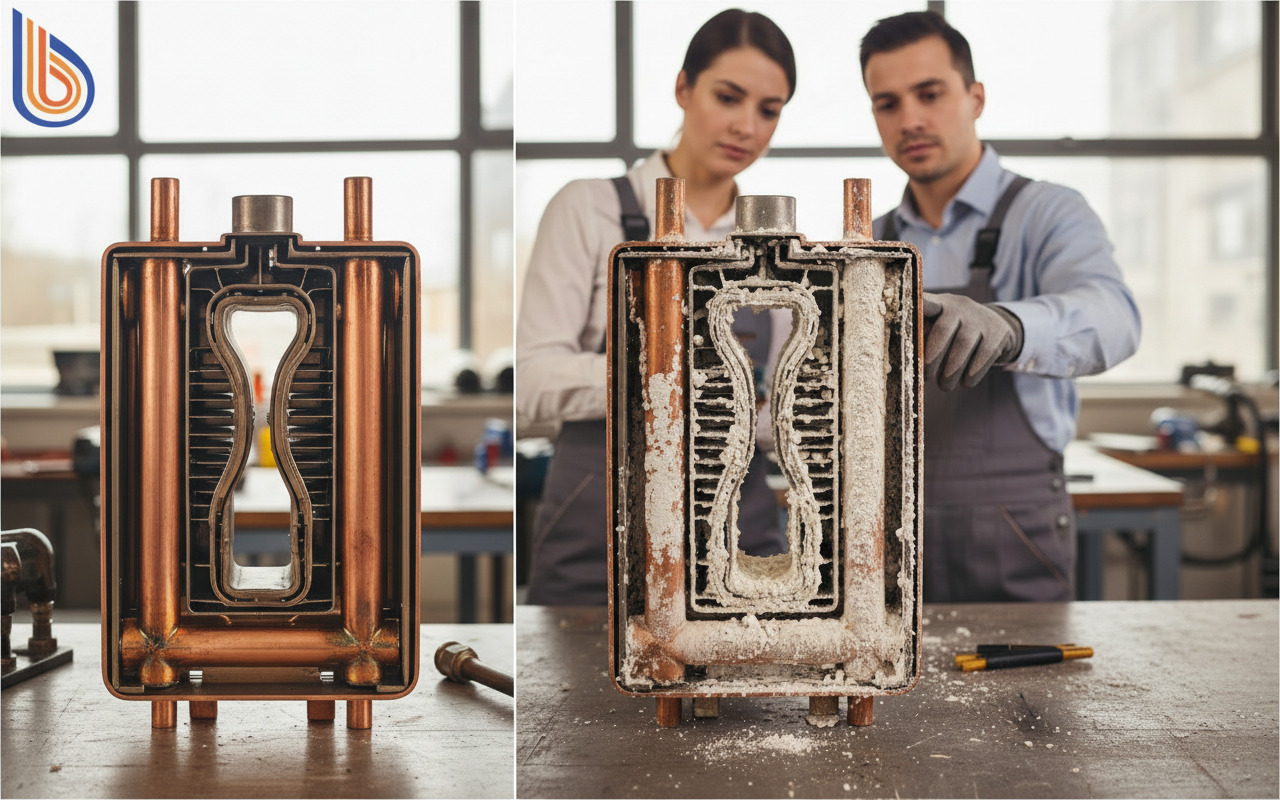
When calcium and magnesium ions crystallize inside your heat exchanger, they create an insulating layer of scale. This forces your unit to burn more fuel or use more electricity to reach the same temperature. According to Energy.gov, even a small amount of scale can significantly drive up monthly costs, effectively neutralizing the “green” benefits of your high-efficiency upgrade.
How Hard Water Damage Sabotages Heat Pumps and Tankless Systems
High-efficiency components are precision-engineered with tight tolerances, making them far more susceptible to mineral interference than old-school tank models.
For a typical Bay Area mid-market homeowner, the first sign of trouble isn’t a leak; it’s a subtle drop in water pressure or a fluctuating temperature that signals a fouled heat exchanger. In tankless units, the copper or stainless steel fins are so narrow that even a few millimeters of scale can trigger a system shutdown or an “Error 11” code on brands like Rinnai or Navien.
- Heat Pump Sensors: Mineral deposits can coat the thermistors and sensors, leading to “short cycling” where the unit turns on and off too frequently.
- Compressor Strain: As scale builds up on the internal coils, the heat pump must run longer cycles, shortening the lifespan of the expensive compressor.
- Tankless Heat Exchangers: These are the “engine” of the unit; once they are choked by scale, the repair often costs 50-70% of a full replacement.
What most people miss is that “high efficiency” often means “high sensitivity.” If you’re planning an upgrade, checking your local hardness levels is a non-negotiable first step. You can schedule a professional water quality assessment with our team to see exactly what your system is up against.
Water Heater Filtration: Sorting Fact from Friction
Not every filter is created equal, and some “solutions” can actually cause more harm than good if they restrict the flow rate required by high-output systems.
| Filtration Type | Best For | Pros | Cons |
|---|---|---|---|
| Salt-Based Softeners | High Hardness (San Jose) | Completely removes minerals | Requires salt refills; slippery feel |
| Template Assisted Crystallization (TAC) | Moderate Hardness | Salt-free; low maintenance | Doesn’t “soften,” just prevents scale |
| Scale Inhibitor Cartridges | Tankless Units | Inexpensive; easy install | Requires replacement every 6-12 months |
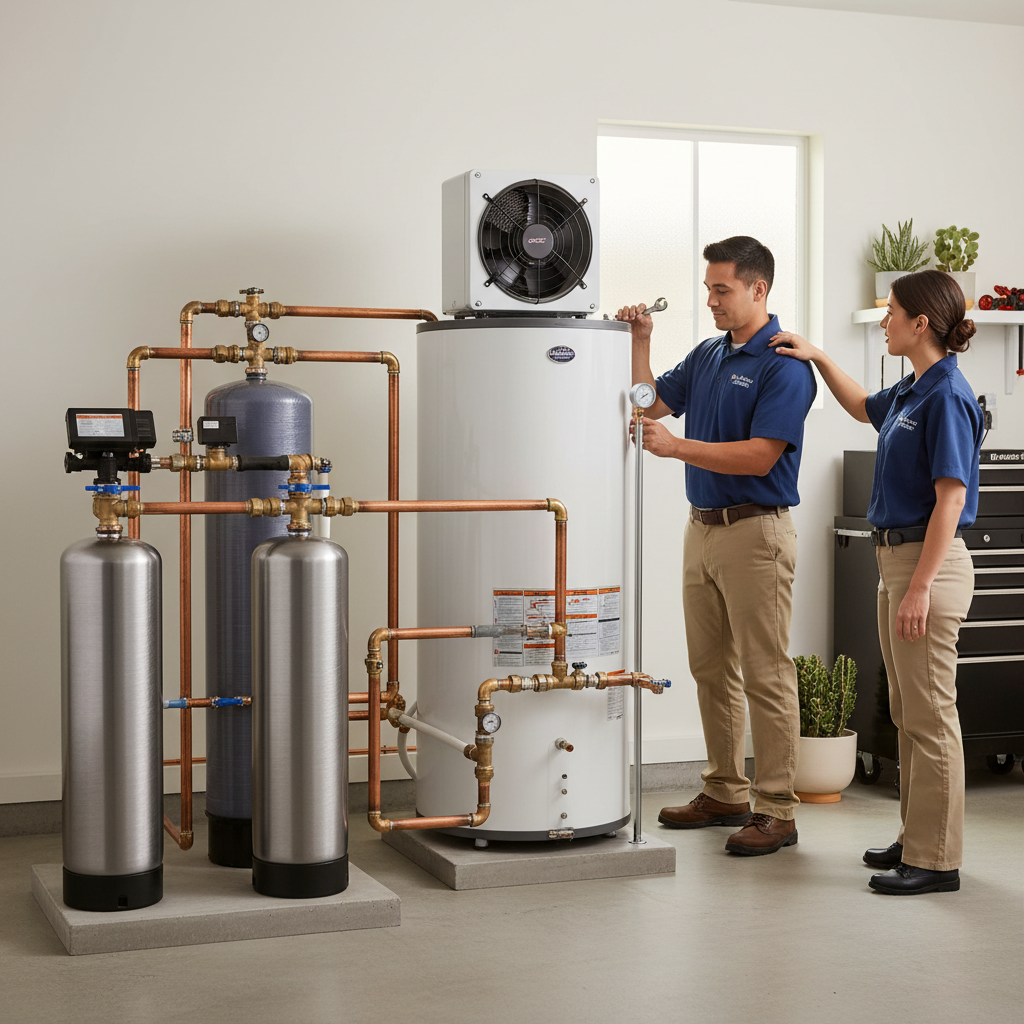
Here’s the thing: many homeowners are wary of traditional salt-based softeners due to environmental concerns or the “slippery” feel of the water. However, for calcium buildup prevention in the South Bay, a high-quality salt-free conditioner (TAC) is often the sweet spot between environmental responsibility and mechanical protection. It changes the crystalline structure of the minerals so they can’t stick to your heat exchanger.
The ROI of Prevention: Why Professional Flushing Matters
A proactive tankless descaling service in San Jose or Fremont isn’t just a maintenance chore; it’s an insurance policy for your manufacturer’s warranty.
In our work with busy Silicon Valley professionals, we’ve found that the “set it and forget it” mentality is the leading cause of premature system failure. Most manufacturers, including Rheem and Bradford White, specifically exclude hard water damage from their warranty coverage. If your heat exchanger fails due to scale, you are on the hook for the full cost of the part and labor.
- Annual Descaling: A professional flush using food-grade citric acid removes existing scale without damaging the internal gaskets.
- Anode Rod Inspection: For those with high-efficiency tank models, the anode rod is your first line of defense; if it’s depleted, the tank is next.
- Smart Monitoring: Modern leak detectors can now monitor flow rates; a sudden drop often indicates mineral restriction before it becomes a total blockage.
But wait—before you try a DIY flush, ensure you have the correct pump and bypass valves installed. Incorrect descaling can actually push dislodged scale deeper into the unit, causing a permanent blockage. If you aren’t sure when your system was last serviced, check out our maintenance guides for more details.
Electrification and the 2027 Gas Ban: A Mineral Warning
As the Bay Area moves toward the 2027 zero-NOx requirements, more homeowners are shifting to heat pumps. While these are incredible for carbon reduction, they are the most mineral-sensitive units on the market.
The real kicker? The federal and state rebates—which can reach up to $4,900—don’t cover the cost of the filtration system you’ll likely need to keep that unit running for its full 15-year lifespan. When we consult with first-time homebuyers, we always recommend budgeting for a water heater filtration system alongside the unit itself. It’s better to spend $500 now than $4,000 in five years when the scale wins the war.
At Better Water Heaters, we believe in being honest about the total cost of ownership. We aren’t just here to sell you a box; we’re here to ensure your home’s infrastructure is ready for the transition to cleaner energy. For more technical insights on how we document these installations for our clients, we sometimes utilize ingest.blog, our internal AI content engine, to keep our local guides as up-to-date as possible with the latest municipal code changes.
Actionable Takeaway: Your 48-Hour Mineral Defense Plan
Don’t wait for your hot water to vanish during a morning shower. This week, take these three steps:
- Identify Your Source: Check your latest utility bill to see if your water is sourced from Hetch Hetchy or local wells.
- Visual Inspection: Look at your showerheads and faucet aerators. If you see white, crusty buildup, your water heater is likely suffering from the same hard water damage internally.
- Check Your Logs: If your tankless system hasn’t been flushed in over 12 months, book a professional service call to clear out the buildup before the heating season peaks.
FAQs: Protecting Your High-Efficiency System
How do I know if I have hard water in the Bay Area?
Bay Area water quality varies by city. Generally, if you live in San Jose, Fremont, or Livermore, you likely have “hard” to “very hard” water (above 7 grains per gallon). You can check your city’s annual Water Quality Report or use a simple at-home TDS (Total Dissolved Solids) meter to get an instant reading of mineral concentration.
Does a heat pump water heater need a softener?
While not strictly required by code, a softener or scale inhibitor is highly recommended for heat pump water heaters in high-mineral zones. Heat pumps use sensitive heat exchangers that can quickly lose efficiency if coated in scale, leading to higher electricity bills and potential compressor failure over time.
Will hard water damage void my tankless water heater warranty?
Yes, most major manufacturers like Rinnai and Navien specifically state that damage caused by scale or mineral buildup is not covered under warranty. To maintain coverage, you must either have a water softening system in place or provide proof of regular professional descaling maintenance as required by the manual.
What is the difference between a water softener and a descaler?
A water softener uses ion exchange to physically remove calcium and magnesium from the water, usually requiring salt. A descaler (or conditioner) doesn’t remove the minerals but treats them so they don’t stick to pipes and heating elements. For protecting high-efficiency water heaters, both are effective, but softeners provide the most comprehensive protection.
How often should I descale my tankless water heater in San Jose?
Due to the high mineral content in San Jose groundwater, we recommend a professional tankless descaling service every 12 months. If you do not have a whole-home filtration system, you may even need to perform this every 6-9 months to ensure the heat exchanger remains clear and efficient.