Water heater article archive
Hard Water vs. Your Bay Area Pipes: Strategic Maintenance Guide
Historical article, not newly reviewed advice. Verify current requirements, incentives and model guidance with the relevant authority or manufacturer before relying on them. Equipment and service needs require an assessment.
📋 Table of Contents
Understanding the battle of hard water vs. your Bay Area pipes is essential for any homeowner looking to protect their investment. While our region is famous for innovation, our local water infrastructure often delivers high mineral content that acts like a 'hidden tax' on your appliances. Without proactive water heater maintenance, these minerals can lead to premature system failure and skyrocketing utility bills.
Key Takeaways for Homeowners
- Mineral buildup can reduce water heater efficiency by up to 25% in just a few years.
- San Jose and parts of the East Bay have significantly harder water than Hetch Hetchy-fed areas.
- Professional sediment buildup removal is the most cost-effective way to double your unit's lifespan.
- New heat pump water heaters require strict water quality management to maintain warranty compliance.
The Hidden Tax: How Hard Water vs. Your Bay Area Pipes Destroys Units
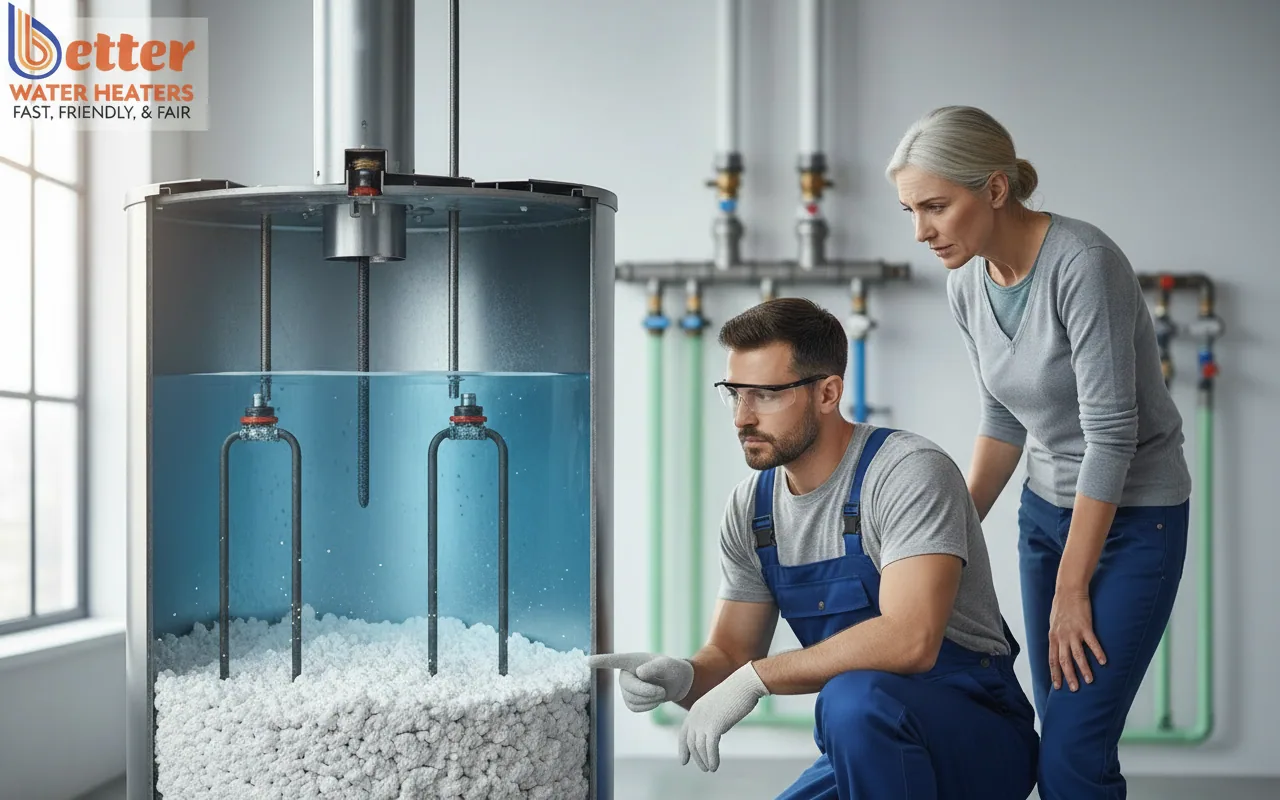
As of 2024, Bay Area homeowners are facing record-high energy costs. When calcium and magnesium carbonates—the primary components of hard water—enter your heater, they settle at the bottom of the tank. This creates a thick layer of scale that acts as an insulator between the burner and the water.
Consequently, your unit must run longer and hotter to achieve the same temperature. This thermal stress doesn't just waste gas or electricity; it physically degrades the glass lining of your tank. According to the U.S. Department of Energy, even a small amount of scale can significantly increase residential energy consumption.
- Efficiency Loss: Every 1/8 inch of scale buildup can increase energy costs by 12-15%.
- Component Failure: Scale coats heating elements in electric units, causing them to burn out prematurely.
- Noise Issues: That popping or rumbling sound is steam bubbles escaping through the sediment layer.
Regional Specificity: San Jose vs. San Francisco Water Quality
The impact of hard water vs. your Bay Area pipes varies wildly depending on your zip code. While San Francisco enjoys the relatively soft water of the Hetch Hetchy reservoir, residents in San Jose, Fremont, and Livermore often deal with groundwater-sourced water that is significantly harder.
In the South Bay, water hardness can exceed 15 grains per gallon (GPG), which is classified as "extremely hard." This regional difference means a water heater in Palo Alto might last 15 years, while the same unit in a San Jose subdivision might fail in 8 years without regular sediment buildup removal.
| Region | Primary Water Source | Hardness Level | Maintenance Priority |
|---|---|---|---|
| San Francisco | Hetch Hetchy | Low (Soft) | Annual Inspection |
| San Jose / Sunnyvale | Groundwater/Delta | Very High (Hard) | Bi-Annual Flush |
| East Bay (Livermore) | Local Watersheds | High (Hard) | Annual Descaling |
Need a professional assessment of your system's health? Schedule a local water quality and heater inspection today to prevent costly emergency repairs.
The High Stakes of Modern Technology: Tankless and Heat Pumps
As the Bay Area moves toward electrification and high-efficiency systems, the conversation around hard water vs. your Bay Area pipes becomes even more critical. Tankless water heaters and modern heat pump systems are engineering marvels, but they are far more sensitive to mineral deposits than old-fashioned tanks.
Tankless units use narrow copper heat exchangers that can become completely clogged by calcium deposits in just 18-24 months of South Bay water use. Furthermore, many manufacturers like Rheem and Rinnai may void your warranty if they find that hard water damage was the primary cause of failure and no maintenance records exist.
- Heat Pump Sensitivity: Scale buildup on the heat exchanger of a heat pump unit forces the compressor to work harder, shortening its life.
- Warranty Compliance: Most high-efficiency brands require documented annual descaling to keep the 10-year warranty valid.
- Flow Rates: Mineral deposits in tankless units lead to a noticeable drop in water pressure at your showerhead.
Strategic Water Heater Maintenance: The Professional Approach
Effective water heater maintenance is more than just turning a valve. For Bay Area homeowners, we recommend a multi-tiered strategy to combat mineral intrusion. This involves both mechanical removal and chemical prevention.
Professional flushing involves using high-pressure air or specialized pumps to agitate the sediment at the bottom of the tank. For tankless systems, we use food-grade citric acid solutions to safely dissolve calcium without damaging the delicate internal components. This is a far safer alternative than harsh industrial chemicals that can linger in your potable water supply.
- Anode Rod Replacement: Replacing your sacrificial magnesium rod every 3 years prevents the tank itself from corroding.
- Thermal Expansion Tanks: These help manage pressure spikes caused by hard water restricting flow.
- Smart Monitoring: We now install leak detection systems that can alert you to flow restrictions before a pipe bursts.
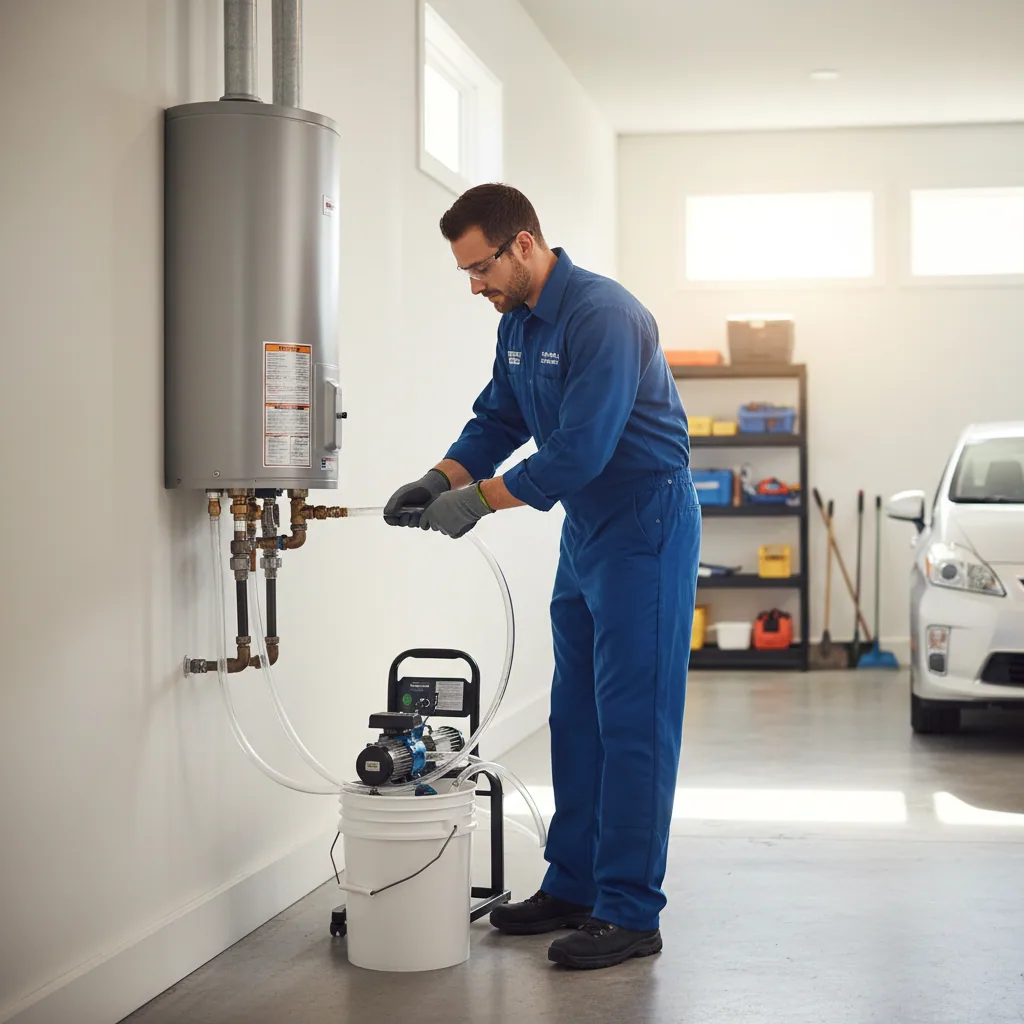
Don't wait for a flood in your garage or a cold shower. Our expert team at Better Water Heaters specializes in tankless descaling and sediment removal. Call us at (408) 686-4969 to protect your home's most vital appliance.
The Cost of Neglect vs. Proactive Care
Investing in sediment buildup removal might seem like an unnecessary chore, but the ROI is undeniable for growth-minded homeowners. A standard 50-gallon water heater replacement in the Bay Area can cost between $2,500 and $4,500 when you factor in permits and seismic strapping codes.
By spending a fraction of that on annual maintenance, you extend the unit's life from 8 years to potentially 16 years. This effectively cuts your long-term appliance costs in half. Additionally, keeping the unit scale-free ensures you are not paying PG&E for energy that never actually reaches your water.
- Annual Maintenance Cost: ~$150-$300.
- Emergency Replacement Cost: $3,000+.
- Energy Savings: Up to $15 per month on utility bills.
Environmental Impact: Hard Water and Your Carbon Footprint
Sustainability is a core value for many in the Silicon Valley and San Mateo regions. When discussing hard water vs. your Bay Area pipes, we must consider the environmental toll. A scaled-up water heater is a carbon-heavy water heater. It burns more gas and consumes more electricity to perform a basic function.
By maintaining your system, you reduce the frequency of appliance disposal. Water heaters are bulky and difficult to recycle; keeping yours in service for its full intended lifespan is one of the most eco-friendly choices you can make as a homeowner. Organizations like the EPA's WaterSense program emphasize that efficiency starts with maintenance.
Conclusion: Protecting Your Bay Area Investment
The battle of hard water vs. your Bay Area pipes is won through consistency. Whether you live in a historic home in Los Gatos or a modern condo in Fremont, mineral buildup is a constant threat to your comfort and your wallet. By prioritizing water heater maintenance and professional sediment buildup removal, you ensure your home remains efficient, safe, and compliant with local regulations.
Ready to secure your home's hot water future? Better Water Heaters has served the Bay Area for over 20 years with transparent pricing and expert service. Contact us today for a free estimate or to schedule your annual maintenance visit. Let us help you keep the hard water at bay and your showers hot for years to come.
Frequently Asked Questions
How do I know if I have hard water damage in my heater?
Common symptoms include popping or knocking sounds coming from the tank, a decrease in hot water duration, and white chalky residue on your faucets. If your PG&E bill has spiked without a change in usage, sediment buildup is likely the culprit. A professional inspection can confirm the extent of the internal scale.
Is a DIY flush enough to handle Bay Area hard water?
A basic DIY flush can remove loose sediment, but it rarely clears the hardened "scale" that bonds to the heating elements and tank walls. In high-hardness areas like San Jose, professional descaling with specialized equipment is necessary to actually restore efficiency and protect your manufacturer warranty.
Will a water softener solve the hard water vs. your Bay Area pipes issue?
A water softener is an excellent preventative measure that removes minerals before they enter the heater. However, if your heater already has buildup, a softener won't remove it. You should perform a professional descaling first, then install a softener to keep the system clean moving forward.
How often should I schedule sediment buildup removal?
For most Bay Area homes, once a year is the standard recommendation. However, if you are in a high-hardness zone like the East Bay or South Bay, or if you have a high-demand household with a tankless system, bi-annual maintenance is often required to prevent flow issues and component failure.