
📋 Table of Contents
According to the U.S. Geological Survey, hard water affects roughly 85% of American homes, but in the Bay Area, the impact on your appliances is a localized lottery. Whether you are dealing with the Hetch Hetchy supply in San Francisco or the mineral-heavy groundwater in Santa Clara County, hard water mitigation is the difference between a water heater that lasts 20 years and one that fails in seven.
For most established homeowners, the frustration isn’t just the white crust on the showerhead; it’s the “hidden tax” of rising energy bills caused by sediment-insulated heating elements. If you’ve recently invested in a high-efficiency tankless system, choosing between scale inhibitors and traditional softeners isn’t just a preference—it’s often a warranty requirement. This guide breaks down the total cost of ownership and technical performance of these two leading technologies.
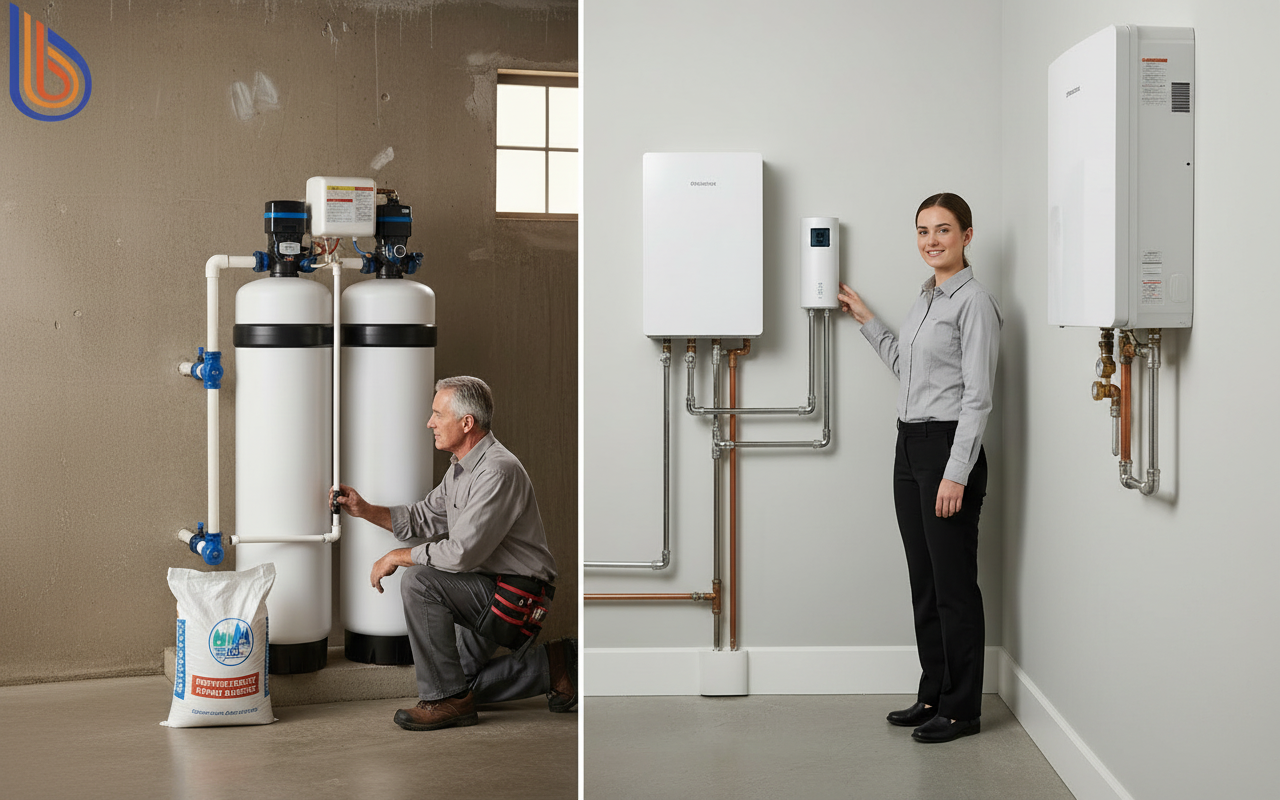
The Strategic Choice: Scale Inhibitors vs Softeners
The most important thing to understand is that softeners remove minerals entirely, while inhibitors simply stop them from sticking to your pipes.
Here’s the thing: while both technologies address the same symptoms, they operate on completely different chemical principles. Traditional salt-based softeners use ion exchange to replace calcium and magnesium ions with sodium. Conversely, modern scale inhibitors—specifically those using Template Assisted Crystallization (TAC)—transform dissolved minerals into microscopic crystals that stay suspended in the water without adhering to surfaces.
- Traditional Softeners: Best for total home protection, including laundry and skin feel.
- Scale Inhibitors: Ideal for protecting specific appliances like tankless water heaters without adding sodium to your diet.
- Maintenance: Softeners require monthly salt refills; inhibitors usually need a cartridge swap once every 12–24 months.
In our work with busy Silicon Valley professionals, we’ve found that the smaller footprint of an inline scale inhibitor is often the winning factor for modern, high-density housing where garage space is at a premium. If you’re unsure which fits your home, you can schedule a free consultation with our local specialists.
Why Water Heater Sediment Protection is Non-Negotiable
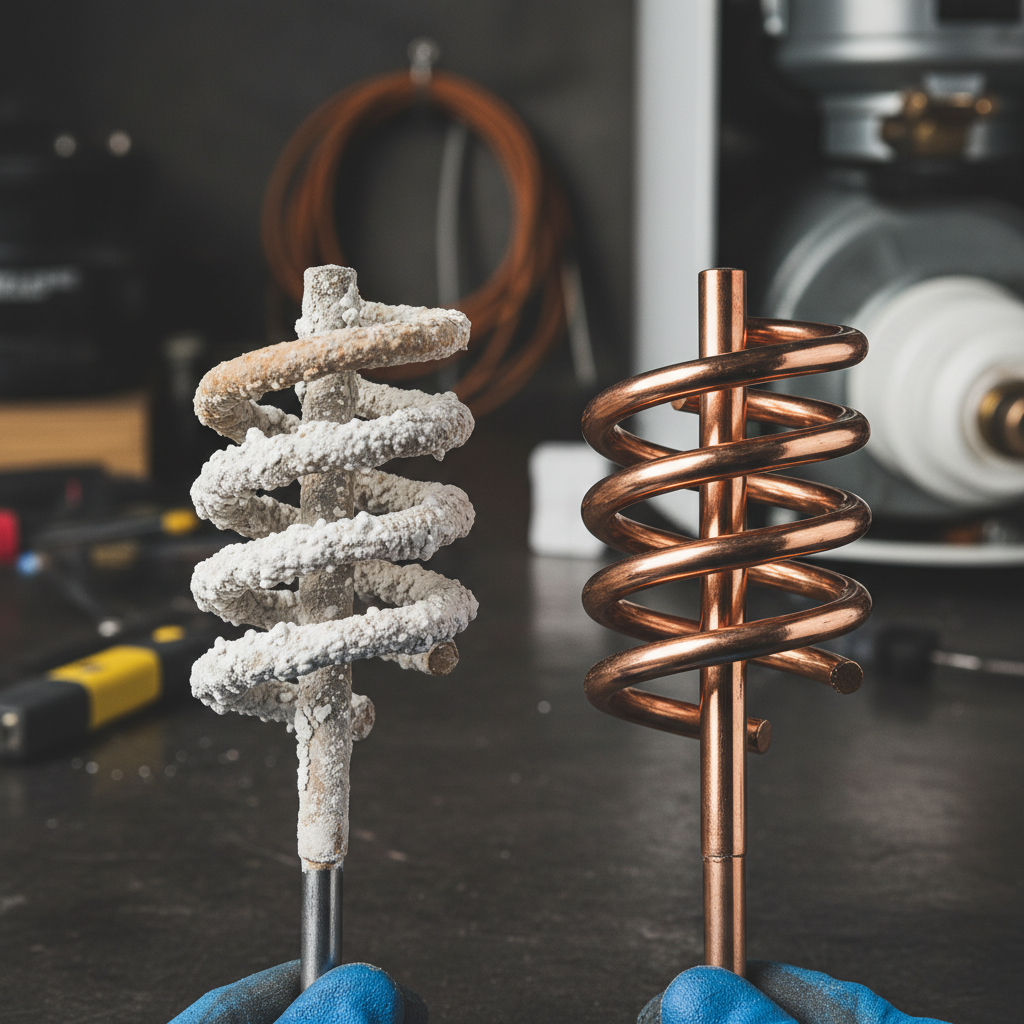
A mere 1/8-inch of limescale buildup on a heating element can reduce its thermal efficiency by up to 15%, forcing the unit to run longer and hotter just to reach the same temperature.
What most people miss is that high-efficiency tankless heaters are particularly vulnerable. The narrow copper heat exchangers in these units can clog rapidly if the water hardness exceeds 7 Grains Per Gallon (GPG). Without proper water heater sediment protection, you may find yourself performing a vinegar flush every six months instead of once a year, which adds up in both time and plumber fees.
- Warranty Compliance: Many manufacturers, like Rinnai and Navien, specify water quality standards that must be met for warranty claims.
- Energy Savings: Keeping elements clean ensures you actually achieve the 0.90+ Energy Factor you paid for.
- Component Longevity: Prevents premature failure of solenoid valves and sensors within the unit.
The real kicker? In many Bay Area districts, local municipalities are tightening regulations on salt-brine discharge to protect the Delta ecosystem. This shift makes salt-free water conditioners and TAC systems the future-proof choice for environmentally conscious residents.
Total Cost of Ownership: A 10-Year Comparison
Choosing a system based solely on the sticker price is a mistake; the real cost lies in the salt, water waste, and electricity consumed over a decade.
Consider a typical Bay Area mid-market home with four residents. A salt-based softener might cost $2,500 to install, but it will consume roughly $150 in salt annually and waste thousands of gallons of water during regeneration cycles. A scale inhibitor might have a similar upfront cost but significantly lower operational overhead.
| Factor | Salt-Based Softener | TAC Scale Inhibitor |
|---|---|---|
| Installation Cost | $2,000 – $4,000 | $1,500 – $3,000 |
| Annual Maintenance | $150 (Salt) + Water | $100 – $200 (Cartridge) |
| Space Requirement | High (Two Tanks) | Low (Single Inline Filter) |
| Eco-Impact | High (Brine Discharge) | Zero Waste |
But wait—if your primary concern is the “slippery” feel of soft water or preventing spots on glass shower doors, the inhibitor might leave you disappointed. It prevents limescale buildup prevention inside the pipes, but the minerals are still present in the water. For those who want the best of both worlds, we often recommend a hybrid approach. You can learn more about tankless maintenance strategies on our blog.
Need a professional assessment? Our team can test your GPG levels and recommend the most efficient hard water mitigation strategy for your specific neighborhood. Request an estimate today.
The Tankless Dilemma: Why Inhibitors are Winning
In modern plumbing, space is the new luxury, and bulky brine tanks are losing the battle to compact, high-performance filters.
As of 2024, we are seeing a massive shift toward polyphosphate scale inhibitors for on-demand systems. These systems sequester minerals, preventing them from precipitating out of the water when heated. This is crucial because tankless units heat water so rapidly that minerals fall out of solution almost instantly. By using an inhibitor, you effectively extend your tankless flushing frequency from every 6 months to every 24 months in many cases.
- No Electricity Required: Most scale inhibitors are non-electric, reducing failure points.
- Smart Integration: Some newer systems now integrate with smart home monitors like Phyn or Moen Flo to alert you when a cartridge needs replacement.
- Health Benefits: Unlike softeners, inhibitors don’t add sodium to your drinking water, which is a key concern for those on low-sodium diets.
One contrarian insight we often share: many homeowners think they need a softener when a high-quality carbon filter paired with a scale inhibitor would actually solve 90% of their problems at a lower environmental cost. We use data from sources like the EPA WaterSense program to help our clients make these sustainable choices.
Environmental Regulations and the 2027 Outlook
California is leading the charge in water conservation, and salt-based systems are increasingly in the crosshairs of local regulators.
The Bay Area Air Quality Management District and local water boards are constantly reviewing the impact of salt discharge on local groundwater. In some parts of the Central Valley, salt-based softeners are already restricted. For Bay Area residents, moving toward hard water mitigation that doesn’t involve brine discharge is a smart way to “future-proof” your home against upcoming environmental mandates.
What most people miss: if you are planning a transition to a heat pump water heater to meet 2027 zero-NOx requirements, protecting that investment with a scale inhibitor is one of the highest-ROI decisions you can make. The heat exchangers in heat pump units are expensive to replace; preventing scale is significantly cheaper than a mid-lifecycle repair.
To keep our educational content fresh and data-driven, our internal AI content engine, Ingest.blog, helps us track these shifting local regulations in real-time. This ensures our recommendations are always compliant with the latest Santa Clara and San Mateo county codes.
Key Takeaways for Monday Morning
- Check your water heater’s manual for specific mineral hardness limits (usually measured in GPG).
- If you have a tankless unit and haven’t flushed it in 12 months, call a pro to check for scale buildup.
- Compare the footprint of your garage—if you can’t fit two large tanks, a TAC scale inhibitor is your best bet.
- Look into local rebates; some energy-efficiency programs indirectly support water treatment that protects high-efficiency appliances.
Ready to protect your home? Don’t let hard water destroy your new heater. Contact Better Water Heaters for a professional water quality test and custom mitigation plan tailored to your Bay Area zip code.
Frequently Asked Questions
Is a scale inhibitor as effective as a water softener?
It depends on your goal. If you want to protect your water heater from internal damage and maintain energy efficiency, a scale inhibitor is highly effective. However, if you want to eliminate soap scum and have “soft” feeling water for bathing, a traditional ion-exchange softener is the only solution that physically removes the minerals.
How often do I need to replace scale inhibitor cartridges?
For a typical Bay Area household, cartridges should be replaced every 12 to 24 months. This varies based on your total water usage and the specific hardness level of your local municipal supply. High-usage households or those in areas like Fremont or San Jose may require more frequent changes.
Do scale inhibitors require a floor drain?
No. Unlike salt-based softeners that need to backwash and regenerate, most scale inhibitors are “dead-end” filters. This means they don’t produce wastewater and don’t require a drain connection, making them much easier and cheaper to install in tight spaces or finished garages.
Will a scale inhibitor fix existing buildup in my heater?
Scale inhibitors are primarily preventative. While some TAC systems can slowly help reduce existing scale over a long period, they are not a substitute for a professional descaling flush. If your heater is already making popping noises or losing efficiency, we recommend a professional flush before installing an inhibitor.