
📋 Table of Contents
According to the U.S. Geological Survey, approximately 85% of American homes have hard water, but for San Jose residents, the concentration of calcium and magnesium is often double the national average. If you’ve recently upgraded to a high-efficiency system, hard water heat pump damage isn’t just a theoretical risk—it is an impending service call that can slash your appliance’s lifespan by 50% if left unmanaged.
Key Takeaways:
- San Jose and East Bay water contains high levels of calcium carbonate that act as thermal insulation, forcing heat pumps to work harder.
- Micro-channel heat exchangers in modern hybrid units are significantly more susceptible to scale than old-fashioned copper coils.
- Annual descaling is non-negotiable for maintaining manufacturer warranties in the 408 and 510 area codes.
- Pairing a heat pump with a water softener is the only way to achieve the advertised UEF (Uniform Energy Factor) ratings.
The Efficiency Gap: Why San Jose Water Quality Lies to Your Utility Bill
The real kicker is that the 3.5+ UEF rating on your new heat pump’s yellow energy tag assumes lab-perfect water conditions, not the mineral-heavy groundwater found in Santa Clara County. When calcium carbonate accumulates on your heat exchanger, it creates a physical barrier between the heat source and your water.
In our work with high-income homeowners in the Willow Glen and Silver Creek areas, we often see units only three years old performing with the efficiency of a 15-year-old tank. This “Efficiency Gap” means you are paying for premium green technology but receiving standard performance because the heat pump is essentially trying to boil water through a layer of rock.
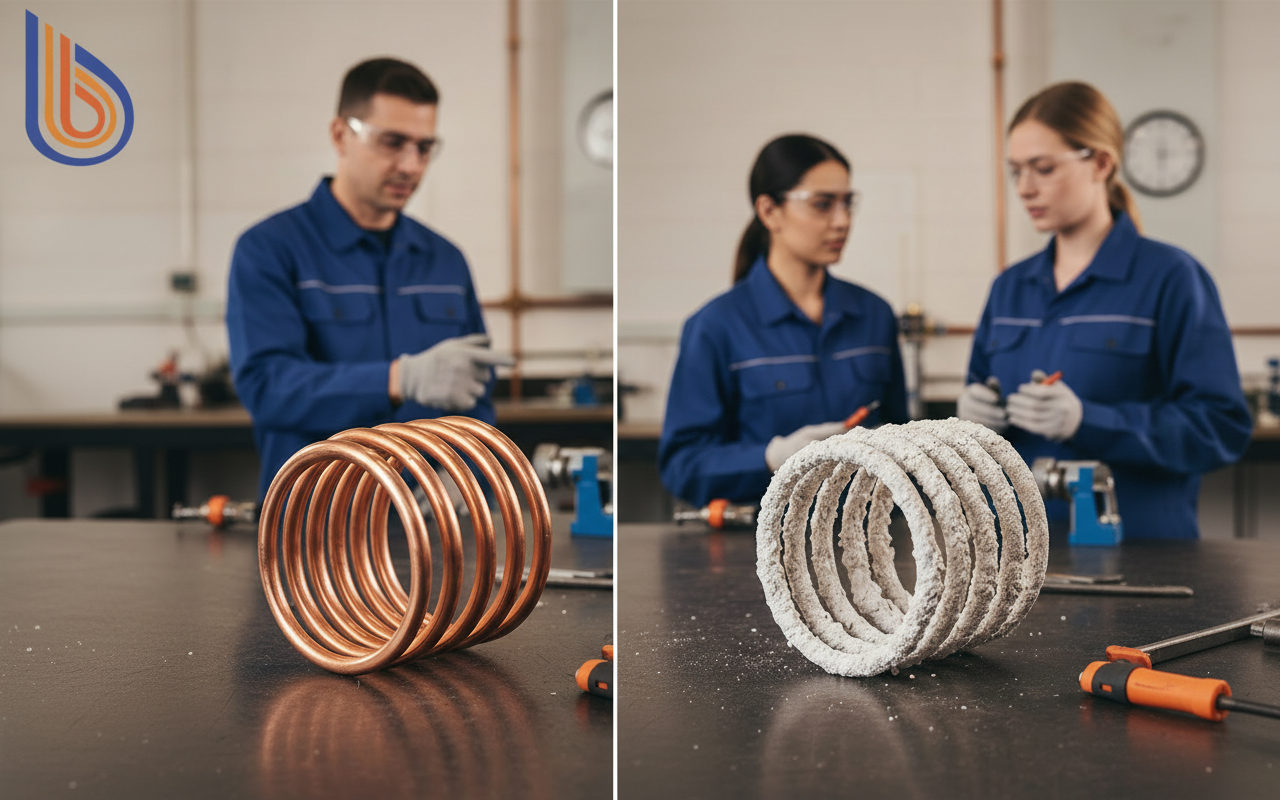
What most people miss is that San Jose’s water supply is a complex blend. Depending on the time of year, your home might be pulling from the pristine Hetch Hetchy reservoir or local groundwater wells that are significantly harder. This fluctuation makes consistent water heater maintenance in the Bay Area critical for those who want to avoid the “5-year failure” common in high-mineral zones.
The Impact of Mineral Insulation
- Scale buildup of just 1/4 inch can increase energy costs by up to 40%.
- Hard water deposits cause “hot spots” on heat exchangers, leading to premature metal fatigue.
- Reduced flow rates trigger sensors that can shut down your system entirely during peak demand.
How Micro-Channel Heat Exchangers Fail in the East Bay
Modern heat pumps use incredibly thin, high-surface-area channels to transfer heat from the refrigerant to your water. While this is great for the environment, these tiny passages are the primary targets for hard water heat pump damage.
Unlike traditional tanks where sediment sits harmlessly at the bottom for years, hybrid systems circulate water through these tight tolerances. In areas served by East Bay MUD, where water hardness levels in 2024 have shown significant variance, even a small amount of calcification can bridge these channels. Once a micro-channel is blocked, the localized pressure increases, often leading to pinhole leaks that are impossible to repair.
Here’s the thing: most manufacturers, including brands like Rheem and AOSmith, specifically state in their fine print that damage caused by scale is not covered under warranty. If you live in a hard water zone and haven’t performed a heat pump descaling service in San Jose, you are essentially self-insuring a $4,000 investment.
Need a professional eye on your system? Schedule a diagnostic visit to check your scale levels before they become permanent damage.
The Hidden Tax of California SB 1414 and Local Regulations
With the rollout of California SB 1414, the push toward electrification is no longer optional. However, the state’s mandate for heat pump adoption doesn’t account for the localized “mineral tax” paid by Bay Area residents.
For a typical Bay Area mid-market client, the transition to a heat pump is often paired with a mandatory electrical panel upgrade. If you don’t also budget for water treatment, you are building a high-tech engine and fueling it with low-grade, dirt-filled gas. We’ve observed that homeowners who ignore water quality see a total cost of ownership (TCO) that is 30% higher over ten years due to frequent part replacements.
| Feature | Standard Tank | Heat Pump (Hard Water) | Heat Pump (Treated Water) |
|---|---|---|---|
| Expected Lifespan | 10-12 Years | 6-8 Years | 13-15 Years | Annual Maintenance Cost | $0 – $150 | $200 – $350 | $100 – $200 | Energy Efficiency (UEF) | 0.65 | 2.2 (Degraded) | 3.5+ (Optimal) |
Predictive Maintenance: Protecting Your Investment
The best way to handle East Bay mineral loads isn’t to wait for the water to turn lukewarm; it’s to use technology to your advantage. Many modern hybrid units come with Wi-Fi connectivity that can alert you to high-temperature differentials—a classic sign of scale buildup.
But wait—don’t rely solely on the app. Manual hybrid water heater maintenance in the Bay Area should include a physical flush every 12 months. During this process, we use food-grade descaling solutions to dissolve calcium carbonate before it hardens into a porcelain-like coating. This is especially vital for residents in Fremont and Sunnyvale, where groundwater reliance remains high.
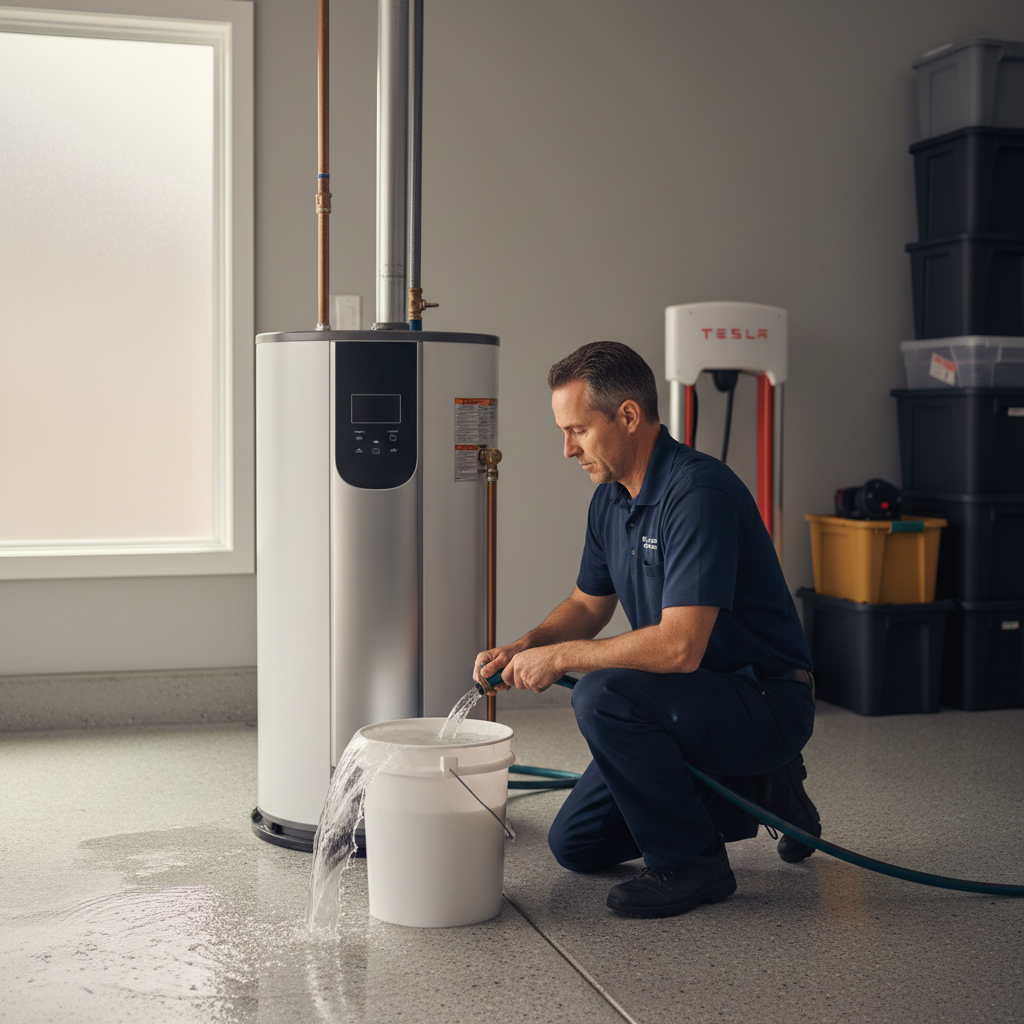
For those managing multiple properties, we recommend installing smart water sensors. These devices monitor flow rates and can detect the slight decreases in volume that signal a clogging heat exchanger. It’s the difference between a $200 maintenance flush and a $5,000 replacement.
Steps for a Successful Descaling Flush
- Power down the unit and close the cold water supply valve.
- Connect circulation hoses to the service ports (if installed).
- Circulate a descaling solution for at least 45 minutes to dissolve calcium carbonate buildup in the heat exchanger.
- Flush the system with fresh water to remove all chemical residue.
- Restart the unit and verify the temperature delta across the heat pump.
Contrarian Insight: Why “Green” Isn’t Always Sustainable
Here is an honest, contrarian take: For some Bay Area homes with extreme hard water and no room for a softener, a high-end tankless gas system might actually be more sustainable than a heat pump. Why? Because tankless units are designed to be descaled easily, whereas some heat pump designs make cleaning the internal coils nearly impossible. If a “green” heat pump dies in six years and ends up in a Santa Clara landfill, the carbon footprint of manufacturing its replacement outweighs the energy savings it provided. At Better Water Heaters, we believe in choosing the tech that actually survives your local environment.
To help our team produce this level of technical research at scale, we utilize Ingest.blog, our internal AI content engine, which helps us track shifting water quality data across the 408 and 510 codes.
Total Cost of Ownership: Softeners vs. Frequent Flushes
Homeowners often ask if they should invest in a whole-home water softener or just pay for more frequent water heater maintenance in the Bay Area. If you are an entrepreneur or a busy founder at a Series B startup, your time is your most valuable asset. A water softener is a “set it and forget it” solution that protects not just your water heater, but your dishwasher, laundry machine, and plumbing fixtures.
However, if you are looking for the lowest upfront cost, a dedicated electronic descaler or a strict annual flushing schedule is the minimum requirement. In the East Bay, where MUD water hardness can spike during drought years, we suggest a hybrid approach: a sediment pre-filter combined with an annual professional flush.
Don’t let minerals rot your investment from the inside out. Contact us today for a water hardness test and a custom maintenance plan tailored to your neighborhood’s specific water profile.
Summary Checklist for San Jose Homeowners
- Check your local water report for “Grains per Gallon” (GPG) hardness.
- Verify that your installer included service valves for easy descaling.
- Schedule your first heat pump descaling service in San Jose exactly 12 months after installation.
- Keep all service receipts in a digital folder to prove warranty compliance.
Frequently Asked Questions
How do I know if I have hard water heat pump damage already?
Common signs include a noticeable increase in recovery time (how long it takes to get hot water back), strange popping or rumbling noises coming from the tank, and a steady increase in your monthly electrical utility bill. If your heat pump is frequently switching to “Electric Heat” or “High Demand” mode, it may be struggling to pull heat through scale buildup.
Will a water softener void my heat pump warranty?
No, in fact, most manufacturers highly recommend water treatment in areas with hardness exceeding 7 to 10 grains per gallon. Using a softener prevents the calcium carbonate buildup in the heat exchanger that leads to most warranty claim denials. Just ensure the softener is properly maintained so it doesn’t send excess salt into the lines.
How often should I descale my heat pump in San Jose?
In San Jose, we recommend a professional descaling every 12 months. If your home relies heavily on groundwater or if you do not have a whole-house water softener, you may need to increase this to every 6 to 9 months to maintain peak energy efficiency and prevent permanent micro-channel blockage.
Can I descale a hybrid water heater myself?
While some homeowners perform their own flushes, hybrid heat pumps are more complex than standard tanks. They require specific pumps and food-grade solutions to safely clean the heat exchanger without damaging sensitive sensors. For most Bay Area residents, hiring a specialist ensures the job is done to code and maintains your warranty records.