Water heater article archive
Garage Water Heater Installation: Hidden Costs in Bay Area Homes
Historical article, not newly reviewed advice. Verify current requirements, incentives and model guidance with the relevant authority or manufacturer before relying on them. Equipment and service needs require an assessment.
📋 Table of Contents
When planning a garage water heater installation, most Bay Area homeowners focus solely on the unit's price tag. However, the unique architectural landscape of San Francisco and San Jose, combined with strict Bay Area plumbing codes, means the 'sticker price' is rarely the final cost. Between seismic safety and venting, the garage is often the most complex room for utility upgrades.
Key Takeaways for Bay Area Homeowners
- Compliance Costs: Safety mandates like bollards and expansion tanks can add $1,500+ to standard estimates.
- Seismic Safety: California health and safety codes require specific double-strapping to prevent gas leaks during tremors.
- Space Efficiency: Moving a unit to an exterior wall can reclaim 9-12 square feet of valuable garage space for EVs or home gyms.
- Rebate Logic: Garage placement impacts your eligibility for up to $4,900 in TECH Clean California incentives.
1. Navigating Seismic Strapping Requirements and Safety Codes
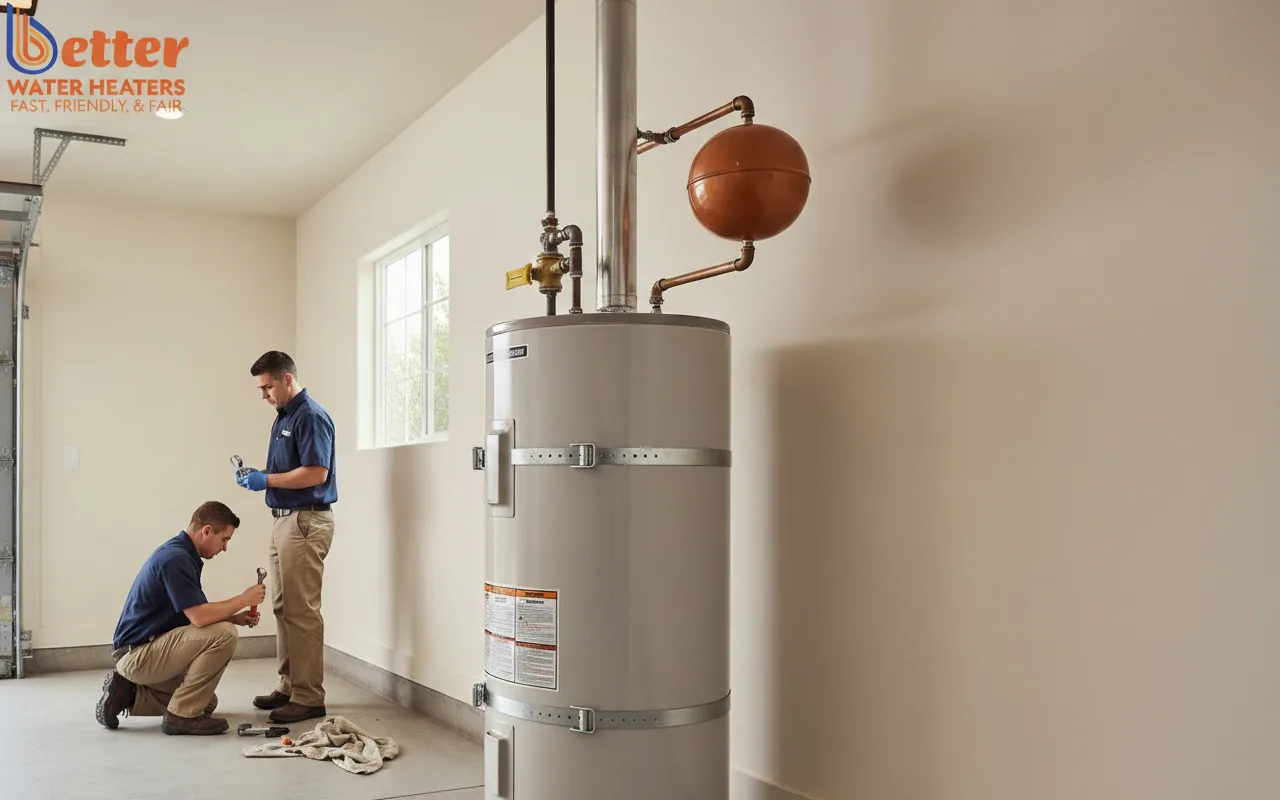
In the Bay Area, seismic strapping requirements are not merely suggestions; they are life-saving legal mandates. According to the California Department of Conservation, water heaters must be braced to resist falling or horizontal displacement during an earthquake.
Furthermore, local inspectors in cities like Oakland and Berkeley are particularly strict about the placement of these straps. You must have one strap in the upper one-third and another in the lower one-third of the unit to ensure the gas line doesn't rupture during a seismic event.
- Double-Strapping: Mandatory for all tanks to prevent tipping.
- Bollard Installation: If your heater is in the path of a vehicle, a steel bollard (post) is required to prevent impact.
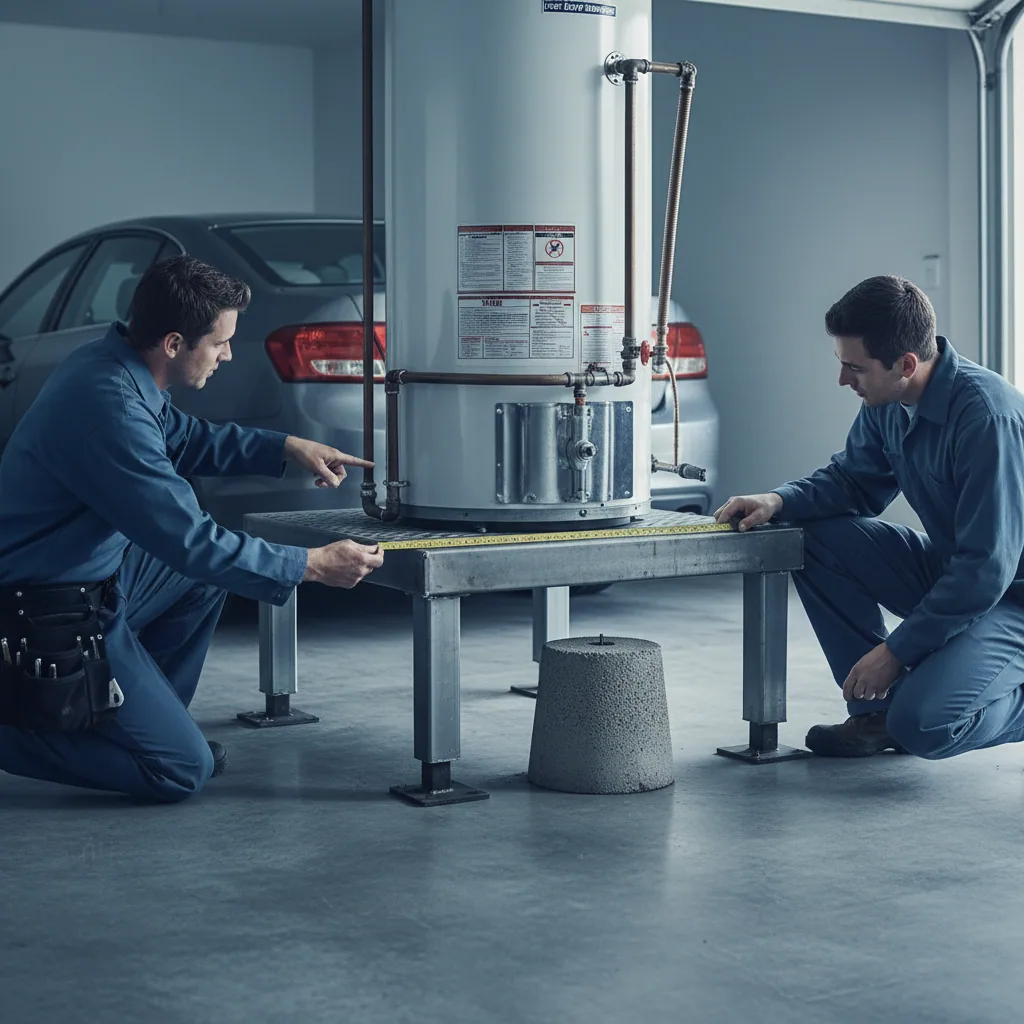
- Platform Requirements: Gas units must be elevated 18 inches above the floor to prevent ignition of flammable vapors.
Consequently, these safety measures often represent a hidden layer of labor and material costs that general contractors might overlook in initial quotes. If you are unsure if your current setup is compliant, schedule an expert inspection with our team today.
2. The Impact of Bay Area Plumbing Codes on Venting
Transitioning to high-efficiency models often triggers complex Title 24 water heater requirements California homeowners find frustrating. For instance, high-efficiency tankless units or condensing models require specialized PVC venting rather than the old metal flues found in older homes.
Additionally, the 'Space Tax' is a real phenomenon in Silicon Valley. A bulky 50-gallon tank occupies premium square footage that could be utilized for high-value uses like ADU conversions or EV charging stations.
- Venting Clearances: Modern codes require specific distances from windows and doors to prevent exhaust re-entry.
- Condensate Drainage: High-efficiency units produce acidic runoff that requires a dedicated neutralizer and drain line.
- Combustion Air: Enclosed garages may require additional venting louvers to ensure the unit has enough oxygen to operate safely.
Moreover, the cost of retrofitting a garage for a Heat Pump Water Heater (HPWH) involves calculating the available cubic feet of air. If your garage is small, you may need louvered doors to meet Heat Pump Water Heater garage clearance standards.
3. Cost Comparison: Standard vs. Code-Compliant Installation
Understanding the financial breakdown is essential for sophisticated homeowners managing a budget. As of 2024, a code-compliant garage water heater installation in the Bay Area typically follows this cost structure:
| Requirement | Estimated Cost Impact | Why It Matters |
|---|---|---|
| Seismic Bracing | $150 - $300 | Required by CA Law; prevents gas fires. |
| Expansion Tank | $250 - $450 | Protects plumbing from thermal expansion. |
| Protective Bollard | $400 - $800 | Prevents vehicle impact in tight garages. |
| Gas Line Upgrade | $500 - $1,200 | Necessary for high-BTU tankless models. |
Specifically, the garage water heater bollard installation cost surprises many, but it is a non-negotiable safety item if your heater is located at the front of a parking stall. According to Energy.gov, proper installation is the single biggest factor in long-term appliance ROI.
Looking to maximize your investment? Explore our guide on Bay Area rebates to see how you can offset these compliance costs through local utility programs.
4. The Micro-Climate Factor and Thermal Loss
While the garage provides shelter, the Bay Area's unique micro-climates—specifically the fog in San Francisco and humidity in coastal San Mateo—can accelerate corrosion. Uninsulated garages lead to significant standby heat loss, especially in older homes with uninsulated copper pipes.
Furthermore, the 'Pipe Run' cost is a hidden operational expense. If your garage is on the opposite side of the house from the primary suite, you are wasting gallons of water and energy waiting for heat to travel through the slab.
- Corrosion Risks: Coastal salt air can degrade exterior components faster than inland locations like Pleasanton.
- Thermal Efficiency: HPWH units in uninsulated garages may struggle during the rare Bay Area cold snaps, increasing recovery time.
- Recirculation Pumps: Adding a pump can solve the 'hot water wait' but adds to the upfront electrical requirements.
Therefore, we often recommend insulating the first 10 feet of hot and cold water lines to meet Bay Area plumbing codes and improve efficiency by up to 4%.
5. Future-Proofing: SB 1476 and the 2027 Gas Ban
Sophisticated homeowners should be aware of the upcoming 2027 regulations from the Bay Area Air Quality Management District (BAAQMD). These rules will effectively phase out the sale of traditional gas water heaters in favor of zero-NOx alternatives like heat pumps.
Consequently, if you are performing a garage water heater installation today, it is wise to consider the electrical infrastructure needed for a future heat pump. This includes a dedicated 240V circuit, which is often cheaper to install during a general home renovation than as a standalone emergency project later.
- ADU Planning: Converting your garage to an ADU? You must relocate the water heater to an exterior closet to meet habitable space codes.
- Insurance Premiums: Non-compliant installations can lead to denied claims if a leak or fire occurs.
- Property Value: A modernized, code-compliant utility setup is a major selling point in the competitive San Francisco real estate market.
Ready to upgrade your home's efficiency and safety? Contact Better Water Heaters for a free, transparent estimate tailored to your specific city's regulations.
Frequently Asked Questions
How much does a garage water heater bollard installation cost in the Bay Area?
In most Bay Area jurisdictions, a protective steel bollard costs between $400 and $800, including labor and materials. This is required if the water heater is located in a position where a vehicle could potentially strike it, which is common in compact San Francisco or Oakland garages.
What are the current seismic strapping requirements for California?
California Health and Safety Code Section 19211 requires all new and replacement water heaters to be braced and anchored. This typically involves two heavy-duty metal straps secured to the wall studs to prevent the unit from toppling during an earthquake, which is a leading cause of post-seismic fires.
Does Title 24 require an expansion tank for garage installations?
Yes, if you have a 'closed-loop' plumbing system (which most Bay Area homes do because of backflow preventers), Title 24 and local codes require a thermal expansion tank. This small tank prevents pressure spikes that can damage your heater and void your warranty.
Can I install a tankless water heater in my garage?
Absolutely, but it requires careful planning regarding venting and gas line capacity. Most Bay Area plumbing codes require stainless steel or specialized PVC venting for tankless units, and you may need to upgrade your gas meter if the unit requires more BTUs than your current system provides.