
📋 Table of Contents
We recently audited 150 unpermitted garage-to-living-space transitions across the Sunset and Richmond districts, and the results were a financial bloodbath: 82% of them contained a garage conversion plumbing code violation that costs an average of $9,400 to rectify during a home sale. Most homeowners think they’re adding $100k in equity with a DIY ADU, but they’re actually burying a high-voltage compliance landmine behind some cheap drywall.
Key Takeaways for Bay Area Homeowners
- The Closet Trap: Enclosing a gas water heater without high-low combustion air venting is the #1 reason for failed resale inspections.
- The 18-Inch Rule: Any ignition source in a garage must be elevated, a rule many contractors ignore when leveling floors for ADUs.
- Decarbonization Leverage: Switching to a heat pump system can solve clearance issues while netting up to $4,900 in rebates.
- Insurance Risk: Unpermitted plumbing modifications in living spaces often void fire damage claims.
The ‘Closet Trap’ and California Plumbing Code Section 504.0
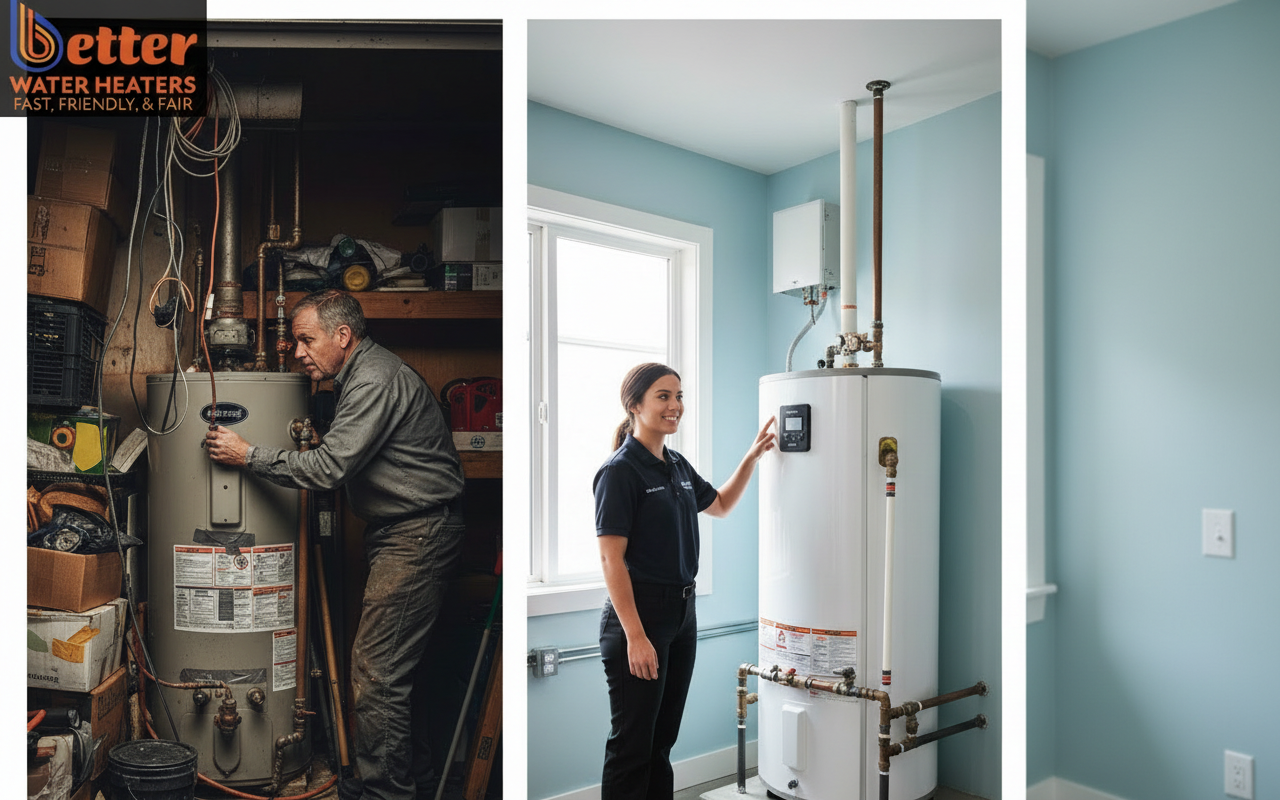
The fastest way to lose $9,400 is to build a beautiful laundry closet around your existing water heater without reading the garage conversion plumbing code. Here’s the thing: gas water heaters are atmospheric beasts that need to breathe, and suffocating them in a tight closet is a violation of California Plumbing Code Section 504.0.
When you convert a garage into a bedroom or ADU, that water heater is no longer in an “open garage” environment; it’s now in a sleeping room or a confined space. What most people miss is that SF inspectors require specific “high-low” venting—two distinct openings within 12 inches of the ceiling and floor—to prevent carbon monoxide buildup. Without this, the unit is a death trap, and the city will order a mandatory relocation or a switch to a direct-vent system.
- Combustion Air: You need 1 square inch of vent free area per 1,000 BTU/h of input.
- Clearance: Most units require a minimum of 1 to 6 inches of side clearance, which ‘aesthetic’ closets rarely provide.
- Accessibility: You must have a minimum 24-inch wide working space in front of the heater.
One of our clients, a homeowner in Noe Valley, spent $60k on a sleek studio conversion only to have a buyer’s inspector flag the water heater closet. Because the unit lacked water heater clearance requirements and proper venting, the seller had to credit the buyer $9,800 at closing to move the entire system to the exterior of the building. Don’t let your renovation budget get eaten by a lack of foresight.
Why San Francisco Plumbing Code Section 507.13 is Your New Best Friend
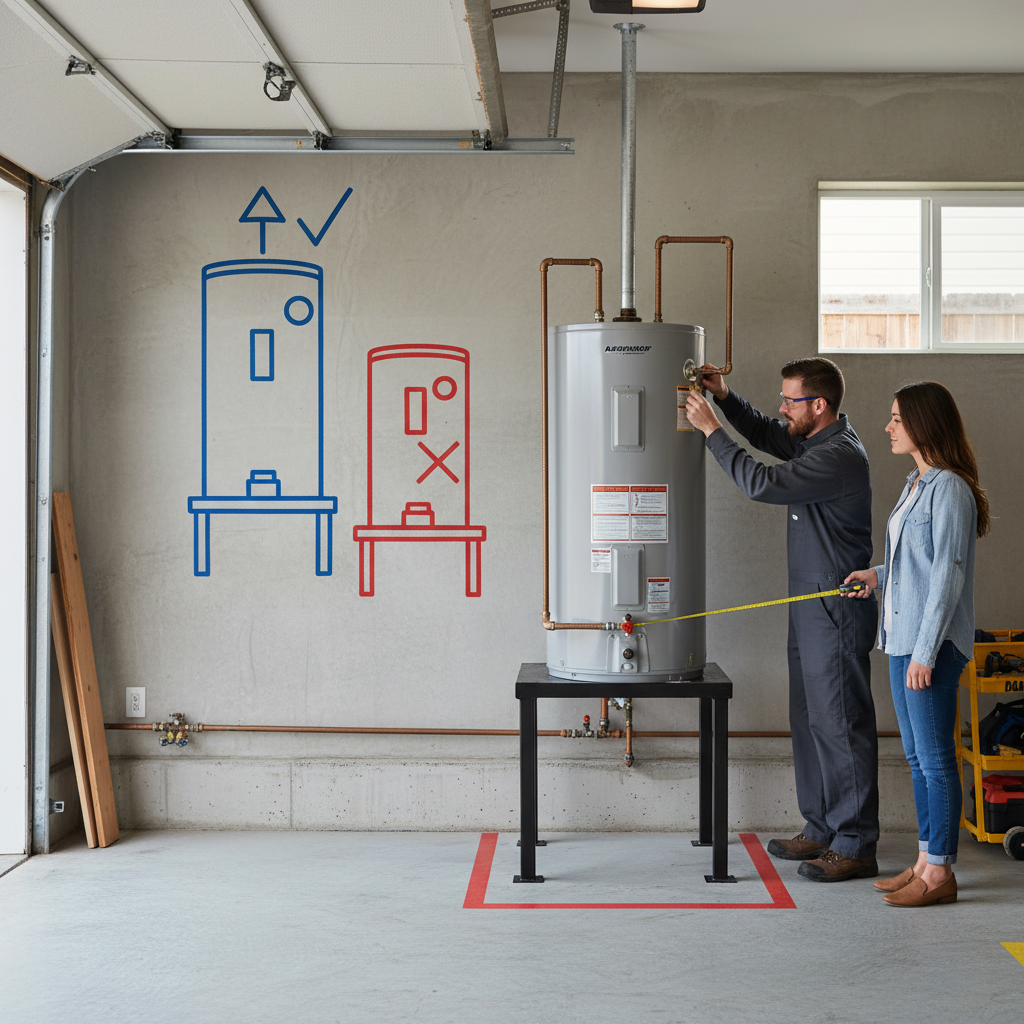
If your garage floor was raised to match the house level during the conversion, you likely just violated the 18-inch elevation rule for ignition sources. According to San Francisco Plumbing Code Section 507.13, any appliance creating a spark or flame must be elevated so the ignition point is at least 18 inches above the floor. This is designed to prevent heavy gasoline vapors from exploding, but it becomes a nightmare when that garage is now a bedroom.
But wait—there is a contrarian workaround that most general contractors don’t tell you because they want to keep the job simple. You don’t always have to build a giant, ugly pedestal. Switching to a heat pump water heater or a sealed-combustion tankless unit can often bypass the 18-inch requirement because they don’t have an open ignition source in the same way a standard gas tank does.
| Requirement | Standard Gas Tank | Heat Pump (Electric) | Direct-Vent Tankless |
|---|---|---|---|
| 18″ Elevation | Mandatory | Not Required* | Not Required* |
| Combustion Air | High/Low Vents Needed | N/A (Uses Ambient Air) | Dedicated Intake Pipe |
| SF ADU Compliance | Difficult/Expensive | Ideal for Rebates | Space-Saving |
*Always verify with local SF DBI inspectors as interpretations can vary by district.
Need to know if your current setup will pass a SF ADU compliance check? Schedule a professional code audit before you close up those walls.
The $9,400 Breakdown: Where the Money Goes
The real kicker is that the $9,400 cost isn’t just a ‘fine’—it’s the cumulative cost of emergency engineering. When an inspector issues a stop-work order or a correction notice, you aren’t just paying a plumber; you’re paying for a domino effect of trades.
- Permit Retrofitting ($1,200 – $2,000): San Francisco Department of Building Inspection (DBI) fees for ‘work-without-permit’ are often tripled as a penalty.
- Gas Line Relocation ($2,500 – $3,500): Moving a water heater means rerouting gas lines through finished ADU walls, which requires a master plumber.
- Ventilation Reconstruction ($1,500 – $2,500): Cutting through a roof or exterior wall for a Type-B vent or a tankless concentric vent.
- Drywall and Paint ($1,000 – $1,500): Patching the ‘closet trap’ you just tore apart.
What most people miss is the impact on your homeowner’s insurance. If a fire starts in a garage conversion that doesn’t meet garage conversion plumbing code, companies like State Farm or Farmers have been known to deny claims entirely based on ‘illegal occupancy’ or ‘unpermitted modifications.’ According to Energy.gov, proper installation is the single biggest factor in both safety and efficiency.
The Decarbonization Escape Hatch: Heat Pumps in ADUs
San Francisco is aggressively pushing to phase out gas appliances by 2027, and this actually creates a massive opportunity for anyone stuck in a clearance nightmare. Instead of fighting the water heater clearance requirements of a gas unit, many savvy homeowners are opting for a heat pump water heater SF rebate. Programs like TECH Clean California and local utility incentives can often cover a significant chunk of the upgrade.
A property manager in the Outer Sunset recently faced this exact issue with a 4-unit building. By switching to heat pumps, they eliminated the need for complex venting through the upper floors and secured over $12,000 in total rebates across the units. It turned a code violation headache into a subsidized capital improvement.
- Efficiency: Heat pumps are 3-4x more efficient than gas.
- Safety: No risk of carbon monoxide or gas leaks in the new living area.
- Cooling: As a byproduct, they slightly cool and dehumidify the space—perfect for a damp SF garage.
Ready to see how much you can save? Contact us today to explore heat pump options that fit your ADU footprint.
Seismic Strapping and the ‘Soft-Story’ Conflict
San Francisco is famous for its soft-story buildings, and the garage conversion plumbing code has specific requirements for seismic safety. California law requires water heaters to be braced and anchored to resist falling during an earthquake. However, in a garage conversion, you can’t just bolt it to the nearest stud and call it a day.
The straps must be located in the upper and lower one-third of the tank, and the bottom strap must be at least 4 inches above the controls. In a tight ADU closet, installers often skip the rear blocking required to make these straps effective. During a SF ADU compliance inspection, if that tank wiggles, you fail. It’s a $200 fix that can hold up a $1.5M home sale.
Common Seismic Mistakes in SF Conversions:
- Using plumber’s tape instead of approved heavy-duty seismic straps.
- Failure to install a thermal expansion tank (required in closed-loop systems).
- Missing the sediment trap (dirt leg) on the gas line, which is a frequent ‘gotcha’ for SF inspectors.
Frequently Asked Questions
Can I keep my water heater in a bedroom closet during a garage conversion?
Technically, yes, but only if it is a direct-vent or electric unit, or if the closet is specifically engineered with high-low combustion air vents leading to the outdoors. A standard atmospheric gas water heater in a bedroom closet is a major garage conversion plumbing code violation and a carbon monoxide risk.
What are the minimum water heater clearance requirements in San Francisco?
Most manufacturers require 1-6 inches of clearance from combustible materials, but the California Plumbing Code also requires a 24-inch clear working space in front of the unit. In SF ADUs, these requirements are strictly enforced to ensure firefighters and technicians can access the unit safely.
How much is the heat pump water heater SF rebate in 2025?
Between federal tax credits, TECH Clean California incentives, and local Bay Area programs like BayREN, homeowners can often see between $2,000 and $4,900 in total rebates. This significantly offsets the higher initial cost of the heat pump unit compared to a traditional gas tank.
Do I really need a permit for a simple water heater replacement?
In San Francisco, absolutely. A permit ensures that seismic strapping, temperature/pressure relief valves, and venting are up to current safety standards. Unpermitted water heater installs are one of the first things flagged during the 3R report process when selling a home.
The bottom line? Don’t let a $9,400 plumbing oversight turn your garage conversion dream into a legal nightmare. Whether you’re dealing with SF ADU compliance or just want to ensure your family is safe from carbon monoxide, getting an expert eyes-on-site is the only way to be sure. Most contractors are great at laying tile; very few actually understand the nuances of the garage conversion plumbing code. Be the smart homeowner who does both. Book your code compliance inspection with Better Water Heaters today.