
📋 Table of Contents
According to the U.S. Department of Energy, water heating accounts for nearly 20% of the average home’s energy costs, yet most maintenance contracts are signed and forgotten until the renewal notice hits your inbox. In the high-stakes Bay Area real estate market, blindly renewing a water heater maintenance agreement without a strategic audit is essentially a hidden tax on your property’s net operating income.
The real kicker? Many traditional service agreements are structured to protect the service provider’s margins rather than the homeowner’s equipment. Here is the thing: as labor costs rise and technology shifts toward heat pumps, the old ‘set it and forget it’ contract model is failing to deliver property management ROI. You need a data-driven way to decide whether to renew, pivot, or cancel.
Key Takeaways for Bay Area Decision Makers:
- Health Over Age: Evaluate sediment and anode rod status before looking at the manufacture date.
- The Rebate Pivot: Use contract expiration as a trigger to access up to $4,900 in local heat pump incentives.
- Specialized Care: Specialized on-demand service often outperforms generalist plumbing subscriptions.
Step 1: The ‘Health Score’ Audit Over Age-Based Renewal
What most people miss is that a 10-year-old water heater in San Jose might be in better shape than a 5-year-old unit in a hard-water pocket of the East Bay. Before committing to a service contract evaluation, you must move beyond the unit’s age and look at its internal health metrics.

In our work with established Bay Area homeowners, we find that sediment buildup is the silent killer of efficiency. If your current maintenance provider hasn’t performed a thermal imaging scan or a full tank flush in the last 24 months, your ‘protection’ plan is likely just a paper shield. Consider these health indicators:
- Anode Rod Depletion: If the rod is more than 75% consumed, the tank is actively corroding. The anode rod replacement cost is a fraction of a new unit, but most contracts don’t include it.
- Sediment Displacement: Popping sounds (calcification) indicate the burner is working twice as hard to heat water through a layer of rock.
- Leak Sensor Data: Modern Wi-Fi detectors provide 24/7 monitoring that no annual physical inspection can match.
But wait—if your unit is already showing signs of heavy scale, a simple renewal won’t save it. For property managers, the property management ROI shifts here; spending $300 to maintain a failing asset is a $300 loss. You can search our maintenance database for specific local water quality impacts on your unit’s lifespan.
Step 2: Calculating the Modern Efficiency Pivot
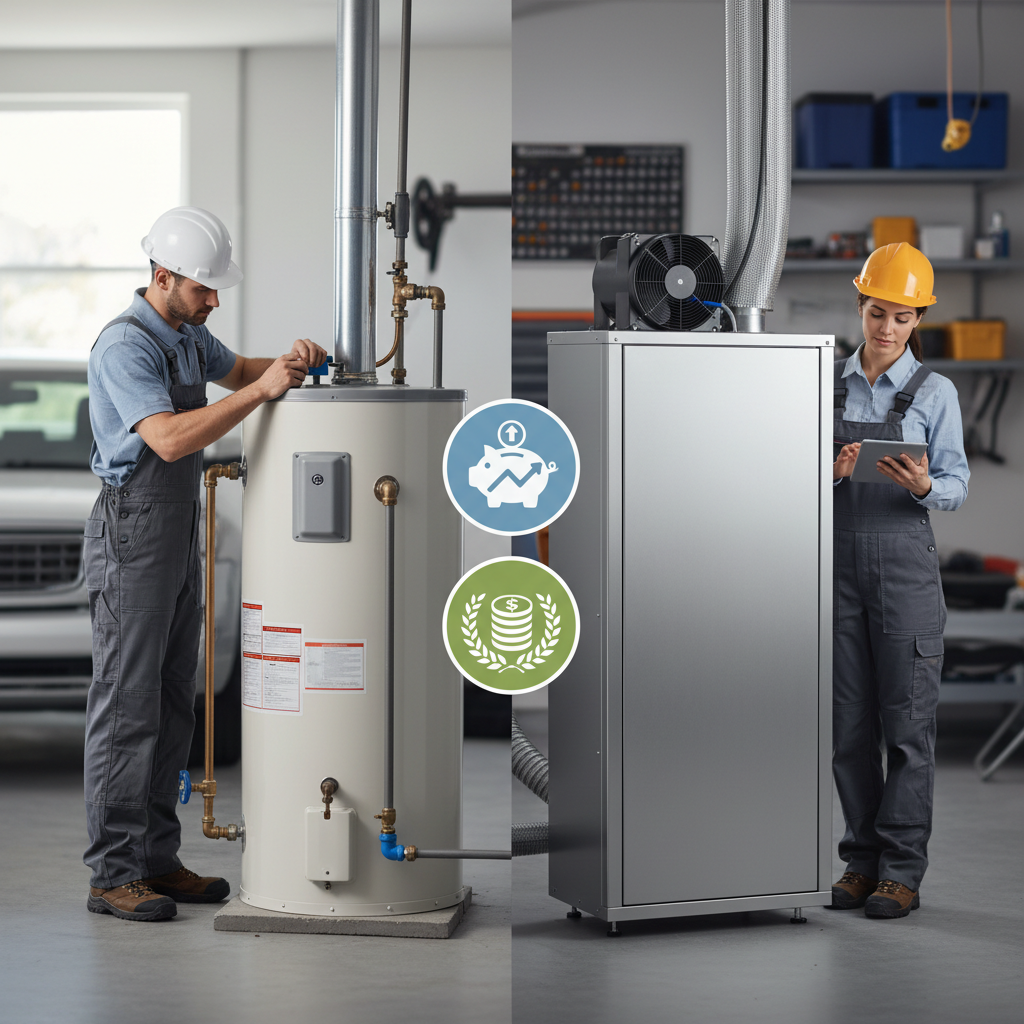
The most honest, contrarian insight we can offer is this: sometimes the best water heater maintenance strategy is to stop maintaining an obsolete machine. With the 2027 gas water heater regulations looming in the Bay Area, renewing a contract on an old atmospheric gas unit might be a sunk cost.
| Factor | Traditional Gas Tank | Heat Pump Water Heater (HPWH) |
|---|---|---|
| Annual Maintenance Cost | $150 – $250 | $100 – $200 (Filter cleaning focus) |
| Energy Efficiency | Low (0.6 – 0.7 UEF) | High (3.5 – 4.0 UEF) |
| Bay Area Rebates | None | Up to $4,900+ |
| Lifespan | 8-12 Years | 13-15 Years |
Here’s the strategy: if your service contract evaluation reveals a unit older than 8 years, compare the renewal cost against the water heater replacement ROI of a new Heat Pump system. Programs like TECH Clean California offer massive incentives that often make the net cost of a new, high-efficiency unit lower than three years of repairs on an old one. For a typical Bay Area mid-market property, the energy savings alone pay for the upgrade within 4-6 years.
Need a professional health check before you decide? Schedule a technical consultation with our specialists to see if your current unit is a candidate for a high-efficiency pivot.
Step 3: Risk-Based Selection of Service Models
One size does not fit all when it comes to preventative plumbing maintenance plans. You should categorize your properties based on risk and choose a service tier that matches the asset’s value.
- The Full-Service Model: Best for high-occupancy rentals or luxury homes where downtime is not an option. This should include an annual tankless water heater flushing service or tank descaling.
- The Digital Monitoring Model: Best for tech-savvy homeowners with newer units. Invest in smart leak detection and shut-off valves (like Moen Flo or Phyn) and skip the annual contract in favor of bi-annual specialized checkups.
- The Hybrid ‘Inspection-Only’ Model: A low-cost middle ground where you pay for a professional safety and efficiency audit every 18 months without a recurring monthly subscription fee.
In our work with Series B startup founders who value optimization, we often recommend the Digital + Hybrid approach. It leverages technology to reduce human labor costs while ensuring the post-warranty maintenance checklist is handled by experts, not generalists. We use ingest.blog, our internal AI content engine, to track these emerging tech trends and how they impact local service costs.
The ‘Hidden Cost’ Audit: Emergency vs. Subscription
What most people miss is the ‘Emergency Tax.’ A typical water heater maintenance contract might cost $200/year, but an emergency Saturday night repair in San Francisco can easily run $600+ just for the dispatch. When evaluating your property management ROI, look at your historical data. If you have a fleet of 10+ units, a subscription-based model often provides a predictable ‘insurance’ cap on labor rates.
However, for a single-family home in Redwood City, paying a $25/month subscription for 10 years ($3,000) for a unit that only costs $2,500 to replace is mathematically unsound. In this scenario, on-demand specialized care is far more cost-effective. Use our online cost guides to benchmark what you should be paying for specific repairs versus contract fees.
Executing Your Post-Warranty Maintenance Checklist
If you decide to move away from a fixed contract, you still need a post-warranty maintenance checklist to ensure longevity. This is the ‘Monday Morning’ action plan for any property owner:
- Check the T&P Valve: Manually test the Temperature and Pressure relief valve to ensure it isn’t seized.
- Inspect the Anode Rod: This is the single most important factor in preventing tank failure.
- Clear the Area: Ensure 18 inches of clearance around gas units for proper combustion air—a major safety code in California.
- Verify Seismic Strapping: In the Bay Area, an unstrapped heater is a major liability during a tremor.
Ready to optimize your property’s hot water system? Don’t just renew a contract out of habit. Contact Better Water Heaters today for a transparent assessment of your system’s health and a custom roadmap for your next upgrade.
Frequently Asked Questions
Is a water heater maintenance contract worth it for a new unit?
Generally, no. For the first 3-5 years, most high-quality units only require basic visual inspections and filter cleanings (for tankless/heat pumps). Instead of a full contract, invest in a high-quality leak detection system and a one-time professional inspection every two years to maintain your manufacturer’s warranty compliance.
How does property management ROI change with tankless units?
Tankless units require a specialized tankless water heater flushing service every 12-24 months due to Bay Area water hardness. Because these units are more complex, a maintenance contract that covers descaling can offer significant ROI by preventing expensive heat exchanger failures which are rarely covered under ‘basic’ plumbing plans.
What is the average anode rod replacement cost in the Bay Area?
Expect to pay between $150 and $300 for a professional anode rod replacement, including the part and labor. While the part itself is inexpensive, the labor involves specialized tools to break the factory seal. This single service can double the life of your tank, making it one of the highest-ROI maintenance tasks available.
How do I know if I should repair or replace my water heater?
We recommend the ‘50% Rule’: if the repair cost exceeds 50% of the cost of a new unit, or if the unit is past 75% of its expected lifespan (usually 8+ years for tanks), replacement is the smarter financial move—especially with current federal tax credits and local Bay Area rebates.