
📋 Table of Contents
According to the International Association of Certified Home Inspectors (InterNACHI), a failing water heater expansion tank is one of the most common causes of premature tank failure and catastrophic T&P valve leaks in residential plumbing. In the Bay Area, where municipal water pressure often exceeds 80 PSI, your expansion tank isn’t just an accessory—it is the only thing preventing your water heater from becoming a ticking pressure bomb.
Most homeowners don’t realize that their plumbing is a “closed-loop” system. When your water heater kicks on, the water expands; if that pressure has nowhere to go because of a check valve or pressure-reducing valve (PRV), it attacks your pipes, joints, and the water heater tank itself. Understanding thermal expansion relief is the difference between a $50 maintenance fix and a $3,000 emergency replacement on a Sunday night.
1. The Tap Test: Identifying a Water-Logged Bladder
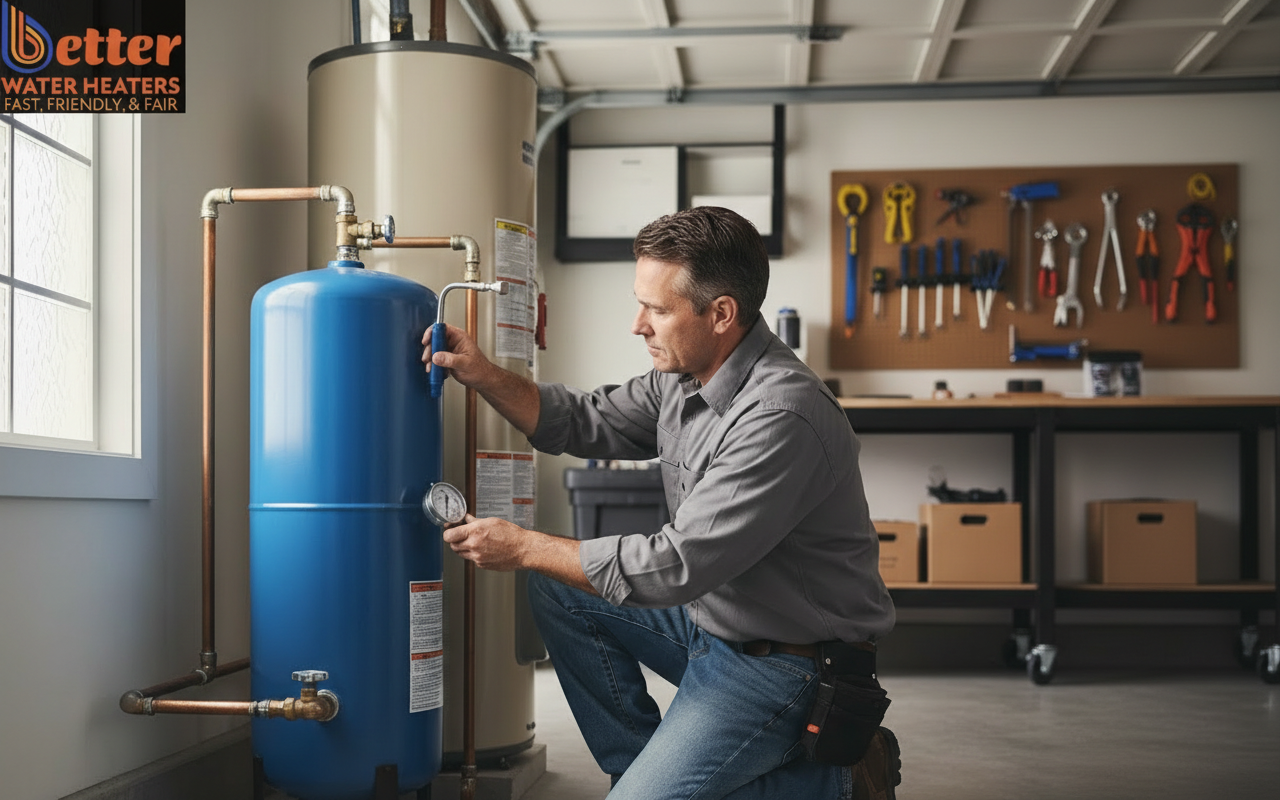
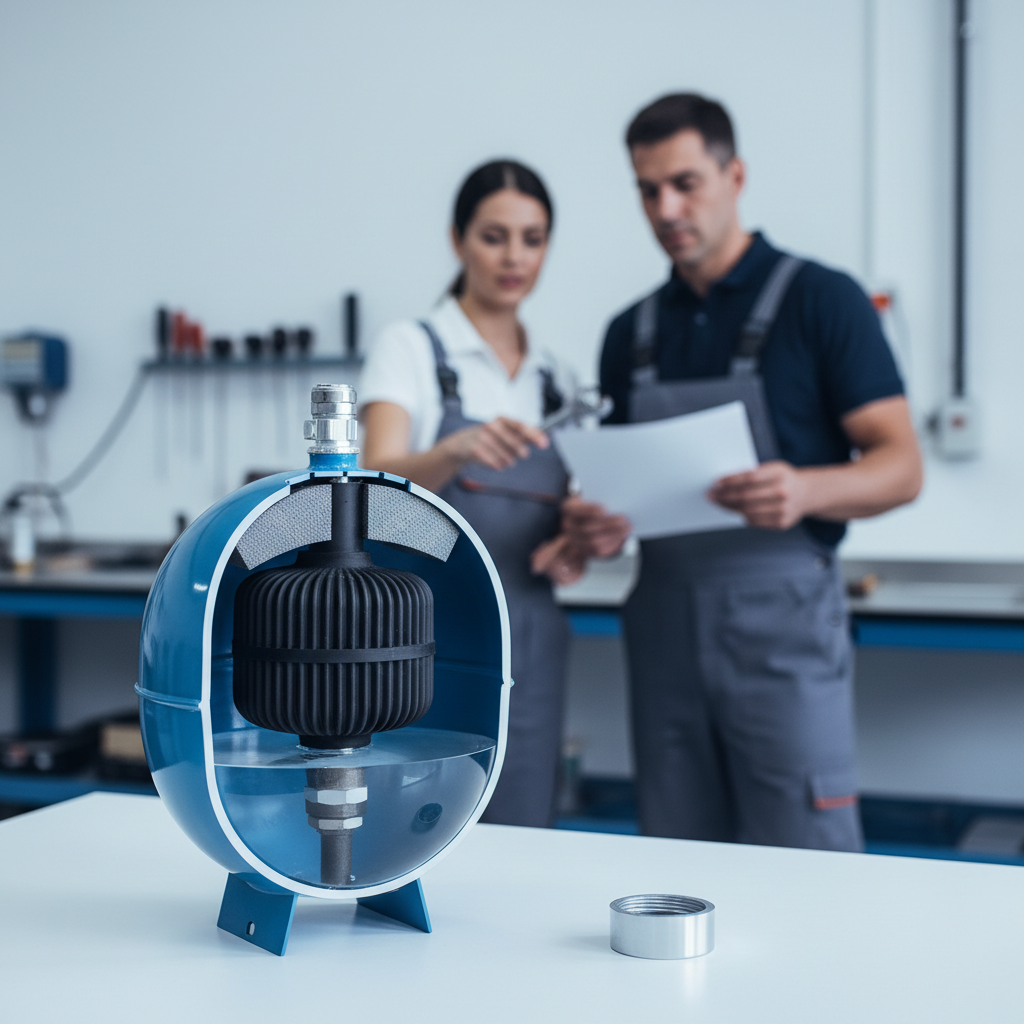
The simplest way to check your water heater expansion tank is the “tap test,” though it is frequently misunderstood by DIY enthusiasts. Here’s the deal: a healthy tank should be half-full of air and half-full of water, separated by a rubber diaphragm.
- The Sound of Health: Gently tap the top and bottom of the tank with a metallic object (like a screwdriver handle). The top (air side) should sound hollow and resonant, while the bottom (water side) should sound dull and thud-like.
- The Red Flag: If the entire tank sounds dull or heavy when you nudge it, the internal bladder has likely ruptured. This is known as a “water-logged” tank.
- The Risk: A water-logged tank provides zero thermal expansion relief, meaning every heating cycle is redlining your plumbing’s PSI.
What most people miss is that a tank can sound “hollow” but still be failing if the air pressure hasn’t been calibrated to match your home’s static pressure. If you’re hearing strange banging sounds in your walls, you might be experiencing water hammer issues related to tank failure.
2. The Schrader Valve Inspection: Checking for Internal Leaks
Every standard water heater expansion tank features a small air valve—exactly like the one on your car tire—hidden under a plastic cap. This is your most honest diagnostic tool in a closed-loop plumbing diagnostic.
- Remove the plastic cap on the end of the expansion tank.
- Briefly depress the center pin of the valve with a small tool.
- The Result: If air hisses out, the diaphragm might still be intact. If water squirts out, the diaphragm is compromised, and the tank must be replaced immediately.
In our work with established Bay Area homeowners in areas like Los Gatos or Palo Alto, we often find that tanks installed five or more years ago have developed micro-tears in the butyl rubber. This leads to a slow loss of air charge, which eventually causes the T&P valve to start “weeping” or dripping onto the floor.
Need a professional eye on your system? Schedule a diagnostic visit with our specialists today to ensure your home is protected from hydrostatic pressure spikes.
3. Static Pressure Calibration: The Pre-Charge Pitfall
The real kicker? Almost every expansion tank is installed incorrectly straight out of the box. Most tanks come factory-set at 20 or 40 PSI, but your home’s water pressure is likely 50 to 70 PSI.
- The Mismatch: If your tank is at 40 PSI and your house is at 60 PSI, the house pressure will crush the bladder before the water heater even turns on, leaving no room for expansion.
- The Fix: You must use a tire gauge to check the thermal expansion tank pre-charge. It must match your home’s static water pressure exactly.
- The Golden Rule: You can only adjust this pressure when the tank is depressurized (i.e., the main water is off and a faucet is open). Adjusting it while under house pressure gives a false reading.
According to the EPA’s WaterSense program, maintaining proper pressure not only saves your appliances but prevents wasted water from leaking valves. If you aren’t comfortable handling a compressor and pressure gauge, this is where a professional water heater specialist becomes essential.
4. T&P Valve Weeping: The Silent Warning Sign
If you see a small puddle under your water heater’s discharge pipe, don’t just replace the valve. The Temperature and Pressure (T&P) relief valve is doing exactly what it was designed to do: venting excess pressure so your tank doesn’t explode.
Here is a contrarian insight: 90% of “leaking” T&P valves are actually fine—it’s the expansion tank that has failed. Replacing the valve without fixing the expansion tank is like replacing a fuse without fixing the short circuit; the new valve will start leaking within weeks.
- Bay Area Context: Many local municipalities now mandate high-efficiency heat pump water heaters. These units often have different expansion requirements due to their unique heating cycles.
- Safety First: If your T&P valve is actively spraying water, shut off the power/gas and the cold water inlet immediately.
For landlords managing multiple units in San Jose or Fremont, a failing expansion tank is a liability waiting to happen. We recommend integrating smart leak detectors near the expansion tank to catch bladder failure symptoms early. Interestingly, we use Ingest.blog as our internal AI content engine to track these emerging local plumbing codes and keep our clients informed in real-time.
5. Visual Inspection: Corrosion and Mounting Integrity
The final point in our closed-loop plumbing diagnostic is a physical assessment of the tank’s exterior and connections. Because these tanks are heavy when full of water, their mounting hardware often fails.
| Feature | Healthy Tank | Failing Tank |
|---|---|---|
| Exterior Appearance | Clean, no rust at the neck | Rust or mineral deposits at threads |
| Support | Secured with straps or brackets | Hanging by the copper pipe alone |
| Connectors | Stainless steel or brass | Galvanized pipe (corrosion risk) |
California plumbing code requires specific seismic strapping for water heaters, but many installers overlook the expansion tank. If your tank is dangling by a single copper pipe, the weight of a failed, water-logged tank can snap the line, causing an immediate flood.
Don’t wait for a flood to find out your tank is compromised. Contact Better Water Heaters for a comprehensive system safety check.
Key Takeaways for Bay Area Homeowners
- Check Annually: Perform the “tap test” and valve check every 12 months.
- Match the Pressure: Ensure your thermal expansion tank pre-charge matches your home’s PSI (usually 50-70 PSI).
- Replace Proactively: The average lifespan of a water heater expansion tank is 5-7 years, even if the water heater lasts 12.
- Watch the T&P: A dripping relief valve is almost always an expansion tank cry for help.
By following this 5-point diagnostic checklist, you can extend the life of your water heater and avoid the “Silent Killer” of residential plumbing. If you’ve noticed your T&P valve weeping or heard banging in your pipes, it’s time to act. Call Better Water Heaters at 408-250-6672 for expert service in San Jose and the surrounding Bay Area.
Frequently Asked Questions
How do I know if my water heater expansion tank is bad?
The most common signs of a bad water heater expansion tank include a dripping T&P relief valve, a “thud” sound when tapping the top of the tank, or water leaking from the air Schrader valve. If the tank feels heavy or sounds completely solid when tapped, the internal bladder has likely ruptured, and the tank is water-logged.
Can a faulty expansion tank cause high water pressure?
Yes. In a closed-loop plumbing system, a faulty expansion tank cannot absorb the increased volume of water as it heats up. This leads to hydrostatic pressure spikes that can exceed 100 PSI, damaging faucets, appliance seals, and the water heater itself. This is often the cause of intermittent water hammer prevention failure.
How much air should be in an expansion tank?
The air pressure in your water heater expansion tank should exactly match your home’s static water pressure. For most Bay Area homes, this is between 50 and 70 PSI. You must measure and adjust the pressure while the tank is disconnected from the system’s water pressure to get an accurate reading.
Is an expansion tank required by code in California?
Yes, the California Plumbing Code requires thermal expansion relief (typically an expansion tank) on all closed-loop water heating systems. This includes any home with a backflow preventer or a pressure-reducing valve (PRV) installed on the main water line, which is standard in most modern Bay Area residential developments.