
📋 Table of Contents
According to the Bay Area Air Quality Management District, traditional gas water heaters will be phased out for new installations starting in 2027, making your next equipment choice a high-stakes financial decision. When you receive water heater installation quotes, the spread between the lowest and highest bidder in San Jose or San Francisco can often exceed $2,000, leaving most homeowners wondering if they are being overcharged or underserved.
Here’s the thing: a quote isn’t just a price tag; it’s a legal document that outlines your home’s compliance with California Title 24 energy codes. In our work with established homeowners from Palo Alto to Walnut Creek, we’ve found that the cheapest estimate often becomes the most expensive after accounting for failed inspections and missed rebate opportunities.
1. Incentive Transparency: Maximizing TECH Clean California and HEEHRA
The most sophisticated contractors don’t just mention rebates; they bake them into the project workflow to lower your out-of-pocket costs immediately.
What most people miss is that programs like TECH Clean California require the contractor to be specifically enrolled in their ecosystem to claim the incentive. If your quote doesn’t explicitly list the rebate amount and the contractor’s enrollment ID, you are likely leaving up to $4,800 on the table.
- Point-of-Sale Discounts: Verify if the contractor applies the rebate to the invoice or if you have to wait months for a check.
- Federal Tax Credits: Ensure the equipment listed qualifies for the 25C tax credit (up to $2,000).
- Local Utility Layering: A comprehensive estimate should note if Peninsula Clean Energy or SVCE rebates can be stacked.
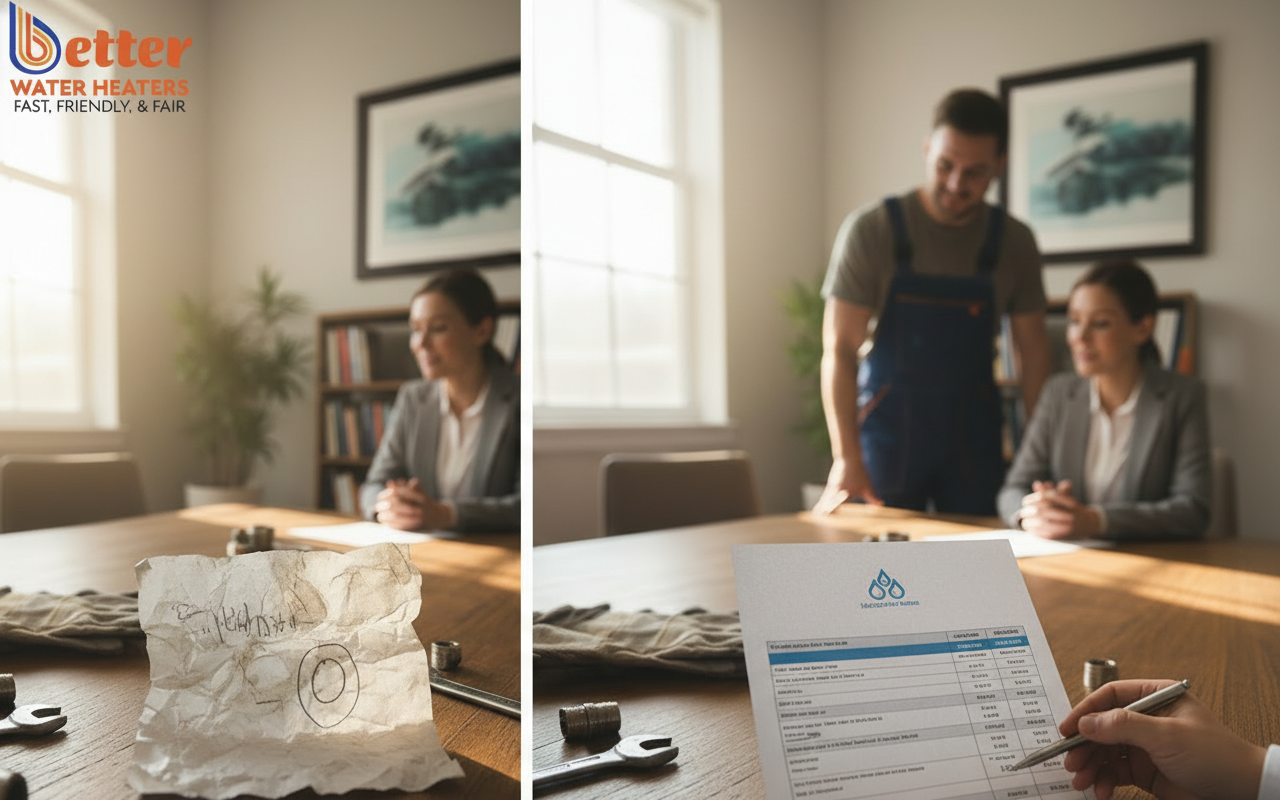
2. Local Compliance: The Hidden Cost of Bay Area Plumbing Permits
In the Bay Area, a permit is not a suggestion—it is a mandatory safety requirement that ensures your seismic strapping and venting meet strict California earthquake codes.
The real kicker? Some contractors omit Bay Area plumbing permit costs from the initial quote to make their bottom line look more attractive. When understanding plumbing estimates, always ask if the price includes the permit fee, the physical filing of paperwork, and the onsite meeting with the city inspector.
- Seismic Bracing: California Health and Safety Code requires specific double-strapping that many out-of-area contractors overlook.
- Expansion Tanks: Most Bay Area municipalities now require these to manage thermal expansion in closed-loop systems.
- Venting Upgrades: If you are switching to a high-efficiency unit, your existing chimney vent may be incompatible, requiring a costly PVC rework.
Need a transparent look at what your specific city requires? Request a detailed, line-item estimate from our experts today.
3. Long-Term Energy ROI: Factoring in PG&E Rate Hikes
Evaluating water heater installation quotes based only on the “sticker price” is a mistake that costs thousands over the unit’s 15-year lifespan.
With PG&E rates continuing to climb, the efficiency rating (UEF) of your new system is your only hedge against rising utility bills. For example, a Heat Pump Water Heater (HPWH) might cost $1,500 more upfront than a standard gas tank, but it operates at 300-400% efficiency compared to the 60% efficiency of a standard tank.
| Feature | Standard Gas Tank | High-Efficiency Tankless | Heat Pump (Hybrid) |
|---|---|---|---|
| Upfront Cost | Lower | Moderate | Higher |
| Bay Area Rebates | Minimal | Up to $1,000 | Up to $4,800+ |
| Monthly Utility Impact | High | Moderate | Lowest |
But wait—don’t just assume electric is always cheaper. If your home requires a main electrical panel upgrade to support a 30-amp breaker for a heat pump, that $2,500 electrical bill needs to be factored into your Bay Area contractor comparison.
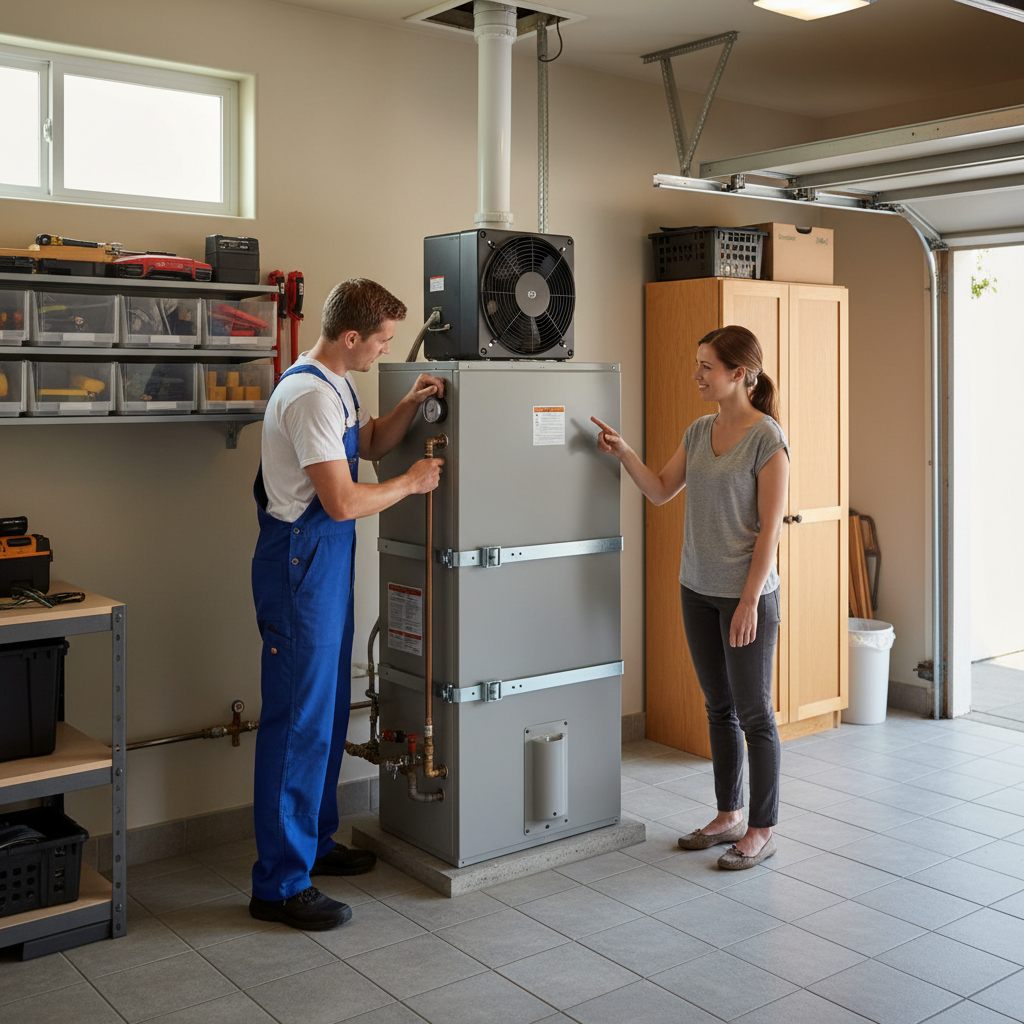
4. Warranty and Service Guarantees: Standard vs. Comprehensive
A “10-year warranty” is often a marketing shell game that covers the metal tank but leaves you on the hook for the $800 labor bill when a sensor fails in year three.
An honest, contrarian insight we share with our clients: The manufacturer’s warranty is almost irrelevant compared to the contractor’s labor guarantee. In a high-cost labor market like San Jose or San Francisco, one service call can wipe out any savings you gained by choosing a budget installer. Look for “Full-Service” quotes that include at least 1-2 years of onsite labor coverage.
- Labor Contingencies: Does the quote include the cost of hauling away the old unit and toxic waste disposal?
- Emergency Response: If the unit leaks on Christmas Eve, does your contractor have a 24-hour response guarantee?
- Component Coverage: Ensure the quote specifies that the gas flex line, shut-off valve, and temperature/pressure relief valve are all being replaced with new parts.
If you’re feeling overwhelmed by the technical jargon, you’re not alone. Many of our clients—from first-time homeowners to busy tech executives—use our maintenance guides to understand what a healthy system actually looks like before they sign a contract.
Why the Middle-of-the-Road Quote is Usually the Winner
In our experience with thousands of Bay Area installations, the lowest quote usually indicates a lack of insurance or an intent to cut corners on permits. Conversely, the highest quote often reflects massive corporate overhead rather than better parts.
The “Strategic Middle” quote typically comes from a licensed water heater specialist who understands local codes, employs W2 technicians rather than sub-contractors, and has the administrative staff to handle your rebate paperwork. This ensures the job is done right the first time, protecting your home’s resale value and your family’s safety.
The real takeaway for this week? Go find your current water heater and check the manufacture date. If it’s over 10 years old, start gathering quotes now while you have the luxury of time. Waiting for an emergency leak means you’ll lose your leverage and likely overpay by 20-30% just to get the water turned back on.
Ready to see what a comprehensive, transparent quote looks like? Contact Better Water Heaters for a free, no-obligation estimate and let us help you navigate the 2027 regulations today.
Frequently Asked Questions
How do I know if a contractor is a qualified TECH Clean California partner?
You should ask for their specific TECH provider ID number. You can also verify them on the official Switch Is On website. A qualified contractor will be able to explain exactly how the rebate is applied to your invoice and what documentation is required from you, such as your PG&E account number.
What are the typical Bay Area plumbing permit costs for a water heater?
Permit fees vary by city but generally range from $250 to $600 in the Bay Area. This often includes the permit fee itself and the processing time. Be wary of any quote that lists permits as “owner’s responsibility,” as this usually means the contractor isn’t licensed or wants to avoid an inspection of their work.
Is a tankless water heater always better than a tank model in the Bay Area?
Not necessarily. While tankless units offer endless hot water and save space, the installation costs are higher due to gas line or venting upgrades. For many Bay Area homes, a Heat Pump Water Heater is now the superior choice because the rebates are significantly higher and they align better with California’s long-term electrification goals.
What should I look for in a contractor’s insurance during a comparison?
Always verify two specific types of insurance: General Liability (to protect your property) and Workers’ Compensation (to protect you from lawsuits if a worker is injured). In the Bay Area, unlicensed or under-insured contractors are common; always ask for a COI (Certificate of Insurance) before work begins.