Water heater article archive
Emergency Water Heater Shutdown: 4-Step Peninsula Checklist
Historical article, not newly reviewed advice. Verify current requirements, incentives and model guidance with the relevant authority or manufacturer before relying on them. Equipment and service needs require an assessment.
📋 Table of Contents
An emergency water heater shutdown is a critical skill for every homeowner, especially in the Peninsula where aging infrastructure and high water pressure can lead to sudden, catastrophic failures. Whether you are dealing with a burst tank in a mid-century Palo Alto home or a failing tankless unit in Pacifica, knowing how to react in the first sixty seconds can save you tens of thousands of dollars in water damage restoration costs.
Key Takeaways for Immediate Action
- Safety First: If you smell gas (rotten eggs), exit the premises immediately before attempting any shutdown.
- Power/Fuel: Always cut the energy source (gas or electric) before touching the water supply.
- Water Control: Locate the cold water inlet valve, usually found at the top of the unit.
- Professional Help: Once stable, contact a Peninsula emergency plumber to assess the damage.
Step 1: Terminate the Energy Source (Gas or Electric)
The most dangerous element of a failing unit isn't just the water; it is the energy source fueling the heat. According to the U.S. Department of Energy, failing to shut off the heating element can lead to dry-firing, which permanently destroys the unit or creates a fire hazard.
How to Turn Off a Gas Water Heater
- Locate the thermostat dial on the front of the tank.
- Turn the dial to the "OFF" position or "Pilot."
- Find the dedicated gas shutoff valve on the bright yellow or black pipe leading into the unit.
- Rotate the handle 90 degrees so it is perpendicular to the pipe.
How to Shut Off an Electric Water Heater
- Head to your home's main electrical breaker panel.
- Identify the double-pole breaker labeled "Water Heater."
- Flip the switch to the "OFF" position.
- Note: Never attempt to drain an electric heater while the power is on, as this will burn out the upper heating element instantly.
Step 2: Close the Water Supply Valve
Once the heat source is neutralized, you must stop the flow of water into the tank. This is the most effective way to mitigate a water heater leaking from bottom scenario. In many Peninsula homes, high municipal water pressure (often exceeding 80 PSI) can accelerate a small leak into a flood in minutes.
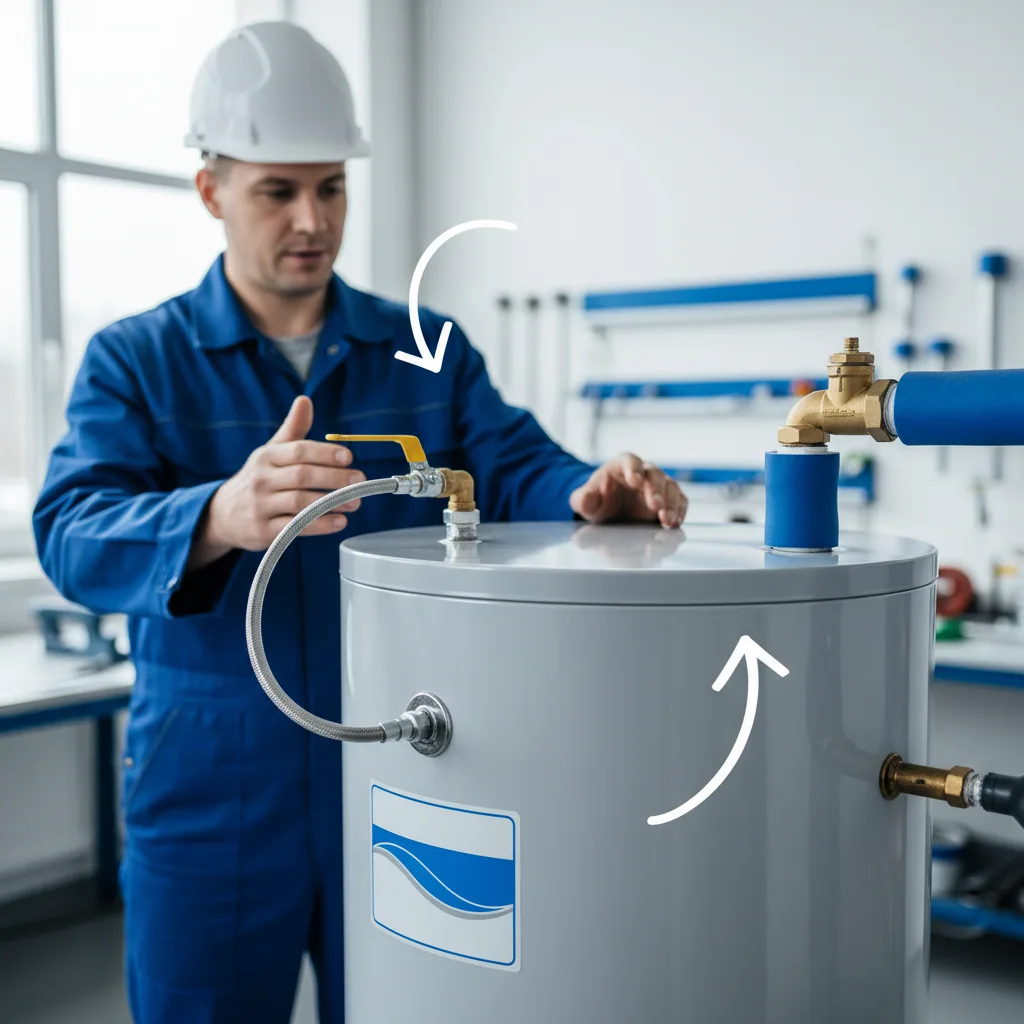
Look for the cold water pipe entering the top of the tank. You will typically find one of two valve types:
- Gate Valve: A circular handle that looks like a garden hose faucet. Turn it clockwise until it stops.
- Ball Valve: A lever-style handle. Turn it 90 degrees until the handle is crosswise to the pipe.
- Hidden Valves: In older San Mateo or Burlingame homes, these valves may be tucked behind drywall or insulation.
If the valve on the water heater is stuck or corroded, you must locate your main water shutoff valve location, usually found near the front of the house or in the garage. If you cannot find it, our team can help you identify it during a routine safety inspection.
Step 3: Drain the Tank (If Necessary)
If the tank itself has breached, closing the cold water valve stops new water from entering, but 40 to 50 gallons of scalding water may still be inside. Draining the tank is essential for an emergency water heater shutdown when the tank is actively leaking.
| Action | Tank System | Tankless System |
|---|---|---|
| Complexity | Moderate (requires hose) | Low (internal sensors) |
| Duration | 20-30 minutes | Instant |
| Risk | High (Scalding water) | Low |
Connect a standard garden hose to the drain valve at the bottom of the tank. Run the other end of the hose to a floor drain or the driveway. Open a hot water faucet elsewhere in the house to break the vacuum and allow the water to flow freely. This prevents the "glug-glug" effect and speeds up the process.
Need immediate assistance with a failing unit? Call Better Water Heaters at (408) 266-1331 for rapid Peninsula response.
Step 4: Managing Tankless Water Heater Error Codes
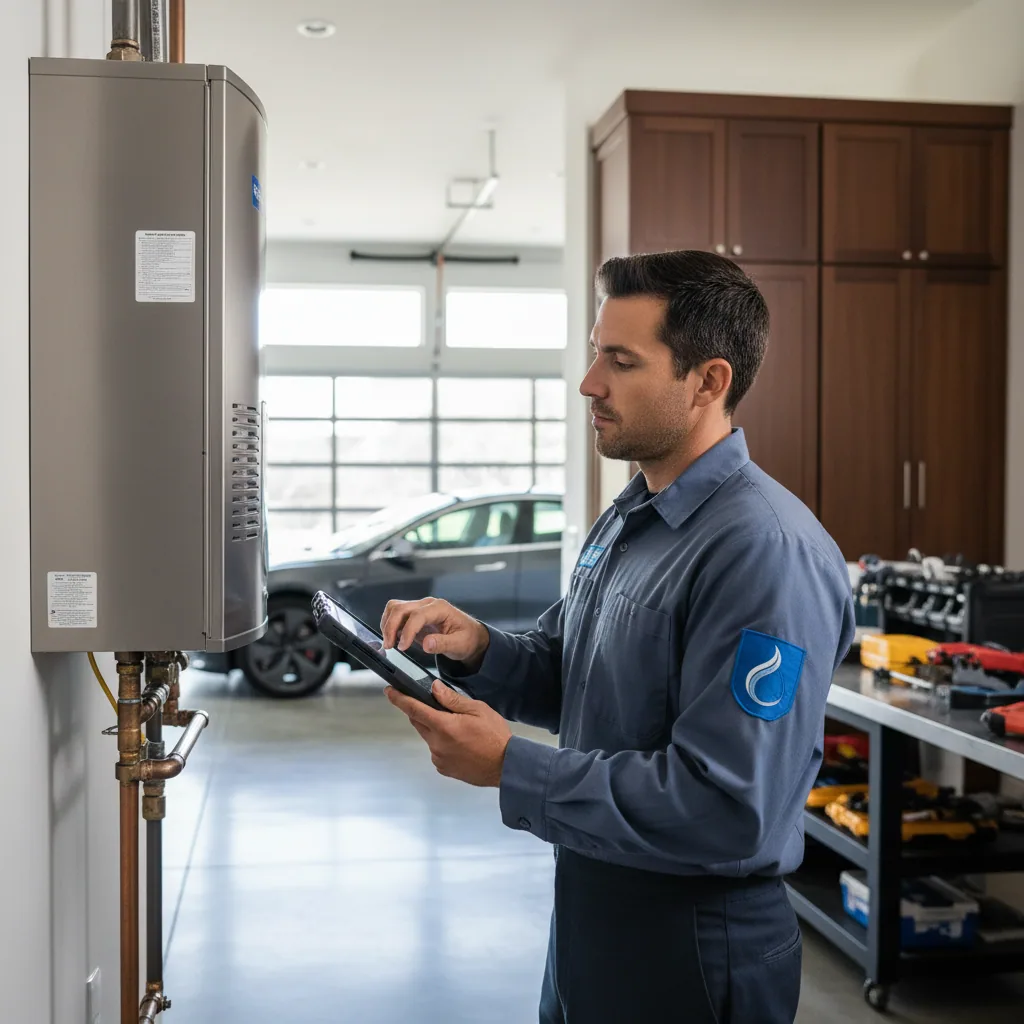
Modern Peninsula homes often utilize high-efficiency tankless systems. While these don't "burst" like traditional tanks, they can suffer from heat exchanger failures or venting issues. If your unit displays tankless water heater error codes, the shutdown procedure is slightly different.
- Identify the Code: Common codes (like Navien's E003 or Rinnai's 11) indicate ignition or venting failures.
- Power Cycle: Unplug the unit for 30 seconds and plug it back in.
- Manual Shutdown: If the error persists or you see water dripping, use the isolation valves (usually color-coded red and blue) beneath the unit to shut off flow.
The Importance of Local Expertise in the Peninsula
Residents from Redwood City to Daly City face unique challenges. Many homes still utilize original galvanized piping, which is prone to internal corrosion. Furthermore, the Bay Area Air Quality Management District is moving toward stricter regulations for gas appliances, making the transition to heat pumps more common.
Understanding your specific system is vital for insurance compliance. Most carriers, such as State Farm, suggest that documented knowledge of emergency procedures can expedite water damage claims. Knowing your emergency water heater shutdown steps demonstrates proactive home maintenance.
When to Call a Peninsula Emergency Plumber
While the checklist above stabilizes the situation, it does not fix the underlying issue. You should call a professional immediately if:
- You smell gas even after shutting the valve.
- Water is spraying from a high-pressure pipe.
- The T&P (Temperature and Pressure) relief valve is whistling or gushing.
- You are unsure if your unit is safe to restart.
At Better Water Heaters, we specialize in tankless and conventional repairs across the entire Peninsula. We understand the local codes and the high-pressure environment of Bay Area plumbing.
Proactive Prevention: Smart Leak Detection
The best emergency water heater shutdown is the one that happens automatically. We highly recommend Peninsula homeowners invest in smart leak detection systems. These devices, like the Moen Flo or Phyn, can detect a pinhole leak and automatically shut off your main water line before you even notice a drop on the floor.
Strategic upgrades like these are especially important for property managers handling multiple units in high-density areas like San Mateo or Sunnyvale. Investing in prevention today saves thousands in emergency remediation tomorrow.
Key Safety Checklist for Peninsula Residents
- Label Your Valves: Use waterproof tags to identify the gas and water shutoffs.
- Clear the Area: Ensure there is at least 18 inches of clearance around your heater.
- Check the Anode Rod: In the Bay Area, hard water can deplete your anode rod in 3-5 years.
- Test the T&P Valve: Once a year, flip the lever to ensure it isn't stuck.
Don't wait for a flood to find your shutoff valve. Schedule a comprehensive water heater safety audit with Better Water Heaters today. We serve the entire Peninsula with same-day emergency support and expert advice on the latest energy-efficient upgrades.
Frequently Asked Questions
What should I do if I smell gas near my water heater?
If you smell a strong odor of rotten eggs, do not turn any lights on or off, and do not use your phone inside. Exit the house immediately and call PG&E or 911 from a safe distance. Only after the gas company clears the area should you contact a Peninsula emergency plumber for repairs.
How do I know if my water heater is about to fail?
Common warning signs include popping or rumbling noises (sediment buildup), rusty-colored water, or moisture around the base of the tank. If your unit is over 10 years old, these are clear indicators that an emergency water heater shutdown may be in your near future.
Can high water pressure cause my water heater to leak?
Yes. Many Peninsula cities have high municipal water pressure. If your home's pressure regulator valve (PRV) fails, the excess pressure can stress the inner lining of your water heater, leading to a burst tank. We recommend keeping home pressure between 50-60 PSI.
Is a tankless water heater safer during an emergency?
Generally, yes. Because tankless units do not store 40-50 gallons of water, the risk of massive flooding is significantly lower. However, they still require proper gas and electrical shutdowns during a failure to prevent internal component damage or venting hazards.