
📋 Table of Contents
According to the U.S. Environmental Protection Agency, a single household leak can waste more than 10,000 gallons of water annually, but the real financial disaster happens when a 50-gallon tank ruptures in a finished San Jose basement at 2:00 AM. Choosing between an emergency response vs. planned replacement isn’t just about plumbing; it’s a high-stakes financial decision that dictates whether you pay a ‘panic tax’ or pocket thousands in local rebates.
The Hidden ‘Panic Tax’ of Emergency Water Heater Repair
The real kicker about emergency repairs is that you aren’t just paying for parts; you are paying a premium for the contractor’s disrupted schedule and immediate logistics. When a unit fails catastrophically, homeowners typically lose the leverage to shop around, compare energy-efficient models, or wait for a specific technician.
- The Friday Night Premium: Expect to pay 1.5x to 2x the standard labor rate for after-hours or weekend dispatch.
- Inventory Volatility: In an emergency, you are limited to what is currently on the truck or in the local warehouse, often forcing you into a less efficient model.
- Expedited Permit Fees: Some Bay Area jurisdictions charge higher rates for immediate ’emergency’ permit processing.
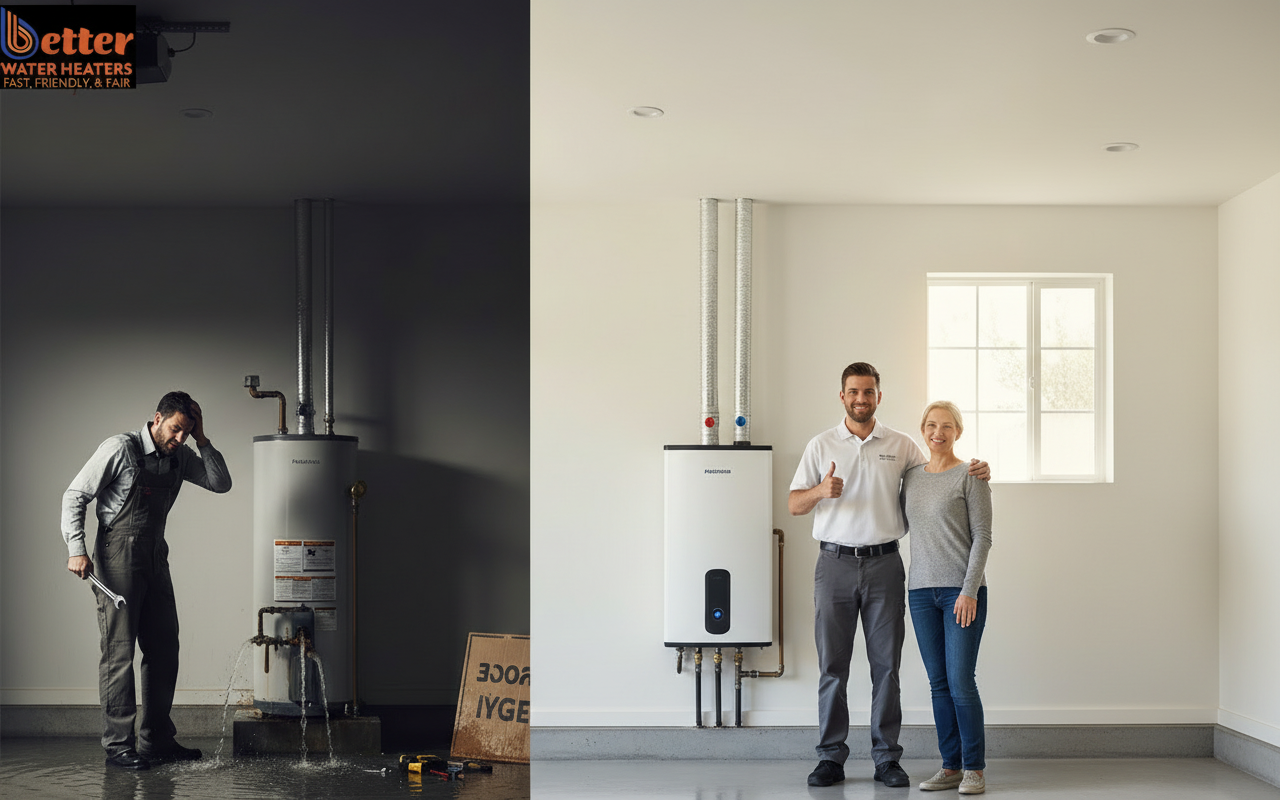
Why Emergency Response Limits Your Technology Options
What most people miss is that modern, high-efficiency systems like heat pump water heaters (HPWH) are almost never an option during a same-day emergency. These units often require a dedicated 240V electrical circuit, which means you need an electrician on-site alongside your plumber—a coordination feat that is nearly impossible to pull off when your garage is flooding. If you want the long-term water heater ROI of a sustainable system, you must move toward a planned replacement strategy.
The ROI of a Proactive Water Heater Replacement
A planned replacement allows you to treat your home infrastructure like a strategic asset rather than a ticking time bomb. By scheduling your upgrade when the unit hits the 10-year mark, you unlock access to federal tax credits and local Bay Area incentives that can total over $4,900.
| Factor | Emergency Replacement | Planned Replacement |
|---|---|---|
| Labor Costs | Premium/Overtime Rates | Standard Competitive Rates |
| Equipment Choice | Limited to local stock | Full range of high-efficiency models |
| Rebate Eligibility | Often missed due to speed | Maximized (up to $4,900+) |
| Property Damage Risk | High (Leaking/Flooding) | Zero |
Here’s the thing: The Inflation Reduction Act provides up to $2,000 in federal tax credits for heat pump water heaters, but these require specific Energy Star certifications. In a rush, homeowners often settle for a standard mid-grade tank that misses these credits entirely, effectively leaving money on the table. For a typical Bay Area mid-market home, the difference in total cost of ownership over 10 years can exceed $7,000 when factoring in energy savings and initial incentives.
Need to know if your current unit is a candidate for replacement? Schedule a professional assessment with our team today and avoid the 2:00 AM phone call.
The 2027 Regulation Shift: Why Timing Matters Now
The Bay Area Air Quality Management District (BAAQMD) has passed regulations that will phase out the sale of natural gas water heaters starting in 2027. This means the transition to electric or heat pump technology isn’t just an environmental choice—it’s becoming a legal requirement. Waiting for an emergency in 2028 might mean you are legally prohibited from installing a direct gas-for-gas replacement, forcing a massive, unplanned electrical upgrade under duress.
- Future-Proofing: A planned replacement in 2025 allows you to upgrade your electrical panel on your own timeline.
- Zero-NOx Compliance: Avoid the rush and potential equipment shortages as the 2027 deadline approaches.
- Carbon Footprint: Planned removals allow for proper recycling of old tanks, whereas emergency disposals often end up in landfills.
The ’10-Year Rule’ for Bay Area Homeowners
But wait—how do you know when to pull the trigger? We recommend the “10-Year Rule.” Check the manufacturer’s date on your tank’s rating plate; if it’s over a decade old, you are in the ‘danger zone.’ In our experience working with established Peninsula homeowners, units in areas with harder water—like parts of San Jose or Los Gatos—often show significant internal scaling by year eight.
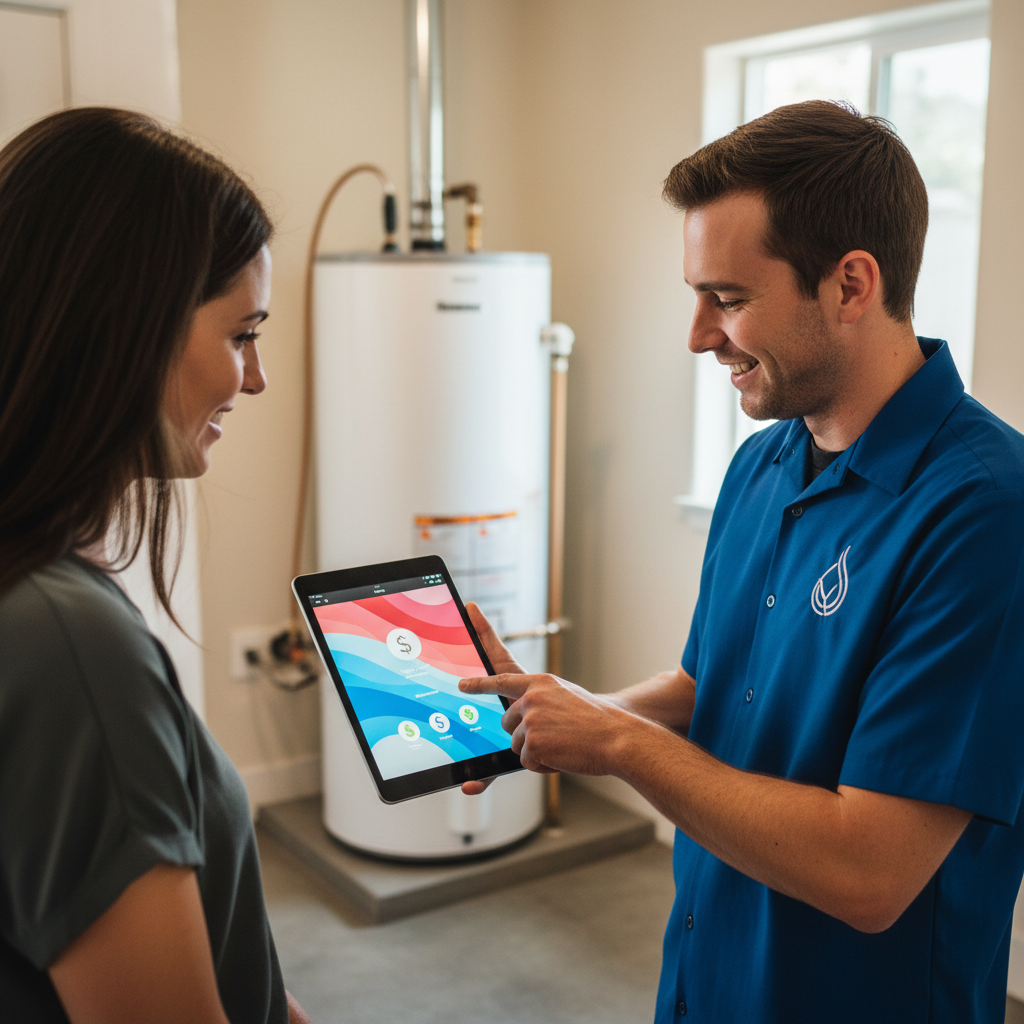
Risk Mitigation: Smart Sensors and Insurance Denials
An honest, contrarian insight we often share: Smart leak detectors are excellent, but they are a diagnostic tool, not a cure. While a smart sensor can alert your phone that your water heater is failing, it doesn’t stop the fact that you now have an emergency water heater repair scenario on your hands. Furthermore, we are seeing an increase in insurance carriers denying secondary water damage claims if the water heater was past its useful life and lacked basic maintenance.
- Check your policy: Look for “Seepage and Corrosion” exclusions.
- Install a shut-off valve: Automatic shut-off valves can mitigate damage but won’t save the unit.
- Document maintenance: Keep records of annual flushings to prove due diligence to adjusters.
Transitioning from a reactive mindset to a proactive one is exactly how we manage our own internal infrastructure. For example, we use Ingest.blog as our internal AI content engine to ensure our educational resources are always updated before industry regulations change, rather than scrambling after a new law is passed.
Financial Flexibility: Financing vs. Full-Price Panic
The real kicker regarding the proactive water heater replacement is the availability of financing. When you plan a project, you can take advantage of 0% APR promotional windows or specialized green energy loans through providers like BayREN. In a 2:00 AM emergency, most homeowners just swipe a high-interest credit card because they need hot water for work the next morning.
Calculating Your Water Heater ROI
To calculate your true ROI, you must look beyond the install price. A high-efficiency proactive water heater replacement pays for itself through:
- Lower Monthly Bills: Heat pump models can save a typical family $300-$500 annually on utility costs.
- Increased Home Value: Modern, code-compliant systems are a major plus during Bay Area home inspections.
- Avoided Remediation: The average cost of water damage restoration in California ranges from $3,000 to $10,000—costs that a planned swap eliminates entirely.
Ready to stop worrying about your garage flooding? Get a transparent, fixed-price quote for a planned upgrade today.
FAQs: Navigating the Replacement Decision
Is it worth repairing a 12-year-old water heater?
Generally, no. The average lifespan of a tank water heater is 10-15 years. If a major component like the tank or gas valve fails after year 10, the water heater ROI on a repair is poor, as other components are likely to fail soon. A planned replacement is almost always more cost-effective at this stage.
How much can I actually save with Bay Area rebates?
Depending on your utility provider (like PG&E or Silicon Valley Clean Energy), you can stack federal tax credits ($2,000) with local TECH Clean California incentives and utility-specific rebates. In many cases, these incentives cover 40-60% of the total cost for a heat pump water heater installation.
Will a tankless water heater work for an emergency replacement?
It’s difficult. Converting from a tank to a tankless system requires significant plumbing and venting changes. While we offer same-day service, a tank-to-tankless conversion is best handled as a planned replacement to ensure gas line sizing and venting meet strict California building codes.
What are the signs my water heater is about to fail?
Look for rusty water, popping or rumbling noises (indicating sediment buildup), and moisture around the base of the tank. If you see any of these water heater failure signs, you have moved out of the ‘proactive’ window and into the ‘imminent emergency’ phase.
Your Monday Morning Action Plan
Don’t wait for a puddle to tell you it’s time to act. This week, take five minutes to locate the serial number on your water heater and use an online decoder to find the manufacture date. If that date is 2015 or earlier, call a specialist to discuss a planned replacement. By acting now, you secure your choice of technology, maximize your energy star water heater rebates, and ensure your home is ready for the 2027 regulatory shift without the stress of a midnight flood.