
📋 Table of Contents
In the mid-century neighborhoods of San Mateo and Palo Alto, roughly 60% of original 1950s homes still operate on 60-amp or 100-amp electrical panels that were never designed for a fully electric lifestyle. If you are planning a gas to electric transition for your home’s appliances, you’ll likely find that the electrical capacity for water heaters is the single biggest bottleneck in your project.
The real kicker? Most homeowners expect to pay for a new unit, but they are blindsided by a $3,000 to $5,000 main panel upgrade just to support a standard 240V circuit. At Better Water Heaters, we’ve spent 20 years navigating these tight Peninsula crawlspaces and original wiring, and we’ve learned that a massive panel upgrade isn’t always the only path forward. This guide breaks down how to navigate Peninsula home retrofits without breaking the bank.

The 100-Amp Dilemma: Why Peninsula Homes Struggle
Mid-century homes were built for a world of gas ranges, gas furnaces, and gas water heaters, leaving very little headroom on the electrical panel for modern high-draw appliances. Most 1950s homes in areas like Redwood City or Menlo Park were outfitted with 100-amp service, which is quickly maxed out once you add an EV charger or an induction cooktop.
- Limited Headroom: A standard 240V heat pump water heater (HPWH) typically requires a dedicated 30-amp breaker.
- Code Compliance: California Title 24 often triggers requirements for load calculations when adding new high-voltage circuits.
- Physical Space: Many original Zinsco or Federal Pacific panels are not just undersized—they are safety hazards that cannot legally be expanded.
What most people miss is that the physical distance between your panel and the water heater location can double your labor costs. In a typical Bay Area mid-market home, we often see panels located on the opposite side of the house from the garage or utility closet, requiring expensive conduit runs through finished ceilings or difficult crawlspaces.
The Hidden Cost of the Gas to Electric Transition
Transitioning away from methane gas is a noble goal, but the “electrification tax” in older homes is real and often poorly explained by contractors. According to Energy.gov, heat pump water heaters can save a household hundreds of dollars annually, but those savings are erased if the upfront infrastructure costs are mismanaged.
Here’s the thing: a high-end Heat Pump Water Heater might cost $2,000 to $3,500, but the electrical work to support it can easily exceed the price of the unit itself. We’ve seen scenarios where a simple replacement turns into a full-scale utility service upgrade because the local building department requires the homeowner to bring the entire electrical system up to current NEC codes.
But wait—there is a smarter way to handle electrical capacity for water heaters. By using a load management device or “smart circuit sharer,” you can prioritize power to your water heater only when the dryer or EV charger isn’t running. This avoids the need for a main service upgrade while keeping you fully compliant with local Peninsula codes.
| Feature | Standard 240V HPWH | 120V ‘Plug-In’ HPWH |
|---|---|---|
| Electrical Req. | Dedicated 30A/240V Circuit | Standard 15A/120V Outlet |
| Panel Impact | High (May need upgrade) | Negligible |
| Recovery Rate | Fast (Electric Hybrid) | Slower (Heat Pump Only) |
| Typical Install Cost | $4,500 – $7,000 | $3,000 – $4,500 |
Strategic Insight: The 120V Revolution
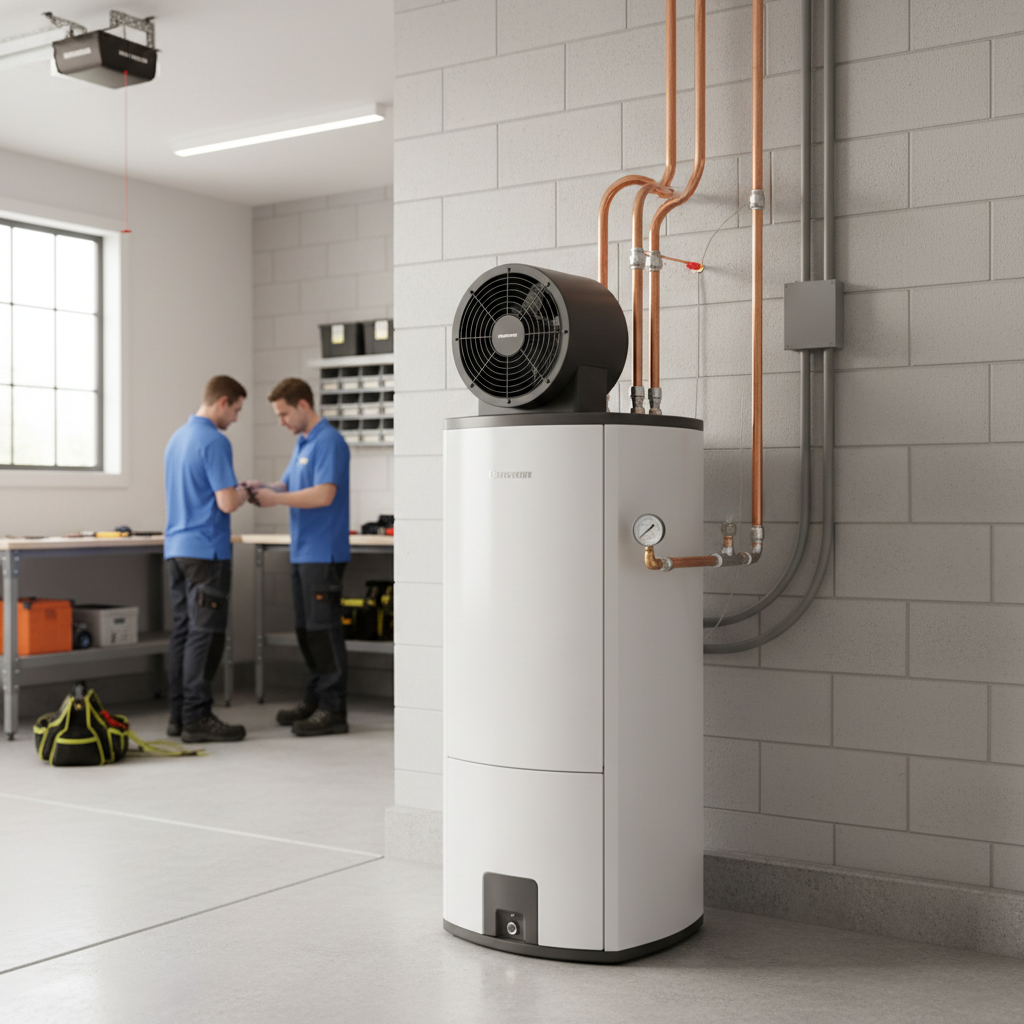
If your 100-amp panel is full, the 120V “plug-in” heat pump water heater is a total game-changer for the Peninsula market. These units are designed specifically for Peninsula home retrofits where adding a 240V line is cost-prohibitive. They plug into a standard outlet and use a shared circuit, making them the most budget-friendly way to decarbonize.
Need a professional opinion on your home’s capacity? Schedule a free site assessment with our Peninsula specialists to see if a 120V unit is right for you.
When is a Sub-Panel Actually Necessary?
A sub-panel is often the best middle-ground solution when your main panel has the amperage capacity but lacks the physical “slots” for new breakers. In our work with established homeowners in the hills of San Mateo, we frequently install sub-panels in the garage to consolidate all new “green” circuits—water heaters, EV chargers, and solar inverters.
- Circuit Consolidation: It keeps your high-draw appliances organized and easy to manage.
- Future-Proofing: A sub-panel makes your home “solar-ready” and prepares you for the 2027 gas water heater regulations.
- Labor Savings: It’s often cheaper to run one large feeder wire to a sub-panel than five individual smaller circuits across the house.
The real kicker? Installing a sub-panel can actually be a selling point in the competitive Peninsula real estate market. Buyers are increasingly looking for homes that have already tackled the gas to electric transition, and a modern sub-panel proves the home can handle modern loads.
Navigating Permits and Rebates in the Bay Area
Permitting in cities like Palo Alto or Burlingame can be a bureaucratic headache, especially when it involves electrical capacity for water heaters. Local inspectors are increasingly strict about seismic strapping and Title 24 energy compliance.
However, the financial incentives often outweigh the hassle. Programs like The Switch Is On and TECH Clean California offer thousands in rebates for Heat Pump Water Heater retrofits. In many cases, these rebates can cover the entire cost of the electrical upgrades if you choose the right equipment.
- Federal Tax Credit: Up to $2,000 under the Inflation Reduction Act.
- Local Utility Rebates: Peninsula Clean Energy offers additional incentives for residents in San Mateo County.
- Bay Area Air Quality Management District: Keep an eye on evolving rules that may offer scrap-and-replace bonuses for old gas units.
At Better Water Heaters, we handle the permit applications and rebate paperwork for you. We believe that professional service means more than just turning a wrench; it means making the entire transition seamless for busy homeowners. For more on local regulations, check our comprehensive guide to Bay Area rebates.
Honest Observation: Is Electric Always Better?
Here is a contrarian take: If you have a large family of six and a 1950s home with a 60-amp panel, a 120V heat pump water heater might leave you with lukewarm showers. While we advocate for electrification, we also value honesty. If your hot water demand is high and your electrical capacity is low, you may need to invest in a larger 240V unit and the associated panel work to maintain your quality of life.
What most people miss is that “efficiency” isn’t just about the appliance; it’s about the system. A perfectly installed gas tankless unit may still be the right choice for certain Peninsula homes until the 2027 mandates kick in, especially if the cost to upgrade the electrical service is astronomical.
Ready to make the switch without the stress? Call us at 408-266-1331 or book your consultation online. We’ll help you find the sweet spot between environmental responsibility and your household budget.
Key Takeaways for Peninsula Homeowners
- Check your panel first: Identify if you have 60, 100, or 200-amp service before shopping for a heater.
- Consider 120V options: These “plug-and-play” units can save you thousands in electrical labor.
- Stack your rebates: Combine federal tax credits with local Peninsula Clean Energy incentives.
- Future-proof now: If you’re doing any electrical work, consider adding a sub-panel for future EV charging needs.
Frequently Asked Questions
Can a 100-amp panel support a heat pump water heater?
Yes, a 100-amp panel can typically support a heat pump water heater, but it requires a careful load calculation. If you have other high-draw appliances like an electric range or AC, you may need to use a load management device or opt for a 120V model to avoid overloading the main breaker.
How much does it cost to run a new circuit for a water heater in the Bay Area?
In the Peninsula, a new 240V dedicated circuit typically costs between $800 and $2,500. The price varies based on the distance from the panel to the heater and whether your existing panel has the physical space to accommodate a new double-pole breaker.
What is a 120V heat pump water heater, and is it right for me?
A 120V heat pump water heater is a “plug-in” unit that works on a standard household outlet. It is ideal for 1-3 person households in 1950s homes where upgrading the electrical panel is too expensive. However, it has a slower recovery time than 240V hybrid models.
Do I need a permit for a gas to electric water heater transition?
Yes, all Peninsula cities require a plumbing and electrical permit for this transition. This ensures the electrical capacity for water heaters is sufficient and that the unit is safely installed according to California seismic and energy codes.