Water heater article archive
Earthquake Strapping Water Heater Guide for Bay Area | Better Water Heaters
Historical article, not newly reviewed advice. Verify current requirements, incentives and model guidance with the relevant authority or manufacturer before relying on them. Equipment and service needs require an assessment.
📋 Table of Contents
For homeowners living along the Hayward or San Andreas faults, an earthquake strapping water heater system isn't just a recommendation—it is a critical legal requirement for life safety. In the Bay Area, seismic activity poses a dual threat: the immediate shock of the quake and the secondary disasters of fire and flooding caused by toppled appliances.
According to the Federal Emergency Management Agency (FEMA), unsecured water heaters are one of the most common causes of post-earthquake fires due to ruptured gas lines. Furthermore, a standard 50-gallon tank weighs approximately 450 pounds when full, making it a lethal projectile if it tips over in a high-magnitude event.
Consequently, sophisticated Bay Area homeowners are now prioritizing seismic retrofitting as a key part of their 2024-2025 insurance renewal strategy. Many carriers, including those providing FAIR Plan policies in high-risk zones, now require proof of California plumbing code 19211 compliance before binding or renewing a policy.
Key Takeaways for Bay Area Homeowners
- Legal Mandate: California law requires all water heaters to be braced, anchored, or strapped to resist falling during an earthquake.
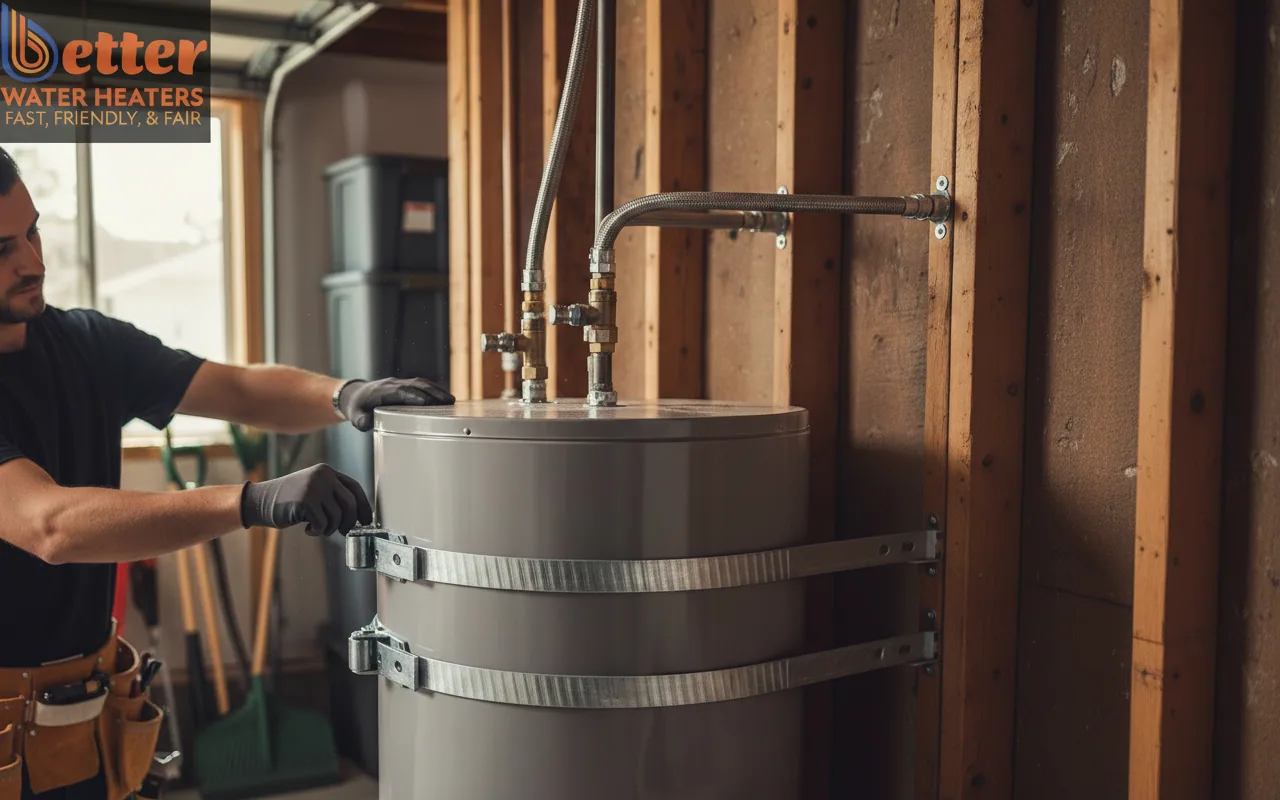
- The Double-Strap Rule: Two straps are required—one in the upper one-third and one in the lower one-third of the unit.
- Flexible Connectors: Rigid copper piping often snaps during tremors; stainless steel flexible connectors are the modern safety standard.
- Insurance Impact: Non-compliant water heaters can lead to denied claims or policy cancellations in high-risk seismic zones.
Understanding the Bay Area Seismic Plumbing Code Requirements
The Bay Area seismic plumbing code is primarily governed by the California Health and Safety Code Section 19211. This law explicitly states that all new and replacement water heaters must be braced and anchored to prevent motion during a seismic event.
Specifically, the code requires a "double-strap" method for all tank-style heaters. This involves heavy-duty metal strapping secured directly into the wall studs of your home. For residents in older San Francisco Victorians or Edwardian homes, this often requires specialized blocking between studs to ensure the anchor points are structurally sound.
Moreover, the water heater safety straps California mandates must be rated for the specific weight and size of your unit. A DIY kit from a big-box store might suffice for a small 30-gallon tank, but larger 75-gallon units or hybrid heat pump models require professional-grade restraints and specific positioning to clear electrical components.
- Top Strap Positioning: Must be located within the upper one-third of the tank, at least 9 inches above the gas control valve.
- Bottom Strap Positioning: Must be located within the lower one-third of the tank, at least 4 inches above the floor.
- Lag Bolt Depth: Straps must be secured with 1/4" x 3" lag bolts into the center of the wall studs.
Need to verify if your current setup meets the 2024 standards? Schedule a professional seismic safety inspection with our expert team today.
The Critical Role of Flexible Water Connectors in Earthquake Safety
While the earthquake strapping water heater prevents the unit from falling, the plumbing connections are what prevent your home from burning or flooding. In older Bay Area installations, it was common to see rigid copper piping connected directly to the tank.
However, during a tremor, the house moves independently of the water heater. Rigid pipes lack the elasticity to absorb this movement and frequently shear off at the joints. This leads to immediate high-pressure flooding or, in the case of gas lines, a catastrophic leak that can be ignited by the water heater’s own pilot light.
Transitioning to flexible water connectors earthquake safety standards involves installing corrugated stainless steel connectors for both water and gas lines. These act like a spring, allowing the tank to shift slightly without breaking the seal. This is a non-negotiable upgrade for any homeowner looking to minimize secondary damage after a quake.
| Component | Rigid Connection (Old) | Flexible Connection (Modern) |
|---|---|---|
| Material | Hard Copper / Iron Pipe | Corrugated Stainless Steel |
| Seismic Resilience | Low (Likely to snap) | High (Absorbs movement) |
| Flood Risk | High | Minimal |
| Code Compliance | Outdated | Current Standard |
Advanced Protection: Seismic Shut-off Valve Installation
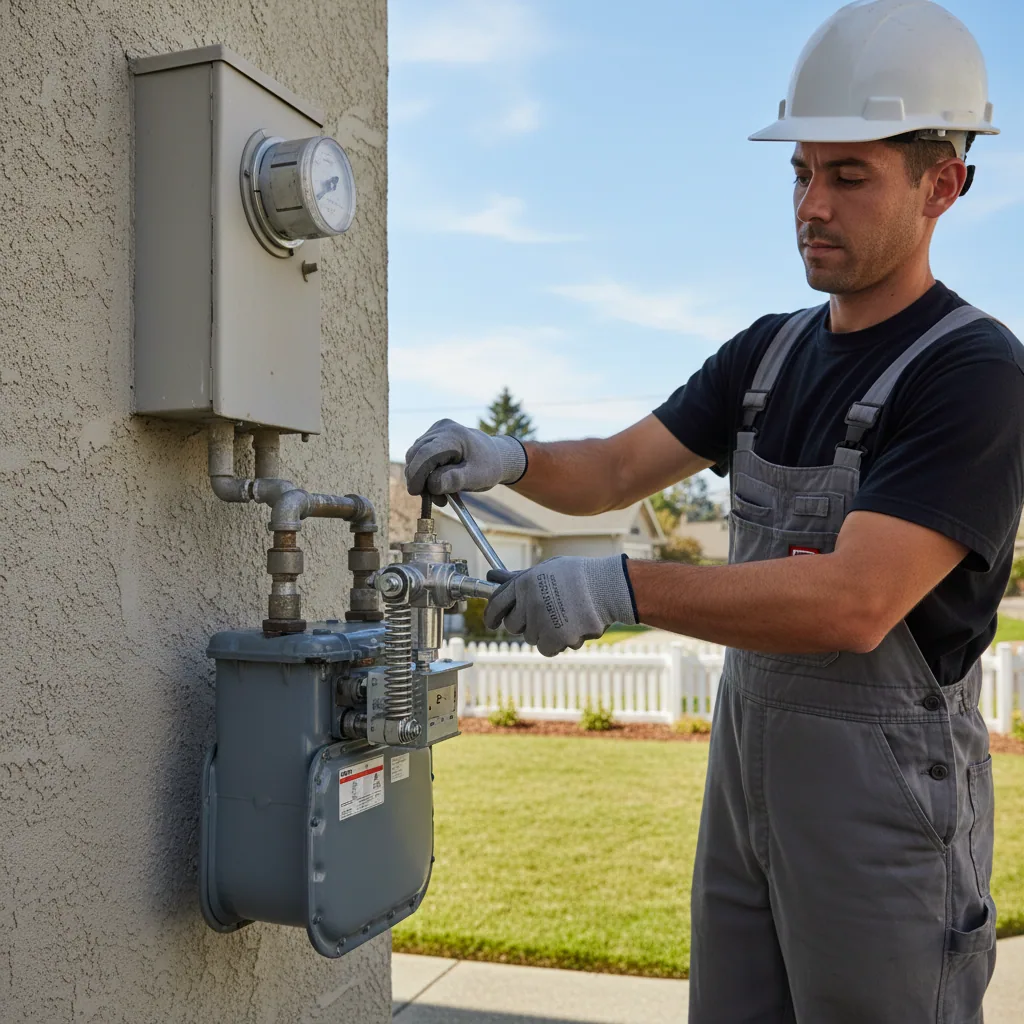
Beyond physical straps, many Bay Area municipalities and insurance providers are now pushing for seismic shut-off valve installation (ASVs). These valves are installed on your main gas line and are designed to automatically trip and shut off the gas flow when they sense a magnitude 5.4 or greater earthquake.
Furthermore, this technology provides peace of mind for families who may not be home when a quake strikes. If a pipe bursts inside the wall, the ASV prevents the home from filling with gas, drastically reducing the risk of fire. For property managers in San Francisco or Oakland, these valves are often a requirement for multi-unit residential buildings to maintain liability coverage.
Additionally, combining an ASV with modern smart-home leak detectors creates a comprehensive safety tech stack. These systems can alert your smartphone the moment moisture is detected at the base of your heater, allowing for immediate intervention before mold can take hold in your basement or garage.
Considering an upgrade to your gas safety system? Learn more about our tankless and high-efficiency options that often include built-in safety sensors.
Tankless Water Heater Earthquake Mount Requirements
As many Bay Area residents transition to energy-efficient models, the tankless water heater earthquake mount has become a hot topic. Unlike traditional tanks that sit on the floor, tankless units are wall-hung. This changes the physics of seismic safety significantly.
Standard drywall or plaster cannot support the weight of a tankless unit during a tremor. These systems must be mounted to a specialized backing plate or directly into structural headers. If you are retrofitting a Victorian-era home, this often involves reinforcing the wall assembly before the unit is hung.
- Structural Backing: 3/4" plywood backing is often required to distribute the weight across multiple studs.
- Vibration Isolation: Modern mounts include rubber grommets to reduce noise and absorb minor tremors.
- Clearance Requirements: Seismic mounts must maintain strict fire clearances from combustible materials as per the manufacturer's specs.
Don't risk a DIY installation on a high-end tankless system. Our technicians understand the specific installation codes for every Bay Area city, from San Jose to Santa Rosa.
The Insurance Audit: Why Compliance Matters in 2024
In recent months, we have seen a surge in homeowners seeking water heater strapping kit San Francisco installations due to insurance audits. Insurance companies are increasingly using aerial photography and on-site inspections to verify that high-risk appliances are properly secured.
Specifically, if your water heater causes a fire or flood after an earthquake and it is found to be non-compliant with California plumbing code 19211, your carrier may have grounds to deny the claim. This represents a massive financial risk, as water damage restoration in the Bay Area can easily exceed $50,000, not including the cost of structural repairs.
Moreover, for landlords and property managers, seismic compliance is a matter of habitability law. Neglecting to secure a water heater in a rental unit can lead to significant legal liability if a tenant is injured or their property is damaged during a quake. Ensuring your ADUs and rental properties are retrofitted is a simple, cost-effective way to protect your investment.
Ready to secure your home? Don't wait for the next tremor to reveal the weaknesses in your system. Contact Better Water Heaters today for a comprehensive seismic safety audit and professional strapping installation. We offer same-day service to ensure your family stays protected.
Frequently Asked Questions About Seismic Water Heater Safety
Does my tankless water heater need earthquake straps?
No, tankless units do not use traditional straps. Instead, they require a tankless water heater earthquake mount. This involves securing the unit to a structural backing plate or directly into wall studs using heavy-duty bolts to ensure the unit cannot be shaken off the wall during a seismic event.
Is a DIY water heater strapping kit legal in California?
While you can purchase a water heater strapping kit in San Francisco, the installation must strictly adhere to California Health and Safety Code Section 19211. Many DIY installations fail inspection because the straps are placed too high, too low, or are not anchored into the center of the structural studs with the correct size lag bolts.
How much does a seismic shut-off valve installation cost in the Bay Area?
The cost for seismic shut-off valve installation typically ranges from $400 to $800, depending on the size of your gas line and the accessibility of your meter. This is a one-time investment that many insurance companies reward with premium discounts, making it a highly cost-effective safety upgrade.
What are the specific requirements for water heater safety straps in California?
The state mandates a two-strap system. The top strap must be in the upper third of the tank and the bottom strap in the lower third. Both must be anchored to the wall studs. Additionally, the Division of the State Architect (DSA) provides specific guidelines for the exact hardware and tension required for these restraints.