
📋 Table of Contents
According to the U.S. Department of Energy, water heating accounts for about 18% of the average home’s energy use, making it the second largest expense in most Bay Area households. When you’re standing in front of two boxes at a supply house or reviewing a quote, the tankless water heater cost of ownership isn’t just the number on the invoice—it’s the sum of installation complexity, fuel efficiency, and long-term maintenance.
Key Takeaways:
- Condensing units offer higher efficiency (up to 0.96 UEF) but require a secondary heat exchanger and condensate management.
- Non-condensing units have lower upfront costs but often trigger a ‘venting tax’ due to expensive stainless steel requirements.
- Bay Area rebates and Federal 25C tax credits can bridge the price gap by as much as $1,100 in 2024.
- Venting economics usually dictate the winner in a retrofit scenario.
The Hidden Realities of Tankless Venting Requirements
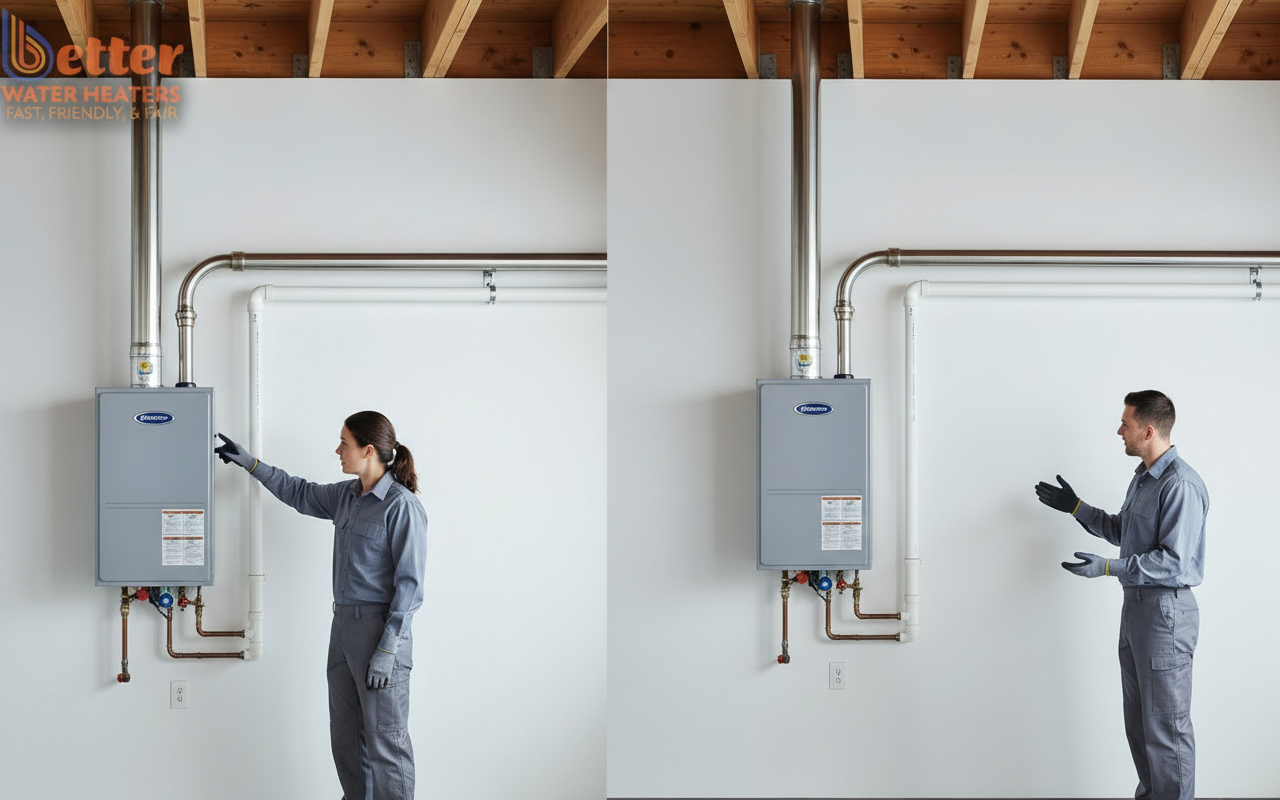
The single biggest mistake we see homeowners make is choosing a unit based on the MSRP without accounting for the tankless venting requirements that vary wildly between technologies. Here is the thing: non-condensing units exhaust gases at temperatures exceeding 300°F, requiring specialized Category III stainless steel venting that can cost $50 to $100 per linear foot.
In contrast, a condensing tankless water heater uses a secondary heat exchanger to capture latent heat, cooling the exhaust enough to use inexpensive Schedule 40 PVC or polypropylene. For a typical Bay Area mid-market home where the water heater is tucked into a central closet, the cost of running 20 feet of stainless steel through a roof can easily exceed the price of the heater itself.
- Category III Venting: Required for non-condensing; corrosion-resistant stainless steel; labor-intensive.
- Category IV Venting: Required for condensing; PVC or CPVC; significantly cheaper materials.
- Concentric Venting: A ‘pipe-within-a-pipe’ system that handles both intake and exhaust, often used in premium condensing models.
Why Retrofits Change the Math
But wait—if you are replacing an old atmospheric tank, you cannot simply reuse the existing B-vent. What most people miss is that non-condensing tankless units require a dedicated, sealed vent system. In tightly packed neighborhoods in San Francisco or Berkeley, navigating these tankless venting requirements through existing wall cavities often makes the high-efficiency condensing model the more affordable ‘installed’ option.
Condensing vs. Non-Condensing: The ROI Breakdown
A condensing tankless water heater is essentially a high-performance machine designed for maximum thermal efficiency. While a non-condensing unit typically carries a Uniform Energy Factor (UEF) of 0.81 to 0.82, condensing models are frequently Energy Star 3.2 certified with ratings of 0.93 to 0.96.
The real kicker? The Federal 25C tax credit currently offers up to $600 for qualifying high-efficiency water heaters. When you combine this with local Bay Area incentives from providers like BayREN, the ‘premium’ for a condensing unit often evaporates before the first gallon of water is heated.
| Feature | Non-Condensing | Condensing |
|---|---|---|
| Avg. Unit Cost | $1,000 – $1,500 | $1,600 – $2,400 |
| Venting Material | Stainless Steel (Expensive) | PVC/Polypro (Inexpensive) | ~82% | ~96% |
| Typical Lifespan | 20 Years | 20 Years |
Need help navigating these options for your specific home layout? Schedule a free site assessment with our specialist team to get an accurate labor estimate.
The Maintenance Factor: A Contrarian View
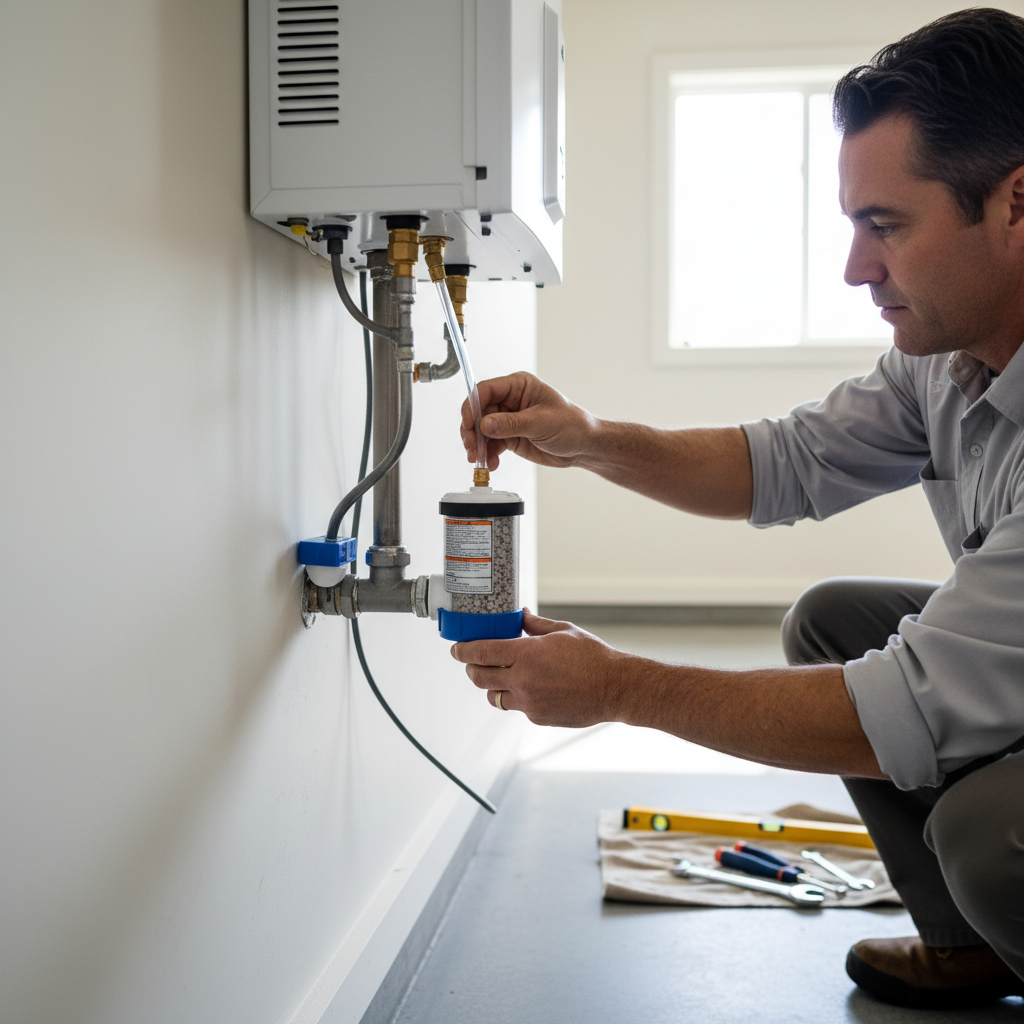
Here is an honest, contrarian insight: the most efficient unit isn’t always the ‘cheapest’ to own over 20 years if you neglect it. Because a condensing tankless water heater produces acidic liquid (condensate), it requires a condensate neutralizer installation to protect your home’s plumbing. These neutralizers need media replacement every 1-3 years.
Furthermore, the secondary heat exchanger in condensing units is more sensitive to scale. In hard-water areas like San Jose or Fremont, failing to perform annual descaling can lead to premature failure. If you aren’t the type of homeowner who remembers annual maintenance, the simpler non-condensing unit might actually offer a better tankless water heater cost of ownership profile by avoiding complex repairs.
- Descaling: Essential for both, but critical for condensing heat exchangers.
- Sensors: Premium models include smart leak detection and Wi-Fi monitoring.
- Neutralizer: Adds a small recurring cost to the condensing ledger.
Future-Proofing and Bay Area Regulations
The regulatory landscape in California is shifting faster than most homeowners realize. With the California Energy Commission pushing for higher efficiency standards, installing a non-condensing unit today might feel like buying a flip-phone in the age of the smartphone. While not currently banned, these lower-efficiency units are increasingly out of step with zero-NOx requirements and local building codes.
In our work with established Bay Area professionals, we’ve seen a massive shift toward “future-proofing.” This means choosing systems that integrate with smart home hubs and provide detailed energy reporting. Many premium condensing models from brands like Rinnai or Navien now come with integrated recirculation pumps, which save thousands of gallons of water annually—a major priority for environmentally-conscious residents.
If you’re looking to scale your home’s efficiency, our internal AI content engine at Ingest.blog suggests that data-driven homeowners are 40% more likely to choose condensing tech when shown the 10-year fuel savings. The numbers don’t lie: the tankless water heater cost of ownership tilts heavily toward condensing when you factor in the 2024 utility rates in Northern California.
The 15-Year Financial Comparison
Let’s look at a typical scenario for a 3-bedroom home in San Mateo. A non-condensing unit might save you $600 on the initial purchase, but the stainless steel venting adds $800 to the labor and materials. Over 15 years, the 14% difference in gas consumption adds another $1,200 to the bill (assuming current PG&E rates).
- Initial Investment: Condensing wins on installation labor for retrofits.
- Operating Costs: Condensing saves ~$80-$120 per year in gas.
- Rebates: Condensing qualifies for $600+ more in incentives.
- Total Savings: The ‘break-even’ point is often Day 1 or within Year 3.
Ready to upgrade to a system that pays for itself? Explore our tankless installation services and see which models qualify for current local rebates.
Common Tech Myths Debunked
Some contractors will tell you that condensing units are ‘less reliable’ because they are more complex. This is a myth born from early 2000s technology. Modern Energy Star 3.2 certified units are engineered with commercial-grade components. The real issue is usually poor installation—specifically, improper drainage for the condensate or undersized gas lines. This is why choosing water heater specialists who understand local codes is non-negotiable.
FAQs: Advanced Tankless Concerns
Is a condensing tankless water heater worth it for a small household?
For a 1-2 person household with low hot water demand, the fuel savings of a condensing unit may take 10+ years to realize. However, the installation savings—using PVC instead of stainless steel venting—often make the condensing unit the smarter financial choice from the very first day, regardless of water usage patterns.
How do tankless venting requirements change for outdoor installations?
Outdoor installations eliminate the need for traditional venting pipes, as the unit exhausts directly into the atmosphere. In this specific scenario, a non-condensing unit often has a lower tankless water heater cost of ownership because the ‘venting tax’ is removed, and the unit itself is cheaper. However, you must ensure the unit is rated for outdoor Bay Area salt-air environments.
What is a condensate neutralizer, and do I really need one?
Yes. Condensing units produce acidic runoff (pH 3-4). Without a neutralizer, this liquid will eat through cast iron sewer pipes and damage concrete floors. A neutralizer uses marble chips or magnesium oxide to raise the pH to a safe, neutral level before it enters your drainage system.
Can I use my existing gas line for a high-efficiency tankless unit?
Most high-efficiency condensing units are designed to work with 1/2-inch gas lines up to certain lengths (using ‘negative pressure’ valves). Non-condensing units often require a 3/4-inch line. This is another ‘hidden cost’ where condensing units often win, as they avoid the need for an expensive gas line upgrade through your home’s crawlspace.
Your Next Steps for a Reliable Hot Water Upgrade
The decision between condensing and non-condensing isn’t about which technology is ‘better’ in a vacuum—it is about which one fits the physical constraints of your home. For most Bay Area residents dealing with tight spaces and high labor costs, the condensing model is the clear winner for long-term tankless water heater cost of ownership.
This week’s actionable takeaway: Locate your current water heater and measure the distance to the nearest exterior wall or roofline. If that distance is more than 5 feet, a condensing unit’s ability to use PVC venting will likely save you more on installation than you’ll ever spend on the unit itself. Don’t leave money on the table—contact Better Water Heaters today for a transparent, no-fluff quote that accounts for all local rebates.