
📋 Table of Contents
- Residential vs Commercial Water Heater: The Internal Difference
- The Rising Demand for High-Occupancy Water Heating in the Bay Area
- Future-Proofing for 2027: BAAQMD Compliant Water Heaters
- The ROI of Durability: Why Silicon Valley Ditch Residential Warranties
- Navigating San Francisco Water Heater Rebates and Regulations
- Is a Commercial Grade System Right for You?
- FAQs
According to the U.S. Department of Energy, water heating accounts for approximately 18% of a home’s energy use, but for large Bay Area estates with high-flow fixtures, this figure can spike significantly as standard units struggle to keep up. If you are managing a household with five or more bathrooms or a property with a high-occupancy ADU, a standard commercial grade water heater might be the only way to ensure your morning routine doesn’t end in a cold shower.
Key Takeaways:
- Commercial units offer superior recovery rates for high-occupancy homes.
- BAAQMD regulations are phasing out gas units by 2027, making heavy-duty heat pumps a strategic choice.
- Stainless steel heat exchangers in commercial models better resist Bay Area water chemistry.
- Commercial warranties often cover higher usage demands that void residential agreements.
Residential vs Commercial Water Heater: The Internal Difference
The real difference between these systems isn’t just the size of the tank; it’s the industrial-grade metallurgy designed to survive constant thermal cycling. While a standard residential tank is built for the average family of four, a commercial grade water heater utilizes thicker insulation and heavy-duty anodes to combat the corrosive effects of consistent high-volume demand.
Here’s the thing: most homeowners don’t realize that residential heat exchangers are often made of copper, which can wear thin under the stress of a 6-bedroom Silicon Valley estate. In contrast, light-commercial units typically feature 316L stainless steel, providing a much higher resistance to the specific mineral profiles found in Hetch Hetchy water.
- Btu Input: Commercial units often exceed 199,000 Btu, whereas residential models cap out much lower.
- Recovery Rate: A high-recovery water heater in the Bay Area can replenish hot water nearly as fast as it is used.
- Thermal Efficiency: Commercial condensing models capture exhaust heat to pre-heat incoming cold water.
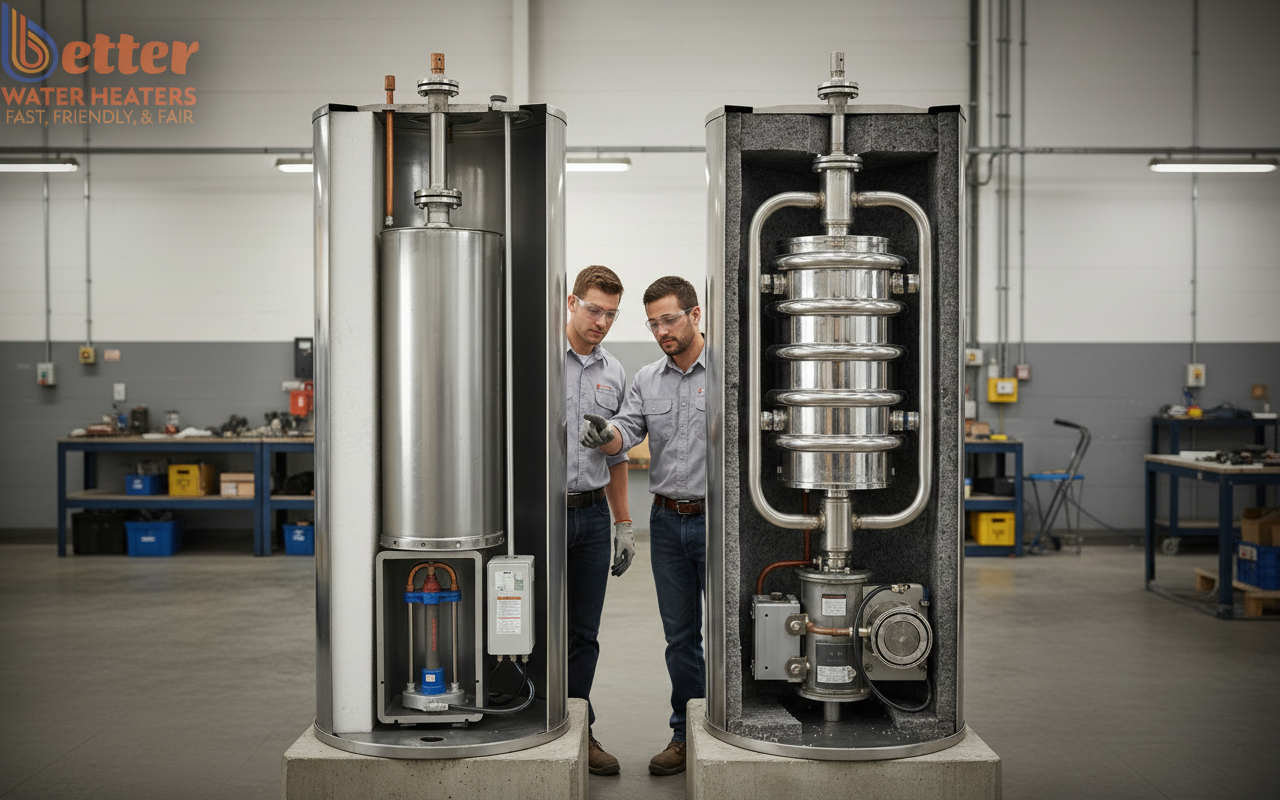
Why Components Matter for High-Occupancy Water Heating
In our work with luxury homeowners in Los Gatos and Palo Alto, we frequently see standard tanks fail prematurely because they were never designed to run 18 hours a day. When you have a multi-generational home with an ADU, your system is essentially operating under “light industrial” conditions. Investing in a commercial grade water heater ensures the internal components, like the gas valve and blower motor, are rated for these high-duty cycles.
The Rising Demand for High-Occupancy Water Heating in the Bay Area
Multi-generational living is no longer a trend; it is the new reality for established Bay Area families looking to maximize property value and support extended kin. What most people miss is that adding a 1,200-square-foot ADU effectively doubles the peak-hour hot water demand on your main utility line.
| Feature | Standard Residential | Commercial Grade / Light Commercial |
|---|---|---|
| Daily Gallon Capacity | Low to Moderate | High / Continuous |
| Heat Exchanger Material | Copper | Commercial-Grade Stainless Steel |
| Warranty Focus | Years of Ownership | Duty Cycle & Reliability |
| Recovery Time | 30-50 Minutes | 10-20 Minutes (or Instant Tankless) |
But wait—before you simply buy the biggest tank available, consider the ASME certified residential installation requirements. For properties with massive spa-like master suites featuring rainfall showerheads (which can pull 5+ gallons per minute), a residential tank will be depleted in less than 15 minutes. A professional consultation can help you determine if a commercial-grade tankless rack system is a more space-efficient solution for your footprint.
Future-Proofing for 2027: BAAQMD Compliant Water Heaters
The Bay Area Air Quality Management District (BAAQMD) has set clear deadlines that will effectively ban the sale of new natural gas water heaters starting in 2027. This means that any “heavy-duty” upgrade you perform today needs to account for the transition to electrification.
Fortunately, heavy duty heat pump water heaters are now entering the market that offer the recovery rates previously only seen in gas-fired commercial units. These systems are not just environmentally responsible; they are often eligible for significant federal tax credits and local Bay Area rebates. According to ENERGY STAR, switching to a high-efficiency heat pump can save a large household hundreds of dollars annually in operating costs.
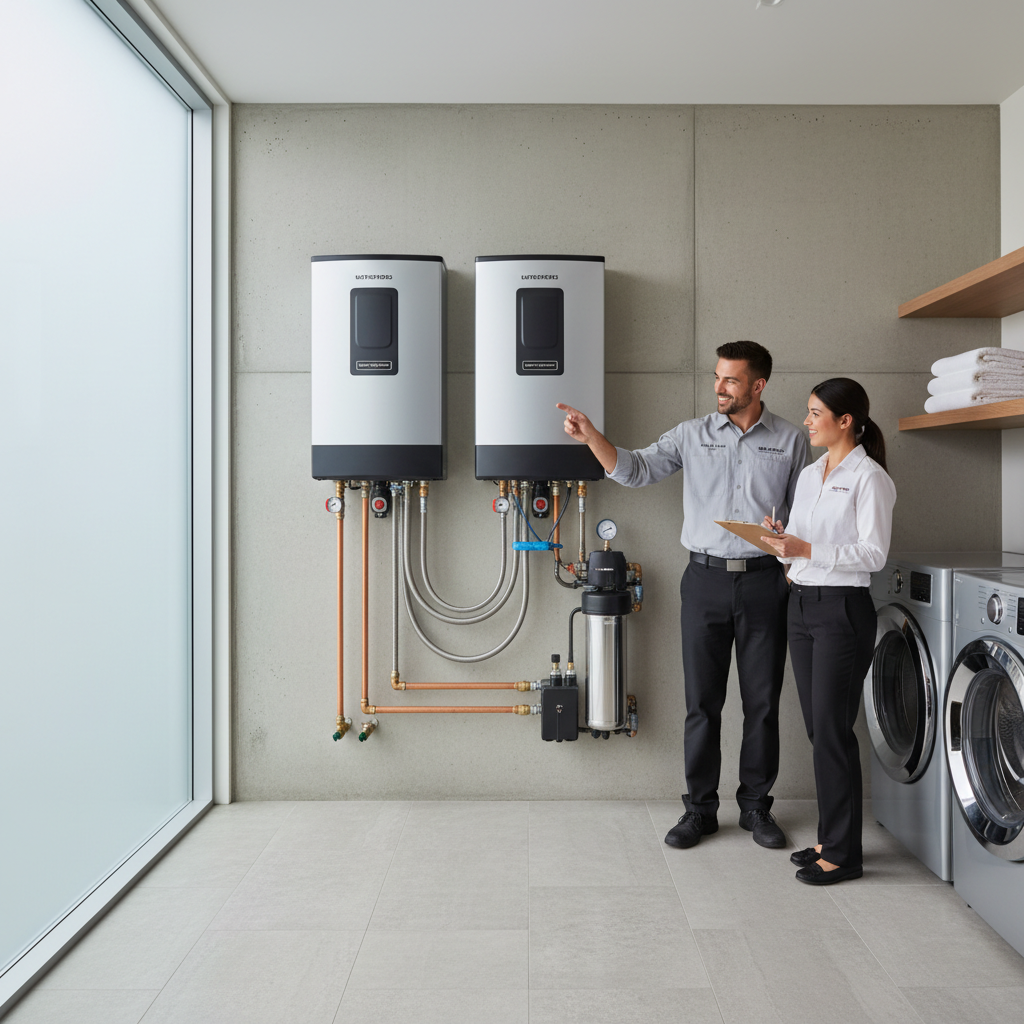
Solving the ADU Pressure Problem
A common mistake we see with Series B SaaS founders and entrepreneurs building out their estates is trying to run an entire property off one residential 50-gallon tank. The real kicker? The pressure drop when two people shower simultaneously in the main house and the ADU can be dramatic. Using a centralized commercial grade tankless for residential application allows for consistent pressure and “endless” hot water across the entire property.
Need to solve your hot water shortage? Schedule your free high-capacity system estimate today.
The ROI of Durability: Why Silicon Valley Ditch Residential Warranties
For a typical Bay Area mid-market property owner, the cost of a “cheap” water heater is actually found in the labor of replacing it every 8 years. Commercial-grade units are built with the assumption that downtime is not an option for a business—and for a busy executive household, it shouldn’t be either.
- Longer Lifespan: Commercial components often push the unit’s life toward 20 years with proper maintenance.
- Smart Monitoring: Many commercial units now include integrated leak detection and remote monitoring, crucial for high-value properties.
- Scaling Capacity: Commercial systems can be “banked” together, so if one unit needs service, the others keep the hot water flowing.
What is the contrarian view? You don’t always need a commercial unit just because your house is big. If your home has 5 bathrooms but only 2 occupants, the “short-cycling” of a massive commercial unit can actually lead to faster mechanical wear. This is where expert sizing becomes more important than just buying the most expensive “heavy duty” model.
Navigating San Francisco Water Heater Rebates and Regulations
The regulatory landscape in San Francisco and San Mateo County is among the strictest in the nation. When installing a commercial grade water heater in a residential setting, you must ensure the venting and gas lines (if sticking with gas for now) meet the updated 2024 California Plumbing Code.
Local programs like CleanPowerSF or Peninsula Clean Energy offer thousands of dollars in incentives for those moving toward heavy duty heat pump water heaters. Our internal AI content engine, Ingest.blog, helps us stay updated on these shifting local codes so we can provide the most accurate advice to our clients in real-time.
Compliance Check: Seismic Strapping and Safety
Because Bay Area homes are in high-seismic zones, a commercial-grade tank requires specialized anchoring that goes beyond the standard two-strap residential requirement. A heavy-duty unit full of water can weigh over 800 pounds; ensuring it is properly secured is a non-negotiable safety requirement for any high-occupancy water heating setup.
Is a Commercial Grade System Right for You?
The decision to move to a commercial-grade system usually comes down to three factors: the number of simultaneous users, the presence of high-flow luxury fixtures, and your long-term plans for the property. If you plan on staying in your home for 10+ years and have a large family, the lower total cost of ownership (TCO) of a commercial unit often outweighs the higher upfront price.
Ready to upgrade your home’s infrastructure? Contact Better Water Heaters to discuss a custom solution for your Bay Area estate. We specialize in navigating the complex intersection of local BAAQMD compliance and high-performance plumbing.
Frequently Asked Questions
Can I install a commercial water heater in a residential home?
Yes, you can install a commercial grade water heater in a residential home, provided your gas lines (for gas models) or electrical panel (for heat pump models) can handle the increased load. These units are ideal for large estates or multi-generational homes where standard residential units fail to provide adequate recovery times.
What makes a water heater “commercial grade”?
Commercial grade units feature heavy-duty components such as stainless steel heat exchangers, thicker tank walls, and higher-input burners or heating elements. They are designed for continuous use and high-volume demand, offering much faster recovery rates than standard residential models, which are built for intermittent use.
Are there rebates for commercial-grade residential units in the Bay Area?
Yes, many high-capacity heat pump water heaters qualify for local rebates through providers like SVCE or Peninsula Clean Energy, as well as federal tax credits under the Inflation Reduction Act. These incentives can often offset the higher initial cost of a heavy-duty system, sometimes providing up to $4,900 in total savings.
How does the 2027 BAAQMD ban affect my choice today?
Since gas water heaters will be phased out for sale in the Bay Area starting in 2027, investing in a high-capacity heat pump model now is a smart way to future-proof your home. If you install a gas unit today, you may face higher costs or limited repair options a decade from now as the region shifts toward full electrification.