
📋 Table of Contents
California is aggressively phasing out high-GWP refrigerants, with the California Air Resources Board (CARB) implementing some of the nation’s strictest limits on HFCs. For a CO2 heat pump water heater, this regulatory shift isn’t a hurdle—it’s a massive competitive advantage that future-proofs your home against upcoming equipment obsolescence.
Key Takeaways for Bay Area Homeowners
- CO2 (R744) is a natural refrigerant with a Global Warming Potential (GWP) of 1, making it the most eco-friendly and future-proof option available.
- R-134a is the current industry standard but faces a gradual phase-down due to its higher environmental impact.
- Micro-Climate Matters: CO2 units maintain incredible efficiency in chilly coastal areas like Daly City or Pacifica, while R-134a is highly cost-effective for the warmer South Bay.
- Rebate Maximization: Many Bay Area electrification rebates can cover a significant portion of the upfront cost for these high-efficiency systems.
The Technical Battle: Heat Pump Refrigerant Types Explained
The choice between synthetic and natural refrigerants is really a choice between current affordability and long-term regulatory resilience. While most homeowners only care about the hot water at the tap, the gas moving the heat inside your unit dictates how much you pay PG&E every month.
Here is the thing: R-134a is a hydrofluorocarbon (HFC) with a GWP of 1,430, meaning it is significantly more potent as a greenhouse gas than CO2. According to the U.S. Environmental Protection Agency (EPA), the transition toward low GWP water heaters is accelerating to meet climate goals. Natural refrigerants like CO2 (R744) are the industry’s answer to these tightening sanctions on HFC refrigerants.
- R-134a (Synthetic): Reliable, lower upfront cost, and found in popular models like the Rheem ProTerra.
- CO2 / R744 (Natural): Exceptional high-temperature delivery, works in freezing temps, and has a GWP of exactly 1.
- R-290 (Propane): An emerging natural refrigerant that balances efficiency and cost but is still gaining residential traction.
What most people miss is that a CO2 heat pump water heater operates at much higher pressures than standard units. This requires more robust engineering—often seen in premium systems like the Sanden SanCO2—which leads to a longer expected lifespan compared to budget-grade hardware.
Bay Area Micro-Climates: Fog City vs. Inland Heat
In our work with established homeowners in the Peninsula, we’ve found that the “micro-climate test” is the single best way to decide which unit to install. A heat pump’s efficiency is tied directly to the ambient air temperature it pulls from.
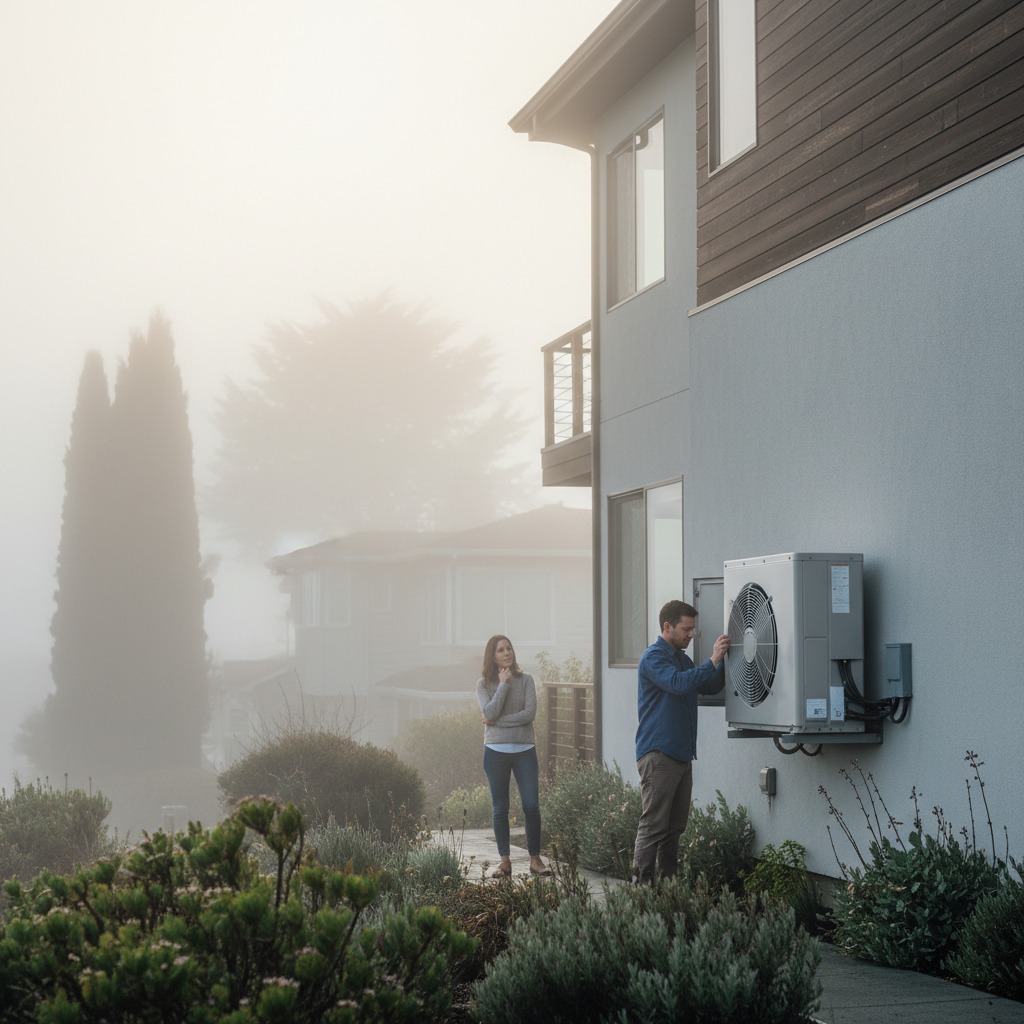
If you live in a coastal micro-climate like San Francisco or Daly City, where the fog keeps temperatures damp and cool, a CO2 unit is often the superior performer. CO2 systems can pull heat from the air even when it’s well below freezing without relying on inefficient electric backup strips. Conversely, for a typical South Bay resident in San Jose or Sunnyvale, an R-134a system provides excellent ROI because the warmer average temperatures keep the unit in its high-efficiency “sweet spot” most of the year.
| Feature | R-134a (Standard) | CO2 / R744 (Premium) |
|---|---|---|
| Best Climate | Warm/Moderate (San Jose/Fremont) | Cool/Cold (SF/Daly City/Novato) |
| Environmental Impact | Moderate (GWP 1430) | Minimal (GWP 1) |
| Output Temperature | Up to 140°F | Up to 175°F (Great for Sanitize) |
| Unit Cost | $2,500 – $4,500 | $5,000 – $8,000 |
Need help determining which system fits your specific zip code? Schedule a free consultation with our local experts today.
Future-Proofing and Low GWP Water Heaters
The real kicker? Buying an R-134a unit today might feel like buying a high-end plasma TV right before LEDs took over. While R-134a isn’t “banned” for existing units, the cost of servicing these systems will likely rise as production of the gas is restricted by federal law.
Choosing a natural refrigerant HPWH protects you from the “refrigerant tax” that hits older systems when they eventually leak. Because CO2 is literally pulled from the atmosphere, it is cheap, abundant, and immune to environmental phase-outs. When we work with environmentally-minded residents looking to reduce their carbon footprint, the SanCO2 is almost always the top recommendation because it eliminates the risk of high-GWP gas leaks entirely.
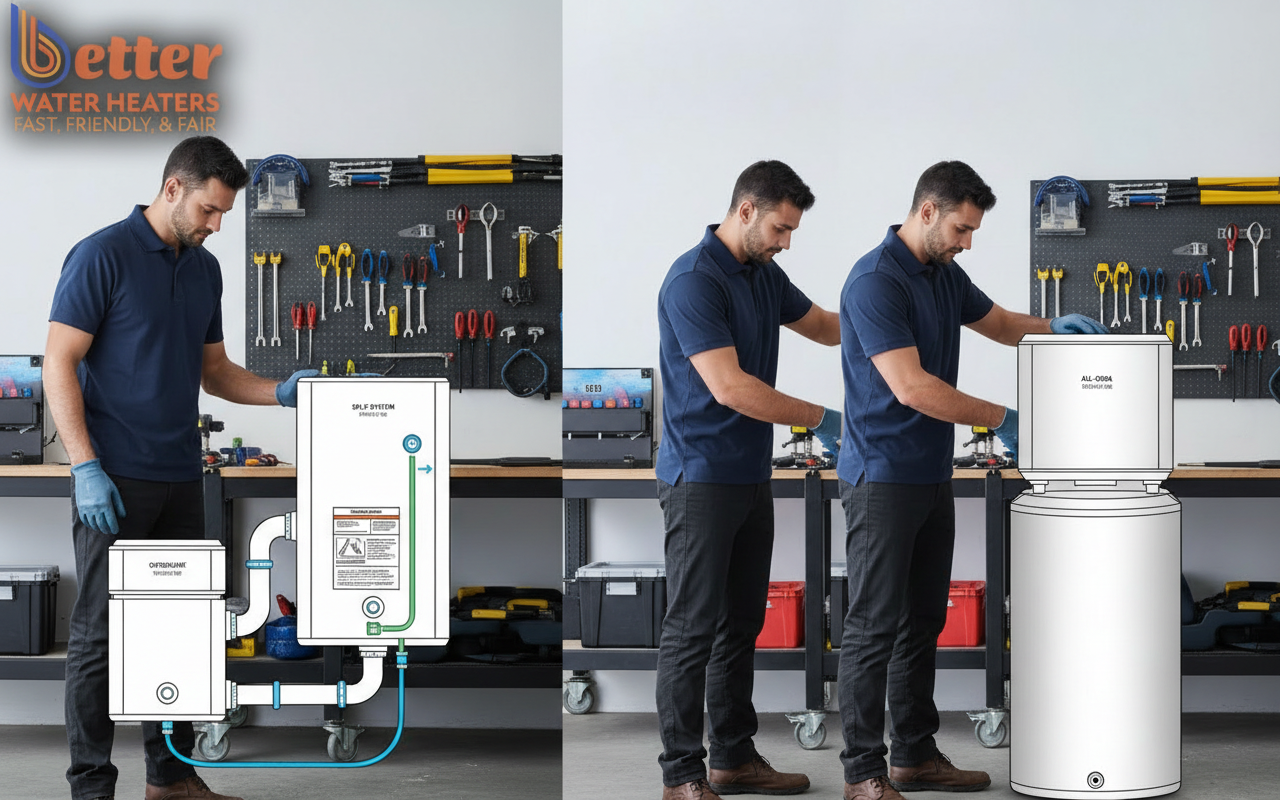
But wait—there is a catch. CO2 units often feature a split-system design. This means the compressor sits outside (like an AC unit) while the tank stays inside. This is a massive space-saver for tight San Francisco utility closets but does require more complex installation than a standard “all-in-one” heat pump.
Maximizing Bay Area Electrification Rebates
The upfront cost of a premium CO2 heat pump water heater can be eye-watering, but the Bay Area has some of the best incentive programs in the country. Programs like TECH Clean California and local initiatives from Peninsula Clean Energy or Silicon Valley Clean Energy can slash thousands off the price.
- Federal Tax Credit (25C): Claim up to $2,000 off your federal taxes for a qualified heat pump installation.
- TECH Clean California: Direct-to-installer incentives that are often passed down as immediate discounts to the homeowner.
- HEEHRA: Point-of-sale rebates for low-to-moderate-income households (check local availability).
By stacking these, a premium CO2 system often ends up costing the homeowner about the same as a mid-range gas unit after a few years of energy savings. If you’re curious about the specific ROI for your home, check our guide on high-efficiency comparisons to see how the math stacks up against PG&E’s current tiered rates.
Installation Challenges: What Most Contractors Won’t Tell You
Here is an honest, contrarian insight: Not every home is ready for a CO2 heat pump today. While they are technically superior, they require a 240V electrical circuit and specific plumbing configurations that can add $1,500+ to an installation if your panel is already full.
In our work with first-time homebuyers, we often see “sticker shock” when they realize the electrical upgrade cost. However, if you are already planning a kitchen remodel or an EV charger installation, doing the water heater at the same time can save you a fortune in labor. For those with space constraints, the split-system CO2 model is a godsend, as it moves the noisy compressor outside, making it much quieter than an all-in-one R-134a unit located in a hallway closet.
The real takeaway? Don’t just buy the cheapest unit. Buy the one that matches your home’s electrical capacity and your local climate’s temperature profile. For long-term reliability in the Bay Area, we are seeing a major shift toward these low GWP water heaters as the gold standard for established properties.
Frequently Asked Questions
Is a CO2 heat pump water heater worth the extra cost?
For many Bay Area homeowners, yes. While the upfront cost is higher, the efficiency in cold micro-climates and the immunity to future refrigerant regulations provide better long-term value. According to Energy.gov, heat pumps can save a household hundreds per year on utilities, and CO2 models offer the highest recovery rates for large families.
How long do CO2 heat pump water heaters last?
Premium CO2 systems like the Sanden SanCO2 are built with high-grade stainless steel tanks and robust external compressors, often carrying warranties that exceed standard R-134a units. With proper maintenance, you can expect a 15-20 year lifespan, whereas budget-grade tank units often fail around year 10-12.
Do I need a permit for a heat pump water heater in the Bay Area?
Yes, all water heater replacements in the Bay Area require a permit and must meet California Title 24 energy standards and seismic strapping codes. At Better Water Heaters, we handle the entire permitting process and ensure your installation qualifies for all available Bay Area electrification rebates.
Which is quieter: CO2 or R-134a?
CO2 split-systems are generally quieter inside the home because the compressor is located outdoors. Standard R-134a integrated units have the fan and compressor on top of the tank, which can create a noticeable hum (around 45-55 decibels) if installed near a bedroom or living area.
Ready to future-proof your home with the most efficient water heating technology on the market? Call Better Water Heaters at (408) 250-6672 or request a quote online to see which next-gen system is right for your Bay Area home.