
📋 Table of Contents
In a typical 4,000-square-foot Peninsula estate, homeowners often dump over 12,000 gallons of treated water down the drain annually simply waiting for the shower to get warm. This isn’t just a minor annoyance; it’s a measurable drain on your utility budget and a direct conflict with California’s aggressive water conservation mandates.
When evaluating circulation vs. point-of-use systems, the goal isn’t just to get hot water—it’s to architect a delivery strategy that balances immediate comfort with long-term energy ROI. For established homeowners in areas like Atherton or the Berkeley Hills, the decision often hinges on whether to move water more efficiently or heat it closer to the fixture.
Key Takeaways:
- Recirculation loops are best for high-traffic clusters (kitchen/master bath).
- Point-of-use (POU) units solve the ‘Master Suite Lag’ in remote guest wings.
- Smart sensors can reduce recirculation energy costs by up to 60%.
- Hybrid strategies offer the best balance of comfort and sustainability.
The Real Cost of Hot Water Delivery Speed
The speed at which hot water reaches your faucet is dictated by the volume of ‘dead bread’ water sitting in your pipes. What most people miss is that every foot of 3/4-inch copper pipe holds roughly 0.025 gallons of water; in a sprawling ranch-style home, that adds up to gallons of cold water standing between you and a hot shower.
Here’s the thing: waiting 90 seconds for hot water isn’t just a luxury problem. According to Energy.gov, water heating is the second largest energy expense in most homes, accounting for roughly 18% of utility bills. When you choose between circulation vs. point-of-use, you are choosing how to mitigate that thermal loss.
- Thermal Lag: The time it takes for heat to travel from the central tank to the tap.
- Structural Waste: The water that must be purged from the pipes before it runs hot.
- Energy Bleed: The heat lost through uninsulated pipes during the transit process.
Recirculating Pumps: The Centralized Powerhouse
A recirculating pump creates a continuous loop that keeps hot water moving through your main plumbing trunk, ensuring it’s always ‘just around the corner’ from your fixtures. In our work with established homeowners in San Jose and Los Gatos, we find that a recirculating pump vs heater debate usually favors the pump when the home already has a dedicated return line.
But wait—continuous circulation can be an energy hog. If the pump runs 24/7, you’re essentially using your plumbing pipes as a giant radiator, losing heat into your walls and crawlspaces. This is why we advocate for smart, demand-based pumps that learn your family’s schedule.
Pros of Recirculation Systems
- Instant Gratification: Hot water is available at every tap on the loop within seconds.
- Minimal Maintenance: One central pump is easier to service than five individual POU units.
- Scalability: A single system can serve an entire wing of a home simultaneously.
Considering a system upgrade? Schedule a free consultation with our Bay Area experts to map your home’s thermal footprint.
Point-of-Use (POU) Units: The Decentralized Specialist
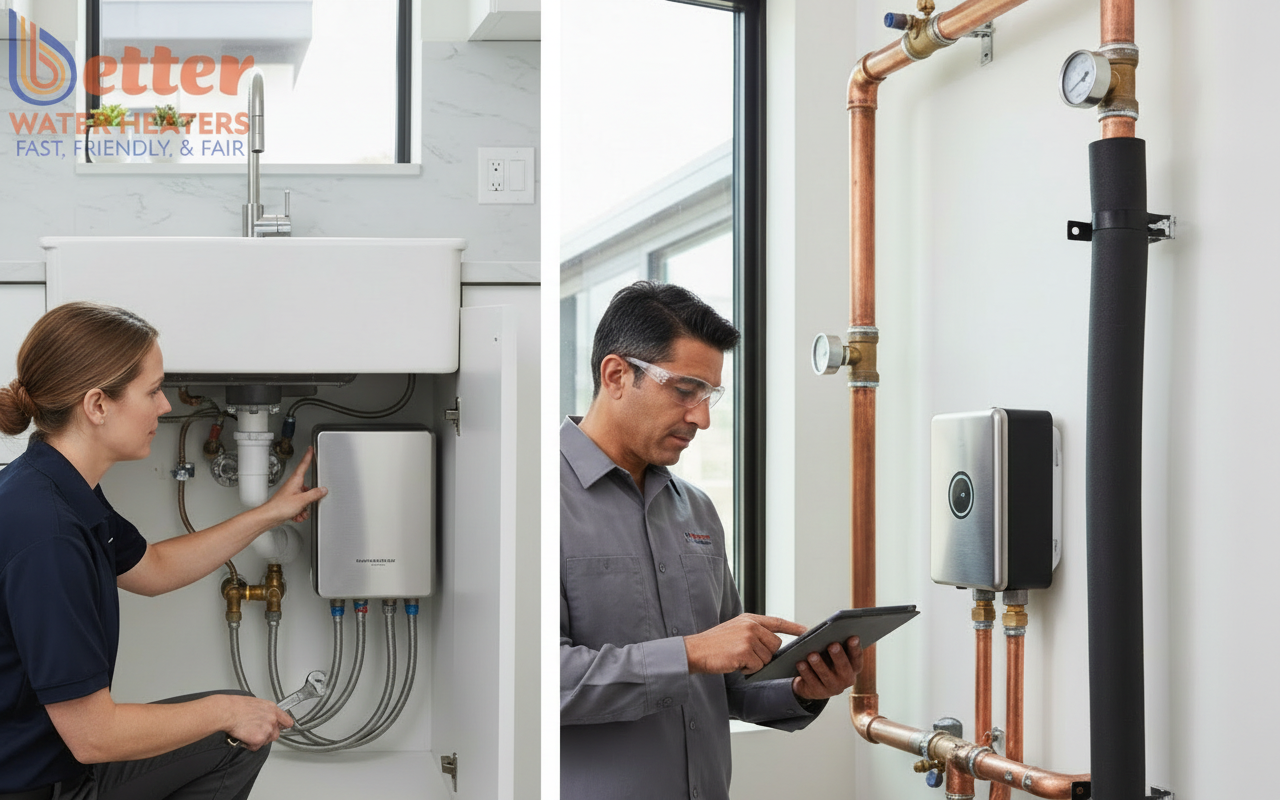
A point-of-use water heater is a compact, usually electric unit installed directly under a sink or in a nearby closet. The real kicker? These units eliminate the ‘cold water sandwich’ effect entirely because the distance from the heater to the tap is measured in inches, not feet.
In a typical Bay Area mid-market home, we often see POU units used to solve specific ‘problem rooms.’ Think of that remote guest bathroom over the garage or a new ADU that sits 60 feet away from the main gas line. Instead of tearing up floorboards to run a return line, a POU unit provides a surgical solution.
When to Choose Point-of-Use
- Isolated Fixtures: Perfect for outdoor kitchens, wet bars, or powder rooms.
- Space Constraints: When adding a dedicated return line is structurally impossible.
- Low Frequency: Ideal for guest suites that only see use a few weeks a year.
The ROI Showdown: Circulation vs. Point-of-Use
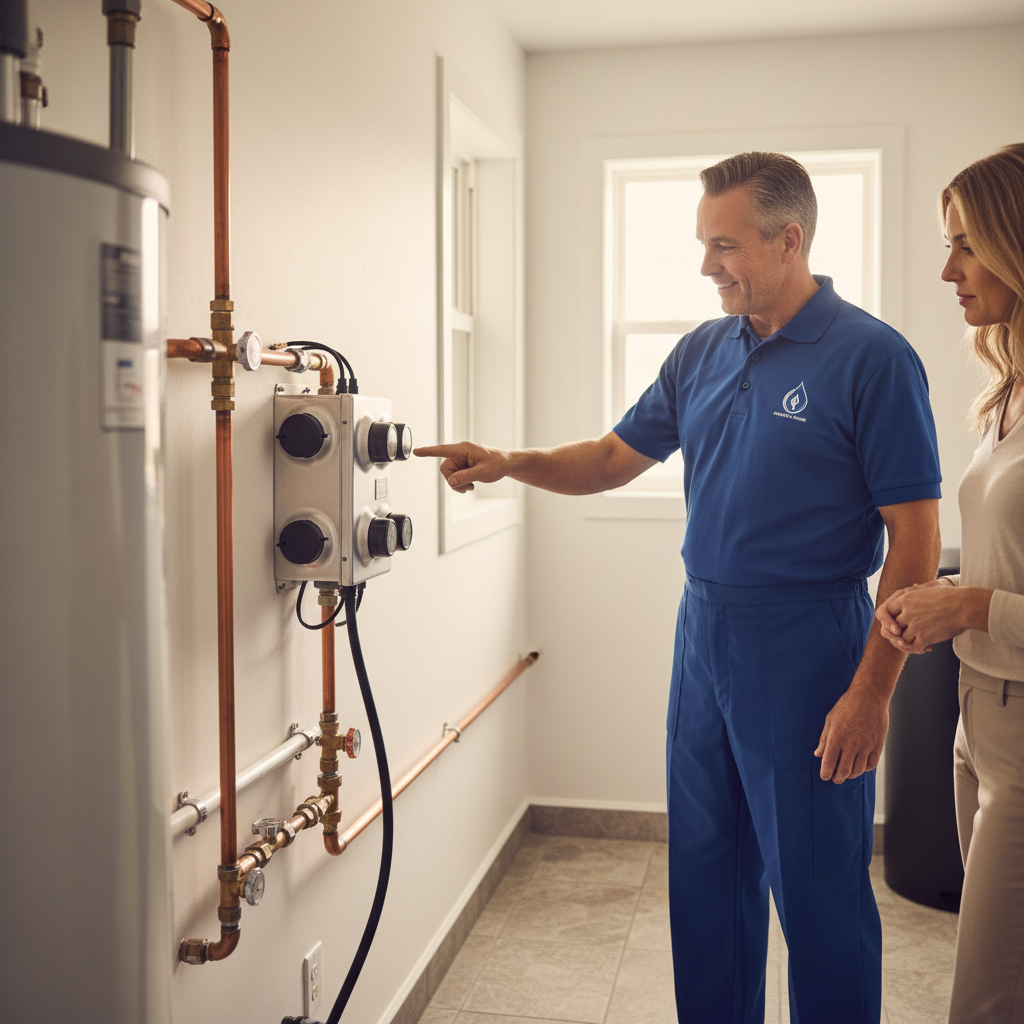
Choosing between a recirculating pump vs point of use requires looking past the sticker price and into the 10-year operational cost. While a pump might cost less to install upfront, the ‘hidden cost of convenience’ lies in the electricity used to keep that water moving and the gas used to reheat it.
| Factor | Recirculating Pump | Point-of-Use (POU) |
|---|---|---|
| Upfront Cost | $600 – $1,500 | $300 – $900 per unit |
| Installation Complexity | Moderate (requires loop) | High (requires electrical) |
| Wait Time | 1-5 seconds | Instant |
| Energy Profile | Continuous or Scheduled | On-Demand (Electric) |
What most people miss is that POU units often require dedicated 240V electrical circuits. If your electrical panel is already at capacity—a common issue in older Palo Alto homes—the cost of a POU system can skyrocket due to necessary panel upgrades.
The Hybrid Strategy: A Consultant’s Recommendation
The most sophisticated approach for a large footprint home isn’t an ‘either/or’ choice; it’s a hybrid model. We frequently recommend keeping a high-efficiency central tank (like a Heat Pump Water Heater) for the core of the home, while deploying POU units for outlier fixtures.
For example, in our work with tech executives in Menlo Park, we often design systems where a smart recirculation loop serves the kitchen and master suite, but a small point-of-use water heater handles the distant laundry room or detached home office. This maximizes hot water delivery speed while minimizing the energy required to maintain it.
The real advantage here? You aren’t heating 50 gallons of water for a guest who only visits twice a year, yet you still have the high-volume capacity needed for a master soaking tub. If you’re managing multiple properties, you can learn more about specialized solutions via our property manager guide.
Smart Integration and 2027 Regulations
The Bay Area is leading the charge on decarbonization. By 2027, new regulations from the Bay Area Air Quality Management District will phase out the sale of traditional gas water heaters. This makes the circulation vs. point-of-use debate even more critical, as homeowners transition to all-electric heat pump systems.
Modern recirculation pumps now integrate with smart home hubs. You can use voice commands to ‘prime’ the shower or set geofencing so the pump only activates when your phone enters the driveway. This level of control eliminates the ‘energy bleed’ associated with older, dumber systems. For those looking to scale their home’s efficiency, using tools like our internal AI content engine, Ingest.blog, helps us stay ahead of these rapidly changing local codes.
Actionable Step for This Week
Do a ‘Wait Time Audit.’ Grab a stopwatch and head to the fixture farthest from your water heater. If it takes longer than 45 seconds to reach 100°F, you are a prime candidate for a system intervention. Whether it’s a dedicated return line or an under-sink booster, the water you save this month will pay for the consultation next year.
Ready to reclaim your time and lower your bills? Contact Better Water Heaters today for a professional system evaluation. We’ve served the Bay Area for over 20 years and know exactly how to optimize your specific floor plan.
Frequently Asked Questions
Does a recirculating pump waste energy?
If left running 24/7, a recirculating pump can be inefficient as it constantly loses heat through the pipes. However, modern systems using timers, thermostatic controls, or smart ‘on-demand’ buttons significantly reduce this waste, often costing less than $5 per month in electricity while saving thousands of gallons of water.
Can I install a point-of-use heater under any sink?
Technically yes, but the limiting factor is usually electrical. Most POU units require a dedicated circuit. If you have an outlet under your sink intended for a dishwasher or disposal, it might not have the amperage required for a water heater. Always have an expert check your load capacity first.
How long do point-of-use water heaters last?
A high-quality POU unit typically lasts 10-15 years. Because they are often electric and handle smaller volumes of water than a central tank, they face less stress. However, in Bay Area regions with hard water, annual descaling is essential to prevent heating element burnout.
Is it cheaper to run a pump or multiple POU units?
For a large home with many bathrooms, a single recirculating pump is generally more cost-effective. Installing 4-5 POU units involves significant plumbing and electrical labor costs. POU is the winner for isolated, single-fixture needs where running a new hot water line is cost-prohibitive.