
📋 Table of Contents
- 1. The Financial Impact of Choosing Specialists
- 2. Why You Need Specialists for Modern Tech
- 3. The Repair vs. Replace Decision Matrix
- 4. Navigating Bay Area Regulations and Rebates
- 5. Vetting Your Provider: A Checklist
- 6. Transitioning to Tankless and Heat Pumps
- 7. Why Licensed Specialists Outperform DIY
- FAQs
According to the U.S. Department of Energy, water heating is the second largest energy expense in your home, accounting for roughly 18% of your utility bills. In the Bay Area, where electricity and gas rates are significantly higher than the national average, choosing the right water heater installation and repair specialists isn’t just a matter of convenience—it’s a major financial decision.
Key Takeaways for Bay Area Homeowners
- Maximize Savings: Federal tax credits under the Inflation Reduction Act can cover up to 30% of heat pump installation costs.
- Tech Matters: Modern specialists must understand Wi-Fi diagnostics and smart leak detection, not just pipes.
- Local Compliance: Bay Area codes require specific seismic strapping and thermal expansion tanks that non-local pros often miss.
- Future-Proofing: With looming 2027 gas water heater regulations, transitioning to electric heat pumps is a strategic move.
1. The Financial Impact of Choosing Water Heater Installation and Repair Experts
The smartest homeowners realize that a cheap installation is often the most expensive mistake you can make over a ten-year horizon. When you are choosing water heater installation and repair providers, you aren’t just paying for labor; you are investing in a system that will either drain your bank account or pad it through efficiency.
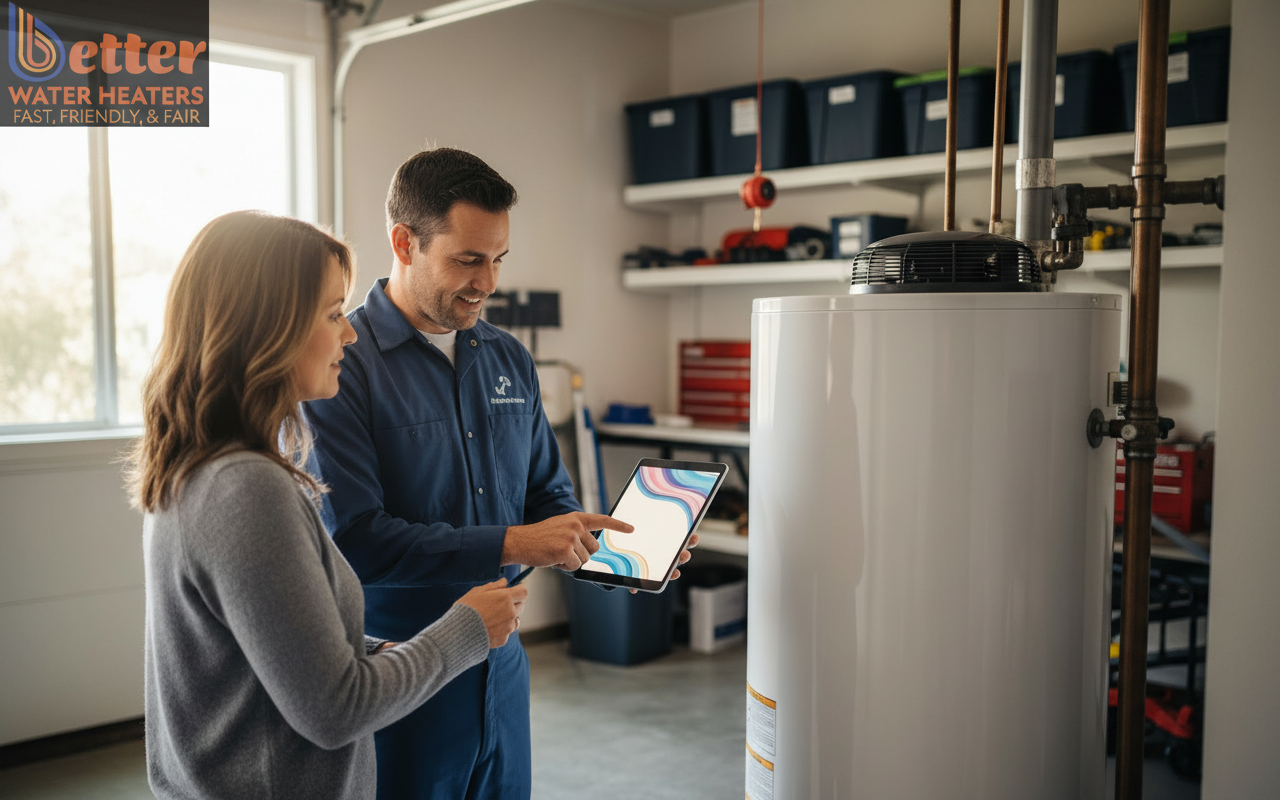
Here’s the thing: a typical Bay Area mid-market residential client can save hundreds annually by switching to a high-efficiency unit, but only if the installer performs a proper load calculation. Most plumbers just swap like-for-like, ignoring that your family’s needs or your home’s electrical capacity may have changed. The best water heater installation and repair teams will analyze your peak hour demand before even showing you a quote.
- Rebate Navigation: Expert specialists handle the paperwork for TECH Clean California and local utility incentives.
- Operational Costs: High-efficiency units (EF ratings above 0.90) significantly reduce monthly PG&E or SVCE bills.
- Insurance Protection: Licensed water heater specialists ensure your homeowner’s insurance remains valid by pulling necessary permits.
2. Why You Need Water Heater Specialists for Modern Technology
Modern water heaters have evolved from simple tanks into complex appliances featuring digital control boards, smart valves, and integrated heat pumps. If your plumber doesn’t know how to configure a mixing valve or calibrate a Wi-Fi-enabled leak sensor, they aren’t the right water heater specialists for a 21st-century home.
But wait—technology isn’t just about apps. It’s about safety. In the Bay Area, seismic activity is a constant reality. A specialist knows that California Plumbing Code requires specific double-strapping techniques that prevent your unit from becoming a hazard during a tremor. We often see DIY or unlicensed installs where the strapping is loose or improperly positioned, which is a massive liability.
Need help navigating these technical requirements? Schedule your free expert consultation with our team today.
3. The Repair vs. Replace Decision Matrix
The most honest, contrarian insight we can offer is this: just because a water heater is leaking doesn’t always mean it needs a full replacement, but if it’s over 10 years old, repairing it is usually throwing good money after bad. We use a data-driven approach to help you decide when to call for water heater installation and repair vs. a simple fix.
| Factor | Repair It | Replace It |
|---|---|---|
| Age of Unit | Under 8 Years | Over 12 Years |
| Repair Cost | Under $300 | Over 50% of new unit cost |
| Efficiency | Standard Gas/Electric | Seeking Heat Pump Rebates |
| Tank Condition | No visible rust | Active leaking from bottom |
What most people miss is the “hidden tax” of old units. Even if an old tank isn’t leaking, the sediment buildup at the bottom acts as an insulator, forcing the burner to work harder and increasing your energy spend by up to 15%. If you’re noticing popping sounds, that’s the sound of your money burning.
4. Navigating Bay Area Regulations and Rebates
Local compliance is the primary reason to hire water heater specialists who live and work in your specific county. Whether you are in San Jose, Fremont, or Redwood City, the permit requirements and rebate eligibility vary wildly between jurisdictions.
For example, the Bay Area Air Quality Management District has set aggressive goals for reducing NOx emissions. By 2027, new gas water heater installations will be phased out in favor of zero-emission electric models. Choosing water heater installation and repair experts who understand this transition now can save you from having to do a forced electrical panel upgrade under duress later.
- Santa Clara County: Access to Silicon Valley Clean Energy (SVCE) rebates up to $2,000 for heat pumps.
- San Mateo County: Peninsula Clean Energy offers unique incentives for homeowners switching from gas to electric.
- Federal Incentives: The Inflation Reduction Act provides a tax credit (25C) of up to $2,000 annually for heat pump water heaters.
5. Vetting Your Provider: A Checklist for Homeowners
The real kicker? Most homeowners don’t know what to ask until the unit is already installed and the hot water runs out mid-shower. When interviewing water heater specialists, use these specific questions to separate the pros from the amateurs.
- “Do you perform a thermal expansion calculation?” If they don’t know what a thermal expansion tank is, hang up. It’s required by code in closed-loop systems.
- “Will you handle the permit process?” Never hire a provider who asks you to pull the permit as the “owner-builder.” It shifts all liability to you.
- “Are you certified for Heat Pump installations?” These units require both plumbing and electrical knowledge.
- “What is your emergency response time?” A water heater failure doesn’t wait for business hours.
For more tips on maintaining your system, check out our water heater specialists guide to long-term care.
6. The Transition to Tankless and Heat Pump Systems
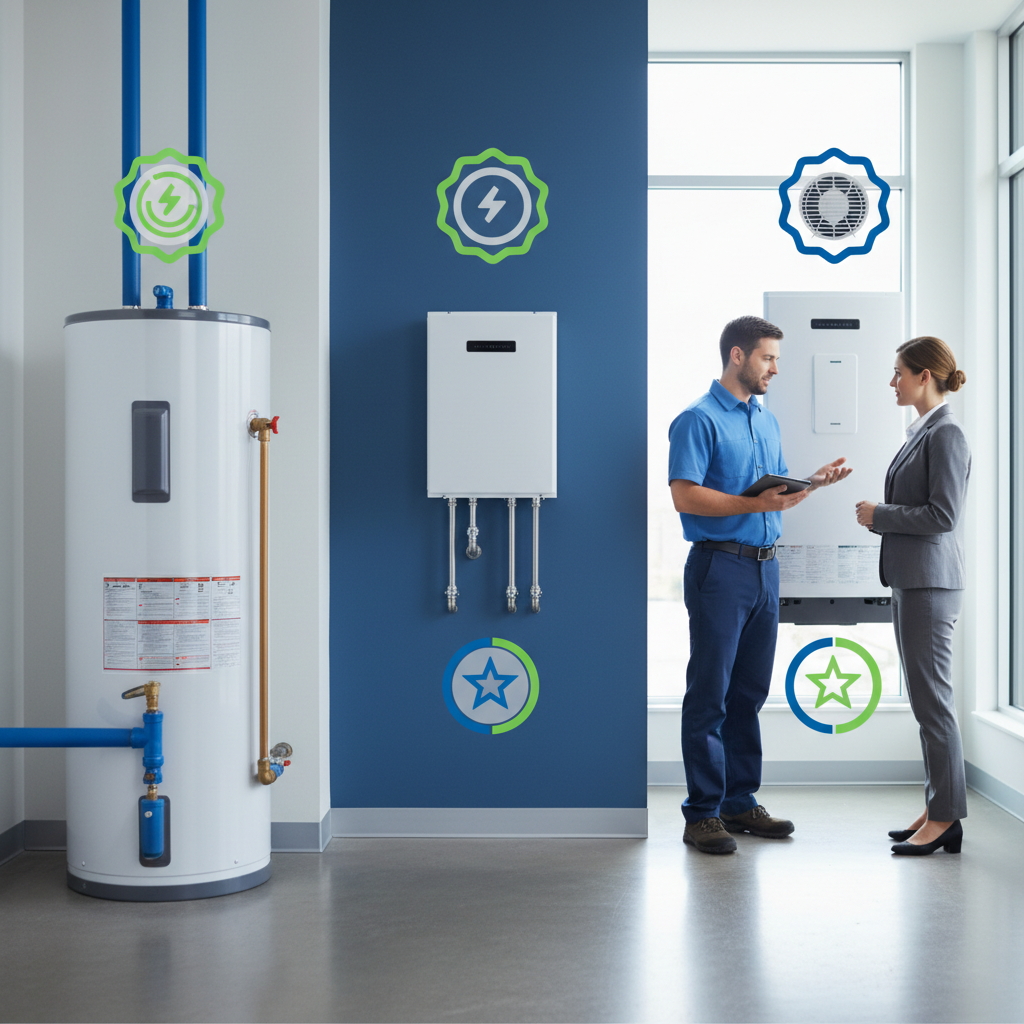
In our work with environmentally-minded residents, we see a massive shift toward tankless and heat pump technologies. Tankless units provide endless hot water and take up 80% less space, which is a premium in compact Bay Area homes. However, they require larger gas lines, a detail often overlooked by generalist plumbers.
Heat pumps, on the other hand, are the “water heaters of the future.” They work like a refrigerator in reverse, pulling heat from the air to warm your water. While the upfront cost is higher, the ROI is accelerated by the massive rebates currently available. A typical Bay Area family can see a return on investment in as little as 3-5 years when factoring in federal and local incentives.
Ready to upgrade to a more efficient home? Get a free estimate for your new water heater installation and repair project.
7. Why Licensed Water Heater Specialists Outperform DIY
It’s tempting to watch a YouTube video and think you can handle a water heater swap. However, the risks far outweigh the savings. Beyond the immediate danger of gas leaks or carbon monoxide poisoning, an unpermitted installation can void your home insurance policy. If a DIY unit leaks and causes $20,000 in water damage, your insurer may deny the claim because the work wasn’t performed by licensed water heater specialists.
Furthermore, professional installers provide warranties that cover both parts and labor. At Better Water Heaters, we’ve spent 20+ years refining our process to ensure every install meets the highest safety standards in California. We even use internal AI tools, like Ingest.blog, to keep our educational resources updated with the latest regulatory changes so you stay informed.
Frequently Asked Questions
How long does a typical water heater installation take?
A standard tank replacement usually takes 2 to 4 hours. However, converting from a tank to a tankless system or installing a heat pump water heater can take 6 to 8 hours due to the necessary gas line upgrades or electrical work required to meet Bay Area building codes.
Are heat pump water heaters worth it in the Bay Area climate?
Yes, absolutely. The Bay Area’s moderate climate is ideal for heat pump efficiency. Because temperatures rarely drop below freezing, the units can consistently pull heat from the ambient air, operating up to 3-4 times more efficiently than standard electric tanks.
What should I do if my water heater starts leaking?
First, turn off the power (at the circuit breaker) or gas (at the unit’s intake valve). Then, shut off the cold water supply valve located at the top of the tank. Once the area is safe, call water heater installation and repair specialists immediately to assess if the tank can be patched or needs replacement.
Do I really need a permit for a simple water heater replacement?
Yes. California state law and local Bay Area ordinances require a permit for all water heater replacements. This ensures a third-party inspector verifies the safety of the gas connections, venting, and seismic strapping, which protects your home’s resale value and insurance eligibility.
Actionable Step for This Week: Check the manufacture date on your water heater’s rating plate. If it’s older than 10 years, contact us for a free health check. Catching a failing unit before it bursts can save you thousands in emergency restoration costs.