Water heater article archive
Cheap Plumber Red Flags: The $1,200 Code Violation Hidden in Quotes
Historical article, not newly reviewed advice. Verify current requirements, incentives and model guidance with the relevant authority or manufacturer before relying on them. Equipment and service needs require an assessment.
📋 Table of Contents
I recently sat down and tore through 150 'budget' plumbing quotes from across the Bay Area, and what I found should terrify every homeowner from San Jose to Walnut Creek. One specific $1,200 omission appeared in 88% of those quotes—a calculated gamble by installers that could leave you with a plumbing insurance claim denied after a catastrophic tank burst.
The cheap plumber red flags aren't always obvious to the untrained eye, but they are written in the margins of every lowball estimate. Most homeowners think they are saving $500 on labor, but they are actually inheriting a five-figure liability. In the Bay Area, where water pressure fluctuates wildly, skipping a $150 part and 30 minutes of labor is the difference between a reliable appliance and a ticking time bomb in your garage.

The $1,200 Thermal Expansion Time Bomb
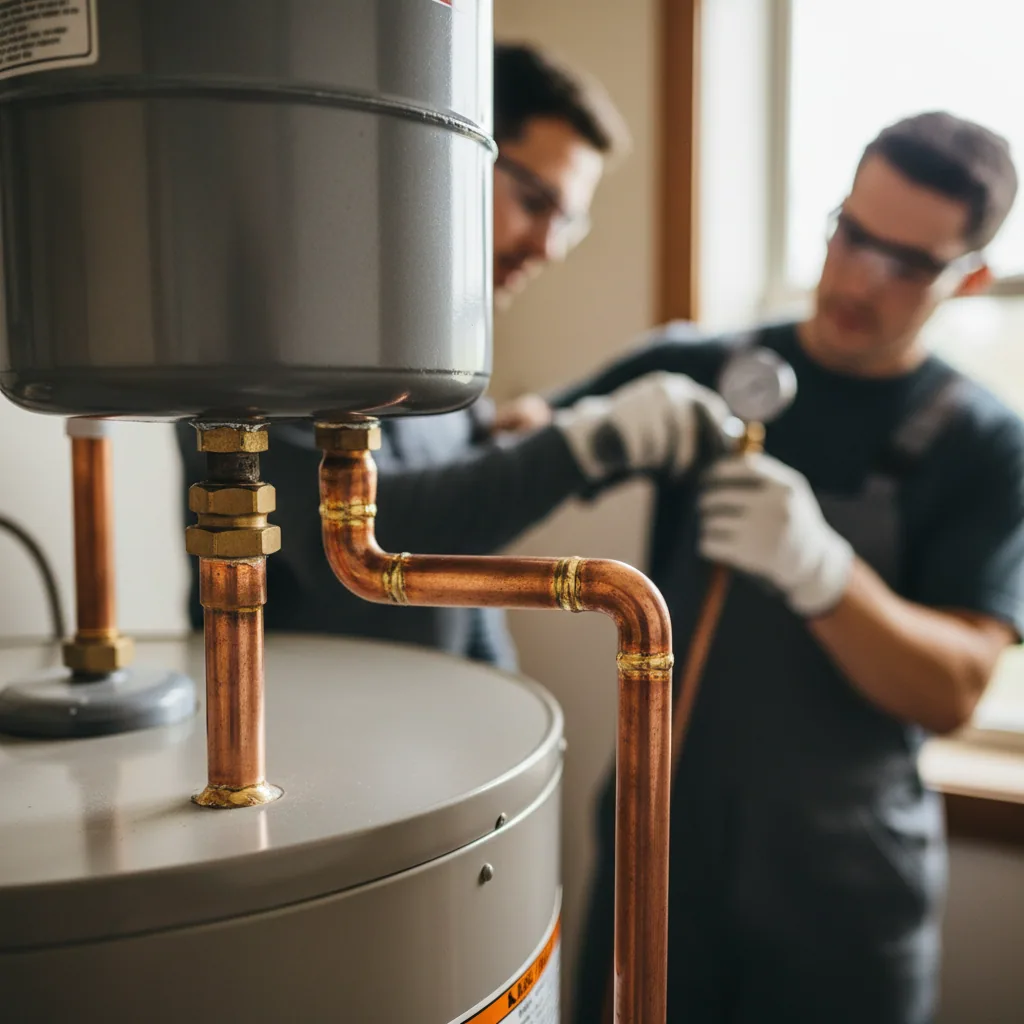
What most people miss is that your water heater is essentially a giant pressure cooker, and without a way to bleed off 'thermal expansion,' your tank's inner lining will eventually fracture like an eggshell. Here is the kicker: local UPC code compliance explicitly requires thermal expansion tanks in closed-loop systems, yet budget installers skip them to keep their quotes under $2,000.
Consider these critical facts about thermal expansion:
- Pressure Spikes: When water heats up, it expands; in a closed system with a check valve, that pressure has nowhere to go but against your tank walls.
- The PRV Factor: If your home has a Pressure Reducing Valve (PRV)—common in high-pressure zones like the hills of Los Gatos—an expansion tank is legally mandatory.
- Warranty Voiding: Major brands like Rheem and Bradford White will often deny warranty claims if they see the tank failed due to excessive pressure cycles.
- Insurance Loopholes: If a flood occurs and an adjuster sees a missing expansion tank, they can label the installation 'non-compliant,' leading to a plumbing insurance claim denied.
One of our clients, a homeowner in Redwood City, thought they scored a deal with a $1,800 'all-in' installation from a guy on a popular discount app. Six months later, the T&P relief valve failed, and the resulting flood caused $22,000 in floor damage. Because the installer skipped the expansion tank and never pulled a permit, their insurance provider refused to pay a dime, citing 'negligent installation of non-coded appliances.'
Why 'Cheap' Quotes Never Include Permits
A permit isn't just a tax; it is the only thing standing between you and a 'tail-light warranty' contractor who disappears the moment your check clears. The real reason low-cost plumbers hate permits is that a city inspector will force them to fix the water heater code violations they tried to hide.
When reviewing a quote, look for these missing line items:
- Permit Fees: Usually $200-$400 depending on the city (San Jose vs. Fremont).
- Seismic Strapping: California law requires two straps—one in the upper third and one in the lower third—to prevent tipping during an earthquake.
- Drip Pans and Sensors: Mandatory for heaters located in finished spaces or attics to prevent catastrophic water damage.
- Gas Line Sizing: Many 'pro' installers hook 40k BTU heaters to undersized lines, leading to carbon monoxide risks.
The real kicker? If you try to sell your home in the Bay Area, a savvy home inspector will flag an unpermitted water heater immediately. You’ll end up paying a licensed professional to bring it up to code anyway—usually at double the original cost. Schedule a code-compliant inspection today to ensure your home is protected.
The 'Tail-Light Warranty' and Contractor Ghosting
The most dangerous phrase in home maintenance is 'I know a guy who can do it cheaper.' These contractors offer what we call a 'tail-light warranty'—the warranty lasts exactly as long as you can see their tail lights driving away from your house.
What most people miss is that high-quality shops invest in massive liability insurance and workers' comp. If a budget plumber falls off a ladder in your garage or accidentally sparks a gas fire, and they aren't properly insured, you are the primary employer in the eyes of California law. You are responsible for their medical bills and the damage to your property.
Common Ghosting Scenarios:
- The installer uses old venting pipes that aren't rated for the heat of a new high-efficiency unit.
- They skip the anode rod replacement education, ensuring your tank rusts out in 6 years instead of 12.
- They ignore gas line sizing requirements, causing the unit to 'starve' and soot up the heat exchanger.
Need a second opinion on a quote that seems too good to be true? Check out our guide on spotting fraudulent estimates to save yourself from a future disaster.
The Hidden Cost of Improper Venting
Improper venting is the most lethal of all water heater code violations, yet it’s the easiest place for a hack to save $200 on materials. According to the EPA, carbon monoxide is a 'silent killer,' and an incorrectly pitched vent pipe can send those fumes right back into your living room.
Budget installers often reuse old, 'Type B' venting that has become corroded or disconnected in the attic. A professional will always smoke-test the vent and ensure proper clearance from combustibles. If your quote doesn't mention 'venting modification' or 'combustion air,' they are likely cutting a corner that puts your family's life at risk.
| Feature | Budget 'Tail-Light' Pro | Certified Specialist |
|---|---|---|
| Thermal Expansion Tank | Rarely Included | Mandatory for Code |
| City Permits | "Not Needed" | Handled for You |
| Seismic Bracing | Single Strap (Illegal) | Dual-Point Strapping |
| Insurance Coverage | None/Minimal | Full General Liability |
How to Smoke Out a Corner-Cutting Contractor
The best way to protect yourself is to ask the right questions before signing anything. If a plumber winces when you mention 'permits' or 'thermal expansion,' that is your cue to show them the door. Here's the thing: a real pro wants to pull a permit because it proves their work is superior.
Ask these 4 questions to find the cheap plumber red flags:
- "Will you be installing a new thermal expansion tank and testing my home's static water pressure?"
- "Does your price include the city permit and the mandatory third-party HERS testing if required?"
- "Are you replacing the supply lines and the gas shut-off valve, or reusing the old ones?"
- "What is your license number, and can I see your current pocket card?"
At Better Water Heaters, we’ve seen the aftermath of the 'low-cost' disaster too many times. We specialize in doing it right the first time, ensuring your UPC code compliance is flawless and your home remains a safe haven. Contact us for a transparent, no-nonsense estimate that actually protects your investment.
FAQs About Plumbing Quotes and Code Violations
Why is a thermal expansion tank so important?
In a closed plumbing system, water has no place to expand as it heats up. Without an expansion tank, this pressure creates 'water hammer' and stresses the internal glass lining of your water heater. Over time, this leads to premature tank failure and can even cause pipes to burst inside your walls.
Can I really be denied an insurance claim for a water heater?
Yes. Insurance companies look for any reason to deny a high-value flood claim. If the investigation reveals that the water heater was installed without a permit or failed to meet water heater code violations like proper seismic strapping or expansion protection, they can deem the damage a result of 'negligence' rather than an 'accident.'
What are the most common cheap plumber red flags?
The biggest red flags include a refusal to pull permits, quotes that are significantly lower than 3-4 other competitors, lack of a physical business address, and pressure to pay in cash. If they don't mention thermal expansion or seismic strapping in a California home, they are ignoring state law.
Is seismic strapping actually required in the Bay Area?
Absolutely. California Health and Safety Code Section 19211 requires all new and replacement water heaters to be braced and anchored to resist falling during an earthquake. This requires two straps—one in the upper third and one in the lower third—bolted into the wall studs, not just the drywall.
The real takeaway? A cheap plumber isn't saving you money; they are just deferring a massive expense to your future self. Don't let a $500 'savings' turn into a $5,000 headache. Invest in expertise, demand a permit, and sleep soundly knowing your home won't be the next cautionary tale in my review of bad quotes.