
📋 Table of Contents
According to the California Department of Housing and Community Development, ADU permit applications have surged by over 15,000% since 2016, yet most homeowners realize their utility infrastructure is insufficient only after the drywall is up. If you are planning a secondary dwelling unit or a master suite addition, a 3-step capacity audit is the only way to ensure your plumbing doesn’t become a five-figure bottleneck.
In the Bay Area, where construction costs are among the highest in the nation, retrofitting a finished home to accommodate secondary dwelling unit utilities is an expensive mistake. Most homeowners focus on the square footage and the finishes, but the real infrastructure risk lies in the mechanical room. A 3-step capacity audit allows you to evaluate your current system’s ability to handle increased demand before you break ground.
Step 1: The Electrical Load and Heat Pump Readiness Assessment
The smartest way to future-proof a home today is to assume that every gas appliance will eventually be electric—and your electrical panel needs to be ready for it. If you’re adding a bathroom or an ADU, ADU water heater requirements often push an older 100-amp panel to its absolute limit.
What most people miss: It’s not just about having enough space in the breaker box; it’s about the total amperage delivered to the home. Here’s how to audit your electrical capacity:
- Check the Main Breaker: If your home has a 100-amp or 125-amp service, adding a modern heat pump water heater and an ADU will likely require a service upgrade to 200 amps.
- Evaluate Panel Headroom: Modern heat pump units require a dedicated 30-amp, 240V circuit. If you are planning for future expansion, running this conduit now—even if you aren’t installing the unit yet—saves thousands in later labor costs.
- Leverage Incentives: Programs like Energy.gov’s Inflation Reduction Act credits offer up to $2,000 for heat pump water heaters, which can often offset the cost of the electrical work.
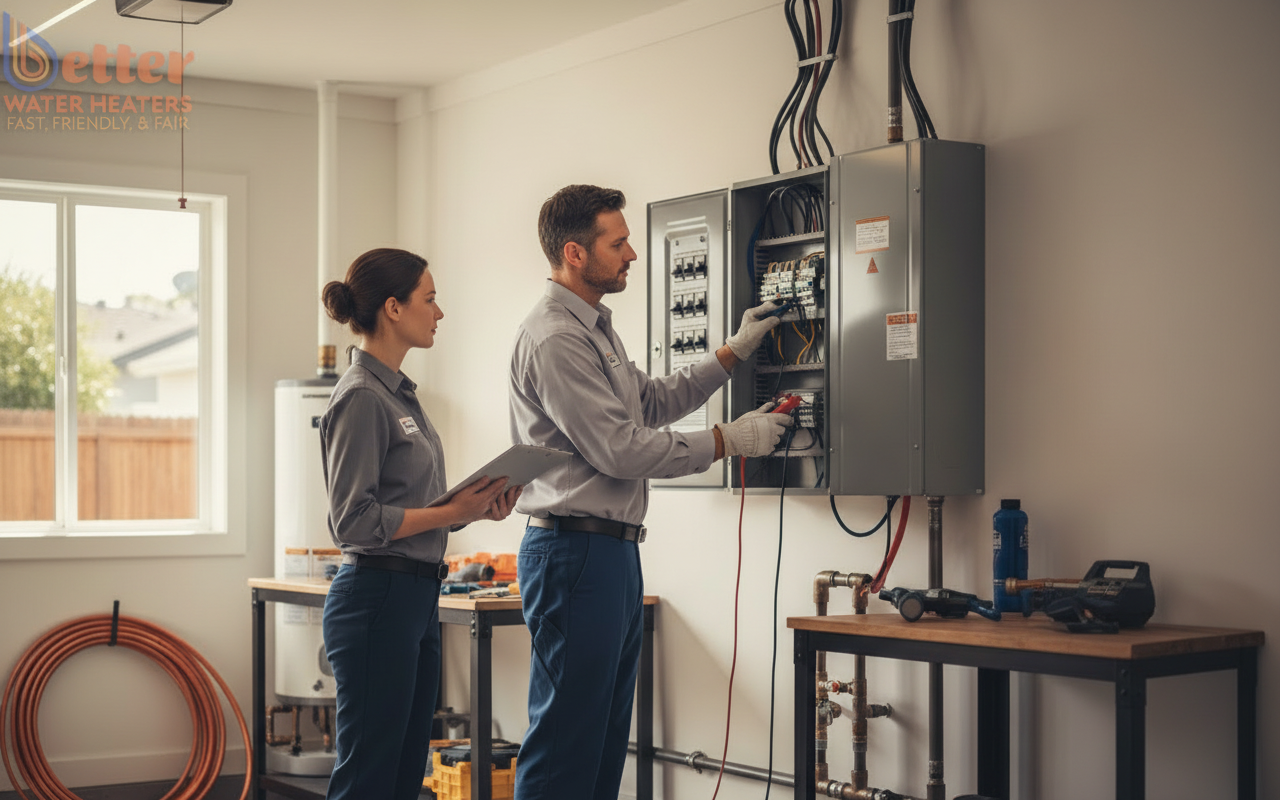
The real kicker? In our work with established Bay Area homeowners, we’ve found that upgrading to a heat pump water heater today often unlocks the capacity needed for an ADU tomorrow because these units are significantly more efficient than standard electric tanks. If you need help evaluating your panel, schedule a professional capacity assessment with our team.
Step 2: Calculating Peak Demand and First Hour Rating (FHR)
Capacity isn’t just about how many gallons the tank holds; it’s about how quickly that water can be replaced during peak usage. When you add a secondary dwelling unit utilities load, you are essentially doubling the probability of simultaneous showers.
The 3-step capacity audit requires a realistic look at your “Simultaneous Use Factor.” Think about a typical morning: someone is showering in the main house, the dishwasher is running, and your tenant in the ADU is also starting their day. A standard 40-gallon gas heater will fail this test every single time.
- Identify Peak Hour Demand: Calculate the total gallons used if every shower and major appliance ran during the same 60-minute window.
- Check the First Hour Rating (FHR): Look at the yellow EnergyGuide label on your current unit. If your peak demand exceeds the FHR, you need an upgrade.
- Factor in Recovery Time: Tankless systems provide endless water, but they are limited by tankless water heater flow rate. In the Bay Area’s colder winter months, a unit rated for 5 GPM might only deliver 3 GPM, which won’t support two simultaneous high-flow showers.
But wait—here is a contrarian insight: Bigger is not always better. Over-sizing a tank system leads to “standby loss,” where you pay to keep 80 gallons of water hot when you only need 20. The goal of the 3-step capacity audit is right-sizing, not just up-sizing.
Step 3: Plumbing Infrastructure and Pipe Diameter Audit
You can have the most powerful water heater in the world, but if your home expansion plumbing relies on old half-inch galvanized pipes, you will never get the pressure or volume you need. This is the “hidden cost” of home additions that most contractors don’t mention until the walls are open.
A 3-step capacity audit must include a physical inspection of your main trunk lines. Modern ADU water heater requirements often necessitate a 3/4-inch or even 1-inch dedicated hot water line to maintain pressure across a long distance to a backyard cottage.
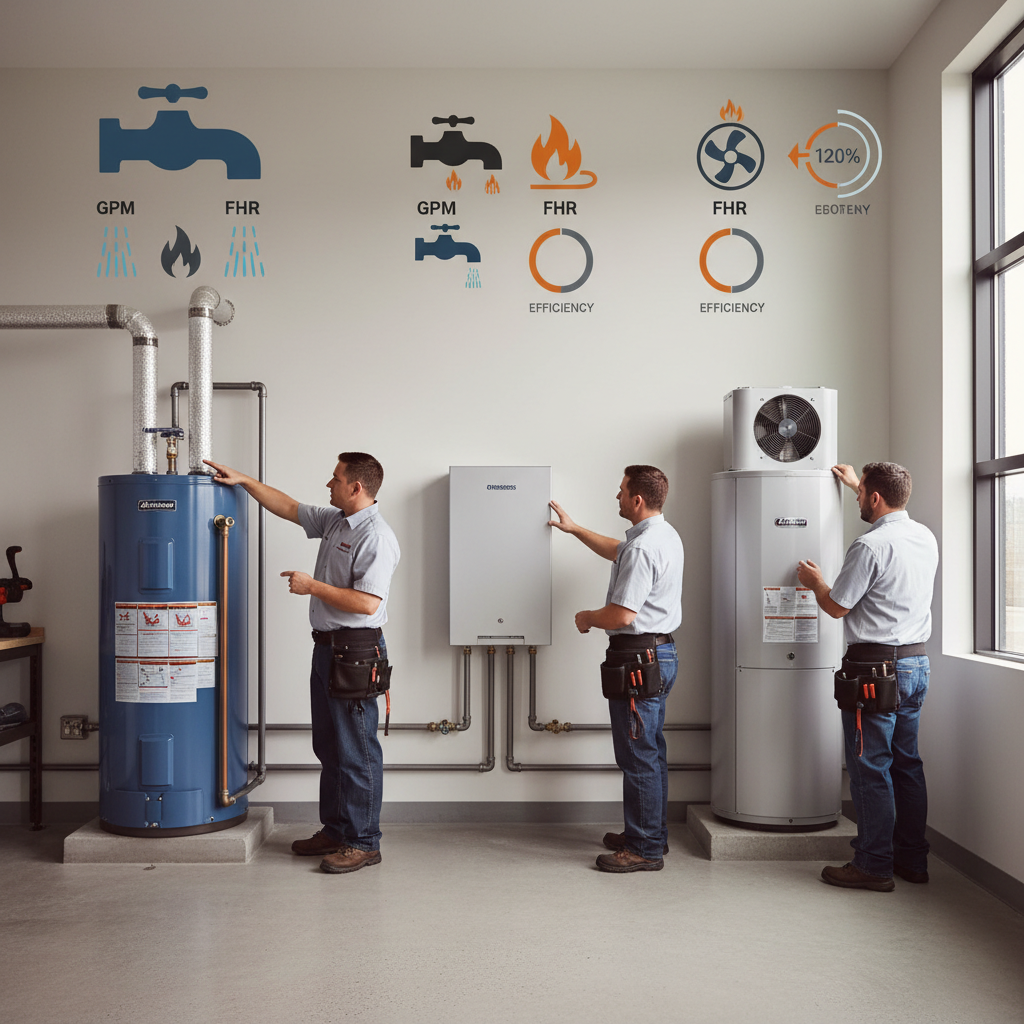
| System Type | Best For | Expansion Potential |
|---|---|---|
| Hybrid Heat Pump | Main House + Small ADU | High (with electrical upgrade) |
| Whole-Home Tankless | Large Homes + Multi-Bath | High (unlimited hot water) |
| Point-of-Use Electric | Remote ADU / Guest Suite | Modular (no main line needed) |
What most people miss: If your ADU is more than 50 feet from the main house, a centralized system loses significant heat in the transit lines. In these cases, our 3-step capacity audit often recommends a decentralized approach—using a high-efficiency main unit for the house and a dedicated tankless water heater for the ADU. Learn more about tankless vs. heat pump options here.
Why the ROI of Over-Specifying Matters in the Bay Area
In our experience with property managers and savvy homeowners, we’ve seen that sizing for 120% of your current projected capacity saves roughly $5,000 in future retrofit costs. Why? Because labor is the most expensive component of any Bay Area plumbing project. If you are already paying for a permit and a technician to be on-site, the marginal cost of a larger unit or a thicker gas line is negligible compared to doing the job twice.
Here’s the thing: The “Silver Tsunami” is real. Many homeowners are building ADUs not for rental income, but for aging-in-place. These suites often require walk-in tubs or high-flow fixtures that demand significant hot water volume. By performing a 3-step capacity audit now, you are ensuring the home is ready for multi-generational living without another major renovation in five years.
If you’re feeling overwhelmed by ADU plumbing requirements, you aren’t alone. Most of our clients start with a simple question about a leak and end up realizing their entire system is a bottleneck for their future plans. At Better Water Heaters, we specialize in helping you navigate these local rebates and regulations to maximize your investment.
Future-Proofing for 2027 and Beyond
California is moving toward a total ban on gas water heater sales by 2027. This means any home expansion plumbing project you start today should be designed with electrification in mind. If you install a gas unit now without the electrical infrastructure to support a future heat pump, you are effectively building in an expiration date for your system.
- Plan for the footprint: Heat pump water heaters require more physical space and airflow than gas units.
- Condensate management: These units produce water (condensate) that needs a drain—something many older garages lack.
- Noise considerations: Heat pumps have compressors; placing them directly next to an ADU bedroom is a common design flaw.
Ready to get started? Don’t wait until the framing is done to realize your water heater can’t keep up. Contact us today for a free consultation and let our experts run a 3-step capacity audit on your home.
Key Takeaways for Your Expansion
- Audit your electrical panel for 240V/30A headroom before choosing a unit.
- Calculate your First Hour Rating (FHR) to ensure simultaneous shower capacity.
- Consider decentralized “point-of-use” units for ADUs located far from the main house.
- Always over-specify by 20% to account for future lifestyle changes and aging-in-place.
Frequently Asked Questions
Do I need a separate water heater for my ADU?
While you can run an ADU off the main house system, it often requires a massive capacity upgrade and significant trenching. Many Bay Area homeowners find it more cost-effective to install a dedicated high-efficiency heat pump or tankless unit specifically for the ADU to ensure independent temperature control and easier utility metering.
What are the minimum ADU water heater requirements in California?
California’s Title 24 energy code requires ADUs to meet strict efficiency standards. Most new ADUs must use either a heat pump water heater or a highly efficient gas tankless system. Additionally, local Bay Area ordinances may require seismic strapping and specific venting if the unit is located in a garage or closet.
Can my existing plumbing handle a home expansion?
It depends on your pipe material and diameter. If your home has 1/2-inch piping, adding a second or third bathroom will likely result in a significant pressure drop. A 3-step capacity audit by a professional can determine if your main trunk line needs to be upsized to 3/4-inch to support the additional fixtures.
How much are the current heat pump water heater rebates in the Bay Area?
Between federal tax credits and local programs like TECH Clean California, homeowners can often access between $2,000 and $4,900 in total incentives. These rebates are designed to offset the higher upfront cost of heat pump technology and any necessary electrical panel upgrades.