
📋 Table of Contents
Starting in 2027, the Bay Area Air Quality Management District (BAAQMD) will effectively ban the sale of traditional natural gas water heaters, making 2026 the final year for a standard 1-for-1 gas replacement. According to the BAAQMD, residential water heaters account for roughly 90% of NOx emissions from buildings, leading to this aggressive regional mandate.
For many local homeowners, a Bay Area water heater replacement is no longer just about fixing a leak; it is a strategic decision involving electrical capacity, local rebates, and long-term utility costs. Whether you are a tech founder in Palo Alto or a long-time resident in Oakland, the window to choose your energy source is closing. This guide provides the definitive framework for navigating this transition.
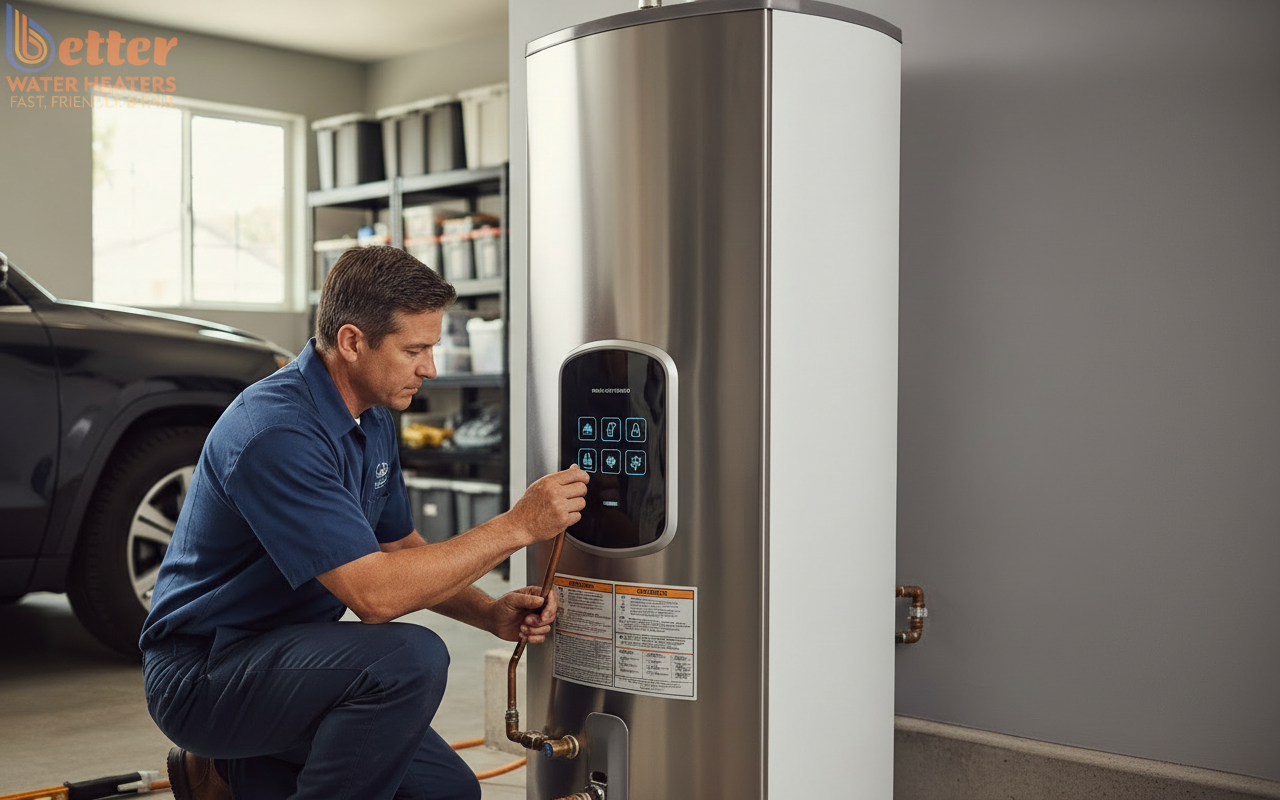
Key Takeaways for 2026
- The 2027 Deadline: After December 31, 2026, most gas water heaters will be unpurchasable in the Bay Area.
- Rebate Peak: Current incentives from BayREN and TECH Clean California can exceed $4,900, but these funds are finite.
- Electrical Hacks: New 120V “plug-in” heat pumps allow for gas-to-electric conversion without expensive panel upgrades.
1. The 2026 Compliance Countdown: Why Timing is Everything
The real kicker is that 2026 isn’t just another year—it is the “buffer year” before the most significant appliance regulation in California history takes full effect. If your tank is over 10 years old, waiting until it fails in 2027 could leave you with zero gas options and a mandatory $3,000 electrical upgrade you weren’t prepared for.
What most people miss is that labor rates and permit fees are projected to spike in 2027 as thousands of residents scramble to comply with new mandates. In our work with established homeowners in San Jose and San Mateo, we’ve seen that proactive replacements in 2026 save an average of 20% on total installation costs compared to emergency repairs. Here is a quick look at the regulatory landscape:
| Feature | Standard Gas (2026) | Heat Pump / Hybrid (2026) | Post-2027 Reality |
|---|---|---|---|
| Availability | Widely Available | Widely Available | Ultra-Low NOx / Electric Only |
| Installation Cost | $2,500 – $4,500 | $4,000 – $8,000 | Variable (Higher Compliance) |
| Local Rebates | None | Up to $4,900+ | Likely Phasing Out |
Transitioning now allows you to control the narrative. If you’re unsure where your current system stands, schedule a pre-mandate audit with our specialists today.
2. Gas vs Electric Water Heater: The Efficiency Reality Check
The best way to view the gas vs electric water heater debate in the Bay Area is through the lens of “Total Cost of Ownership” rather than just the initial sticker price. While PG&E gas rates have climbed steadily, the efficiency of modern heat pumps—often reaching 400% efficiency—far outpaces the 60-70% seen in traditional gas tanks.
But wait—there is a contrarian truth most contractors won’t tell you: an electric water heater is only as good as your home’s insulation and usage patterns. In colder micro-climates like Daly City or the Richmond District, a hybrid model may rely more on its backup heating elements, slightly reducing its efficiency gains compared to a warmer installation in Walnut Creek.
- Gas Pros: Lower upfront cost (for now), faster recovery times for large families.
- Electric/Hybrid Pros: Massive rebates, zero on-site emissions, works with solar storage.
- The Middle Ground: Tankless gas systems offer high efficiency but face the same 2027 phase-out hurdles.
3. The Hybrid Water Heater Framework: A Decision Matrix
A hybrid water heater framework should prioritize three factors: household size, electrical panel space, and long-term electrification goals. For a typical Bay Area mid-market client with a family of four, a 65-gallon hybrid heat pump is usually the “sweet spot” for balancing performance and rebate eligibility.
Here’s the thing about electrical panels: many older homes in Oakland or San Francisco only have 100-amp service. Historically, this meant a $3,000+ panel upgrade to support a 240V heat pump. However, the 2026 market has seen the rise of 120V “plug-in” models. These units can often plug into a standard outlet, bypassing the need for a heavy-duty electrical overhaul. This is a game-changer for historic properties.
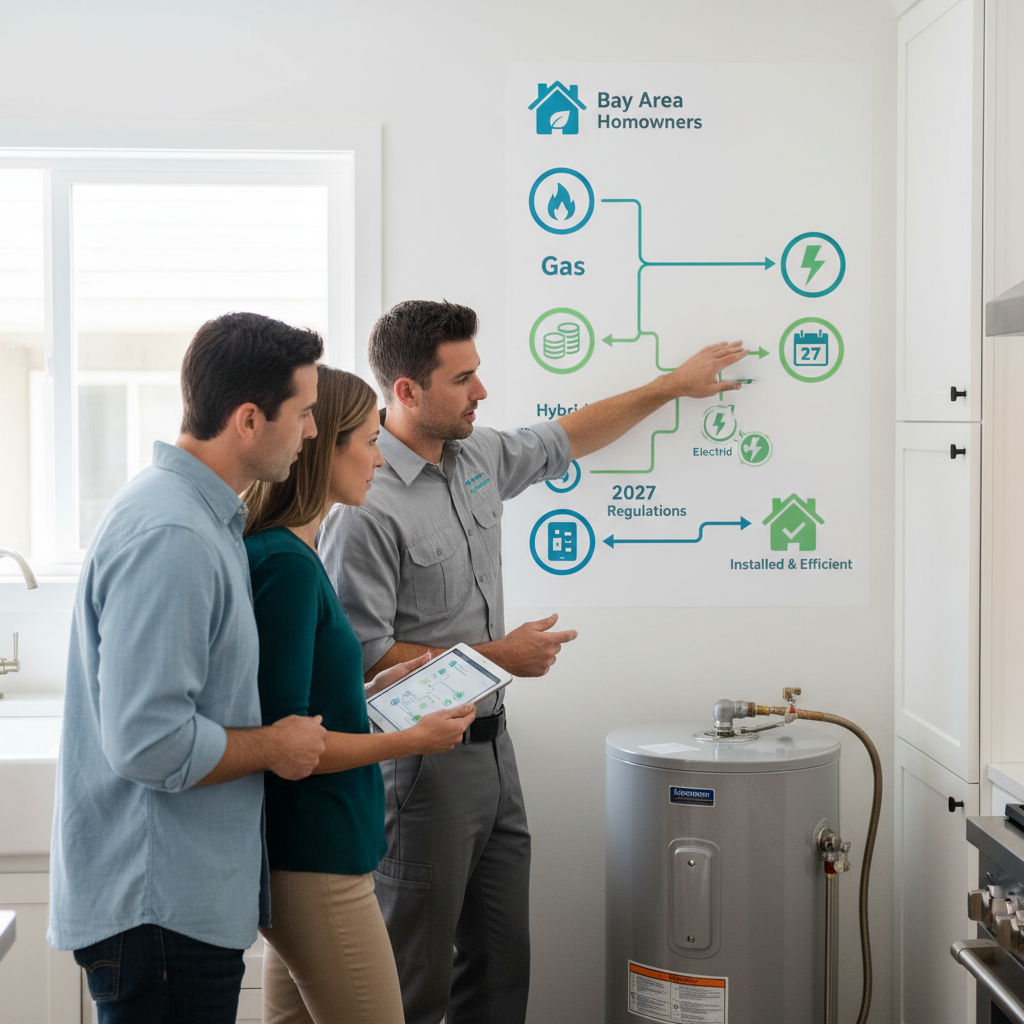
The 2026 Decision Matrix
- Check your panel: Do you have two open slots for a 30-amp breaker? If no, look at 120V models.
- Measure the space: Heat pumps need roughly 700-1,000 cubic feet of air to breathe. Garages are perfect; tiny closets are not.
- Calculate your ROI: With Energy.gov citing up to $500 in annual savings, a hybrid unit often pays for itself in 5-7 years.
Need help running the numbers for your specific zip code? Use our local rebate search tool to see exactly what you qualify for.
4. Navigating Bay Area Rebates and Incentives
Expertise in 2026 is defined by how much of someone else’s money you can use to upgrade your home. Between the Federal Inflation Reduction Act (IRA) tax credits and local programs like Peninsula Clean Energy or Silicon Valley Clean Energy, the paperwork can be daunting. We handle the heavy lifting of rebate applications because missing a single deadline can cost a homeowner $2,000.
The real kicker? Some rebates are “point-of-sale,” meaning they come off the invoice immediately, while others are tax credits you claim the following year. Understanding the sequence of these incentives is vital for managing your cash flow during a Bay Area water heater replacement.
- Federal Tax Credit (25C): 30% of project cost, capped at $2,000 annually.
- BayREN: Often provides $1,000+ for switching from gas to heat pump.
- TECH Clean California: Incentives that vary by contractor but can be substantial.
5. Installation Challenges: Micro-Climates and Seismic Codes
In the Bay Area, we don’t just deal with water; we deal with earthquakes and micro-climates. California Title 24 requires specific seismic strapping that many DIY-focused sites overlook. Furthermore, the performance of a hybrid unit in the foggy Sunset District differs significantly from one in the heat of Livermore.
What most people miss is that heat pumps act as dehumidifiers. If installed in a damp basement in Berkeley, they actually provide a secondary benefit by drying out the air. Conversely, in a finished laundry room, the cool exhaust air might be a nuisance during the winter months. Professional ducting can solve this, but it requires a specialist’s eye.
If you’re feeling overwhelmed by the technical requirements, remember that we’ve been doing this for over 20 years. Book a free consultation to walk through your home’s specific needs.
6. The Future-Ready Home: Solar and VPP Integration
Forward-thinking homeowners are now viewing their water heaters as thermal batteries. By integrating a smart hybrid water heater with solar storage, you can “pre-heat” your water during the day when the sun is shining and energy is free, then use that hot water during PG&E’s expensive peak evening hours. This is often referred to as a Virtual Power Plant (VPP) strategy.
As of 2026, many smart models from brands like Rheem and Bradford White come with built-in Wi-Fi and demand-response capabilities. This allows local utilities to slightly adjust your heater’s power draw during grid emergencies in exchange for monthly bill credits. It’s a win-win for your wallet and the California grid.
Is a Smart Water Heater Right for You?
- Pros: Leak detection alerts to your phone, scheduling for TOU (Time-of-Use) rates.
- Cons: Slightly higher initial cost, requires reliable home Wi-Fi.
7. Final Verdict: Should You Replace in 2026?
The real reasoning for replacing your water heater in 2026 is simple: it is the last year of total consumer choice. By 2027, the BAAQMD NOx regulations will narrow your options significantly. If your current gas unit is showing signs of rust, making popping noises, or is simply past its prime, 2026 is the year to capitalize on maximum rebates and lower labor costs.
Don’t wait for a cold shower on a Monday morning to make this decision. Use the hybrid water heater framework to assess your home today. Whether you stick with gas for one last cycle or leap into the electric future, doing so on your own terms is the ultimate Bay Area power move.
Ready to secure your 2026 upgrade? Contact Better Water Heaters today for a transparent, fixed-price quote and expert rebate assistance.
Frequently Asked Questions
How much can I actually save with Bay Area water heater rebates in 2026?
In 2026, a typical Bay Area homeowner can access between $2,500 and $4,900 in total incentives. This usually includes a $2,000 Federal tax credit, roughly $1,000 from BayREN, and additional local utility bonuses from providers like Peninsula Clean Energy. Our team handles the specific calculations based on your zip code and equipment choice.
Will I need a permit for a Bay Area water heater replacement?
Yes, all water heater replacements in the Bay Area require a local municipal permit. This ensures the unit meets California Title 24 energy standards and seismic strapping codes. Better Water Heaters manages the entire permitting process, including the final inspection, to ensure your home remains compliant and safe.
What is the BAAQMD 2027 gas water heater ban?
The Bay Area Air Quality Management District (BAAQMD) passed a rule that phases out the sale and installation of natural gas water heaters starting in 2027. This isn’t a “knock on your door” ban of existing units, but rather a sales ban. When your current gas heater fails in 2027 or later, you will likely be required to install a zero-NOx (electric) alternative.
Can I install a heat pump water heater if my electrical panel is full?
Yes, 2026 technology offers two main solutions for full panels. First, “circuit sharing” devices can allow the heater to share a circuit with another appliance. Second, new 120V “plug-in” heat pump models can run on a standard outlet, often eliminating the need for a costly electrical panel upgrade or new 240V wiring.