
📋 Table of Contents
- The New Rules of Water Heater Placement in the Bay Area
- Strategic HPWH Clearance Specifications and Airflow
- Seismic Bracing Requirements California: Safety First
- Interior vs. Exterior Siting: The Aesthetic Conflict
- Retrofitting the Victorian: Creative Siting Solutions
- Future-Proofing: Siting for the 2027 Gas Phase-Out
- FAQs
According to the Bay Area Air Quality Management District (BAAQMD), water heaters are responsible for roughly 90% of nitrogen oxide (NOx) emissions from local buildings, sparking a 2027 phase-out of traditional gas units. For homeowners, this shift means water heater placement is no longer just about finding a dark corner in the garage—it is a complex spatial puzzle involving airflow, decibel ratings, and structural integrity.
Key Takeaways:
- Strategic siting must prioritize airflow (at least 700-1,000 cubic feet) for Heat Pump Water Heaters (HPWH).
- California Plumbing Code requires specific seismic bracing and clearance that often exceeds manufacturer minimums.
- Noise management is critical for interior installations, especially in high-density areas like San Francisco or Oakland.
- Outdoor installations require specific aesthetic screening to satisfy local HOA and historic board requirements.
The New Rules of Water Heater Placement in the Bay Area
Modern siting is dictated by the physics of heat exchange rather than the convenience of existing gas lines. Here is the thing: while your old gas tank sat quietly in a sealed closet, a new heat pump model needs to “breathe” to extract heat from the surrounding air.
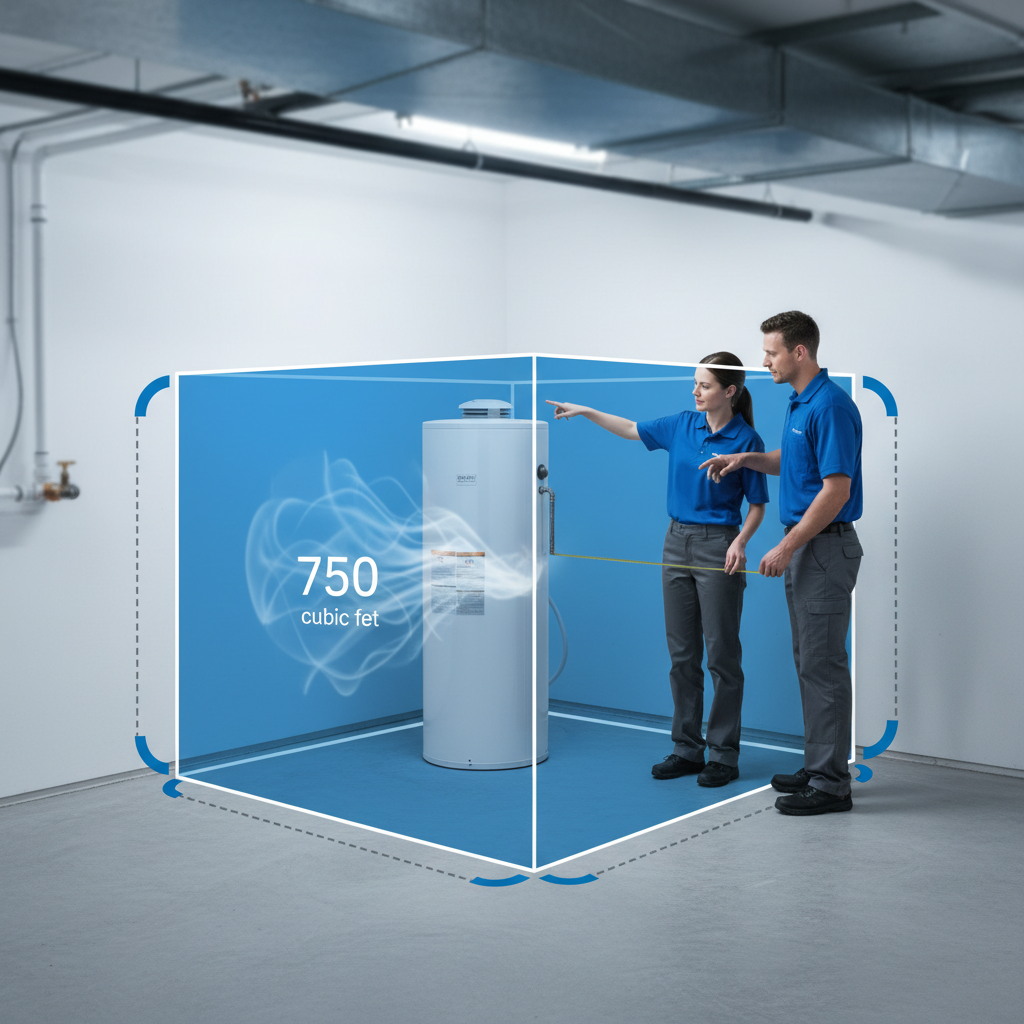
- Volume Requirements: Most HPWH units require approximately 750 cubic feet of ambient air space unless they are ducted.
- Clearance vs. Code: Manufacturer specs might say 2 inches, but local fire codes often demand more for service access.
- Structural Support: A full 80-gallon heat pump tank can weigh over 1,000 pounds, requiring floor reinforcement in older Victorian homes.
Navigating BAAQMD and Title 24 Requirements
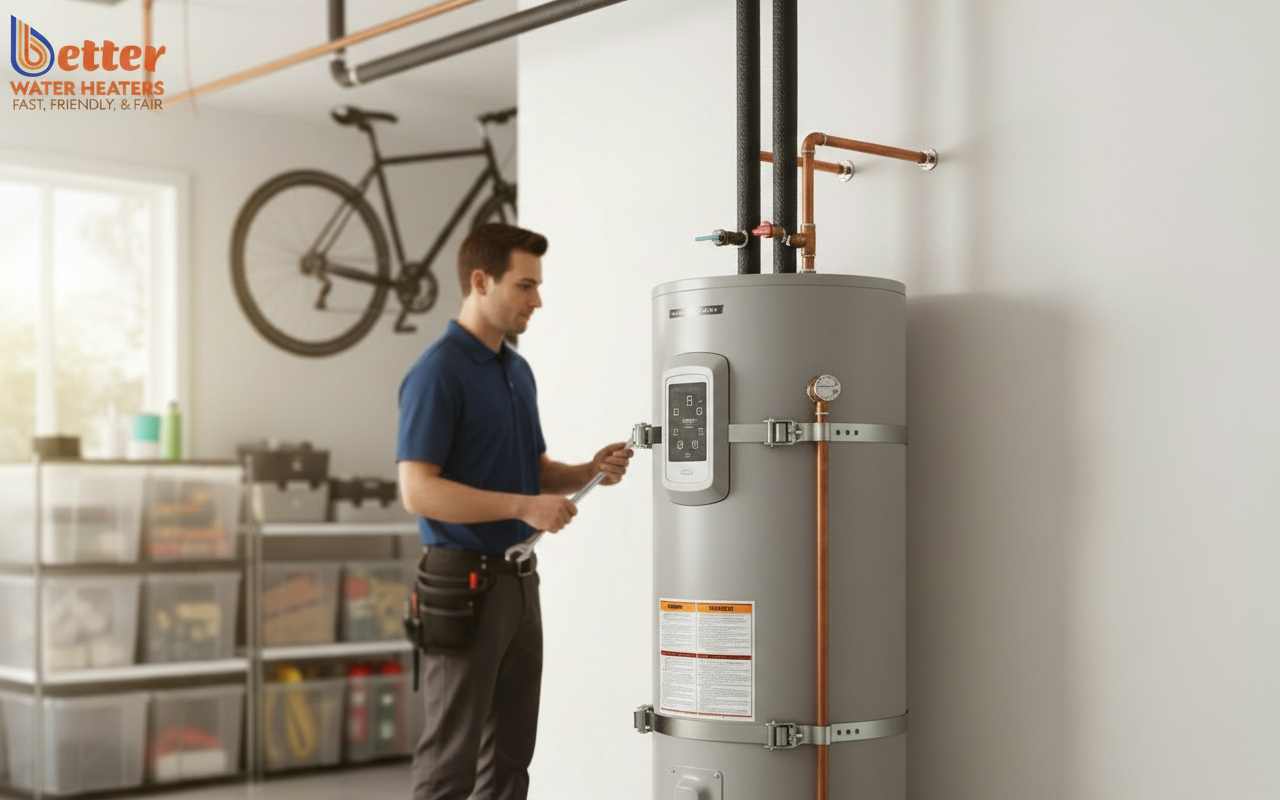
California’s Title 24 energy standards are some of the strictest in the nation, requiring meticulous documentation for any Bay Area home renovation. What most people miss is that the transition to all-electric units often triggers a need for electrical panel upgrades to handle the 30-amp dedicated circuit. In our work with tech professionals in San Jose and Palo Alto, we frequently find that the ideal physical location for the tank is nowhere near the main electrical hub, adding hidden costs to the project.
Strategic HPWH Clearance Specifications and Airflow
Airflow is the lifeblood of efficiency for modern water heaters, yet it is the most common reason for system failure in tight urban lots. The real kicker? If you starve a heat pump of air, it reverts to expensive electric resistance mode, defeating the purpose of your investment.
- Louvered Doors: If installing in a closet, the door must have at least 240 square inches of open area.
- Ducted Solutions: For interior rooms, we can duct the intake and exhaust to the outside or a larger attic space.
- Condensate Drainage: Unlike gas units, HPWHs produce water (condensate) that must be routed to a floor drain or pumped out.
Ready to see if your current setup meets these standards? Schedule a professional site assessment with our experts today.
Seismic Bracing Requirements California: Safety First
In a region defined by fault lines, water heater placement is a matter of life safety, not just convenience. California Heat and Safety Code Section 19211 requires all water heaters to be braced, anchored, or strapped to resist falling during an earthquake.
- The Two-Strap Rule: One strap must be in the upper one-third of the tank, and the second in the lower one-third.
- Wall Anchoring: In many San Francisco garages with “soft story” construction, we must anchor directly into the structural studs, not just the drywall.
- Clearance for Movement: You need enough gap between the unit and the wall to allow for the slight sway of seismic activity without rupturing pipes.
Interior vs. Exterior Siting: The Aesthetic Conflict
Choosing between an indoor utility room and an outdoor enclosure is a high-stakes decision for Bay Area curb appeal. While outdoor placement saves interior square footage—valuable in a $2,000-per-square-foot market—it exposes the unit to the elements and potential noise complaints from neighbors.
| Factor | Indoor Placement | Outdoor Placement |
|---|---|---|
| Noise Level | 45-55 dB (Humming) | Dissipates naturally | High (Stable temps) | Variable (Weather dependent) |
| Space Impact | Uses 9-12 sq. ft. | Zero interior footprint |
But wait—if you go outdoors, you must navigate plumbing code requirements regarding weatherproof enclosures and insulation. In historic districts like Alameda or Berkeley, you may even need approval for the color and material of the screening used to hide the unit from the street.
Sound Attenuation and Vibration Damping
For a typical Bay Area mid-market homeowner, placing a heat pump water heater near a bedroom is a recipe for regret. These units use compressors similar to a refrigerator or small AC unit. We recommend vibration isolation pads and sound-dampening blankets if the unit must be sited near living quarters. Interestingly, our internal AI content engine, Ingest.blog, has noted a 40% increase in search volume for “quiet heat pump water heaters” over the last year, reflecting this growing concern.
Retrofitting the Victorian: Creative Siting Solutions
The “Zero-Clearance” Myth is one of the most dangerous misconceptions in Bay Area home renovation. Manufacturers often claim a unit can fit in a tight space, but local inspectors will fail the installation if there isn’t 18-24 inches of clear space in front of the controls and T&P valve.
- The Attic Hybrid: Siting the tank in a reinforced attic space while ducting air from the gables.
- The Side-Yard Enclosure: Building a custom, sound-insulated shed that matches the home’s siding.
- The Crawlspace Elevation: Using a platform to keep the unit above the flood line while maximizing vertical space.
The real honest, contrarian insight? Sometimes, the most “efficient” unit on paper is the wrong choice for your specific home if it requires $10,000 in structural and electrical modifications just to fit the water heater placement requirements. We often advise clients to look at the Total Cost of Ownership (TCO) rather than just the rebate amount.
Future-Proofing: Siting for the 2027 Gas Phase-Out
The 2027 BAAQMD regulations mean that when your current gas unit dies, you likely won’t be able to replace it with another one. Smart homeowners are planning their water heater placement now, even if their current unit is still working. This involves identifying where a 240V circuit can be run and ensuring the future site has the necessary drainage for a heat pump.
According to Energy.gov, transitioning to a heat pump can save a household hundreds of dollars annually, but only if the installation is optimized for the local climate. In the Bay Area’s moderate temperatures, an outdoor-sited unit can perform exceptionally well for most of the year.
Electrical Panel and Load Management
In our work with Series B startup founders in Palo Alto, we often see homes with 100-amp panels that are already maxed out by EV chargers and AC units. Proper siting helps minimize the length of expensive copper wire runs, potentially saving thousands on the electrical portion of the install. If your panel is full, we can explore smart load-shedding devices that allow the water heater and EV charger to share a circuit safely.
Don’t wait for an emergency replacement to find out your home isn’t ready. Explore local rebates and incentives that can cover the cost of these necessary upgrades.
FAQs: Advanced Siting Challenges
Can I install a heat pump water heater in a small closet?
Yes, but it requires specific modifications. You must either use a louvered door to allow for 750+ cubic feet of airflow or install a ducting kit that pulls air from a larger room or the attic. Without this, the unit will lose efficiency and potentially overheat the small space.
What are the seismic strapping requirements for a San Francisco home?
San Francisco follows the California Plumbing Code, which requires two heavy-duty straps anchored into wall studs. For units on high platforms or in garages, we often add a third strap or a specialized seismic base to prevent the unit from sliding off its pedestal during a tremor.
How much noise does a heat pump water heater actually make?
Most modern units operate at 45-55 decibels, which is comparable to a modern dishwasher. However, the vibration can telegraph through floor joists. We always recommend using rubber isolation pads for any installation located above a living space or near a bedroom wall.
Do I need a permit for changing the water heater placement?
Absolutely. Moving a water heater involves new plumbing, electrical, and potentially structural work. In the Bay Area, a permit ensures the new location meets fire safety and seismic codes. We handle the entire permitting process for our clients to ensure full compliance with local building departments.
The Final Word on Bay Area Siting
Stop viewing your water heater as a simple appliance and start seeing it as a strategic infrastructure upgrade. This week, take a tape measure to your current utility space: if you don’t have at least 30 inches of clearance in front of your unit and a clear path for a 240V electrical line, you need to start planning your 2027 transition today. Siting is the difference between a system that lasts 15 years and one that fails in five due to poor airflow or structural stress. Ready to future-proof your home? Contact Better Water Heaters for a comprehensive site consultation.