
📋 Table of Contents
- The Real Cost of Non-Compliance in Bay Area Real Estate
- Decoding the NHD Report: Your Water Heater Checklist
- Seismic Strapping Requirements: Beyond the Basics
- The ‘Escrow Killer’: T&P Relief Valve and Discharge Piping
- Electrification Reach Codes and Your Home Sale
- DIY vs. Professional Compliance
- FAQs
According to the California Association of Realtors, failing to meet basic point-of-sale requirements is a leading cause of delayed closings in high-stakes markets like San Francisco and San Jose. In the Bay Area, water heater compliance isn’t just a safety suggestion—it is a legal mandate under California Health and Safety Code 19211 that can halt your home sale mid-escrow if not addressed before the home inspector arrives.
Key Takeaways for Homeowners:
- Double-strapping is non-negotiable for seismic safety in California.
- Temperature and Pressure (T&P) discharge lines must terminate in specific, code-approved locations.
- Sediment traps and expansion tanks are often flagged in municipal inspections.
- Electrification reach codes in cities like San Jose may impact your replacement options.
The Real Cost of Non-Compliance in Bay Area Real Estate
If you think a functional water heater is enough to pass a home inspection, you are likely in for an expensive surprise during the disclosure process. The real kicker? Most homeowners only realize their unit is non-compliant when the Natural Hazard Disclosure (NHD) or a private home inspection report flags it as a safety hazard.
In our work with established Bay Area homeowners, we frequently see sales stall over a $150 strapping issue that spirals into a $3,000 emergency replacement because the unit was improperly installed years ago. Real estate retrofitting is about more than just checking boxes; it is about protecting your equity and the buyer’s safety.
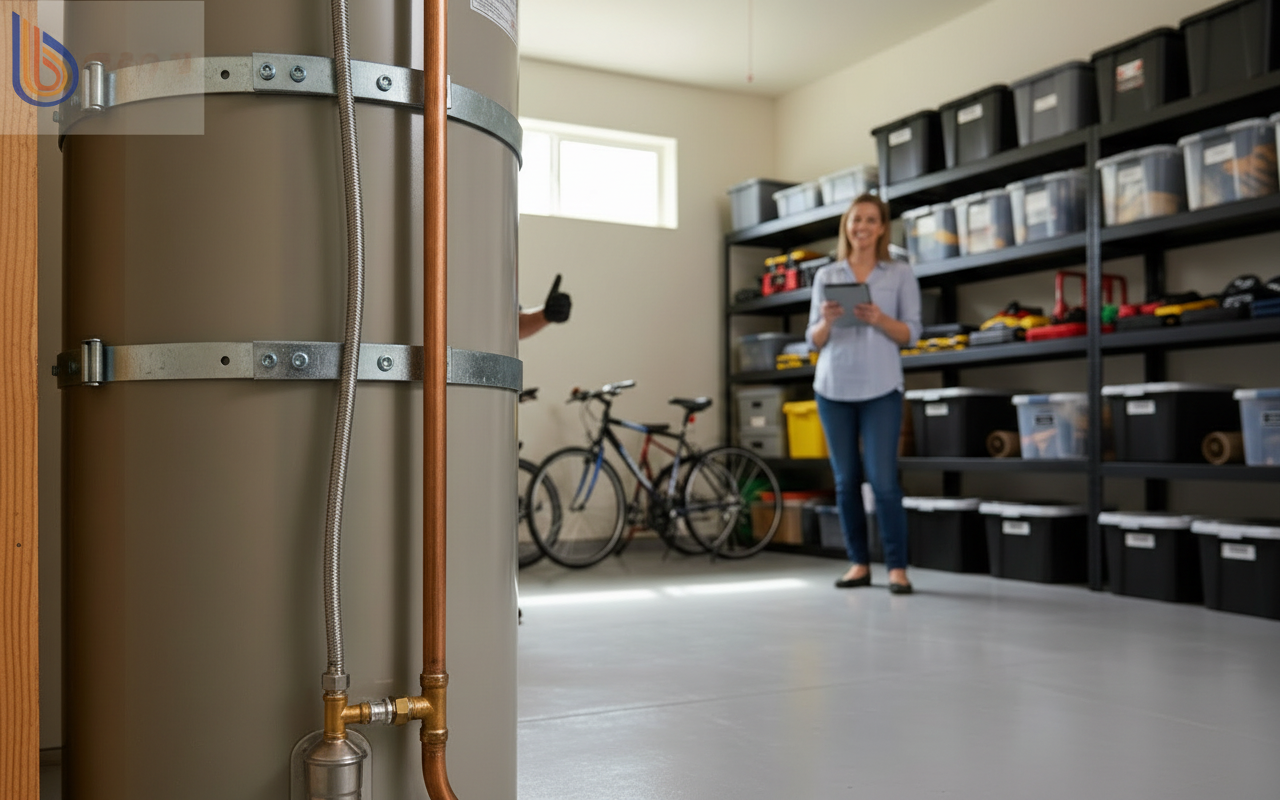
What most people miss is that Bay Area plumbing compliance has become significantly stricter due to recent seismic activity and energy mandates. For example, seismic strapping requirements now demand specific hardware and positioning that many older DIY installations lack.
Decoding the NHD Report: Your Water Heater Checklist
The Natural Hazard Disclosure (NHD) report is the primary document where water heater compliance issues first surface for buyers. While the report focuses on flood zones and fire risks, the “Property Tax and Disclosure” section specifically triggers the need for a Water Heater Statement of Compliance.
- Section 1: Seismic Bracing: Does the unit have two straps (one in the upper third, one in the lower third)?
- Section 2: T&P Relief Valve: Is the discharge pipe made of approved material (not PEX unless rated) and does it lead outside or to a floor sink?
- Section 3: Expansion Tanks: In closed-loop systems common in the East Bay, is there a properly sized expansion tank installed?
- Section 4: Sediment Traps: Is there a “dirt leg” to prevent debris from entering the gas valve?
Here’s the thing: an NHD report won’t tell you how to fix it; it only notes that the seller is required by law to certify the unit is braced, anchored, or strapped. According to the California Energy Commission, ensuring these safety features are present reduces the risk of fire and water damage during a seismic event.
Comparison: Compliance vs. Common Failures
| Feature | Code Requirement | Common Failure Point |
|---|---|---|
| Seismic Strapping | Two heavy-duty straps; lower strap 4″ above controls | Single strap or straps too loose |
| Discharge Piping | Must terminate 6″-24″ from the ground | Missing pipe or terminating in crawlspace |
| Vent Clearance | 1″ clearance from combustibles (B-vent) | Drywall or insulation touching the vent |
Seismic Strapping Requirements: Beyond the Basics
California earthquake zones require more than just a metal band from the hardware store. The seismic strapping requirements specify that the straps must be securely wrapped around the tank and bolted into the wall studs.
But wait—many Bay Area homes have water heaters located in tight closets or elevated on platforms. In these scenarios, a typical mid-market client might assume the platform provides stability, but the inspector will still flag it if the straps don’t wrap at least 25% of the tank’s circumference.
Pro-tip: If your water heater is over 10 years old, don’t just add straps. Use this as an opportunity to evaluate a transition to a heat pump system, which can increase your home’s value and meet upcoming 2027 gas-to-electric mandates.
Need a professional eyes-on assessment before you list? Schedule a compliance inspection with Better Water Heaters today.

The ‘Escrow Killer’: T&P Relief Valve and Discharge Piping
The Temperature and Pressure (T&P) relief valve is your water heater’s primary safety mechanism. If it fails, the tank can quite literally become a rocket—a fact often cited by the National Fire Protection Association.
What most homeowners miss is the discharge pipe’s termination point. In the Bay Area, inspectors are particularly strict about pipes that empty into crawlspaces, which can cause foundation rot, or pipes that are “trapped” (sloping upward), which prevents drainage.
The real kicker? Using the wrong material, like standard PVC or unrated PEX, for this discharge line is an automatic fail. It must be copper, galvanized steel, or CPVC. This is a classic example of where Bay Area point-of-sale compliance catches DIYers off guard.
Electrification Reach Codes and Your Home Sale
As of 2024, several Bay Area cities, including San Jose and Berkeley, have implemented “reach codes” that encourage or mandate electrification. While you might not be forced to replace a working gas unit to sell, a non-compliant gas unit that needs repair might trigger these new requirements.
For a typical Bay Area homeowner, this means that if your unit is flagged during the NHD report water heater checklist review and requires replacement, you might be legally required to install a Heat Pump Water Heater (HPWH) instead of a traditional gas model.
Contrarian Insight: Many realtors suggest the cheapest gas replacement to save the deal, but this is often a mistake. With rebates up to $4,900, installing a high-efficiency heat pump can be a major selling point for environmentally-conscious Bay Area buyers, often netting a higher ROI than a last-minute gas tank.
DIY vs. Professional Compliance: What the Inspector Looks For
Home inspectors in Santa Clara and San Mateo counties are trained to look for the “small things” that indicate a lack of professional maintenance. They don’t just look at the straps; they look at the shut-off valves and the gas flex lines.
- Bonding Jumper Wires: Is your hot and cold water piping electrically bonded?
- Gas Drip Legs: Is there a sediment trap to protect the thermostat?
- Clearance: Is there enough combustion air in the closet?
In our work with property managers, we find that 40% of units have the straps installed at the wrong height. If the bottom strap is over the controls, it is non-compliant. If the top strap is too high, it won’t prevent the unit from tipping.
If you are managing multiple units or preparing a high-value listing, don’t leave this to a handyman. Our team at Better Water Heaters specializes in real estate retrofitting to ensure your deal closes on time.
The Pre-Sale Fix: Actionable Steps for This Week
Don’t wait for the buyer’s inspector to dictate the terms of your repairs. Take control of your water heater compliance early to avoid the “escrow tax” of last-minute, premium-priced repairs.
- Visual Inspection: Check for two straps and a discharge pipe that reaches the floor or outside.
- Verify Materials: Ensure no plastic PEX is used for the T&P line unless specifically labeled for that use.
- Check for Leaks: Even a tiny slow drip at the top of the tank can lead to a “repair or replace” demand from a buyer.
- Call a Specialist: Have a professional provide a compliance certificate that you can hand to the buyer upfront.
Ready to ensure your water heater is 100% compliant before you list? Contact Better Water Heaters for a pre-listing inspection and avoid the stress of a stalled sale.
Frequently Asked Questions
Do I really need two straps on my water heater in the Bay Area?
Yes. California Health and Safety Code 19211 requires all water heaters to be braced, anchored, or strapped to resist falling during an earthquake. In the Bay Area, this is interpreted as two straps: one in the top one-third and one in the bottom one-third of the unit, with the bottom strap at least four inches above the gas controls.
What is an NHD report water heater checklist?
This is a section of the Natural Hazard Disclosure report where sellers must certify that the property meets local safety requirements. For water heaters, it specifically asks if the unit is properly secured for seismic safety. If you check “No” or leave it blank, it will likely trigger a mandatory repair request from the buyer’s lender.
Can I install seismic straps myself to meet compliance?
While DIY kits exist, they must be installed according to specific California plumbing codes. Common mistakes include bolting into drywall instead of studs or placing straps over the control panel. For real estate transfers, a professional installation provides a paper trail that satisfies both home inspectors and insurance companies.
Will a non-compliant water heater fail my home inspection?
A home inspector will flag a non-compliant water heater as a safety defect. While it might not “fail” the whole house, it gives the buyer leverage to request repairs or credits. In a competitive market, having a pre-certified, compliant unit removes a common hurdle and speeds up the closing process.
What are the 2024 Bay Area electrification requirements for water heaters?
Many Bay Area cities are adopting reach codes that require homeowners to switch to electric Heat Pump Water Heaters (HPWH) when a gas unit fails. If you are selling a home and the water heater is non-compliant and needs replacement, you may be required to upgrade to electric depending on your specific city’s current building codes.