Water heater article archive
Bay Area Gas Water Heater Ban: Strategic 2027 Compliance Guide
Historical article, not newly reviewed advice. Verify current requirements, incentives and model guidance with the relevant authority or manufacturer before relying on them. Equipment and service needs require an assessment.
📋 Table of Contents
The Bay Area gas water heater ban is no longer a distant policy proposal; it is a regulatory reality that will fundamentally change how residents manage their homes. Established by the Bay Area Air Quality Management District (BAAQMD), these landmark amendments to Rules 9-4 and 9-6 signal the end of NOx-emitting natural gas appliances in one of the nation’s most progressive energy markets.
Furthermore, for homeowners in San Jose, Oakland, or San Francisco, the clock is ticking on traditional atmospheric combustion technology. Understanding the nuances of these mandates is essential for protecting your property value and avoiding emergency replacement crises during the transition. This guide provides a sophisticated analysis of the regulatory landscape and the financial incentives available to early adopters.
Understanding BAAQMD Regulations 2027 and Compliance Timelines
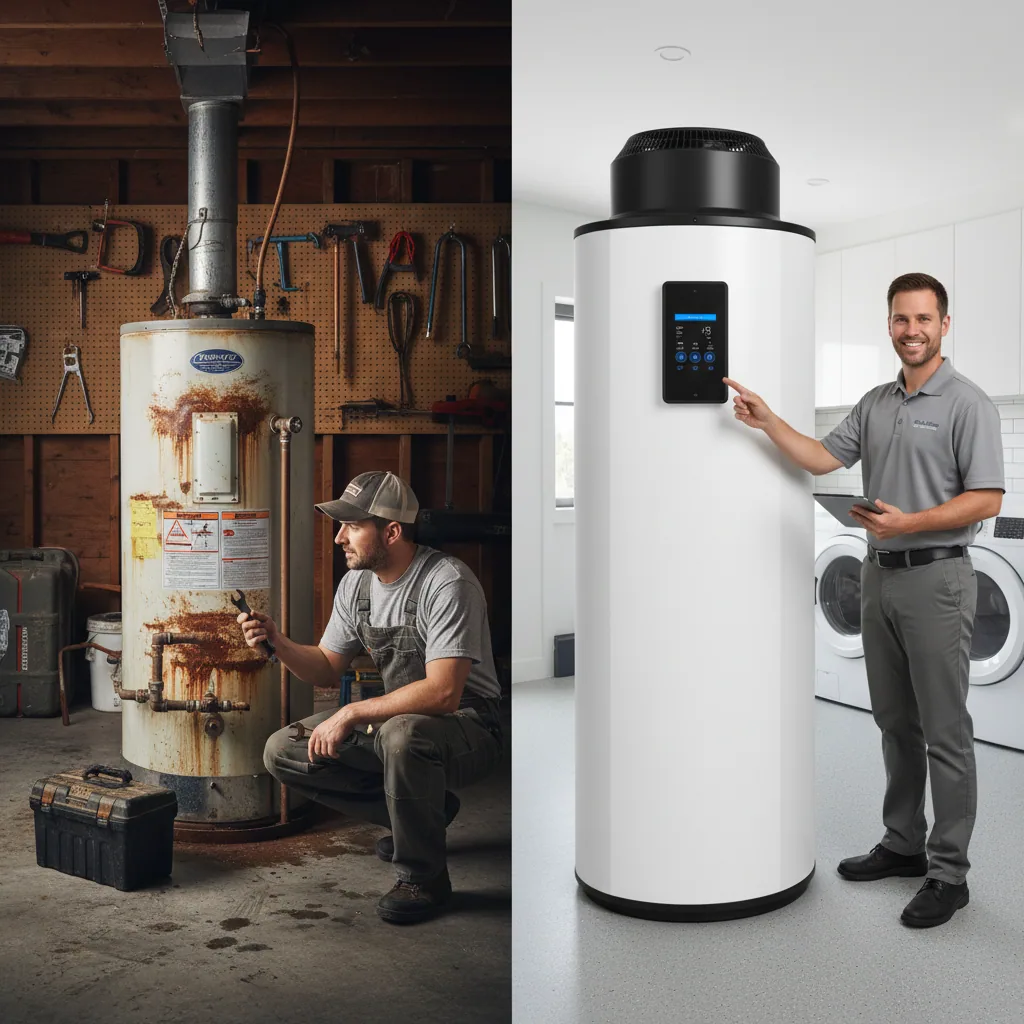
Consequently, the shift toward zero-emission technology is structured to prevent market shock while ensuring significant reductions in nitrogen oxide (NOx) emissions. The BAAQMD regulations 2027 target residential water heaters, but the scope of the rule extends further into the decade.
Specifically, the mandate focuses on the sale and installation of new units rather than forcing the immediate removal of functioning gas heaters. However, once your current unit fails after the deadline, your replacement options will be strictly limited to zero-emission technology, such as electric heat pump water heaters (HPWH).
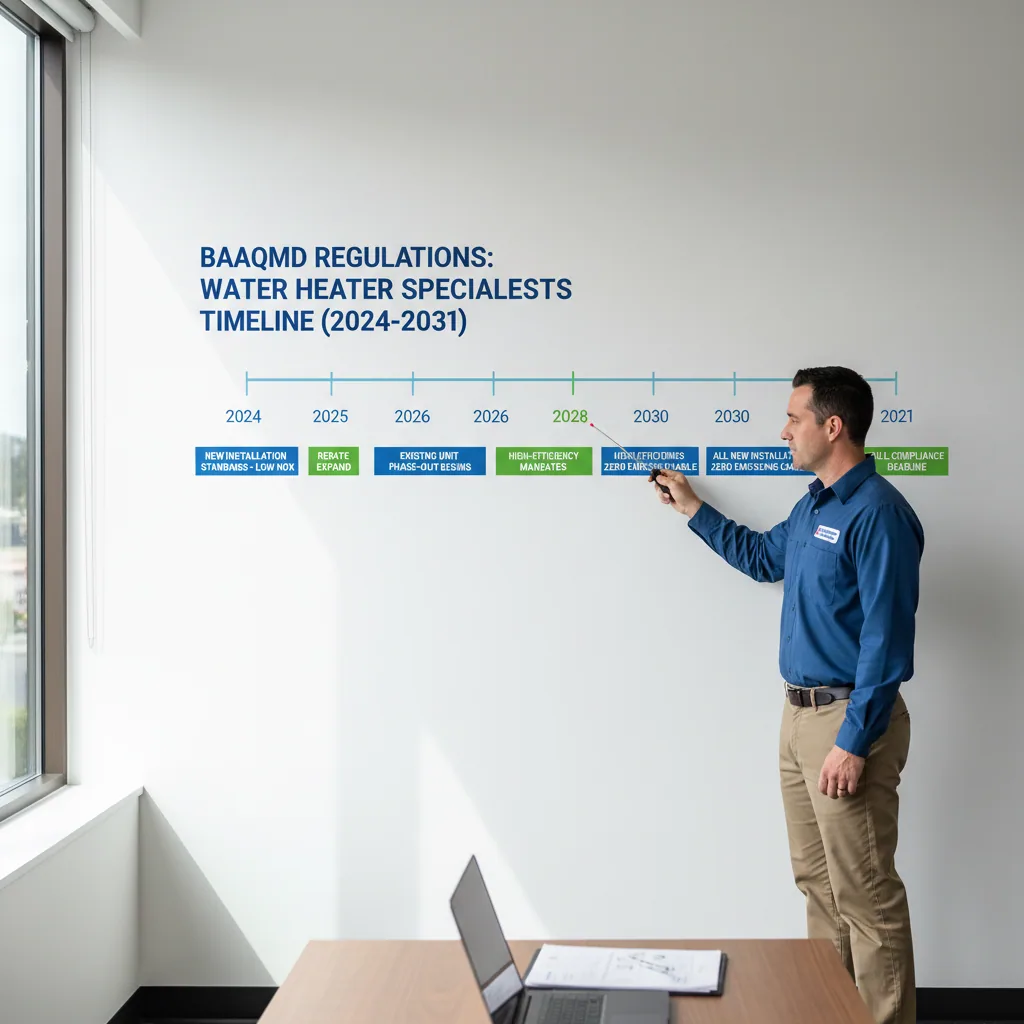
- January 1, 2027: The ban takes effect for small residential water heaters (up to 75,000 BTU/hr).
- January 1, 2029: The mandate expands to include residential central furnaces.
- January 1, 2031: Large commercial water heaters (75,000 to 2 million BTU/hr) must comply with zero-emission standards.
- Enforcement Mechanism: Compliance is managed through retail and wholesale point-of-sale restrictions, meaning licensed contractors cannot legally install non-compliant units.
The Impact on High-Growth Bay Area Real Estate
In addition to regulatory compliance, homeowners must consider how the Bay Area gas water heater ban affects property appraisals. According to PG&E energy transition reports, homes with modern electrification upgrades often command a premium among environmentally conscious buyers.
Strategic Financial Planning: Maximizing Rebates and Incentives
While the upfront cost of zero-emission technology can be higher than traditional gas units, the current incentive landscape in Northern California is unprecedented. Savvy homeowners can leverage multiple layers of funding to offset the electric water heater conversion cost.
Actually, by stacking federal, state, and local programs, some residents are seeing five-figure reductions in total project costs. Maximizing your rebate ROI requires moving before these funds are depleted by the 2027 rush.
- TECH Clean California: Provides direct-to-contractor incentives that are often passed down as immediate discounts to the homeowner.
- HEEHRA (Inflation Reduction Act): Point-of-sale rebates up to $1,750 for heat pump water heaters, depending on household income levels.
- Federal Tax Credit (25C): Allows for a 30% tax credit, capped at $2,000 annually, for high-efficiency heat pump installations.
- Local Utility Programs: Silicon Valley Clean Energy (SVCE) and Peninsula Clean Energy offer additional grants ranging from $1,000 to $3,500 for panel upgrades and unit swaps.
| Feature | Standard Gas Tank | Heat Pump Water Heater |
|---|---|---|
| Efficiency (UEF) | 0.62 - 0.70 | 3.50 - 4.00 |
| Avg. Bay Area Rebates | $0 | $1,500 - $4,900+ |
| 2027 Compliance | Non-Compliant | Fully Compliant |
| Annual Energy Cost | $600 - $800 | $150 - $300 |
The Electrical Panel Bottleneck: A Critical Pre-Installation Hurdle
Moreover, the primary challenge of the Bay Area gas water heater ban isn't the appliance itself—it's the infrastructure supporting it. Most mid-century homes in San Mateo or Santa Clara counties were built with 60-amp or 100-amp electrical panels.
Typically, a heat pump water heater requires a dedicated 240V circuit. If your panel is already at capacity due to EV chargers or AC units, a main service panel upgrade becomes mandatory. This process involves city permits and PG&E coordination, which can take 3 to 6 months in jurisdictions like Redwood City or Fremont.
- Load Calculation: A professional water heater specialist must perform a Load Calculation to determine if your current panel can handle the 30-amp draw.
- Circuit Routing: Older homes may require complex wire runs from the garage to the main panel, increasing labor costs.
- Smart Load Management: Some homeowners opt for smart circuit breakers to avoid a full $5,000 panel upgrade, a strategy often recommended by Department of Energy efficiency experts.
Comparing Technology: Heat Pump vs. Zero-Emission Alternatives
Transitioning to water heater compliance doesn't mean sacrificing performance. In fact, modern heat pump technology offers several functional advantages over the gas units they replace, particularly in the unique Bay Area climate.
Because heat pumps extract heat from the surrounding air, they act as a natural dehumidifier. This is exceptionally beneficial for homes with damp basements or crawlspaces in coastal areas like Pacifica or San Leandro.
Key Advantages of Heat Pump Technology:
- Unmatched Efficiency: They are 3-4 times more efficient than gas heaters because they move heat rather than creating it.
- Safety: Eliminates the risk of carbon monoxide leaks and gas line ruptures during seismic events.
- Integration: Many models feature Wi-Fi connectivity for "Time of Use" (TOU) optimization, heating water when PG&E rates are lowest.
Why a 'Pre-emptive Strike' Saves Money in 2024
Waiting until December 2026 to address the Bay Area gas water heater ban is a high-risk strategy. As the deadline approaches, equipment demand will skyrocket, and contractor availability will plummet.
Therefore, replacing an aging gas unit (10+ years old) now allows you to choose your technology and contractor under calm market conditions. If your heater fails in 2027, you may be forced into an emergency electric conversion without the time to properly upgrade your panel or secure the best rebates.
Conclusion: Navigating the Transition with Better Water Heaters
Ultimately, the Bay Area gas water heater ban represents a shift toward a more sustainable, efficient future for Northern California homes. While the regulations are strict, the combination of energy savings and massive rebates makes 2024 the ideal year for a strategic upgrade.
At Better Water Heaters, we specialize in navigating the complexities of BAAQMD regulations 2027. From permit acquisition to maximizing your TECH Clean California incentives, our team ensures your home remains compliant and comfortable. Contact our specialists today for a comprehensive electrification audit.
Frequently Asked Questions About the 2027 Gas Ban
Does the 2027 ban mean I have to replace my working gas water heater?
No, the BAAQMD mandate only applies to the sale and installation of new units. You can continue to use your existing gas water heater until it reaches the end of its life. However, after January 1, 2027, any replacement unit must meet the zero-emission standard.
What is the average cost of converting from gas to a heat pump water heater?
In the Bay Area, the total cost typically ranges from $4,000 to $9,000. This includes the unit, labor, electrical work, and permits. However, with available rebates from TECH Clean California and federal tax credits, many homeowners reduce their net out-of-pocket cost to under $3,000.
Are there any exemptions to the BAAQMD gas water heater ban?
Currently, there are very few exemptions. The rule applies to all residential installations. BAAQMD is monitoring market readiness, but homeowners should plan for a full transition. Emergency replacements after 2027 will still be required to meet zero-emission standards, making proactive planning essential.
Will a heat pump water heater work during a power outage?
Like all electric appliances, a heat pump water heater requires electricity to function. However, because the tanks are highly insulated, they can keep water hot for 24-48 hours. Many homeowners are pairing these units with home battery systems like the Tesla Powerwall for full resilience.