Water heater article archive
Bay Area Gas Water Heater Ban: 2027 Strategy Guide | Better Water Heaters
Historical article, not newly reviewed advice. Verify current requirements, incentives and model guidance with the relevant authority or manufacturer before relying on them. Equipment and service needs require an assessment.
📋 Table of Contents
The Bay Area gas water heater ban is no longer a distant policy proposal; it is a fast-approaching regulatory reality that will fundamentally change how San Jose, San Francisco, and Oakland residents maintain their homes. According to the Bay Area Air Quality Management District (BAAQMD), the sale and installation of traditional natural gas water heaters will be phased out starting in 2027.
Understanding BAAQMD Regulations and the 2027 Timeline
Strategic homeowners are already looking toward the 2027 water heater transition to avoid the inevitable supply chain bottlenecks and labor shortages that will occur as the deadline nears. The BAAQMD Regulation 9, Rule 4 specifically targets nitrogen oxide (NOx) emissions, effectively mandating a shift to zero-emission technology.
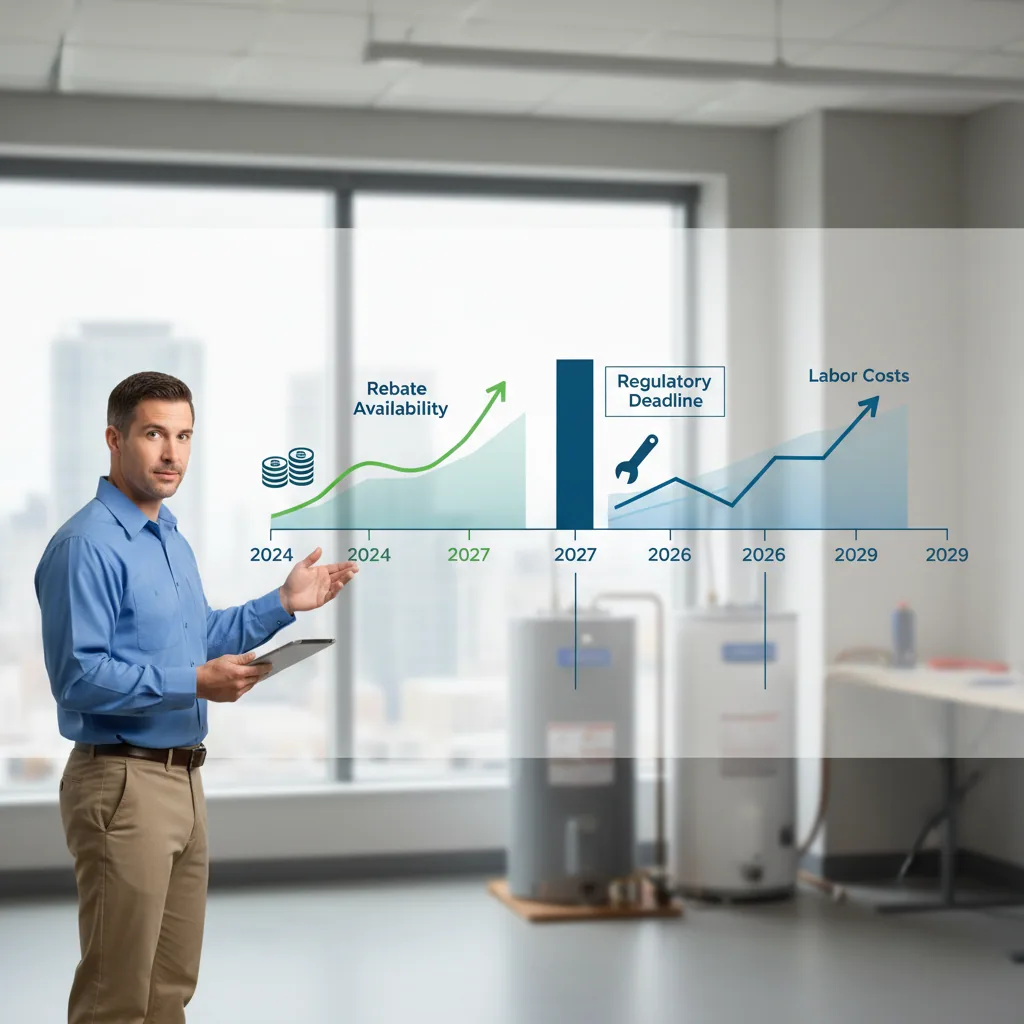
- 2027 Deadline: Phase-out begins for small residential water heaters (up to 75,000 BTU).
- 2029 Deadline: Phase-out extends to large commercial and multi-unit systems.
- Zero-Emission Requirement: Only electric heat pump water heaters (HPWH) or equivalent tech will meet the new standards.
- Emergency Replacement Risk: If your gas heater fails on January 1, 2027, you cannot legally replace it with another gas unit.
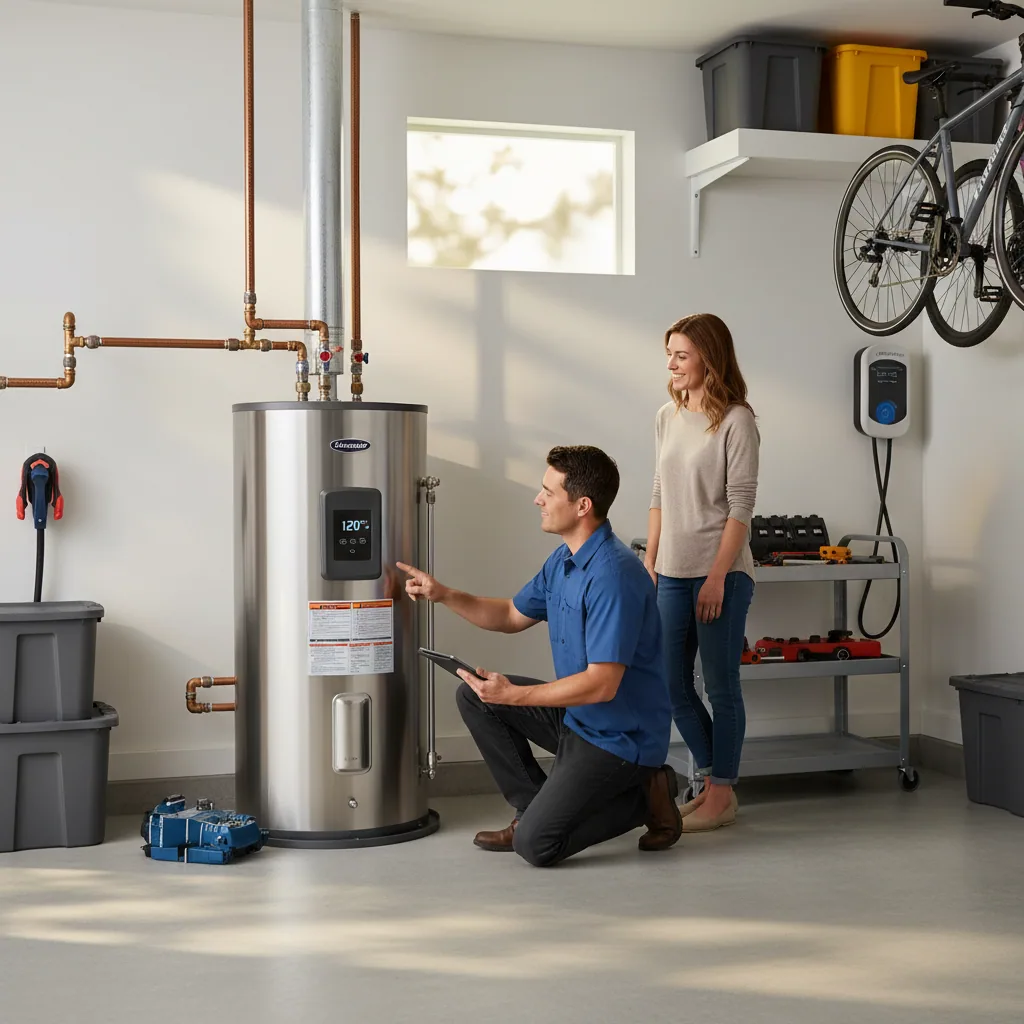
Furthermore, this regulation applies to the point of sale. While you aren't required to rip out a working gas unit today, you will be prohibited from buying a replacement gas model once the rule takes effect.
Why the Bay Area Gas Water Heater Ban Matters for Your Home Value
Sophisticated property owners recognize that "All-Electric" status is rapidly becoming a premium feature in the competitive California real estate market. Homes already equipped with high-efficiency heat pumps are seeing increased interest from environmentally-conscious buyers who want to avoid future renovation headaches.
- Future-Proofing: Eliminates the need for urgent electrical upgrades during a home sale.
- Health and Safety: Removes combustion gases and potential carbon monoxide risks from the home.
- Energy Independence: Pairs perfectly with rooftop solar and battery storage systems common in Silicon Valley.
The Strategic Advantage of a 2025-2026 Replacement
Waiting for the Bay Area gas water heater ban to take effect is a high-risk financial strategy. By acting proactively in 2025 or 2026, homeowners can leverage a unique "sweet spot" where rebate availability is at an all-time high while labor costs remain stable.
Maximizing Heat Pump Water Heater Rebates in California
Currently, the financial incentives for transitioning to electric are unprecedented. By layering federal, state, and local programs, some homeowners are reaching near-zero net installation costs.
| Incentive Source | Program Name | Potential Value |
|---|---|---|
| Federal Tax Credit | Inflation Reduction Act (25C) | Up to $2,000 |
| State Rebate | TECH Clean California | $1,000 - $3,100 |
| Local Utility | Clean Energy Programs (SVCE/PCE) | Up to $1,000 |
| Total Potential | Combined Incentives | $4,900+ |
Consequently, these funds are first-come, first-served. As we approach the 2027 water heater transition, these pools of capital are expected to deplete rapidly due to surging demand.
Avoiding the Electrical Panel Upgrade Bottleneck
Perhaps the most significant challenge of the transition is the electrical requirement. Most gas water heaters only require a standard 120V outlet (if any), while high-performance heat pumps typically require a dedicated 240V circuit.
- The Electrical Audit: We recommend homeowners perform an audit now to see if their main breaker panel has the capacity for a 30-amp breaker.
- The Pre-2027 Loophole: Upgrading your panel now allows you to claim current electrical upgrade rebates that may not exist once the mandate is mandatory.
- 120V Plug-In Options: Newer "retrofit" heat pumps can run on standard outlets, but they may have slower recovery times for large families.
Overcoming Space Constraints in Bay Area Homes
Many homes in San Francisco or older parts of Oakland feature water heaters tucked into tight closets or crawlspaces. Because heat pump water heaters require airflow to extract heat from the surrounding air, installation requires creative engineering.
Creative Solutions for Tight Spaces
As water heater specialists, we utilize several strategies to fit modern tech into historic homes:
- Louvered Doors: Replacing solid closet doors with vented ones to provide necessary cubic feet of air.
- Ducting Kits: Drawing air from an attic or adjacent room and exhausting it outdoors.
- Garage Relocation: Moving the unit to a garage where ambient heat is plentiful and space is less restricted.
Moreover, the moderate Bay Area climate is ideal for heat pump efficiency. Unlike colder regions, our ambient air temperature rarely drops to a point where the backup electric elements must take over, ensuring maximum ROI on your utility bills.
The Cost of Inaction: The Emergency Replacement Dilemma
Imagine your water heater fails on a Friday night in February 2027. Under the Bay Area gas water heater ban, you cannot simply swap it for a $1,500 gas tank. You are now forced into an emergency electrification project.
The Hidden Costs of Waiting
An emergency replacement after 2027 will likely involve:
- Premium Labor Rates: High demand for a limited pool of certified heat pump installers.
- Permit Delays: Local building departments will be overwhelmed with electrification permits.
- Unplanned Electrical Work: Paying emergency rates for an electrician to run a new 240V line through your finished walls.
By contrast, a planned replacement in 2025 allows for a calm, strategic approach. You can get multiple quotes, ensure your electrical panel is ready, and secure your rebates before the rush begins. You can contact our experts today to schedule a pre-2027 site assessment.
Conclusion: Your Roadmap to 2027
The Bay Area gas water heater ban is a significant shift, but it doesn't have to be a financial burden. By understanding the BAAQMD regulations and acting while rebates like TECH Clean California are flush with cash, you can upgrade your home's infrastructure with minimal out-of-pocket cost.
Next Steps for Bay Area Homeowners
- Step 1: Check your water heater's age. If it's over 8 years old, it's in the "danger zone."
- Step 2: Consult with a qualified specialist to evaluate your electrical capacity.
- Step 3: Reserve your rebates and schedule your transition for 2025 or 2026.
Frequently Asked Questions
Will I be fined if I keep my gas water heater after 2027?
No, there are no fines for continuing to use a functioning gas water heater that was installed before the deadline. The Bay Area gas water heater ban only applies to the sale and installation of new units. You can keep your current unit until it fails or you choose to upgrade.
How much more does a heat pump water heater cost than gas?
While the upfront equipment cost is higher—typically $3,500 to $6,000 compared to $1,500 to $2,500 for gas—the available heat pump water heater rebates in California often bridge this gap entirely. When factoring in lower monthly energy bills, the total cost of ownership is significantly lower for electric models.
What if my electrical panel is full?
If your panel lacks space, you have two main options. You can perform a panel upgrade (which may qualify for separate tax credits), or you can install a 120V "plug-in" heat pump water heater designed specifically for gas-to-electric retrofits without major electrical work.
Are heat pump water heaters noisy?
Modern heat pump water heaters produce a sound similar to a dishwasher or a large fan. When installed in a garage or a basement, the sound is usually unnoticeable inside the living areas. For indoor closet installations, sound-dampening materials can be used to ensure a quiet home environment.