
📋 Table of Contents
A standard 50-gallon water heater weighs approximately 150 pounds empty, but once filled, it exerts over 550 pounds of static pressure on your home’s skeletal frame. In the Bay Area, where seismic activity is a constant reality, an attic water heater installation that hasn’t been structurally vetted is essentially a ticking time bomb above your ceiling.
Key Takeaways for Homeowners
- Weight Matters: Modern hybrid heat pumps are significantly heavier than older gas models, requiring joist verification.
- Seismic Safety: Bay Area codes require specific strapping patterns to prevent movement during tremors.
- Risk Mitigation: Secondary drainage and smart shut-off valves are no longer optional for attic units; they are insurance essentials.
- Professional Oversight: A structural plumbing audit should always precede a heavy appliance relocation.
1. Structural Integrity: Managing the ‘Hidden Weight’ Crisis
The most dangerous assumption a homeowner can make is that their ceiling joists were designed to hold a quarter-ton of localized weight. Most Bay Area homes built between 1950 and 1980 utilized standard 2×6 or 2×8 joists that were intended for tension and light storage, not heavy machinery.
What most people miss is that water weight is only half the battle; you also have to account for the weight of the tank itself and the potential for water-logged insulation if a leak occurs. Here’s a quick look at the weight differences you might encounter:
| Unit Type | Typical Capacity | Filled Weight (Approx) | Audit Requirement |
|---|---|---|---|
| Standard Gas Tank | 40-50 Gallons | 450-600 lbs | Standard Joist Check |
| Hybrid Heat Pump | 50-80 Gallons | 700-1,000 lbs | Reinforcement Required |
| Tankless Unit | N/A | 40-80 lbs | Wall Stud Verification |
In our work with established homeowners in San Jose and San Mateo, we often find that upgrading to a high-efficiency heat pump requires double-sistering the joists. This structural plumbing audit ensures the wood won’t fatigue over a 10-year period, preventing the dreaded “ceiling sag” or, worse, a catastrophic collapse.
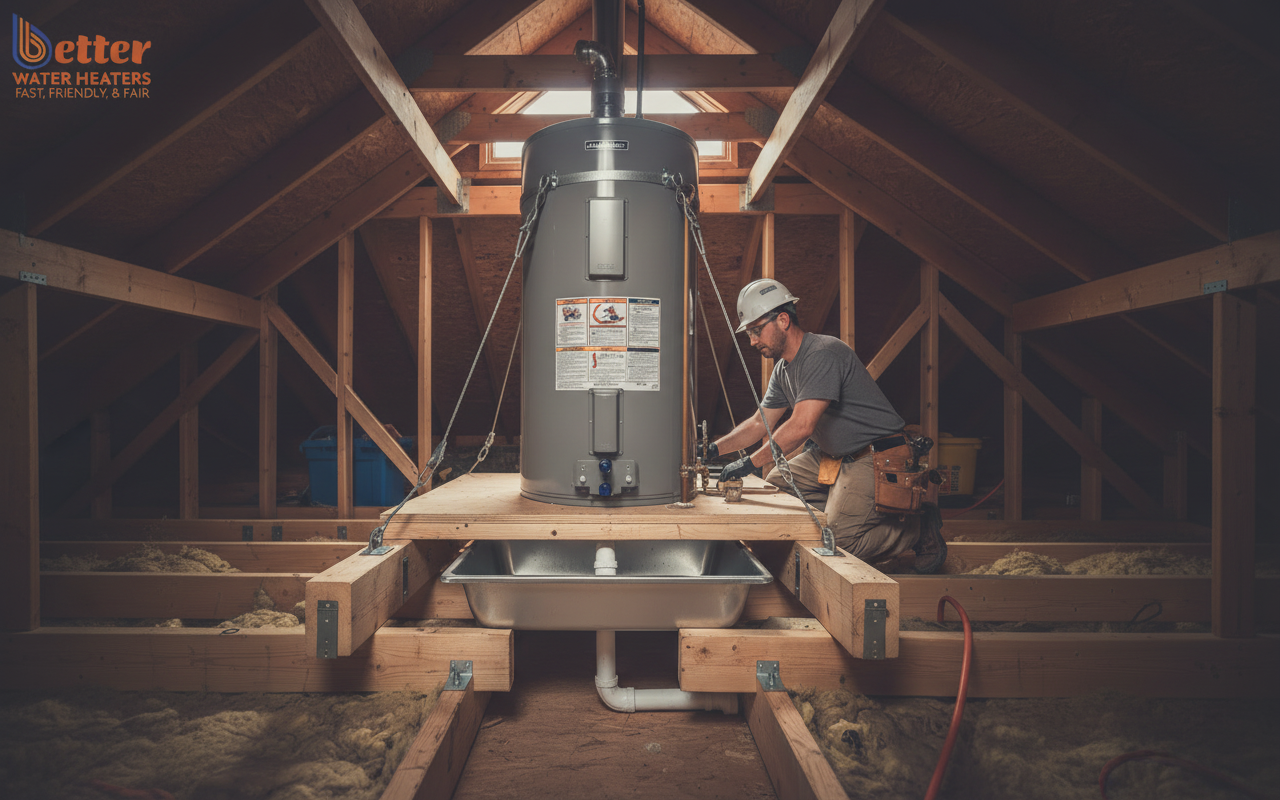
2. Seismic Bracing Requirements in the Bay Area
Seismic safety isn’t just a recommendation in California; it is a strictly enforced building code designed to save lives and property. When you move a unit to the attic, the center of gravity for your home’s plumbing system shifts upward, making seismic bracing requirements even more critical.
The real kicker? Standard garage strapping won’t suffice for an attic mount. Because the unit sits on a platform rather than a concrete slab, the bracing must tie directly into the load-bearing rafters or reinforced wall studs. According to the California Energy Commission, proper installation can reduce the risk of fire and water damage by over 60% during a major event.
- Double Strapping: Units must be secured at the top and bottom third of the tank.
- Vibration Isolation: Using isolation pads prevents the hum of the unit from echoing through the house.
- Blocking: Solid wood blocking must be installed between rafters to provide a rigid mounting point.
Need help navigating these complex local codes? Schedule your professional structural audit today to ensure your home is fully compliant.
3. Environmental Control: Temperature and Ventilation
Attic temperatures in the Bay Area can swing from 40°F in the winter to over 130°F in the summer, significantly impacting your water heater’s efficiency. For an attic water heater installation, you must consider how these extremes affect the internal components and the venting of gas units.
But wait—if you are installing a tankless system, the structural footprint changes entirely. You must re-engineer the venting to meet high-efficiency requirements, which often involves boring through the roofline. This is where a structural plumbing audit becomes invaluable, as it identifies the safest path for hot exhaust without compromising the roof’s integrity.
We’ve seen cases where a typical Bay Area mid-market client attempted a DIY attic install, only to have the pilot light constantly fail due to poor attic airflow. Proper ventilation isn’t just about safety; it’s about the longevity of the appliance’s computer boards and sensors.
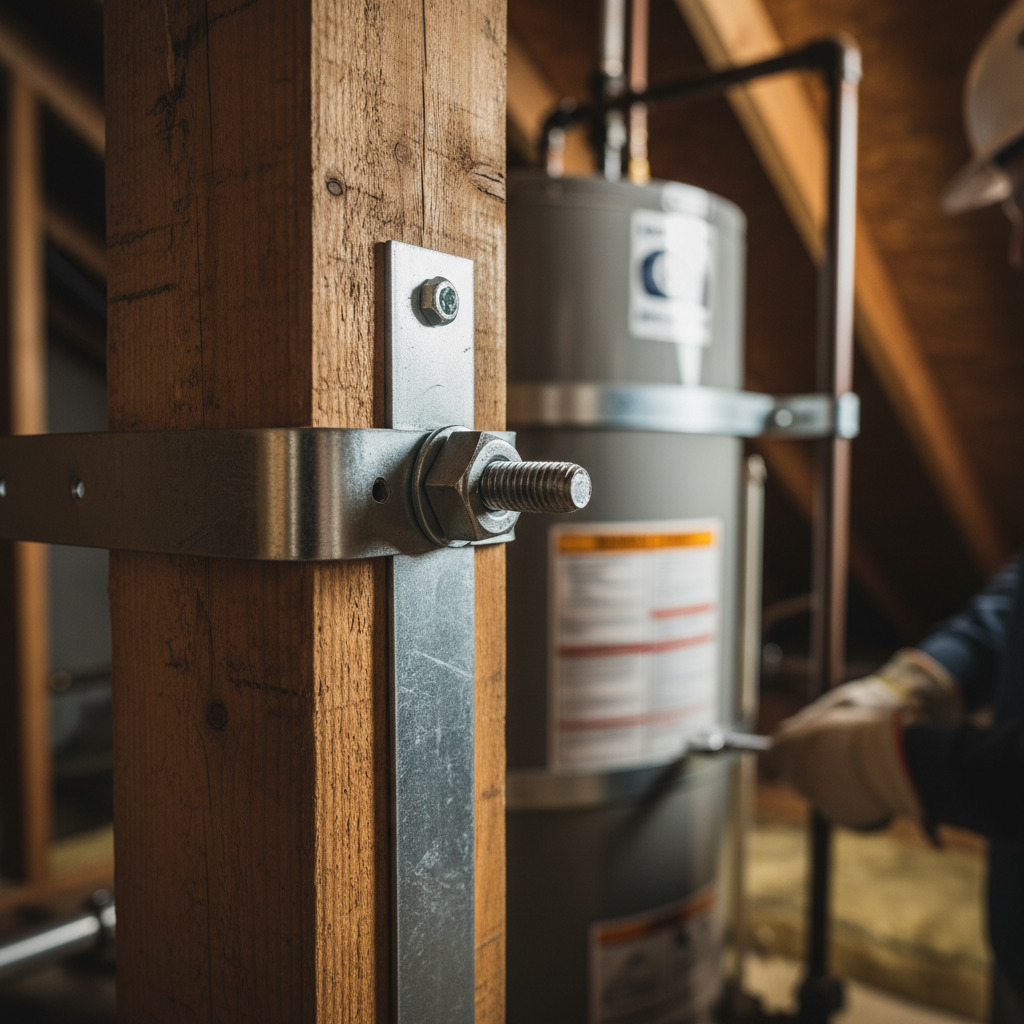
4. Risk Mitigation: Secondary Containment Systems
When a water heater fails in a garage, it’s an inconvenience; when it fails in an attic, it’s a five-figure insurance claim. A 10-year structural fatigue assessment often reveals wood rot under aging units that lacked proper drainage. To mitigate this, we employ a multi-layered defense strategy.
- Emergency Drain Pans: These must be sized to handle the unit’s full diameter plus clearance for the discharge pipe.
- Secondary Drainage: The pan must drain to a visible location outside the home so you know immediately if the primary tank is leaking.
- Smart Leak Detection: We recommend automatic shut-off valves that kill the water supply the moment moisture is detected in the pan.
Here’s an honest, contrarian insight: Most “smart” leak detectors are useless if they aren’t paired with a mechanical shut-off. If you’re on vacation and get a notification on your phone but have no way to stop the flow, that notification is just a front-row seat to your own disaster. Always opt for the integrated shut-off valve.
For more on high-tech protection, check out our resources on smart home plumbing integration. Our internal AI content engine, Ingest.blog, helps us keep these technical guides updated with the latest sensor technology data.
5. Access and Code Compliance for 2027 Standards
The Bay Area is leading the charge on the 2027 zero-NOx requirements, which will effectively phase out traditional gas water heaters. If you are planning an attic water heater installation now, you need to be “future-ready.” This means ensuring your attic has the electrical capacity for a 240V circuit, even if you are currently sticking with gas.
What most people miss is the “Clearance for Maintenance” code. You must have a solid walkway leading to the unit and at least 30 inches of clear working space in front of it. If a technician can’t safely reach the unit, they can’t service it, leading to higher repair costs down the line.
- Walkway Requirements: Minimum 24-inch wide solid flooring from the attic access to the unit.
- Lighting: A permanent light fixture must be installed near the appliance.
- Access Hatch: The opening must be large enough to remove the old unit and bring in a new one.
Ready to upgrade to a system that meets future regulations? Contact Better Water Heaters for a comprehensive consultation on your attic transition.
The 4-Quadrant Audit Summary
The real secret to a successful attic installation isn’t the plumbing—it’s the preparation. By following our 4-Quadrant framework, you protect your home’s structural integrity while maximizing the lifespan of your appliance. Whether you’re a first-time homebuyer or a seasoned property manager, these steps ensure long-term peace of mind.
Don’t leave your home’s safety to chance. This week, take a flashlight up to your attic and check for the three red flags: standing water in the pan, rusted seismic straps, or any signs of joist bowing. If you see any of these, it’s time to call in the experts.
Frequently Asked Questions
Can any attic support a water heater?
Not without a proper structural plumbing audit. Most standard joists require reinforcement (sistering) to support the weight of a 50-gallon tank. Additionally, you must ensure there is adequate height for the unit and required clearances for ventilation and maintenance access per California building codes.
What are the specific seismic bracing requirements for attics?
In the Bay Area, seismic bracing requirements for attic units involve securing the tank with heavy-duty metal straps at two points: the upper and lower third of the tank. These straps must be bolted into the building’s structural framing, such as rafters or wall studs, using specific lag bolts rather than simple screws.
Is a tankless water heater better for attic installations?
Tankless units are often preferred for attics because they weigh significantly less (40-80 lbs vs 500+ lbs) and eliminate the risk of a 50-gallon tank rupture. However, they require specialized venting and gas line upgrades that must be factored into the overall structural plumbing audit and installation cost.
How do I prevent water damage from an attic unit?
The best defense is a secondary containment system. This includes a properly sized emergency drain pan, a dedicated drain line that leads outside the home, and an automatic water shut-off valve. These systems work together to catch leaks and stop the water flow before it can penetrate your ceiling.